Table of Contents >> Show >> Hide
- Before You Start: Think Like an Authenticator
- 1) Check the Leather Quality, Texture, and Smell
- 2) Inspect the Stitching and Overall Craftsmanship
- 3) Study the Quilting Pattern and Shape Alignment
- 4) Analyze the YSL Logo Shape (Not Just “Is There a Logo?”)
- 5) Examine the Hardware, Engravings, and Zippers
- 6) Inspect the Interior Stamp and Brand Tag Typography
- 7) Verify the Serial Number / Style Code Tag Format
- 8) Match the Interior Layout and Features to the Exact Model
- 9) Check Packaging, Extras, and Newer Digital ID Details
- Bonus: The Safest Way to Buy a YSL Bag Online
- Quick Fake vs. Real YSL Bag Checklist
- Conclusion
- Real-World Buying Experiences and Lessons Learned (Extended Section)
Buying a Saint Laurent bag should feel like a luxury win, not a detective thriller with a bad ending. But because YSL (Saint Laurent) bags are so popular, they’re also heavily counterfeited. And not just the obvious “the logo looks like it was drawn in a moving car” kind of fake. Today’s replicas can look convincing in photos, especially when the seller knows how to use soft lighting and confidence.
The good news: you do not need to be a professional authenticator to catch a lot of red flags. You just need a smart checklist and a little patience. In this guide, you’ll learn 9 practical ways to spot fake vs. real YSL bags, including what to inspect on the logo, hardware, stitching, interior stamp, serial tag, and even newer features like Saint Laurent’s Digital ID for select lines.
One quick reality check before we start: no single detail proves authenticity on its own. Brand standards change over time, and different YSL styles are built differently. The goal is to look at the bag like a puzzleif too many pieces feel off, it probably is.
Before You Start: Think Like an Authenticator
Authentication is less about one magic clue and more about consistency. A genuine YSL bag usually gets the big things and the tiny things right at the same time: the leather feels premium, the stitching is clean, the logo proportions make sense, the hardware feels substantial, and the interior details match the exact model. Counterfeits often get 70–80% right and then fall apart in the final details.
So instead of asking, “Does this look okay?” ask:
- Does this match the exact YSL model and size?
- Do the materials, logo, and hardware all look like they belong together?
- Do the interior stamp and serial tag look professionally madeor rushed?
- Are the seller’s photos clear enough to verify all that?
1) Check the Leather Quality, Texture, and Smell
Real YSL bags are known for high-quality leather and refined finishes. Depending on the model, you may see smooth lambskin, grained leather, or Saint Laurent’s signature textured finishes like Grain de Poudre. Authentic leather should feel rich, structured (or intentionally soft, depending on the style), and expensive in a way that is hard to fake.
Counterfeit bags often miss the mark here. The leather may feel:
- Too plasticky or overly glossy
- Flimsy where it should feel structured
- Stiff in a weird way (not “luxury stiff,” more “discount costume stiff”)
- Coated with a strong chemical or factory smell
That smell test sounds simple, but it’s genuinely helpful. Multiple authentication guides point out that fake luxury bags often have a synthetic or chemical odor, while real leather usually has a subtler, natural smell. If the bag smells like a chemistry lab in a hurry, that’s not a great sign.
2) Inspect the Stitching and Overall Craftsmanship
Stitching is one of the fastest ways to separate a real YSL from a fake. Authentic bags typically have neat, consistent, evenly spaced stitching. On many YSL styles, the stitching is part of the design itself, so sloppy workmanship stands out quickly.
Look closely at:
- Stitch spacing (it should be consistent)
- Thread tension (not loose, puckered, or messy)
- Corner finishing (no fraying or awkward bunching)
- Symmetry from left to right
A fake may have crooked lines, uneven spacing, or areas where the stitching looks rushed. Some fakes are “clean enough” at first glance, but under close inspection the details fall apartespecially near corners, flap edges, and logo areas.
Also, keep expectations realistic: genuine luxury bags can have tiny variations because craftsmanship involves hand-finishing. The issue is not “perfectly machine-like” vs. “human.” The issue is whether the stitching looks professional and intentional.
3) Study the Quilting Pattern and Shape Alignment
On YSL styles like the Loulou and other quilted pieces, the quilting is a major authenticity clue. Authentic YSL quilting is not random. The pattern, spacing, and shape alignment are usually very specific to the model and size.
For example, some YSL quilted bags use a chevron or Y-shaped quilting design that should look balanced and deliberate. If the quilting:
- Looks uneven from side to side
- Doesn’t align well with the flap or logo placement
- Has inconsistent puffiness
- Feels too flat or too “puffy marshmallow”
…then you may be looking at a counterfeit. This is especially important because replicas often copy the overall look of the quilting but miss the exact spacing and line placement used on authentic bags.
Pro tip: always compare the bag to official or major retailer photos of the same size. A small and a medium can have slightly different proportions, and counterfeiters often mix details from different versions.
4) Analyze the YSL Logo Shape (Not Just “Is There a Logo?”)
The YSL monogram is one of the most recognizable logos in fashion, and counterfeiters know it. That’s why they copy it constantly. But the logo is also one of the best places to catch a fakeif you know what to look for.
On authentic YSL logo hardware, the letters should have clean proportions and correct overlap. The logo should look crisp, balanced, and intentional, not thick, clumsy, or slightly “off” in shape. Common fake-bag mistakes include:
- Wrong letter thickness (especially the Y and S)
- Poor overlap between letters
- Edges that look too rounded or too sharp compared with the real logo
- A logo that sits crooked on the flap
Also remember that YSL has used different hardware finishes and variations over the years, so focus more on shape quality and alignment than on “this color looks a little brighter.” Finish can vary. Bad proportions usually do not.
5) Examine the Hardware, Engravings, and Zippers
Hardware is where a lot of fake bags lose the game. Real YSL hardware should feel substantial, smooth, and well-finished. It should not feel lightweight, hollow, rough, or over-polished.
What to check on the hardware
- Weight: Authentic chains and metal details usually feel sturdy and slightly heavy.
- Engraving: Letters should be sharp, readable, and evenly spacednot shallow, messy, or crowded.
- Snap closures: Larger snaps on handbags may carry Saint Laurent/Paris markings; tiny snaps and some grommets may not.
- Zipper pulls: Genuine YSL zipper pulls often have a distinct shape and bend/crimp detail, not a flat generic pull.
A very common counterfeit issue is poor engraving. The font may be too small, the spacing too tight, or the stamping too shallow. On some fakes, the hardware looks shiny in photos but feels cheap in person. If the bag is “luxury” but the metal feels like a toy, trust that instinct.
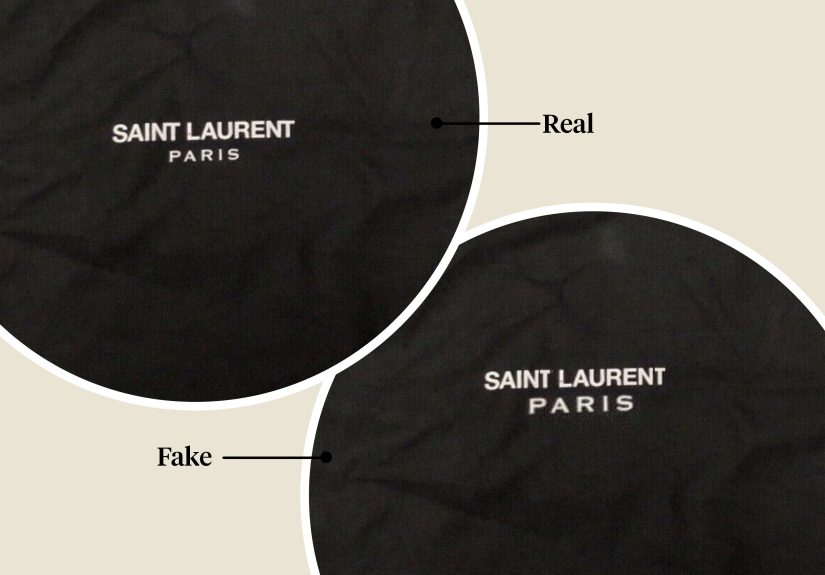
6) Inspect the Interior Stamp and Brand Tag Typography
Inside the bag, you’ll usually find important branding details such as an interior stamp or leather tag. This is one of the highest-value checks because counterfeiters frequently mess up the typography and stamping quality.
On authentic YSL bags, the interior branding should typically look clean and precise, often reading:
SAINT LAURENT PARIS
MADE IN ITALY
Things to inspect:
- Font style (should look crisp, balanced, and consistent)
- Spacing between letters (fakes often cram letters together or space them oddly)
- Stamping depth (authentic debossing/foiling usually looks precise, not muddy)
- Foil quality (if foiled, it should not look flaky or messy)
Authenticators also check matching details on removable pouches when the bag includes one. That’s a great tip for buyers: if the bag comes with a removable pouch or mirror, inspect the branding on those pieces too. Fakes often focus on the main bag and get the extras wrong.
7) Verify the Serial Number / Style Code Tag Format
This is the part that makes many buyers nervous, but it’s actually very useful once you know what to look for. Most authentic YSL bags include an interior serial or style code tag. The tag itself should look high-quality and be attached cleanly, not like an afterthought.
A few things matter here:
- The tag should be properly stitched into the lining
- The code format should match known YSL conventions for that era/style
- The engraving/printing should be clear and not fuzzy or uneven
- The code layout should look intentional (counterfeits often use the wrong spacing or line format)
Some authentication references note that older and newer YSL code formats can differ (including dot separators, prefixes, or style/art formatting), which is why this check works best when paired with model-specific comparison photos. In other words: the code should not just “exist” it should make sense for that exact bag.
Important: a serial tag alone is not proof. Counterfeiters add fake serial tags all the time. Think of it as one strong clue in a larger checklist.
8) Match the Interior Layout and Features to the Exact Model
This is where smart buyers beat good fakes. Counterfeiters often copy the outside well enough, but the inside layout is where they start guessing. Real YSL bags have model-specific interiors, linings, pockets, closures, strap construction, and included accessories.
For example, depending on the style, authentic listings may specify details like:
- Grosgrain lining
- Removable pouch
- Pocket mirror
- Snap closure style
- Sliding chain strap that can be worn single or doubled
- Specific interior pocket arrangement
If the seller says it’s a certain model but the interior pockets, lining, or included pieces don’t match trusted retail or resale references, pause immediately. A counterfeit may look great from the front and still fail the interior map test.
This is also why measurements matter. A fake might be “close,” but an authentic bag usually matches published dimensions very closely. If a listing avoids measurements entirely, ask for them.
9) Check Packaging, Extras, and Newer Digital ID Details
Packaging and extras should never be your only authentication testbut they can still help. Authentic luxury items are usually packaged well, and poor packaging can be a red flag. That said, resale items may not include original packaging, so don’t reject a bag only because the box or dust bag is missing.
What packaging/extras can tell you
- Dust bag/box quality: Materials and printing should feel premium, not cheap.
- Included accessories: Pouches, mirrors, and straps should match the model and show the same quality level as the bag.
- Consistency: The “extras” should not look newer, older, or lower quality than the bag itself.
For newer Saint Laurent bags, there is one more important detail: Digital ID. Saint Laurent’s FAQ explains that select handbags in certain lines (including Y, Loulou, and Voltaire) may include NFC-based Digital ID support through the Saint Laurent app, which can be used to create a digital certificate of authenticity. If a seller is offering a newer eligible bag, asking about Digital ID can be a very smart move.
Just remember: not all bags have it, and older bags won’t. No Digital ID does not automatically mean fake.
Bonus: The Safest Way to Buy a YSL Bag Online
Even if you get good at spotting red flags, the safest move is still buying through platforms or sellers with serious authentication systems and buyer protection. Many major resale platforms now offer authentication services, expert inspections, or authenticity guaranteessome even include cards, tags, or documented review processes.
That matters because photos can hide a lot. A trustworthy seller or platform reduces your risk before the bag ever reaches your door. If a listing is vague, the price is suspiciously low, and the seller refuses close-up photos of the logo, stamp, serial tag, and corners, walk away. There will always be another bag. There may not always be another refund.
Quick Fake vs. Real YSL Bag Checklist
- Leather: Rich feel, no plastic texture, no strong chemical smell
- Stitching: Clean, even, and symmetrical
- Quilting: Correct spacing and alignment for the specific model
- Logo: Proper YSL proportions and overlap
- Hardware: Solid weight, clean engraving, quality finish
- Interior Stamp: Sharp typography, proper spacing, “Made in Italy” where appropriate
- Serial Tag: Correct format and placement for the bag’s era/style
- Interior Layout: Lining, pockets, strap, and accessories match the exact model
- Extras/Digital ID: Packaging quality and eligible Digital ID details (for newer bags)
Conclusion
Spotting a fake YSL bag isn’t about memorizing one secret codeit’s about learning the brand’s language. Real Saint Laurent bags show consistency in materials, typography, hardware, and construction. Fakes can copy the vibe, but they usually struggle with the details.
If you remember only one thing, make it this: never authenticate a YSL bag from one photo or one clue. Check the logo, hardware, interior stamp, serial tag, and construction together. When possible, compare the bag to trusted retailer or professional resale references for the exact model and size. That extra five minutes can save you a very expensive “lesson.”
And yes, if a deal looks too good to be true, it probably is. Luxury math is rude like that.
Real-World Buying Experiences and Lessons Learned (Extended Section)
One of the most common experiences buyers share is this: the bag looked amazing in the listing photos, but the moment it arrived, something felt “off.” Usually, it wasn’t one dramatic flaw. It was a pile of small things. The leather felt stiffer than expected. The chain sounded lighter. The logo looked fine from a distance but slightly clumsy up close. The interior stamp was there, but the spacing looked cramped. This is exactly how many counterfeit bags get past buyersthey pass the first glance, but not the second.
Another common situation happens with gifted or secondhand YSL bags from friends or relatives. The bag may be authentic, but it no longer has the original box, dust bag, or receipt. Buyers often panic and assume “no packaging = fake.” In reality, plenty of authentic resale bags are missing extras. The better approach is to focus on the bag itself: construction, stamp, hardware, serial tag, and model details. Packaging can help, but it should never outrank craftsmanship.
Buyers also get tripped up by comparing the wrong version of a bag. A small YSL wallet-on-chain and a larger shoulder bag can share the same design language but differ in strap construction, interior layout, or pocket count. Some people compare a listing to a random image online and think the bag is fake because the interior looks differentwhen it’s actually a different size or release. That’s why comparing the exact model name, size, and colorway is so important.
There are also “almost right” fakes that fool shoppers who only check the serial tag. A counterfeit can include a believable code, but still fail on quilting symmetry, hardware engraving, or lining quality. Experienced buyers usually learn this after one near miss: they stop treating serial numbers like a magic answer and start treating them like one checkpoint in a bigger system.
The best buying experiences usually have three things in common: clear photos, a seller willing to answer specific questions, and a platform with authentication or buyer protection. When sellers provide close-ups of the logo, interior stamp, serial tag, corners, and hardware without hesitation, that’s a good sign. When they avoid those photos, reply vaguely, or get defensive, that’s your cue to move on.
In short, the smartest YSL buyers aren’t the ones who memorize every code. They’re the ones who slow down, compare carefully, and trust a checklist over excitement. That’s what turns a risky luxury purchase into a confident one.