Table of Contents >> Show >> Hide
- Why Dogs Jump on People in the First Place
- 10 Training Tips to Stop a Dog from Jumping Up on People
- 1. Stop rewarding the jumping, even by accident
- 2. Teach “sit” as the default greeting
- 3. Reward “four paws on the floor” like it’s a major accomplishment
- 4. Manage the environment so your dog cannot rehearse the behavior
- 5. Keep greetings low-key and short
- 6. Teach an alternative behavior like “place” or “go to mat”
- 7. Practice with helpers instead of waiting for “real life” to happen
- 8. Use rewards your dog actually cares about
- 9. Do not use harsh punishment
- 10. Get professional help if jumping is tied to fear, mouthing, or aggression
- Common Mistakes That Keep Dogs Jumping
- How Long Does It Take to Stop a Dog from Jumping?
- Conclusion
- Real-Life Experiences and Practical Lessons from Training a Jumpy Dog
- SEO Tags
Some dogs greet people like they’re trying to win a slam-dunk contest. It starts out looking cute when they’re tiny, fluffy, and approximately the size of a warm burrito. Then suddenly they’re fifty pounds, launching at your guests like a furry pogo stick with opinions. If your dog jumps up on people, the good news is this: the behavior is common, fixable, and usually more about excitement than “bad manners” in the villainous sense.
The not-so-good news? Dogs repeat what works. If jumping gets eye contact, laughter, petting, talking, or even dramatic “No! Off!” speeches worthy of community theater, the dog may think, Excellent. This greeting ritual is a smash hit. The solution is not to out-yell your dog or perform weird anti-jump karate at the doorway. The solution is to teach a better greeting habit and make that habit pay better than jumping ever did.
In this guide, you’ll learn how to stop a dog from jumping up on people using practical, reward-based training that actually makes sense in real life. These dog training tips focus on calm greetings, consistency, and simple behavior changes that help your dog understand one golden rule: four paws on the floor unlock attention.
Why Dogs Jump on People in the First Place
Before you fix the behavior, it helps to understand it. Most dogs jump because they’re excited, social, and trying to get closer to a human face. In dog world, close-up investigation is normal. In human world, especially when your uncle is holding hot coffee, it is less appreciated.
Dogs also jump because humans accidentally train them to do it. Many owners pet a dog when it jumps, laugh when it bounces, or push it away while talking. To the dog, that can still count as rewarding attention. Even inconsistent rewards can keep the behavior alive. In other words, if jumping works just often enough, your dog becomes a tiny gambler in a fur coat.
That is why the goal is not simply to stop the jumping. The goal is to replace it with a polite, repeatable behavior your dog can succeed at every time.
10 Training Tips to Stop a Dog from Jumping Up on People
1. Stop rewarding the jumping, even by accident
This is the foundation of everything. If your dog jumps and gets attention, the behavior is being reinforced. That attention could be petting, talking, laughing, or even pushing the dog off. For many dogs, any interaction is better than being ignored.
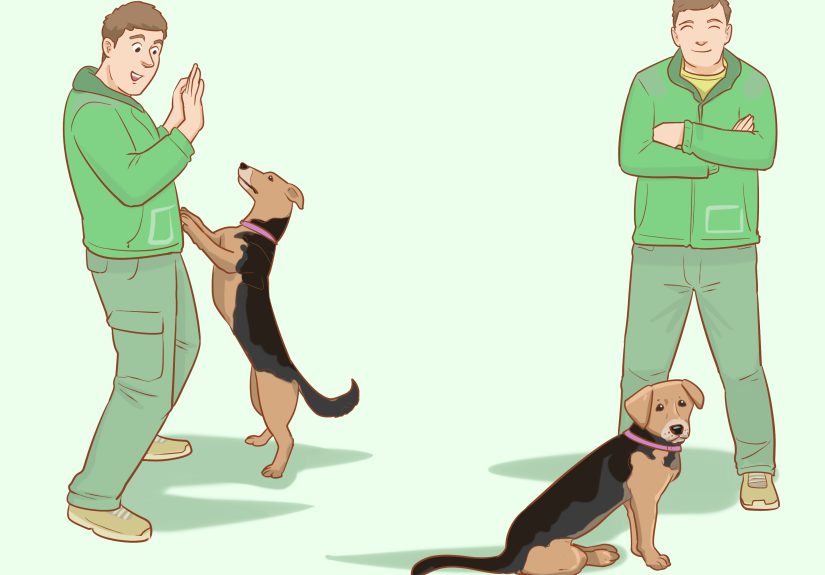
From now on, when your dog jumps, remove the reward. Turn your body slightly away, keep your hands to yourself, avoid eye contact, and stay boring. Very boring. The emotional energy of a tax form. The second your dog has four paws on the ground, calmly reward that position with praise, petting, or a treat.
The timing matters. Reward the behavior you want, not the one you hate. If your dog lands and then gets attention, that’s progress. If your dog jumps and gets squealing affection, you’re basically sponsoring the chaos.
2. Teach “sit” as the default greeting
One of the easiest ways to stop jumping on guests is to give your dog a job that is incompatible with jumping. A dog cannot sit and spring upward at the same time. Physics remains undefeated.
Practice asking for a sit before your dog gets excited. Reward quickly when the rear hits the floor. Then build the association that people approaching means “sit to say hello.” Start with family members, then trusted friends, then visitors. If the dog gets up and jumps, the person should step back or turn away. If the dog stays seated, the person can approach and reward calmly.
This teaches a powerful lesson: sitting makes people come closer, and jumping makes people disappear. Dogs learn patterns fast when humans stop sending mixed signals.
3. Reward “four paws on the floor” like it’s a major accomplishment
Sometimes owners wait for perfect behavior before rewarding. That’s like expecting a dog to write a résumé before earning a biscuit. Instead, catch the early wins. If your dog stays grounded when someone walks in, mark it with praise and immediately deliver a treat low to the floor.
Tossing or placing the treat near the floor can help keep your dog’s body position down and steady. Over time, your dog starts to realize that staying grounded is not boring at all. It’s where the paycheck happens.
This approach works especially well with energetic dogs who pop up the second they see movement. Reward the grounded moment before the jump launches, and you’ll interrupt the pattern earlier.
4. Manage the environment so your dog cannot rehearse the behavior
Practice does not only make perfect. It also makes habits. If your dog jumps on five people a day, that dog is getting very good at jumping. Management helps prevent all those unpaid training disasters.
Use a leash, baby gate, crate, x-pen, or tether when guests arrive. Ask for a sit or place behavior before the greeting begins. If your dog is too amped up to think, create more distance and wait for calm. This is not cheating. It is smart training.
Think of management as installing bumpers at a bowling alley. You are not giving up on training. You are protecting the learning process from chaos, cousins, and doorbell-induced nonsense.
5. Keep greetings low-key and short
Many people accidentally turn arrivals into red-carpet events. High voices, fast movements, and excited touching can make a jumpy dog even bouncier. Calm greetings work better.
When you come home, pause before greeting your dog. If necessary, walk in, put your bag down, breathe, and wait for four paws on the floor. Then say hello quietly. Ask visitors to do the same. No chest patting, no waving arms, no revving the dog up like it’s halftime.
If your dog tends to explode with excitement, greet after a brief pause instead of in the doorway frenzy. A few seconds of structure can save everyone from muddy paw prints and accidental knee injuries.
6. Teach an alternative behavior like “place” or “go to mat”
Some dogs are too excited by visitors to hold a polite sit for long. That’s where a “place” cue shines. Teach your dog to go to a mat, bed, or designated spot and stay there for rewards. This gives your dog a clear job during door greetings.
Start when nobody is visiting. Toss a treat onto the mat, say your cue, and reward generously for stepping onto it. Gradually build duration. Then add mild distractions. Eventually, use the cue when the doorbell rings or guests come in.
A dog on a mat is not only less likely to jump; it also looks like your household has things under control, even if five minutes earlier you were negotiating with a Labradoodle over a stolen sock.
7. Practice with helpers instead of waiting for “real life” to happen
Doorway manners rarely improve by magic. You need rehearsals. Ask a friend or family member to help with structured setups. The helper approaches. Your dog sits or stays on a mat. If the dog breaks position and jumps, the helper turns away or steps back. If the dog stays calm, the helper comes closer and rewards.
Repeat in short sessions. Keep the difficulty low at first. If your dog loses their mind when one person approaches, do not begin with six relatives arriving for game night. That is not a training session. That is an ambush.
Controlled repetitions help your dog connect the dots faster than random real-world greetings ever will.
8. Use rewards your dog actually cares about
Dry kibble may not compete with the thrilling arrival of a new human. Use high-value rewards when working on greetings. That might be tiny pieces of chicken, cheese, freeze-dried treats, a favorite toy, or enthusiastic praise if your dog loves attention more than snacks.
The bigger the distraction, the better the reward should be. This is especially true for puppies, adolescent dogs, and social butterflies who believe every visitor arrived specifically to admire them.
Keep rewards small and easy to deliver. The faster you can reinforce the right choice, the clearer the lesson becomes.
9. Do not use harsh punishment
Kneeing a dog in the chest, stepping on toes, yanking the leash, yelling, alpha-rolling, or using fear-based corrections may suppress behavior in the moment, but they can also increase stress, confusion, and fallout. At best, they teach the dog that humans are unpredictable. At worst, they make greetings more anxious and less safe.
Reward-based dog training is not “soft.” It is skill-based. You are still setting boundaries. You are simply teaching your dog what to do instead of relying on intimidation. That matters, especially around children, older adults, or dogs that are already nervous or over-aroused.
If your current strategy looks like a wrestling audition, it is time for a better plan.
10. Get professional help if jumping is tied to fear, mouthing, or aggression
Most jumping is excited greeting behavior. But if your dog also growls, lunges, snaps, body slams people, guards space, or gets wildly over-threshold around guests, do not try to wing it with generic internet advice and a pocketful of cookies. Get help from a qualified trainer who uses reward-based methods, or better yet, a veterinary behavior professional if the situation feels intense.
The right expert can tell the difference between rude enthusiasm and a deeper behavior issue. That distinction matters. Training a rowdy greeter is one thing. Managing fear or aggression is another level entirely.
Common Mistakes That Keep Dogs Jumping
Even committed owners can accidentally slow their progress. Here are a few classic mistakes:
- Inconsistency: One person ignores the jumping, another pets the dog mid-launch, and the dog concludes the rules are flexible.
- Training only after the dog is already overexcited: Skills should be taught in calm moments first, then gradually practiced with more distractions.
- Asking for too much too soon: A dog that can sit for three seconds is not ready for a crowded front porch reunion.
- Letting guests freelance: Visitors love to say, “Oh, I don’t mind!” Unfortunately, your dog’s future mail carrier might mind a lot.
- Skipping exercise and enrichment: A dog with pent-up energy may greet people like a shaken soda can with legs.
How Long Does It Take to Stop a Dog from Jumping?
That depends on the dog, the history of reinforcement, and how consistent the humans are. Some dogs improve within days once the household stops rewarding jumping and starts rewarding calm greetings. Others need several weeks of steady practice, especially if they’ve spent months perfecting their trampoline routine.
Puppies often learn quickly, but adolescent dogs can backslide because their brains occasionally take a scenic route. Adult dogs can absolutely learn too. Age is not the problem. Consistency is usually the deciding factor.
The real secret is not perfection. It is repetition. If your dog learns that calm behavior reliably opens the door to good things, the polite greeting becomes the easier habit to choose.
Conclusion
If you want to know how to stop a dog from jumping up on people, the answer is refreshingly simple: stop paying the jumping, reward the behavior you want, and make polite greetings a routine your dog can understand. Teach sit. Teach place. Use management. Keep greetings calm. Practice on purpose. And please do not let your dog’s social life be run by chaos and jazz hands.
With patience and good timing, even the most enthusiastic greeter can learn that four paws on the floor is the fastest route to treats, attention, and human admiration. That is a much better party trick than tackling your guests at the door.
Real-Life Experiences and Practical Lessons from Training a Jumpy Dog
One of the most eye-opening things about living with a jumpy dog is how quickly you realize the dog is not the only one being trained. The humans are in boot camp too. A lot of owners begin with good intentions and then accidentally sabotage themselves because the behavior happens fast, usually at the door, and often when everyone is distracted. It is one thing to say, “We’ll ignore jumping.” It is another thing entirely when your dog launches at your best friend while she’s carrying iced coffee and a birthday cake.
In many homes, the turning point comes when the family finally commits to one rule: no attention for airborne greetings. That sounds simple, but it often takes a surprising amount of teamwork. One person wants to be strict, another thinks the jumping is affectionate, and a third says, “He only does it when he’s excited,” as if that somehow makes the muddy paw prints artistic. Once everyone starts responding the same way, progress usually becomes visible much faster.
Another common experience is discovering that management is not a sign of failure. People sometimes feel guilty using a leash indoors, a baby gate, or a mat near the door because they think “real training” should work without those tools. In practice, those tools often save the training plan. They reduce the number of bad rehearsals, help the dog stay below the excitement threshold, and give owners a chance to reward calm behavior before the pogo-stick routine starts. Many owners report that once they started managing arrivals instead of reacting to them, the whole house felt calmer.
Owners also learn that visitors are wild cards. Some guests follow instructions beautifully. Others squat down, flap their hands, squeal the dog’s name, and then look shocked when the dog turns into a furry firework. That is why experienced owners often coach guests before they walk in: ignore the dog if he jumps, reward him if he sits, and keep your greeting boring for the first few seconds. It may feel awkward at first, but it works.
Perhaps the biggest lesson is that success rarely looks dramatic. There is no movie montage where your dog transforms overnight into a tuxedo-wearing gentleman who offers a paw and quotes etiquette manuals. More often, success looks like a two-second pause before a jump. Then a sit instead of a jump half the time. Then a week where the dog greets one person politely. Then a small relapse during a holiday gathering. Then improvement again. Training progress is usually messy, but it is still progress.
And when it clicks, it really clicks. Owners often describe the first truly polite greeting as weirdly emotional. Their dog sees a person, starts to bounce, catches himself, plants four paws on the floor, and sits like he suddenly remembered he has a reputation to protect. In that moment, all the repetition feels worth it. Not because the dog has become perfect, but because the dog finally understands what works. That is the magic of good training: less conflict, more clarity, and a home where guests can enter without bracing for impact.