Table of Contents >> Show >> Hide
- Why an Eco-Friendly Sink Cleaner Makes Sense
- What You Need to Make the Cleaner
- The Best Homemade Stainless-Steel Sink Cleaner Recipe
- How to Clean a Stainless-Steel Sink the Right Way
- Why This DIY Cleaner Works
- Common Mistakes That Can Ruin the Finish
- How Often Should You Clean a Stainless-Steel Sink?
- Extra Tips for a Cleaner, Shinier Sink
- When Cleaning Is Not Enough
- Final Thoughts
- Real-Life Experience: What Actually Happens When You Start Using a Homemade Sink Cleaner
- SEO Tags
If your stainless-steel sink has gone from sleek and shiny to “why does it look like it lost a bar fight with spaghetti sauce,” welcome. You do not need a cabinet full of harsh chemicals to bring it back to life. In most homes, the best eco-friendly stainless-steel sink cleaner is built from simple staples: dish soap, baking soda, warm water, and a little white vinegar used strategicallynot like a fourth-grade volcano experiment gone rogue.
This guide walks you through how to make a homemade cleaner that is practical, low-waste, budget-friendly, and kind to your sink’s finish. It also explains what to avoid, when to sanitize separately, and how to keep that brushed-steel glow without turning your kitchen into a chemistry lab with trust issues.
Why an Eco-Friendly Sink Cleaner Makes Sense
Stainless steel is durable, attractive, and forgiving, but it is not invincible. It can show water spots, dullness, greasy film, mineral buildup, and tiny scratches when cleaned with the wrong tools. That is why a gentler homemade stainless-steel sink cleaner works so well: it removes grime without bullying the finish.
An eco-friendly approach also keeps things simple. Instead of rotating through several specialized products, you can use a short ingredient list that handles everyday grease, food splatter, mild odor, and light hard-water residue. It cuts down on plastic bottles, reduces exposure to overpowering fumes, and makes routine sink cleaning feel less like a punishment assigned by a very strict kitchen principal.
What You Need to Make the Cleaner
Basic ingredients
- 1 tablespoon mild dish soap
- 3 tablespoons baking soda
- 2 to 4 tablespoons warm water
- White vinegar in a separate spray bottle for optional finishing
Tools
- Microfiber cloth or soft sponge
- Soft-bristle brush or old toothbrush for corners
- Small bowl for mixing
- Dry towel for buffing
This combination creates a gentle scrub that is especially good for stainless-steel sinks. Baking soda offers mild abrasion for stuck-on residue, dish soap helps break down grease, and warm water brings the mixture together into a spreadable paste. White vinegar can be used afterward for mineral spots and extra shine, but it is best treated like the encore, not the whole concert.
The Best Homemade Stainless-Steel Sink Cleaner Recipe
Recipe: Eco-friendly sink scrub paste
In a small bowl, mix:
- 3 tablespoons baking soda
- 1 tablespoon dish soap
- 2 to 4 tablespoons warm water, added slowly until the texture resembles loose frosting
You want a paste that spreads easily but does not run all over the basin like it is trying to escape responsibility. If it gets too thin, add a touch more baking soda. If it gets too thick, add a splash of warm water.
Optional shine step
Pour plain white vinegar into a spray bottle. Do not mix the vinegar directly into your paste for storage. The fizz is fun for about three seconds, but from a cleaning standpoint, the ingredients work better in sequence than as one big bubbling drama.
How to Clean a Stainless-Steel Sink the Right Way
Step 1: Rinse out debris
Clear the sink completely. Rinse away food scraps, coffee grounds, and whatever mystery fleck has been hanging out near the drain pretending to be part of the décor. Use warm water to loosen grime.
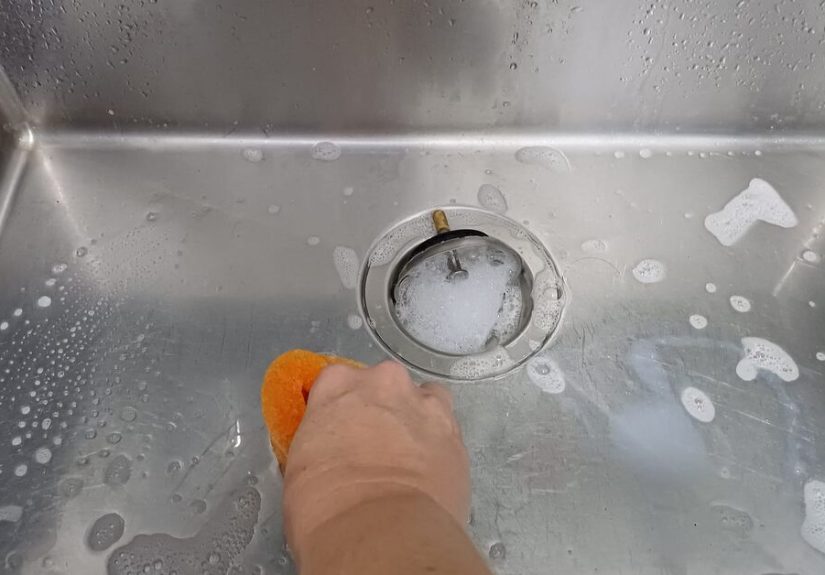
Step 2: Apply the homemade cleaner
Spread the paste over the basin, around the drain, and along the sides. Pay extra attention to the lower bowl where residue and hard-water spots love to form secret alliances.
Step 3: Scrub with the grain
Use a soft sponge or microfiber cloth to scrub gently in the direction of the stainless-steel grain. If you look closely, you can usually see faint lines in the finish. Following that direction helps clean effectively while reducing the chance of visible scratching.
Step 4: Detail the edges and faucet base
Use a soft brush or toothbrush around the drain rim, corners, faucet base, and caulk line. These spots collect the kind of gunk that somehow appears even in homes with responsible adults.
Step 5: Rinse thoroughly
Rinse with warm water until all residue is gone. This matters more than people think. Left-behind baking soda can dry into a chalky film, which is not the “polished finish” anyone is hoping for.
Step 6: Use vinegar only if needed
If your sink has mineral spots or a cloudy look, lightly spray white vinegar over the freshly rinsed surface. Let it sit for a minute or two, then wipe and rinse again. This helps dissolve hard-water buildup and brighten the steel.
Step 7: Dry and buff
Dry the entire sink with a clean microfiber cloth or towel. This final step is the difference between “pretty clean” and “why is my sink suddenly auditioning for a home magazine?” Drying prevents new water spots and brings out the natural shine.
Why This DIY Cleaner Works
The beauty of this eco-friendly stainless-steel sink cleaner is that each ingredient has a clear job. Dish soap lifts grease and everyday kitchen film. Baking soda provides a gentle scouring effect that helps remove residue without relying on harsh grit. Warm water makes everything easier to spread and rinse away. Vinegar, used after scrubbing, can help loosen mineral deposits and brighten a dull-looking basin.
The trick is balance. Homemade cleaners work best when they are aimed at the right kind of mess. For routine cleaning, grease, mild staining, splash marks, and odors, this method does a great job. For true sanitizing after raw meat juices or illness-related messes, cleaning is step onebut sanitizing or disinfecting should be a separate, label-guided step with a product approved for that purpose.
Common Mistakes That Can Ruin the Finish
Using steel wool or harsh scrubbers
If your sponge feels like it could sand a deck, it is too aggressive for stainless steel. Rough scrubbers can scratch the finish and leave the sink looking dull.
Letting acidic messes sit forever
Lemon juice, tomato sauce, vinegar, and other acids are useful in controlled cleaning situations, but letting them sit too long on stainless steel is not ideal. Rinse them away promptly.
Going wild with bleach
Bleach has its place in household sanitation, but it is not a smart default for everyday stainless-steel sink care. It can be too harsh for repeated use on the finish, especially if it sits too long or is used carelessly.
Skipping the drying step
You can clean perfectly and still end up with a spotty sink if you leave water to evaporate on its own. Hard water loves to leave behind tiny souvenirs.
Mixing everything together at once
More ingredients do not always mean more cleaning power. Baking soda and vinegar are often more effective when used one after the other, rather than dumped together in a dramatic foamy mash-up that looks productive but burns through its reaction quickly.
How Often Should You Clean a Stainless-Steel Sink?
For most kitchens, a light daily wipe-down and a deeper clean once a week works well. If you cook often, especially with greasy food or raw meat, you may want to clean the sink more often. A quick rinse and dry after dishwashing or meal prep goes a long way toward preventing buildup.
Think of sink care like brushing your teeth. A little maintenance is easier than dealing with a full-scale situation later. Also, your sink sees everything: dirty dishes, produce rinsing, sauce splatters, coffee drips, and the occasional pan that “soaked” for two days while everyone avoided eye contact.
Extra Tips for a Cleaner, Shinier Sink
Use microfiber instead of paper towels when possible
Reusable microfiber cloths are effective, less wasteful, and excellent for buffing stainless steel.
Keep a small jar of scrub paste ready for the week
You can premix the baking soda, dish soap, and a small amount of water for short-term use. Just stir before each use. If it thickens, loosen it with a few drops of warm water.
Try a paste for stubborn spots
For a particularly stubborn stain, use a thicker baking soda paste with less water. Let it sit for several minutes before gently scrubbing.
Do not forget the drain flange and strainer
A sparkling basin with a grimy drain is like wearing a tuxedo with muddy shoes. Clean both for the full effect.
Rinse after acidic cleaners
If you use vinegar at any point, rinse it off well. Stainless steel likes moderation, not marination.
When Cleaning Is Not Enough
It is important to separate cleaning from sanitizing. Your eco-friendly sink cleaner is great for removing grime, mild stains, and everyday messes. But if the sink has been exposed to raw poultry juices, a stomach bug, or another high-risk mess, a follow-up sanitizing step may be appropriate after cleaning. In those moments, practicality beats purity. The earth will survive one sensible decision made in the interest of food safety.
The smartest routine is this: clean first, rinse, then sanitize separately only when needed and only with a product that is safe for the surface and used exactly as directed. That approach gives you the best of both worldsan eco-conscious everyday method and a realistic standard for hygiene.
Final Thoughts
Making your own eco-friendly stainless-steel sink cleaner is refreshingly uncomplicated. You do not need a trendy subscription box, an industrial degreaser, or a cleaning routine choreographed like a dance number. You need a gentle scrub paste, a soft cloth, and the good sense to clean with the grain instead of declaring war on your sink.
The best DIY stainless-steel sink cleaner is the one you will actually use. A small bowl, a few pantry ingredients, and five focused minutes can rescue a dull basin, cut grease, tame water spots, and keep your kitchen looking sharp. It is affordable, lower-waste, and easy enough to repeat without sighing dramatically every time you look at the sink.
And that may be the most eco-friendly move of all: a routine simple enough to stick with.
Real-Life Experience: What Actually Happens When You Start Using a Homemade Sink Cleaner
The first thing most people notice when switching to a homemade stainless-steel sink cleaner is not the shine. It is the smellor rather, the lack of a chemical cloud strong enough to make your kitchen feel like a public pool locker room. That alone changes the whole mood of cleaning. Instead of bracing yourself for fumes and wondering whether you should crack every window in the house, you are just mixing a simple paste and getting on with your day.
Another common experience is realizing that the sink never got “mysteriously dirty overnight.” It usually looked bad because of a handful of very normal habits: leaving water to air-dry, ignoring the drain edge, letting greasy pans sit too long, or rinsing everything except the faucet base where grime quietly builds a summer home. Once you start using a gentle scrub paste once or twice a week, you begin to spot the patterns. The sink stays cleaner longer because you are interrupting the buildup before it becomes a whole event.
There is also a learning curve with expectations. Some people try a homemade cleaner once and expect cinematic transformationcue heavenly music, the sink sparkles, neighbors applaud. Real life is less theatrical. The first clean usually removes the obvious grime and brightens the surface. The second and third clean are what really improve the look, especially if your sink has old mineral deposits or dull patches. Consistency beats intensity here.
One especially useful lesson is discovering that drying matters almost as much as scrubbing. A sink can be genuinely clean and still look unimpressive if it is left wet. Many people find that the real “wow” moment comes after they buff the basin dry with a microfiber cloth. Suddenly the steel reflects light better, streaks disappear, and the whole kitchen feels more put together. It is a tiny habit with suspiciously big results.
People also learn pretty quickly that more force is not the answer. If you attack stainless steel with rough pads and righteous anger, the sink will not respect your effort. It will just show scratches. A soft sponge, a patient hand, and cleaning with the grain work better than scrubbing like you are trying to erase a bad decision from history.
And then there is the emotional side of it, because yes, sink cleaning has one. A clean sink changes the tone of a kitchen. It makes cooking feel easier, dishwashing feel slightly less tragic, and the room look more cared for overall. It is one of those small housekeeping wins that gives disproportionate satisfaction. No one throws a parade because you cleaned the sink, but you may find yourself standing there afterward thinking, “Well, look at that. I do, in fact, have my life together for at least the next eight minutes.”
That is the real experience of using an eco-friendly stainless-steel sink cleaner. It is not flashy. It is practical, repeatable, and weirdly rewarding. And in a world full of overcomplicated solutions, that is a pretty nice thing to find in a bowl of baking soda and dish soap.