Table of Contents >> Show >> Hide
- Why Alien Babies Work So Well as AI Art
- How I Built the 26-Picture Concept
- What Makes an AI-Generated Image Feel Amazing
- The 26 Gallery Concepts
- The Funniest Failures Along the Way
- The Real-World Side of AI Art: Ethics, Disclosure, and Ownership
- Why People Cannot Look Away from Alien Baby Images
- My Experience Creating These Alien Baby Pictures With AI
- Conclusion
Note: This is body-only HTML, and the 26 image captions below are written to pair neatly with a gallery or slideshow before publishing.
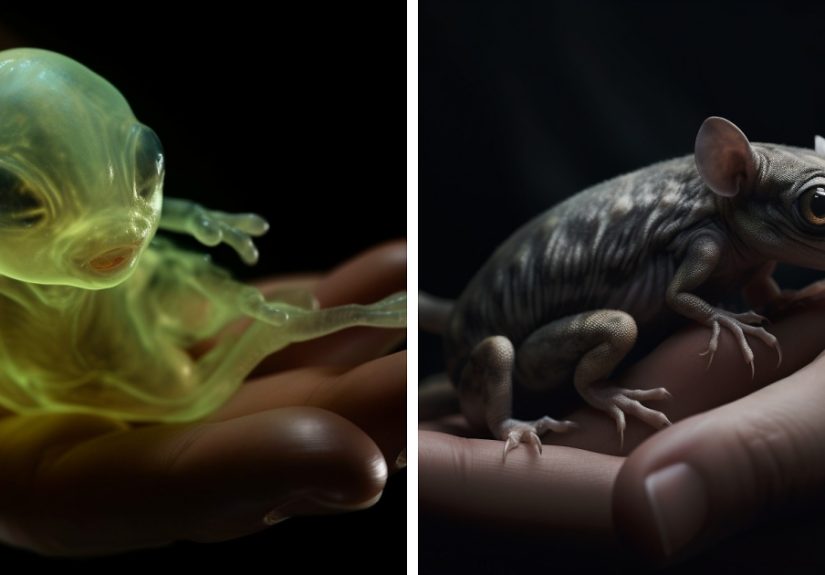
Some ideas arrive with a trumpet fanfare. Others sneak in wearing a tiny silver diaper and holding a glowing space rattle. This project belonged firmly to the second category. The concept was simple, ridiculous, and therefore irresistible: create a gallery of alien babies with artificial intelligence and make them look equal parts adorable, weird, cinematic, and just a little bit like they might one day conquer the solar system.
What started as a goofy prompt experiment quickly turned into a surprisingly creative exercise in visual storytelling. AI image tools are now good enough to follow detailed instructions, keep a style consistent across multiple images, and turn a vague mental picture into something that looks polished, playful, and internet-ready. That does not mean the process is effortless. Far from it. Making a great AI image still requires taste, direction, revision, and a willingness to delete the occasional horrifying baby-lobster hybrid before it sees the light of day.
That is exactly why this kind of gallery is fun. It sits at the intersection of imagination and craftsmanship. You bring the idea, mood, framing, humor, and quality control. The model brings speed, variation, and that wonderfully chaotic ability to surprise you. Somewhere between the two, a bizarre new species of visual content is born. Preferably with oversized eyes and a squishy little moon helmet.
Why Alien Babies Work So Well as AI Art
There is a reason “alien babies” sounds instantly compelling. Babies already trigger an emotional response in viewers because people tend to react strongly to features associated with cuteness, such as large eyes, rounded cheeks, and oversized foreheads. Add a science-fiction twist, and the familiar suddenly becomes fresh. You get something emotionally readable, but visually unpredictable. In other words, the brain says, “Aw, cute,” while the imagination says, “Wait, why does it have lavender freckles and three ears?”
That mix matters. Fully realistic AI humans can drift into eerie territory when something is just slightly off. Stylized characters, fantasy creatures, and cartoon-like beings often feel more forgiving because they are not asking the viewer to believe every pore and eyelash belongs to a real person. Alien babies live in the sweet spot: cute enough to connect, strange enough to stay interesting, and flexible enough to support dozens of visual styles without becoming repetitive.
They also give creators permission to be playful. Nobody expects strict biological realism from a baby from Jupiter. That means you can experiment with luminous skin, jellyfish bonnets, cosmic nurseries, miniature hover-prams, and expressions that say, “I may be six months old, but I also know the secrets of dark matter.” A gallery like this works best when the images lean into wonder instead of pretending to be documentary photography from an interstellar daycare center.
How I Built the 26-Picture Concept
The trick was not simply typing “alien baby” and hoping for genius. That approach usually produces generic results, visual mush, or something that looks like a toy from a discount bin on Mars. Better results came from giving the AI clear creative lanes: subject, mood, environment, lighting, color palette, camera angle, texture, and style. Once those pieces were in place, the images started feeling intentional instead of random.
1. I treated each image like a mini movie scene
Instead of asking for a creature, I asked for a moment. A sleepy alien infant drifting in a transparent pod. A chubby moon baby trying to eat a floating star biscuit. Twins peeking out of a crater nursery under neon skies. The images improved when each prompt suggested a story the viewer could understand in one glance.
2. I got specific about style
AI systems respond much better when you define the visual language. Soft pastel sci-fi illustration creates a different mood from hyper-detailed cinematic realism. A retro pulp-magazine look feels different from a glossy animated-film style. Once I chose a few style families, the gallery felt more curated. Without that step, the collection looked like 26 different universes accidentally sharing a babysitter.
3. I kept revising the prompts
This was the least glamorous part and probably the most important. If the expression felt lifeless, I adjusted the wording. If the hands were odd, I simplified the pose. If the costume swallowed the face, I rebalanced the composition. Great AI visuals rarely appear on the first try. They come from iteration, restraint, and the ancient creative principle known as “Nope, that one is cursed.”
What Makes an AI-Generated Image Feel Amazing
After enough generations, patterns emerged. The strongest pictures were not always the most detailed ones. They were the ones with a clear focal point, emotional readability, and a memorable design hook. In this gallery, that usually meant expressive eyes, tactile textures, whimsical props, and a background that supported the subject without stealing the scene.
Lighting mattered a lot. Soft glows, starlit nurseries, bioluminescent blankets, and nebula-colored rim light all helped sell the fantasy. Color harmony mattered too. A palette of mint, lavender, coral, and midnight blue instantly made the images feel dreamier than random neon chaos. Even when the concept was funny, the best pictures still looked intentional enough to be shareable.
There was also a balance to strike between “cute” and “too cute.” Push the sweetness too hard and the images become syrupy. Push the weirdness too far and the viewer stops connecting emotionally. The best alien babies had enough human-adjacent warmth to be lovable, plus enough strange detail to feel original. Four eyes? Great. Eleven knees? Let us maybe workshop that.
The 26 Gallery Concepts
- An alien baby asleep inside a transparent moon-pod, wrapped in a glowing blanket.
- A tiny green infant giggling while floating star-shaped toys orbit its crib.
- Twin alien babies wearing bubble helmets and sharing one oversized meteor pacifier.
- A purple-cheeked cosmic toddler reaching for a drifting jellyfish lantern.
- A baby from Saturn in knitted ring-pattern booties, sitting in a crater nursery.
- A blue-skinned infant with shimmering freckles napping on a fluffy comet pillow.
- A chubby Mars baby caught mid-sneeze, scattering glittery red dust everywhere.
- An alien newborn peeking out of a silver incubator with enormous curious eyes.
- A moonlit nursery scene with a tiny creature clutching a plush rocket toy.
- A baby with translucent ears and a glowing teething ring made of stardust.
- An underwater space baby drifting through a liquid nursery filled with bioluminescent bubbles.
- A fuzzy antennaed infant wrapped like a burrito in a holographic swaddle.
- A tiny extraterrestrial pouting in a levitating stroller because lunch is late.
- An elegant pastel alien baby wearing a crown that looks suspiciously handmade by robots.
- A sleepy infant under an aurora sky, tucked into a crescent-shaped space bassinet.
- A mischievous little alien trying to bite a glowing moonstone like it is a cookie.
- A nursery portrait of a baby with star-map skin patterns and velvet-soft cheeks.
- A cheerful cosmic crawler leaving sparkling footprints across a glass floor.
- A baby from a frozen planet bundled in luminous fur and looking deeply unimpressed.
- A tiny alien hugging a plush asteroid like it is the greatest gift in the universe.
- A candy-colored sci-fi scene with a baby hiding inside a giant tulip-shaped pod.
- A wide-eyed infant discovering its own floating reflection in a hovering orb.
- A retro pulp-style baby astronaut with a bottle full of glowing galaxy milk.
- A soft watercolor alien baby perched on a cloud over a ringed planet.
- A cinematic close-up of a lavender infant laughing at a tiny robot nanny.
- The grand finale: a group portrait of several alien babies in one interstellar daycare, each somehow adorable and mildly suspicious.
The Funniest Failures Along the Way
No honest article about AI-generated images should pretend the process is pure magic. It is magic, yes, but the kind performed by a wizard who occasionally forgets how elbows work. Some outputs were hilariously bad. A few babies had expressions that suggested unpaid taxes. One looked like a raisin with diplomatic immunity. Another had a bottle, a tail, and what may have been a third eyebrow trying to unionize.
These failures were not wasted effort. They taught me what the model needed. If a composition was too crowded, the subject lost charm. If the prompt was too vague, the result leaned generic. If I crammed in too many style instructions, the output became confused and overdesigned. AI image generation rewards clarity and punishes greed. Ask for everything at once and the model may hand you a masterpiece, or a baby salamander dressed as a Victorian admiral. Usually the admiral.
In a strange way, the mistakes made the final gallery better. They forced me to define what I actually wanted instead of settling for “pretty good.” The creative process became less about pushing a button and more about editing, choosing, and refining. That human role is still the difference between a random novelty and a gallery with real personality.
The Real-World Side of AI Art: Ethics, Disclosure, and Ownership
Even a whimsical project like this deserves a little grown-up context. AI-generated art raises real questions about ownership, authorship, disclosure, and creative responsibility. If you publish AI-made images, it is smart to be transparent that they were generated rather than photographed. That keeps the work honest and prevents viewers from mistaking fantasy for reality.
There is also the issue of copyright and originality. The safest approach is to treat AI as a creative tool, not an excuse to imitate living artists or copy recognizable copyrighted styles too closely. The better move is to develop your own direction: your own prompts, your own curation, your own sense of humor, your own final edits. That is where the work starts feeling like a project instead of a gimmick.
Quality control matters too. The internet is already full of AI images that are technically polished but emotionally empty. If you are going to publish something, give it a point of view. Make it funny, beautiful, surreal, or narratively rich. Do not just dump 26 shiny pictures onto a page and call it a day. A little human judgment goes a long way toward separating creative work from digital wallpaper.
Why People Cannot Look Away from Alien Baby Images
At their best, these pictures scratch several itches at once. They offer cuteness, novelty, fantasy, and a tiny hit of visual comedy. They feel shareable because the viewer gets the joke immediately, but they also reward a second look because the design details are fun to inspect. One image says, “Look how adorable.” The next says, “Also, this child appears to be from a moon colony run by fashionable octopuses.”
That combination is gold for online audiences. Strange but lovable images travel well because they are emotionally legible. You do not need a complicated backstory to understand them. The concept lands in half a second. Still, the best versions avoid being disposable. They have enough artistry, texture, and story value to make people pause instead of scroll.
And frankly, there is something delightful about using advanced technology for a purpose no boardroom would ever dare predict. We built machines that can synthesize visual ideas from language, and naturally one of the first things many of us want to do is make tiny extraterrestrials in knitted booties. Human creativity remains undefeated.
My Experience Creating These Alien Baby Pictures With AI
By the time I had worked through the full set, the project felt less like a joke and more like a tiny art direction workshop disguised as cosmic nonsense. At first, I thought I was just generating cute images for a laugh. But the longer I worked on them, the more I realized I was making a series. Each image had to stand on its own, but it also had to belong to the same playful universe.
I learned very quickly that AI loves confidence. When I wrote hesitant prompts, I got bland results. When I described the exact feeling I wanted, the images improved. “Cute alien baby” was too weak. “Dreamy pastel alien infant in a transparent moon-pod, cinematic soft light, expressive eyes, whimsical sci-fi nursery, cozy and magical mood” was much better. The system needed direction, and once it had it, the outputs became far more usable.
I also learned that there is a huge difference between a technically impressive image and an emotionally appealing one. Some generations were sharp, glossy, and full of detail, but they did nothing. Others were softer and simpler, yet immediately felt charming. That changed the way I judged the gallery. I stopped chasing perfection and started chasing personality.
Another surprise was how much curation mattered. Out of every batch, only a few images had that special spark. Sometimes the pose was right, but the face was off. Sometimes the expression was perfect, but the costume looked like a decorative mop. Sometimes the whole thing worked except for one hand that looked like it had been assembled by committee. The final selection came down to instinct as much as technique. I kept asking the same question: would a stranger stop scrolling for this?
The funniest part was showing early versions to other people. The best reactions were always immediate. They laughed, then leaned in. That was the goal. I did not want the images to feel cold or overly synthetic. I wanted them to feel like concept art for a children’s book written by someone who had spent too much time staring at the night sky and not quite enough time sleeping.
In the end, creating 26 alien baby pictures with AI felt like collaborating with a brilliant, fast, and slightly unhinged intern. It could generate beauty on command, but it still needed supervision, taste, and occasional firm guidance away from the haunted corners of the prompt universe. That tension made the project more interesting, not less. The AI gave me options. I gave the gallery a heartbeat.
Would I do it again? Absolutely. Next time I might build out the universe even further: alien toddlers, cosmic pets, nursery planets, intergalactic family portraits, maybe even a preschool graduation on Neptune. Once you realize you can turn absurd ideas into polished visuals, the only real limit is whether you are willing to keep editing until the weird becomes wonderful.
That is the lasting appeal of a project like this. Underneath the jokes, it is still about imagination. The software may generate the pixels, but the charm comes from choices: what to show, what to cut, what mood to chase, what details to repeat, what world to imply. The result is not just a pile of strange cute pictures. It is a reminder that even in the age of artificial intelligence, the most important creative ingredient is still the same old human instinct to make something delightful out of a wildly unnecessary idea.
Conclusion
“I Created Amazing Pictures Of Alien Babies, Generated By Artificial Intelligence (26 Pics)” works because it blends two things the internet loves: cuteness and novelty. But for the gallery to rise above throwaway AI content, it needs intention. Strong prompts, careful curation, visual consistency, and a clear sense of humor all help transform a goofy concept into a genuinely engaging piece of digital art. The alien babies may be fake, but the creative decisions behind them are very real.