Table of Contents >> Show >> Hide
- Why Plants Make Such Powerful Symbols of Healing
- Art as a Way to Externalize What Is Hard to Explain
- The Connection Between Creativity, Nature, and Wellbeing
- Why This Visual Style Feels So Personal
- Healing Does Not Always Look Soft and Pretty
- Why Audiences Connect With This Kind of Art Online
- How Artists Turn the Concept Into a Real Creative Practice
- The Bigger Meaning Behind “A Healing and Growing Manifestation”
- Personal Experiences and Reflections on This Theme
- Conclusion
Some people journal. Some people meditate. Some people buy a third pothos and call it “a lifestyle.” And then there are artists who do something wonderfully strange and beautiful: they make plants grow out of characters. Not in a horror-movie way, thankfully. More in a “this person has survived some things, and now their soul looks like a greenhouse” way.
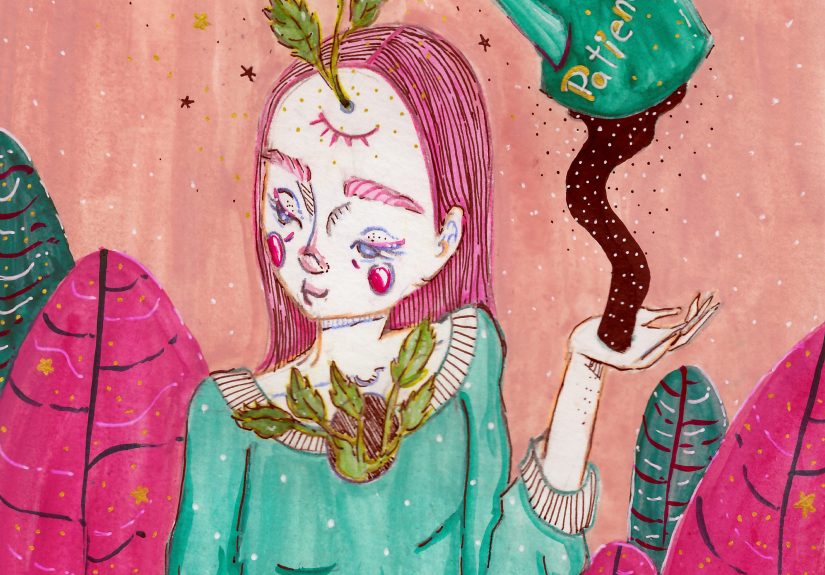
That is the emotional center of the idea behind “I Make Plants Grow Out Of Characters As A Healing And Growing Manifestation”. It is visual storytelling, symbolic healing, and personal growth all rolled into one leafy image. A face becomes fertile ground. A body becomes a garden. A character who once looked closed off suddenly sprouts vines, flowers, moss, branches, or entire ecosystems. It feels imaginative on the surface, but it lands because people instantly recognize the metaphor: healing is growth, and growth is rarely neat.
In recent years, both the art world and the wellness world have shown a growing interest in how creativity, nature, and symbolic expression can help people process emotions. That does not mean every drawing is formal therapy, and it definitely does not mean sketching a fern on someone’s forehead will solve all of life’s problems before lunch. But it does mean there is something deeply human about turning pain into imagery and transformation into form.
Why Plants Make Such Powerful Symbols of Healing
Plants are the overachievers of metaphor. They represent life, patience, vulnerability, resilience, nourishment, seasons, and change. They start small, require care, bend toward light, survive rough weather, and sometimes look absolutely dead before bouncing back in spring like nothing happened. Honestly, if plants had resumes, they would be unbearable.
That is exactly why they work so well in visual art centered on healing and growth. When an artist places flowers blooming from a character’s head, roots wrapping around their body, or leaves unfolding from their chest, the message feels immediate. The character is not frozen. They are becoming. Even if the image includes cracks, tears, scars, or shadows, the plant life suggests renewal rather than defeat.
Botanical imagery also gives artists an enormous symbolic vocabulary. Roots can represent family, ancestry, grounding, or buried memory. Vines can suggest connection, entanglement, persistence, or a mind that keeps reaching. Flowers often carry meanings tied to tenderness, grief, hope, femininity, celebration, or rebirth. Moss can suggest softness returning after damage. Branches can imply strength, extension, and the courage to take up space.
In other words, when plants grow out of characters, the image says something words often struggle to say: healing is alive.
Art as a Way to Externalize What Is Hard to Explain
One reason this theme resonates so strongly is that art allows people to externalize inner experience. That is a fancy way of saying, “You can draw what your feelings would look like if they stopped hiding and got dramatic.” For many people, emotional pain, recovery, identity shifts, and personal transformation are difficult to capture in plain language. Visual symbolism helps bridge that gap.
Instead of saying, “I feel like I’m rebuilding myself slowly after a hard season,” an artist can draw a figure with cracked porcelain skin and tiny green shoots emerging through the fractures. Instead of saying, “I am learning to trust my own growth,” the artist can create a character whose hair becomes climbing ivy wrapping around a bright, open sky. Suddenly, the abstract becomes visible.
This matters because humans often understand themselves through stories and images, not just definitions. A symbolic drawing can hold complexity. A character can be fragile and flourishing at the same time. They can look tired but still rooted. They can carry grief in one hand and blossoms in the other. Real healing usually looks exactly like that: mixed, layered, nonlinear, and annoyingly resistant to tidy captions.
The Connection Between Creativity, Nature, and Wellbeing
The popularity of plant-based symbolic art also reflects a broader cultural truth: people are craving connection to nature and more expressive ways to process life. Research and professional organizations in the United States have increasingly highlighted the value of arts engagement, creative expression, gardening, and green spaces in supporting wellbeing. The point is not that art and plants are magical cure-alls. The point is that creative and nature-connected activities can help people feel calmer, more present, more expressive, and more grounded.
That makes the image of plants growing out of characters especially compelling. It visually merges two areas many people already associate with healing: making art and tending life. It suggests that growth is not only something that happens to us; it is also something we participate in. We nurture it. We notice it. We make room for it.
There is also a mindfulness element here. Plants force patience. They do not care about your productivity hacks or your color-coded panic calendar. A seed grows when it grows. A cutting roots when it is ready. A flower opens in its own time. Artists who use botanical symbolism often tap into that slower rhythm. Their work reminds viewers that becoming takes time, and time is not failure.
Why This Visual Style Feels So Personal
Part of what makes this kind of artwork memorable is that it is both universal and deeply personal. Almost everyone understands the symbolism of a blooming flower or a rooted tree. But each artist can use those forms to tell a specific emotional story.
One artist may draw a character with wildflowers blooming from old scars to represent healing after loss. Another may create portraits where mushrooms and moss overtake the body, signaling rest, decomposition of the old self, and quiet regeneration. Someone else may use tropical leaves, bright fruit, and thick vines to express survival, cultural memory, abundance, or joy after hardship.
The characters themselves matter too. They might be self-portraits, imagined figures, fantasy heroines, monsters, children, elders, or nonhuman beings. When plants emerge from them, those characters become emotional landscapes. Their bodies are no longer just anatomy; they become environments. And environments tell stories.
This is especially powerful in a digital age where many people feel disconnected from both their bodies and the natural world. Botanical character art gently pushes back against that split. It says the body is not a machine. The self is not a brand. A person is an ecosystem, and ecosystems require care.
Healing Does Not Always Look Soft and Pretty
Now, let us be fair: not all healing art has to look like a pastel cottagecore dream where everyone smells like rosemary and emotional maturity. Sometimes healing is thorny. Sometimes the plants in the artwork are spiky, overgrown, tangled, carnivorous, or climbing over ruins. That still counts.
In fact, some of the most striking botanical character art works because it refuses to make growth look cute. It acknowledges that transformation can be uncomfortable. Roots break through hard surfaces. Vines cling. Seeds split open before they sprout. Dead leaves make room for new ones. Nature is beautiful, yes, but it is also intense. It changes things by entering them.
That intensity mirrors real emotional recovery. Healing can involve grief, anger, uncertainty, or exhaustion. Growth can feel awkward before it feels graceful. So when artists depict plants growing from characters in messy or unsettling ways, they are not doing it wrong. They are often being more honest.
Examples of Symbolic Plant Choices in Character Art
Roses: Often used for love, longing, tenderness, and beauty with thorns. Perfect for art about vulnerability and self-protection.
Sunflowers: Frequently symbolize hope, light-seeking, warmth, and optimism. They work well in transformation art that leans toward resilience.
Ivy: Suggests persistence, attachment, memory, or something that keeps growing despite walls and obstacles.
Lotus flowers: Commonly represent emergence, renewal, and beauty developing through difficult conditions.
Mushrooms and moss: Great for themes of softness, decay, rest, hidden networks, and quiet rebirth.
Trees and branches: Ideal for ancestry, rootedness, wisdom, and expansion over time.
Why Audiences Connect With This Kind of Art Online
There is a reason artwork like this spreads quickly online. It is visually rich, emotionally legible, and easy to feel before you fully analyze it. A person scrolling past hundreds of polished, forgettable images will often stop at a portrait with leaves growing out of a ribcage or flowers replacing a crown of hair. The image asks a question without using words: what happened here, and what is still growing?
That kind of image also invites projection. Viewers see themselves in it. Someone recovering from burnout may read the plant imagery as renewal. Someone grieving may read it as continuation. Someone learning self-acceptance may see a body no longer treated as an object, but as living terrain. Good symbolic art makes space for that.
Social platforms have also trained audiences to love short emotional truths. Botanical character art delivers those truths quickly, but not shallowly. It can feel tender without becoming sugary. It can feel mystical without abandoning meaning. And because the symbols are recognizable, even people with no formal art background can connect with the work right away.
How Artists Turn the Concept Into a Real Creative Practice
For artists, this theme is more than a one-off aesthetic. It can become an ongoing practice of reflection. Some begin by asking simple questions: If my current season of life were a plant, what would it be? If my stress had roots, where would they go? If my healing had a color, texture, climate, or bloom pattern, what would it look like?
From there, the work can unfold in many ways. A painter may create a self-portrait series based on different plant cycles. An illustrator may design original characters inspired by emotional states and ecosystems. A mixed-media artist may combine pressed flowers, ink, and collage to show identity changing over time. A digital artist may layer portraits with branches, petals, and luminous growth patterns to create dreamlike transformation scenes.
The beauty of the concept is that it is flexible. It works in realism, surrealism, comics, fantasy art, editorial illustration, tattoo design, and fine art portraiture. It can be delicate or bold, literal or abstract. The core idea remains the same: growth is visible, and healing has form.
The Bigger Meaning Behind “A Healing and Growing Manifestation”
The phrase “a healing and growing manifestation” sounds poetic, but it points to something practical too. In this context, manifestation is not about waving a leaf around and expecting the universe to send a better Tuesday. It is about giving inner change an outer shape. It is a manifestation because it makes growth visible. It takes something emotional, internal, slow, and often private, and allows it to exist in front of us.
That is part of why this theme can be so moving. People want proof that change is possible. They want reminders that the parts of themselves that were buried, neglected, or hurt are not gone forever. Botanical character art offers that reminder without pretending everything is easy. It says healing may be gradual. It may be crooked. It may require seasons of rest. But life can still return.
And maybe that is the real reason this imagery stays with people. We know, instinctively, that we are not meant to be static. We are meant to root, stretch, adapt, shed, rest, and begin again. A character with plants growing out of them is not just a cool image. It is a portrait of becoming.
Personal Experiences and Reflections on This Theme
What makes this topic especially meaningful is how easily it connects to lived experience. Many people have gone through seasons where they felt emotionally dry, creatively blocked, or disconnected from themselves. In those moments, the image of plants growing out of characters does more than look pretty. It feels accurate. It captures the slow return of life after a period of numbness.
I think that is why this theme often feels less like decoration and more like testimony. A character covered in vines can reflect the way healing quietly takes over your life. At first, it appears in tiny ways: a better morning routine, a little more rest, a moment of honesty, a return to drawing, a walk outside, a willingness to breathe before reacting. Then one day you realize the inside of you no longer looks abandoned. It looks lived in. It looks cared for. It looks green.
There is also something powerful about how this imagery reframes emotional struggle. Instead of portraying a person as broken beyond repair, it portrays them as a place where life is still happening. Even cracks become openings. Even emptiness becomes soil. That shift in perspective matters. It does not deny pain, but it refuses to let pain be the whole story.
For artists, creating this type of work can become a ritual of noticing. You start paying attention to what kind of growth you are actually experiencing. Are you in a rooting season, where not much shows on the surface but everything important is happening underneath? Are you blooming, finally visible after a long private process? Are you pruning, letting go of what no longer belongs? Suddenly the language of plants gives shape to emotions that used to feel vague and slippery.
I also love how this theme gives permission for growth to be imperfect. Not every drawing has to show lush, symmetrical beauty. Some of the most honest pieces feature wilted petals, tangled stems, uneven growth, or invasive vines. That kind of imagery reflects reality. Healing is rarely balanced and photogenic. Sometimes it is messy, stubborn, and weirdly beautiful in a way that takes time to appreciate.
Another experience tied to this theme is the way viewers often bring their own stories to the artwork. One person may see flowers growing from a character’s hands and think of learning to create after grief. Another may see roots in the chest and think of family, history, or belonging. Someone else may simply feel comforted by the suggestion that softness can return. The art becomes shared space. It begins with one artist’s vision, but it opens into many emotional readings.
That may be the most healing part of all. Botanical character art reminds people they are not alone in change. Everyone is carrying some invisible season. Everyone has parts of themselves that are resting, breaking open, or beginning again. When an artist gives that process a face, a body, and a living form, viewers often recognize themselves there.
So yes, making plants grow out of characters can be a healing and growing manifestation. It can also be a quiet rebellion against emotional flatness, a visual diary of survival, and a hopeful way of saying, “There is still life here.” And frankly, in a world that often rewards speed, performance, and polished surfaces, there is something radical about honoring slow growth. A leaf unfurling from a character’s shoulder may not solve everything, but it can tell the truth. Sometimes that is exactly where healing begins.
Conclusion
“I Make Plants Grow Out Of Characters As A Healing And Growing Manifestation” is more than an intriguing title. It represents a creative philosophy rooted in symbolism, emotional honesty, and the timeless link between nature and renewal. By blending botanical imagery with human or imagined figures, artists can communicate grief, resilience, identity, rebirth, and hope in ways that feel immediate and memorable.
Whether the result is soft and luminous or wild and thorny, the message remains powerful: growth is not always visible at first, but it is always possible. When plants emerge from characters in art, they turn healing into something we can witness. And sometimes, seeing growth is the first step toward believing in it.