Table of Contents >> Show >> Hide
- Why Furniture Tip-Overs Are a Big Deal (Even If Your Dresser Looks Innocent)
- Meet IKEA’s New Chest-of-Drawers Range: Safety-First, Not Safety-Last
- How “Anchor and Unlock” Works: The Drawer System That Basically Says, “Not Today.”
- STURDY, Federal Standards, and What “Compliant” Actually Means
- Why IKEA’s Safety Push Feels Personal (Because, Historically, It Kind of Is)
- What This Means for Shoppers: Practical Safety Without Panic
- Why IKEA Sharing the Idea Matters: Safety as a Team Sport
- Real-Life Experiences: Living With Anti-Tip Features (and a Household Full of Gravity Tests)
- Conclusion: The Best Dresser Is the One That Doesn’t Become a Hazard
Dressers are supposed to hold your socks, not your whole family’s attention like a suspense movie.
But if you’ve ever watched a kid (or a cat… or a distracted adult) treat open drawers like a staircase,
you already know the uncomfortable truth: tall furniture can tip, and when it does, it’s not a “whoops” moment.
It’s a safety hazard with real-world consequences.
That’s why IKEA’s newer chest-of-drawers lineup is interestingnot because it’s the next big “minimalist moment,”
but because it bakes safety into the design with anti-tipping features that actively discourage risky use.
In other words: this furniture doesn’t just ask you to anchor it. It motivates you.
Why Furniture Tip-Overs Are a Big Deal (Even If Your Dresser Looks Innocent)
Tip-overs aren’t some niche “only if you live in a cartoon” issue. They happen in normal homes, during normal days:
a child climbs, someone yanks a drawer open fast, a heavy TV sits too far forward, a top drawer becomes a “step,”
and gravity decides it’s the main character.
The hazard is commonand the risk isn’t evenly distributed
Safety agencies have spent years tracking tip-over injuries and fatalities, and the pattern is consistent:
young kids are at higher risk, and older adults can also be seriously impacted by furniture-only tip-overs.
Add in a heavy object on top (like a television) or multiple drawers opened at once, and stability can drop fast.
The core problem is physics: when weight shifts forward beyond the base footprint, furniture can pivot and fall.
And drawers are basically “built-in levers” that invite that shift. A fully extended drawer is a tempting handle,
a tempting ladder rung, and a tempting place to sitsometimes all at once.
Meet IKEA’s New Chest-of-Drawers Range: Safety-First, Not Safety-Last
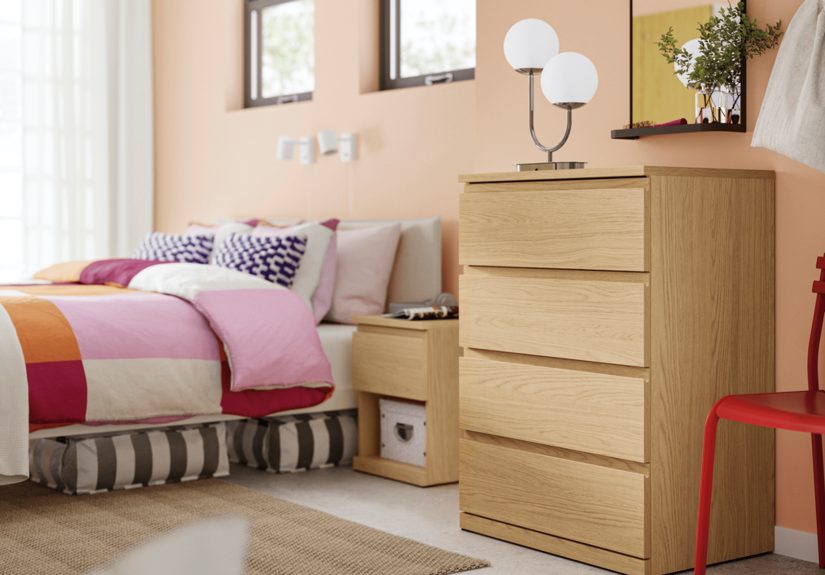
IKEA’s newer chest-of-drawers range in the U.S. includes the STORKLINTA and GULLABERG familiesplus redesigned versions
of popular classics. The point isn’t just a fresh look; it’s a stability approach aligned with modern safety expectations.
IKEA has positioned this range as meeting updated federal stability requirements and as part of a broader safety push.
What’s in the lineup?
Think beyond “just a dresser.” The range includes various drawer configurations and complementary pieces such as
nightstands and wardrobe combinations designed with tip-over prevention in mind. The overall goal is pretty simple:
give people storage that works in real lifewithout requiring everyone to become a furniture safety engineer.
How “Anchor and Unlock” Works: The Drawer System That Basically Says, “Not Today.”
IKEA’s headline safety feature here is called Anchor and Unlock. The concept is clever because it doesn’t rely
on perfect behavior from humans (and we all know humans are inconsistent). Instead, it uses design to reduce risky behavior.
Step one: limited drawer access before anchoring
When the dresser is not anchored to the wall, the system limits how many drawers can be opened at once.
This matters because opening multiple drawers (especially upper drawers) can shift the center of gravity forward,
increasing tip-over risk.
Step two: full functionality after anchoring
Once the unit is properly anchored, the “unlock” mechanism activates and allows multiple drawers to be opened at the same time.
That’s the behavioral nudge: want full convenience? Secure the unit. It’s less “optional safety suggestion” and more
“convenience is behind the seatbelt.”
The result is a feature that’s doing two jobs at once:
it reduces risk and teaches a simple lessonunanchored storage furniture can be unstable, even if it seems sturdy.
STURDY, Federal Standards, and What “Compliant” Actually Means
If you’ve seen the word STURDY around, it’s not just a marketing vibe. It’s tied to the U.S. federal approach
to clothing storage stability. The goal is to make sure dressers, chests, armoires, and wardrobes are tested more realistically
for the way people actually use them.
Why standards changed
Earlier safety standards for clothing storage furniture were voluntary. Over time, regulators moved toward mandatory requirements
intended to reduce tip-over incidentsespecially involving children. The newer requirements emphasize performance-based testing
rather than simply relying on warnings.
What the testing is designed to simulate
Modern stability testing looks at scenarios such as drawers opened with weight distributed like clothing inside,
horizontal forces that mimic pulling, and conditions meant to reflect real homes (including carpet). The idea is:
the furniture should be stable not only in a perfect showroom world, but also in the messy reality of bedrooms,
hallways, and living rooms.
Importantly, standards also emphasize that anti-tip devices should be included and that warning labels and instructions
must clearly communicate anchoring needs. Translation: safety isn’t just a stickerit’s expected to be built into the product
and the customer guidance.
Why IKEA’s Safety Push Feels Personal (Because, Historically, It Kind of Is)
IKEA isn’t entering the tip-over conversation as a brand-new participant. The furniture industrylike many industrieshas learned
hard lessons over time, and IKEA’s history includes major attention on dresser stability and anchoring.
From recalls to redesigns
In past years, large-scale recalls and safety campaigns put tip-over hazards in the national spotlight. That public attention
helped shift consumer expectations: people began to ask not only “Does it look good?” but also “Is it stable in a real home,
with real kids, real pets, real clutter, and real distractions?”
Today’s redesigned ranges can be seen as part of that evolution. Instead of treating anchoring as an afterthought,
IKEA’s newer approach tries to make safe setup feel like the normal, default pathbecause the safest dresser is the one
that’s actually anchored, not the one that came with a bag of hardware nobody used.
What This Means for Shoppers: Practical Safety Without Panic
If you’re shopping for a dresser, nightstand, or wardrobe, the big takeaway is not “Be afraid of furniture.”
It’s “Choose furniture designed for real life, and set it up like you mean it.”
Look for features that reduce risk
- Anti-tip-friendly design: features like drawer interlocks or stability-focused construction.
- Clear anchoring guidance: hardware included, instructions that aren’t written like a riddle.
- Thoughtful drawer behavior: drawers that don’t invite “open-everything-at-once” habits.
Make anchoring the default, not the “someday project”
Anchoring is still the gold standard for tip-over prevention. If you rent, check your lease or ask your landlord about wall anchoring.
If you’re not comfortable doing it yourself, consider using a professional service. The key is not perfectionit’s follow-through.
Small habits that add a lot of safety
- Store heavier items in lower drawers to keep the center of gravity down.
- Avoid placing “kid-magnets” (toys, remotes, snacks) on top of tall furniture.
- Close drawers when not in useopen drawers invite climbing and tripping.
- Don’t let multiple drawers become the world’s worst ladder.
Why IKEA Sharing the Idea Matters: Safety as a Team Sport
One of the more notable parts of IKEA’s approach is that it has talked publicly about sharing elements of its safety innovation
with the broader furniture industry. That’s significant because tip-overs aren’t a “brand problem”they’re a household hazard.
When safety becomes something companies collaborate on (instead of compete on), it can raise the baseline for everyone.
And if the baseline rises, fewer families have to learn about tip-over risk the hard way.
Real-Life Experiences: Living With Anti-Tip Features (and a Household Full of Gravity Tests)
Let’s talk about the part nobody puts in the product description: what these safety features feel like in everyday life.
Because real homes are chaotic. Real homes include the “I’ll put that away later” pile. Real homes include kids who treat
drawers like treasure chests, pets who sprint like they’re late for a meeting, and adults who can’t find a matching sock
even though they own 47 of them.
One of the most common experiences people report with anti-tip designs like drawer-limiting systems is this:
at first, it can feel mildly annoying. You go to open a second drawer, and the furniture basically says,
“Nope. One at a time.” That moment is surprisingly educational. It forces you to notice how often you rely on opening
multiple drawersduring laundry sorting, during outfit planning, during the frantic “Where is my charger?” search.
The furniture is quietly training you into safer habits.
Then comes anchoring daythe moment you either feel like a responsible adult or a person who has finally conquered
the final boss of home setup. Once anchored, the experience tends to flip. Suddenly, the dresser feels like it’s working
with you: multiple drawers can open, you can organize faster, and the overall unit feels more secure.
It’s like the difference between walking on a sidewalk and walking on ice: technically both are “walking,”
but one makes you relax your shoulders.
In homes with young children, families often describe a specific kind of relief. Not because kids stop doing risky things
(they do not; children are basically tiny scientists running endless experiments), but because the furniture reduces how easily
those experiments can turn dangerous. A drawer-limiting feature can prevent the classic “open three drawers and climb”
situation from escalating. It doesn’t replace supervision, but it can reduce the chance that a split-second turns into a crisis.
Pet households have their own version of this story. If you’ve ever had a cat launch itself onto a dresser like it’s auditioning
for an action movie, you understand why stability matters. Anti-tip design won’t stop pets from being pets, but anchoring plus
stability-focused construction can make the furniture less likely to wobble, slide, or shift under sudden movement.
And fewer wobbles means fewer “what was that noise?” moments at 2 a.m.
There’s also the moving experiencebecause nothing tests furniture like relocating it. People who move often say the “anchor and unlock”
idea changes their routine: when you set up in a new place, the dresser’s limited drawer access is a reminder that anchoring should happen
early, not after you’ve already filled every drawer with clothes. It’s an inconvenience that serves a purpose, like a seatbelt alarm
that won’t stop beeping until you click it. Slightly annoying. Extremely effective.
The most honest takeaway from these everyday experiences is this: safety features work best when they’re integrated into normal life.
IKEA’s newer approach doesn’t pretend the home will be perfect. Instead, it assumes drawers will be opened, people will rush,
kids will climb, and life will happenthen designs around that reality. And that’s exactly what “safety-first furniture” should do.
Conclusion: The Best Dresser Is the One That Doesn’t Become a Hazard
IKEA’s safety-forward furniture design is part of a bigger shift: stability is no longer a quiet afterthought.
Between stronger standards, more realistic testing, and features like Anchor and Unlock, the industry is moving toward
furniture that helps prevent tip-overs by designnot just by warning label.
If you’re shopping, the smartest approach is simple: pick furniture that takes stability seriously, anchor it promptly,
and treat anti-tip hardware like it’s part of the product (because it is). You don’t need to live in fear of your dresser.
You just need your dresser to respect gravity as much as you do.