Table of Contents >> Show >> Hide
- Why the Fattah Made Such a Splash
- The Catch: “Hypersonic” Is Doing a Lot of Work Here
- So What Is the Fattah, Exactly?
- Why Analysts Remain Skeptical
- Why the Fattah Still Matters
- The Real Strategic Catch: A Missile Is Only as Good as the System Around It
- Why Tehran Loves the Word “Hypersonic”
- What It Means for Israel, the U.S., and the Region
- Bottom Line
- Experience and Perspective: What Following the Fattah Story Feels Like
- SEO Metadata
When Iran unveiled the Fattah missile, the sales pitch was impossible to miss: Mach 15, fearsome maneuverability, and a name that literally translates to “Conqueror.” In military PR terms, that is the full combo meal. Fast, dramatic, and designed to make generals, diplomats, and headline writers sit up a little straighter.
But the Fattah comes with a catch, and it is a pretty important one. The debate is not really about whether the missile is fast. Plenty of ballistic missiles are fast. The real question is whether Iran has produced a truly hypersonic weapon in the modern sense of the term: one that can maneuver in ways that meaningfully outsmart advanced missile defenses, not just zoom through the sky at a terrifying speed and hope physics does the rest.
That distinction matters because “hypersonic” has become one of the buzziest words in defense reporting. It sounds futuristic, expensive, and slightly like a movie trailer voice-over. But in the real world, the word only matters if the missile’s design, maneuverability, survivability, and battlefield performance match the hype. With the Fattah, the evidence so far suggests Iran may have built something dangerous and noteworthy, but not necessarily the unstoppable wonder-weapon the label implies.
Why the Fattah Made Such a Splash
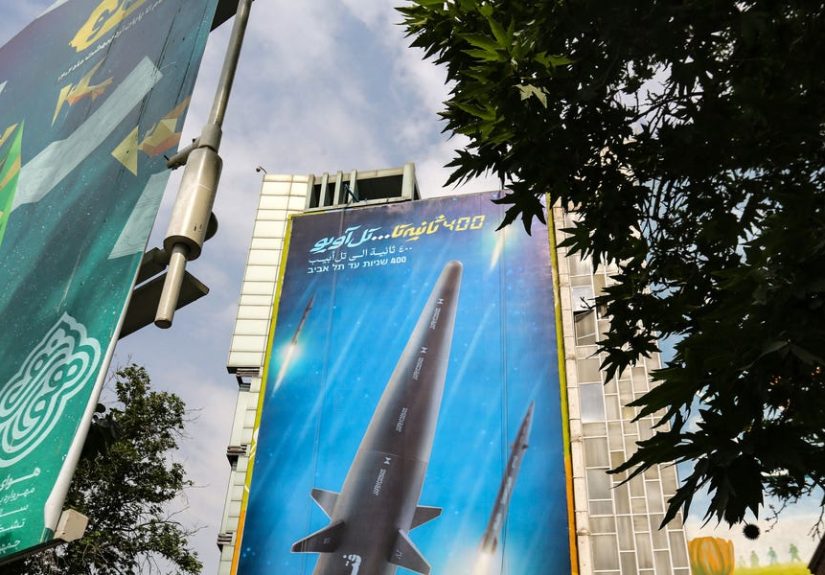
Iran did not introduce the Fattah quietly. It rolled the missile out with a full display of symbolism and strategic messaging. Tehran claimed the missile could reach speeds of around Mach 15, strike at a range of roughly 1,400 kilometers, and evade sophisticated missile defenses. For a country that has long relied on missiles to compensate for an aging air force and years of sanctions pressure, that was a powerful message.
The timing also fit Iran’s broader playbook. Its missile program is more than a collection of weapons. It is a pillar of deterrence, a source of national pride, and a signal to rivals such as Israel and the United States that Tehran wants to be treated as a serious military power. A missile like the Fattah helps Iran say, in effect, “You may have better aircraft, but we can still make your planning very unpleasant.”
And to be fair, that is not an empty boast. Iran’s missile program is large, diverse, and increasingly sophisticated. Even critics who roll their eyes at some of Tehran’s most theatrical claims generally agree that the country has made real gains in solid-fuel systems, range, launch readiness, and accuracy. So the Fattah is not a cartoon prop. It belongs to a real and evolving missile ecosystem.
The Catch: “Hypersonic” Is Doing a Lot of Work Here
The first catch is semantic but crucial. In ordinary conversation, “hypersonic” simply means faster than Mach 5. By that loose definition, lots of ballistic missiles qualify. They climb high, move very fast, and reenter at blistering speeds. If speed alone were the whole story, the missile world would have been “hypersonic” for decades.
Modern defense analysts, however, usually mean something more specific. They are talking about weapons that combine very high speed with sustained atmospheric maneuverability that makes interception much harder. That is what gives true hypersonic glide vehicles and advanced hypersonic cruise missiles their reputation. They do not just go fast. They move unpredictably enough to create a much nastier targeting problem.
That is where the Fattah’s marketing runs into turbulence. Several analysts have argued that the missile looks less like a revolutionary new class of weapon and more like a ballistic missile with a maneuverable reentry vehicle. That may still be dangerous. It may still complicate defenses. But it is not necessarily the same thing as the hypersonic systems most people imagine when they hear the word.
In other words, the Fattah may be closer to an evolutionary upgrade than a clean-sheet breakthrough. That is still impressive. It is just not quite the sci-fi leap the billboard version suggests.
So What Is the Fattah, Exactly?
The best open-source assessments suggest the Fattah is built around a solid-fuel ballistic missile design, with extra features intended to improve maneuverability during the terminal phase of flight. That matters because solid-fuel missiles can typically be launched faster and with less visible preparation than liquid-fueled systems. In a conflict, that shorter prep time can be a huge operational advantage.
Some analysts describe the Fattah as a missile that uses a maneuverable reentry vehicle, or MaRV. Think of that as a warhead section that can make at least some adjustments on its way down, rather than following a purely predictable ballistic arc. That kind of design can improve survivability against missile defenses and may increase precision as well.
But a MaRV is not automatically the same thing as a hypersonic glide vehicle. A true glide vehicle behaves differently and usually sustains a more complex atmospheric flight profile. This is why specialists keep warning people not to lump every fast, somewhat maneuverable missile into the same bucket. Military technology is rude like that. It refuses to respect our favorite buzzwords.
That brings us back to the catch: Iran may have developed a more agile ballistic missile, but that does not necessarily mean it has joined the top tier of hypersonic weapons powers in the way its publicity suggests.
Why Analysts Remain Skeptical
1. Public evidence is limited
One reason for skepticism is simple: there is still not enough transparent evidence in the public domain to prove that the Fattah performs exactly as advertised. Iran has shown models, launch footage, and dramatic claims. Analysts have examined imagery and debris. But independent confirmation of the full performance envelope remains thin.
That does not mean the missile is fake. It means the most dramatic claims are not fully proven. In missile analysis, that is a very big distinction. Governments often reveal just enough to shape perceptions while hiding the technical details that would let outsiders judge the system more precisely. Tehran is hardly unique in that regard, but it is especially enthusiastic about the theater of deterrence.
2. Battlefield proof has been murky
Iran has at times claimed to use the Fattah or related systems operationally, particularly in strikes connected to its confrontation with Israel. But those claims have not fully settled the question. In some cases, analysts have noted that debris could match more than one missile type. In others, interception rates and visible effects have not demonstrated a game-changing leap in performance.
That is another reason the “with a catch” framing fits. If a missile is billed as a defense-breaking monster, observers naturally expect clear evidence that it changes the fight. So far, the Fattah story has produced more debate than consensus.
3. Even supporters use careful language
Some analysts who take Iran’s missile progress seriously still avoid treating the Fattah as a fully validated hypersonic revolution. Instead, they focus on what is more plausible: improved terminal maneuvering, faster launch readiness, better survivability than older systems, and a growing threat to regional defenses if Iran can field the missile in meaningful numbers.
That is a more sober and, frankly, more useful way to think about it. Speed makes headlines. Deployability wins arguments.
Why the Fattah Still Matters
Here is the part that often gets lost in the hype-versus-hoax argument: even if the Fattah is not a textbook next-generation hypersonic weapon, it can still be a serious threat.
First, solid-fuel missiles are operationally valuable. They are quicker to prepare and easier to conceal than liquid-fuel systems, which often require time-consuming fueling procedures and create more opportunities for an adversary to detect and strike launchers before launch. If you are trying to survive under air attack, “ready sooner” is not a minor perk.
Second, modest maneuverability can still matter. Missile defense is not a magic shield. Even limited terminal maneuvering can complicate tracking and interception, especially when combined with salvo tactics, decoys, mixed missile types, and pressure on interceptor inventories. The point is not that one Fattah will suddenly rewrite the laws of war. The point is that a harder-to-predict incoming missile makes a defender’s job nastier.
Third, missiles do not operate alone. They are part of a broader military system that includes launchers, stockpiles, production lines, targeting, and command-and-control. A dangerous missile in a large and resilient arsenal can matter much more than a technically elegant missile produced in tiny numbers. Tehran understands that. It has spent years building not just missiles, but the industrial and organizational machinery behind them.
The Real Strategic Catch: A Missile Is Only as Good as the System Around It
This may be the biggest catch of all. Even if the Fattah is better than skeptics think, a single advanced missile does not automatically transform the regional military balance. Iran still needs reliable production, trained crews, secure launch sites, functioning command networks, and the ability to coordinate strikes under pressure.
That is why open-source analysts increasingly focus on production capacity and force structure, not just flashy unveiling ceremonies. The real question is not whether Iran can display one scary missile under studio lighting. It is whether Iran can produce enough of them, protect enough launchers, and integrate them into strike packages that stress defenses in wartime.
That systems-level view also explains why regional missile defense planners do not simply shrug off the Fattah. Even an incremental improvement becomes meaningful if it arrives in larger salvos, with better timing, from more dispersed launch points, and alongside other missiles and drones. Defense is a math problem under pressure. Iran’s strategy seems designed to make that math uglier.
Why Tehran Loves the Word “Hypersonic”
If the label is contested, why keep using it? Because the term still delivers political and psychological value.
For domestic audiences, “hypersonic” signals prestige. It suggests that Iran has joined an elite military club despite sanctions and isolation. For regional rivals, it forces planners to assume the missile might be as capable as advertised until proven otherwise. And for the broader information battle, it turns a missile unveiling into a global headline instead of a niche defense brief read by twelve sleep-deprived analysts and one very committed spreadsheet.
In other words, the label is useful even before the missile fires. It shapes perception, deterrence, and threat inflation all at once. Tehran does not need universal expert agreement for the word to work. It only needs the term to introduce uncertainty into an opponent’s calculations.
What It Means for Israel, the U.S., and the Region
For Israel and the United States, the smart response is neither panic nor dismissal. The Fattah should not be waved away as pure propaganda, but it also should not be treated as proof that Iran has mastered the most advanced hypersonic technologies in the world.
The more grounded conclusion is that Iran appears to be pushing toward a class of missiles that are quicker to launch, somewhat harder to intercept, and more useful in coercive signaling. That alone is enough to demand attention. Missile defense systems, sensor networks, and interceptor stockpiles are expensive and finite. If Iran can keep improving missile maneuverability while maintaining volume, the pressure on those defenses grows.
There is also a diplomatic angle. Missiles like the Fattah sit at the intersection of conventional deterrence, regional escalation, sanctions policy, and proliferation fears. The debate is not only about whether the missile can dodge interceptors. It is also about what Iran’s advancing missile program means for crisis stability and for any future attempt to limit its strategic capabilities through negotiation.
Bottom Line
Iran’s Fattah is probably best understood not as a magical cheat code, but as a potentially important step in the steady modernization of Iran’s missile force. It may be faster and more agile than many of Tehran’s older systems. It may be harder to intercept. It may become more dangerous if fielded at scale. All of that is serious.
But the catch is that “Mach 15” alone does not settle the case. Ballistic missiles have been fast for a long time. What makes a modern hypersonic weapon truly disruptive is the combination of speed, maneuverability, survivability, and proven operational performance. On those terms, the Fattah remains more contested than confirmed.
So yes, the missile matters. But the smartest way to read it is not as a shiny headline superweapon. It is as a reminder that Iran’s missile program is getting better, more creative, and more difficult to ignore, even when the marketing department is clearly having the time of its life.
Experience and Perspective: What Following the Fattah Story Feels Like
Following the Fattah story is a little like watching two different movies at once. In the first movie, the one built for television and social media, everything is simple. A missile is rolled out. Officials praise it. The speed sounds outrageous. The graphics are dramatic. The message is clear: Iran has built something terrifying, and everyone else should start sweating immediately.
Then there is the second movie, the one analysts, defense reporters, and serious readers end up watching. That version is slower, more technical, and much less cinematic. It involves pausing launch footage, comparing nose shapes, studying debris photos, reading think tank assessments, and trying to separate what is operational from what is aspirational. It is less “Top Gun” and more “group project with very high stakes.”
That tension is what makes the Fattah story so revealing. The experience of following it teaches you how modern missile politics works. Countries do not just build weapons; they build narratives around weapons. They choose names, ceremonies, camera angles, slogans, and carefully worded claims because deterrence is partly psychological. A missile that frightens an opponent before launch has already done some of its job.
At the same time, the people who study these systems for a living rarely react with either blind awe or total dismissal. Their instinct is to ask annoying but necessary questions. How does it maneuver? At what phase of flight? Has it been tested independently? Can it be mass-produced? Was it actually used in combat, or merely claimed to have been used? What do interceptor outcomes suggest? How many launchers are survivable? That methodical skepticism is not nitpicking. It is how you keep propaganda from becoming analysis.
There is also a broader human experience in all of this. For ordinary readers, a term like “hypersonic” creates a feeling that military technology is racing ahead faster than public understanding can keep up. Everything sounds absolute: unstoppable, game-changing, impossible to defend against. But the Fattah saga shows that reality is messier. Weapons are rarely all-powerful, but they do not need to be flawless to make the world more dangerous. Sometimes the most unsettling part is not certainty. It is ambiguity.
That is the emotional catch behind the technical one. The Fattah story leaves you with neither comfort nor clean panic. Instead, it leaves you with the uneasy realization that the truth usually lives in the middle. Iran may not have built the flawless hypersonic nightmare of its own headlines, but it likely has built something more capable than its older missiles and more useful for coercion than critics would like to admit. For policymakers, that means planning for a threat that is real even if it is overmarketed. For readers, it means learning to live with the fact that in modern warfare, the scariest weapons are often not the ones that are fully understood. They are the ones powerful enough to matter, murky enough to debate, and politically useful enough to keep showing up in the news.