Table of Contents >> Show >> Hide
- The old superstar model is creakier than it used to be
- Why the job got harder: the passive giant is now sitting in the room
- And yet, fame still has real economic value
- The catch: fame is riskier than ever
- Where fame still pays best
- Where fame is less worth it
- What the new famous fund manager really looks like
- The verdict: yes, but only if fame serves a business model
- Extended Perspective: What the Experience Actually Feels Like in Today’s Market
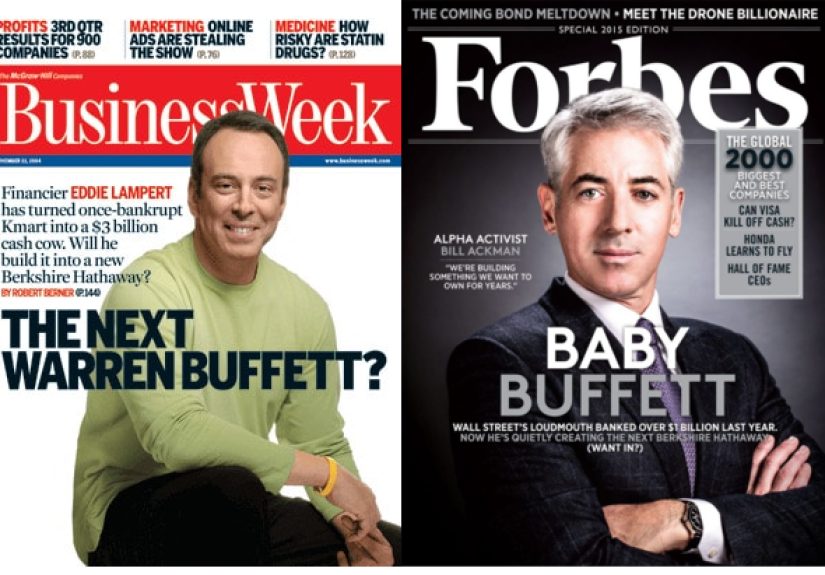
Once upon a Wall Street time, becoming a famous fund manager looked like the financial equivalent of joining a rock band. You got the magazine covers, the conference stages, the flattering profiles, and the magical ability to say “I like cash here” and watch a thousand allocators nod as if they had just heard Shakespeare in a Patagonia vest. Fame in fund management used to mean pricing power, fundraising power, and, on your very best days, the kind of status that made CEOs return your calls before lunch.
Today, that dream still exists. It just comes with more caveats, more spreadsheets, more compliance officers, and more people asking why they should pay active fees when an index fund will happily take their money for next to nothing and complain much less. So, is it still worth it to be a famous fund manager anymore? The honest answer is yes, but not in the old way. Fame still matters in asset management. It simply matters for different reasons, in different products, with different risks, and under a much brighter spotlight.
The old superstar model is creakier than it used to be
For decades, the “star manager” model was built on a simple promise: this individual sees what the market misses. Investors were willing to pay for judgment, conviction, and the possibility of beating the benchmark. In mutual funds and hedge funds alike, a recognizable name could attract billions. That reputation often became part of the product itself. Investors were not just buying a strategy; they were buying a person, a philosophy, and, in many cases, a legend in loafers.
That model has weakened because the math got ruder. Passive investing kept growing, fees kept falling, and performance data kept poking active management in the eye. That does not mean active management is dead. It means the average active manager has a harder sales pitch, and the famous active manager has a harder time proving that fame equals value. In other words, the market has become a lot less impressed by charisma alone. It now wants evidence, preferably net of fees and preferably over more than one lucky season.
Why the job got harder: the passive giant is now sitting in the room
Benchmarks became brutally difficult to beat
The biggest problem for famous fund managers is that the benchmark stopped being a distant reference point and started acting like a full-time rival. In U.S. large-cap equities especially, the hurdle has become viciously high. Mega-cap concentration, momentum-driven leadership, and ultra-low-cost indexing have made life difficult for stock pickers trying to look clever while staying diversified and reasonably sane.
That matters because a famous fund manager is not judged only by absolute returns. They are judged by whether they beat an index after fees, taxes, and the occasional television appearance. If they do not, fame can become a boomerang. The very visibility that helped gather assets can suddenly make underperformance louder, more memed, and more expensive.
Morningstar and SPIVA data reinforce the same uncomfortable point: active management can still work, but broad active outperformance is rare and persistence is rarer. That makes modern fame fragile. A manager can go from market oracle to cautionary tale faster than you can say “style headwind.”
Fees are no longer politely ignored
Fees used to be tolerated as the price of expertise. Now they are treated like a suspicious service charge on a restaurant bill. Investors compare expense ratios, trading costs, tax efficiency, and fund structure with far more scrutiny than they once did. Passive products helped educate the market to ask a devastatingly simple question: “What, exactly, am I paying extra for?”
That question is especially dangerous for famous managers because brand can no longer hide cost. A big name may still open doors, but it does not erase arithmetic. If a manager charges active fees and delivers benchmark-like results, investors do not call that mystique anymore. They call it expensive beta.
And yet, fame still has real economic value
If the story ended there, celebrity in finance would be a museum exhibit. It is not. Fame still matters because asset management is not just about returns; it is also about distribution, trust, fundraising, narrative control, and access. A well-known manager can still do things that a technically skilled but invisible manager cannot.
Fame can still gather assets, especially in newer wrappers
The center of gravity has shifted. In the old model, fame mostly sold mutual funds or flagship hedge funds. In the newer model, fame increasingly helps launch active ETFs, thematic vehicles, private-market strategies, and permanent-capital products. That is a major difference. The star manager of 2026 does not just manage money. They manage a platform.
That platform can be powerful. A recognizable name helps attract media attention, advisor interest, seed capital, and early flows. It helps with recruiting. It helps with partnerships. It helps when converting old mutual fund assets into ETFs or when trying to persuade allocators that a strategy deserves a fresh look in a more tax-efficient wrapper. In short, fame has become less about proving genius in a single portfolio and more about accelerating distribution across multiple channels.
That is why active ETFs are such an important piece of this story. They let firms package active management in a structure investors increasingly prefer. For a famous fund manager, this is the closest thing to an industry software update: same ambition, better user interface.
Reputation still buys access
There is also a quieter benefit to being known. A famous fund manager can access boards, policy circles, founders, bankers, and allocators in ways that most talented managers never will. That access does not guarantee performance, of course. Markets remain delightfully disrespectful. But it can create an informational and strategic edge, especially in private markets, activist investing, and niche strategies where influence matters almost as much as analysis.
In that sense, fame remains worth something very real. It can lower fundraising friction, increase optionality, and turn a manager into a business franchise rather than a single-product operator.
The catch: fame is riskier than ever
Every mistake becomes public, searchable, and very expensive
Here is the downside of modern fame: it scales both applause and damage. A manager with a strong public profile can attract flows quickly, but they can also lose them quickly. Investors are faster, media cycles are faster, social platforms are relentless, and regulators are not exactly moving at nap speed either. If a famous manager stumbles, the narrative often turns before the quarter does.
That makes reputation risk far more severe than it used to be. In the past, a rough patch could be explained away with patience and a shareholder letter. Now it competes with headlines, clips, screenshots, message boards, and instant allocator anxiety. The famous manager has to manage performance and public interpretation at the same time.
Key-person risk became impossible to ignore
Modern firms say they want team-based investing, repeatable processes, and durable cultures. Translation: they have learned the hard way that building a business around one famous person is like building a beach house too close to the tide. It looks terrific until the water arrives.
Key-person risk is now one of the central reasons fame is less comfortable than it once was. If one individual dominates the brand, every concern about judgment, health, succession, or conduct becomes a firm-level issue. Allocators know this. Consultants know this. Boards definitely know this. Many firms now try to market investment committees, risk systems, and institutional process rather than pure individual brilliance. They still use famous names, but they prefer famous names with institutional scaffolding underneath.
Regulatory and compliance burdens are heavier
Being famous in fund management also means marketing under tighter rules, especially when performance claims, endorsements, ratings, and private-fund disclosures come into play. The era of breezy self-promotion is over. Today’s star manager has to think like a portfolio manager, communicator, and part-time legal intern. That is not glamorous, but it is real.
In practical terms, fame now demands discipline. The bigger the profile, the less room there is for fuzzy messaging, selective storytelling, or hero narratives unsupported by process. Investors and regulators increasingly want the receipts.
Where fame still pays best
Private markets and permanent capital
If you want the strongest case for modern fame, look outside plain-vanilla active mutual funds. Private equity, private credit, venture capital, activist investing, and permanent-capital vehicles still reward reputation in a big way. In those areas, manager selection matters, access matters, and investors often believe that pedigree and network can materially affect outcomes.
Fame is especially valuable when capital is sticky. That is one reason some high-profile managers have sought structures that reduce redemption pressure. Permanent capital is a lovely thing when your public image is strong and markets are moody. It gives the manager more room to think long term and less need to react to every investor mood swing like a barista taking custom latte orders.
Specialized active ETFs
Fame also works when a manager offers a differentiated strategy in an ETF wrapper that solves a real investor problem: income, downside management, concentrated conviction, tactical fixed income, or a narrow thematic exposure. In those cases, the manager’s name can act like a trust signal rather than just a vanity plate. Investors may not want celebrity for its own sake, but they will still respond to a recognizable operator attached to a product that feels timely, liquid, and easier to understand.
Where fame is less worth it
If the goal is to become famous while running a conventional active U.S. large-cap mutual fund and charging noticeably more than low-cost alternatives, the answer is: probably not. That is the toughest arena. The index is formidable, fees are under a microscope, and investors are much less patient than they were in the era of legendary stock-picking lore.
In that part of the business, fame can actually become a burden. The manager has to defend every deviation, every quarter of lagging returns, and every sentence uttered on television. Unless the manager has extraordinary long-term results and an unusually loyal investor base, the payoff from visibility may not justify the heat it attracts.
What the new famous fund manager really looks like
The modern winner is not necessarily the loudest personality in finance. More often, it is someone who combines investment skill with repeatable process, clean communication, strong risk controls, product savvy, and a structure investors prefer. In other words, the new star looks less like a lone genius and more like a franchise builder.
That manager may still be highly visible. They may still command huge compensation, especially in hedge funds and multi-manager platforms where scarce talent remains extraordinarily valuable. But even there, the pattern is revealing: some of the best-paid people are not public celebrities at all. They are low-profile specialists inside increasingly industrialized investment machines. That tells you something important. In parts of the market, being elite still pays. Being famous is optional.
The verdict: yes, but only if fame serves a business model
So, is it worth it to be a famous fund manager anymore? Yes, if fame helps you gather the right kind of assets, launch the right products, recruit talent, secure durable capital, and build a business that does not collapse when the spotlight gets hot. No, if fame is just a louder microphone attached to an undifferentiated strategy with middling results and above-average fees.
That is the real shift. Fame used to be the prize. Now it is a tool. Used well, it can still be extremely lucrative. Used poorly, it becomes a magnifying glass for every weakness in the franchise. The market still rewards exceptional managers, but it is increasingly skeptical of celebrity unsupported by structure. Investors have grown savvier, products have evolved, and the old cult of the heroic stock picker is no longer enough on its own.
In plain English: being a famous fund manager can still be worth it. But these days, it is far better to be durable than dazzling, scalable than sentimental, and trusted than merely tweeted about.
Extended Perspective: What the Experience Actually Feels Like in Today’s Market
Ask people around the industry what it feels like to work with or around a famous fund manager today, and the answer is usually some variation of this: exciting, useful, exhausting, and occasionally terrifying. The glamour is still there, but it sits right next to pressure. One allocator may love the manager’s conviction, while another worries that the entire franchise is too dependent on one person’s judgment. One advisor may see a household name as a client-friendly selling point, while another sees a possible performance headache with extra media baggage attached.
There is also a very practical shift in day-to-day experience. Years ago, a well-known manager could spend more time focused on investing and a little less time playing public quarterback. Now visibility often means interviews, podcasts, conference appearances, video clips, shareholder updates, social media scrutiny, and nonstop brand maintenance. The manager is not just picking securities. They are performing clarity under pressure. When markets are strong, that looks easy. When markets are messy, every sentence feels as if it was reviewed by investors, journalists, compliance staff, and a stranger on the internet who thinks duration is a personality type.
For teams working under famous managers, the experience can be just as intense. A high-profile boss can open doors that would otherwise stay shut. Company management may take meetings faster. Advisors may listen more closely. Product launches may gain traction earlier. Recruiting gets easier when talented analysts think they are joining a meaningful platform instead of a financial witness-protection program. But that advantage comes with a trade-off: the team often has to work harder to prove that the process is bigger than the founder. Everyone inside the firm knows the question allocators are silently asking: “If the star leaves, what exactly remains?”
Investors feel the tension too. Many still like the idea of a recognizable manager with a clear viewpoint. It feels human. It feels accountable. It feels better than handing money to a faceless product with a four-letter ticker and a marketing deck full of words like “holistic outcomes.” But investors have also become more experienced. They have watched stars rise and fade. They have seen what happens when hot performance cools, when style leadership changes, or when a single headline shakes confidence in the firm. As a result, the modern investor experience is more conditional. Fame may attract attention, but due diligence decides whether the capital stays.
Perhaps the clearest real-world experience is this: the people who thrive today are usually not chasing fame for its own sake. They treat visibility as a byproduct of doing several hard things well at once. They build teams. They manage risk. They adapt to new fund structures. They understand fees, taxes, compliance, and distribution. They know when to speak and when not to. In that environment, fame is still valuable, but only when it rests on something sturdier than a hot streak and a memorable quote. That is why the modern asset-management world feels less like a red carpet and more like a pressure cooker with branding. The rewards can still be enormous. But nobody who understands the business would call it easy money with a nice suit.