Table of Contents >> Show >> Hide
- What Actually Happened: A Surprise Appearance, A Throwback Costume, and a Meme Stampede
- Her Response: Classic Jamie Lee Energy (and a Masterclass in “Unbothered”)
- Why This Response Works So Well
- The Meme Moment Beneath the Meme Moment: Age, Attention, and the Internet’s Weird Surprise
- When Memes Cross the Line (and How to Keep It Funny Without Being Weird)
- What This Means for Freakier Friday (and for Hollywood, Too)
- What Fans Can Learn From Curtis: Confidence, Boundaries, and Redirecting the Conversation
- Experiences Related to the Viral Moment (An Extra of “Yep, Been There Online”)
- Conclusion: The Internet Blinked, and Jamie Lee Curtis Didn’t
The internet has a special talent: it can turn a 30-second promo into a weeklong group project, complete with memes, hot takes, reaction GIFs, and at least one person commenting like they’ve never seen a blazer before.
And in August 2025, that talent collided with a surprise appearance by Jamie Lee Curtisan Oscar winner, certified icon, and human embodiment of “I’m fine, thanks”as she promoted Freakier Friday.
The moment went viral for an extremely modern reason: fans focused less on what she said and more on what the outfit suggested. (The neckline did what algorithms love: it sparked attention, emotion, and chaos.)
But Curtis didn’t respond with defensiveness, embarrassment, or a lecture. She did something better: she redirected the spotlight with humor, confidence, and a little marketing savvywithout pretending the internet was going to suddenly develop manners.
What Actually Happened: A Surprise Appearance, A Throwback Costume, and a Meme Stampede
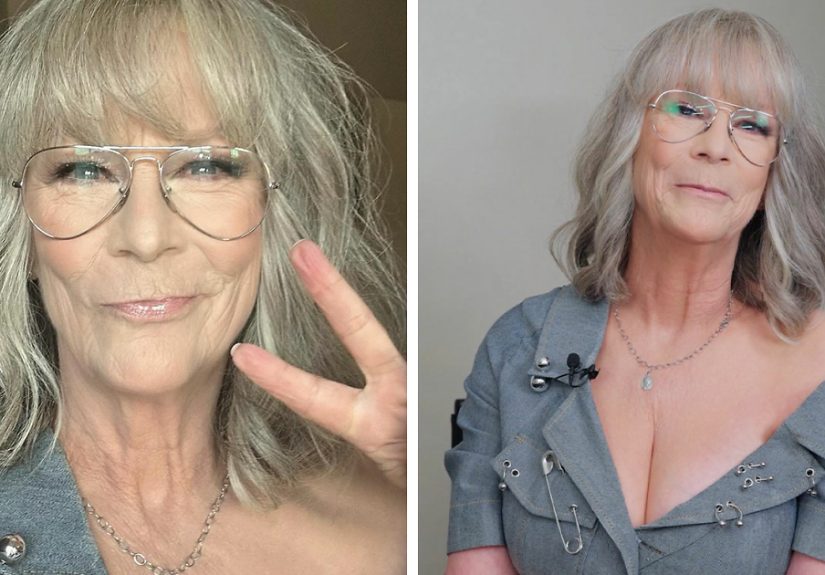
The spark was a special Freakier Friday screening at Hollywood’s El Capitan Theatre, where Curtis showed up in a look inspired by her character, Tess Coleman.
It wasn’t a random outfit; it was an intentional character-ish costume momentpart nostalgia, part “we’re back,” part “yes, this sequel is real and it is happening.”
The look included a low neckline that quickly became the center of attention online, especially once promo footage and social clips started circulating.
If you’ve spent any time on TikTok or Instagram, you already know how this goes: the comments don’t stay on topic.
Some people joked about being “distracted,” others posted reaction images, and the meme machine did what it always doesturn a person into a “moment.”
The irony is that Curtis was there to talk up a movie built on identity-swapping chaos, and the internet decided to swap the conversation into something else entirely.
But here’s the key detail: the buzz wasn’t only about the outfit. It was also about Jamie Lee Curtis being Jamie Lee Curtisa woman in her 60s, confidently showing up, not apologizing for existing, and not acting like aging means shrinking.
That combinationnostalgia + confidence + surprise + an algorithm-friendly clipwas basically a viral recipe with the oven already preheated.
Her Response: Classic Jamie Lee Energy (and a Masterclass in “Unbothered”)
Curtis responded on Instagram in a way that felt both playful and pointed: she acknowledged that the photo got massive attention, then framed that attention as a win for the movie.
The vibe was: “Yes, I see you. Yes, it’s hilarious. And yes, thanks for the publicity.”
One of the smartest parts of her response is that she didn’t scold fans for reactingshe simply reframed the reaction.
Instead of arguing with thousands of commenters (a hobby that has never improved anyone’s day), she basically said: if the internet is going to stare, it might as well buy a ticket.
That’s not just thick skin; that’s strategy.
Curtis has spent years being outspoken about authenticity and the pressure women faceespecially in entertainmentto look a certain way forever.
So when she meets a sudden online frenzy with humor and control, it lands as more than a witty comeback.
It reads like a person who knows exactly who she is, what she’s doing, and what she’s willing to let the internet borrow (and what she’s not).
Why This Response Works So Well
1) She didn’t deny the obviousshe owned the narrative
The fastest way to lose the internet is to pretend it isn’t happening.
Curtis didn’t do that. She acknowledged the viral attention without turning it into a shame spiral or a moral panic.
When a celebrity tries to act like a viral moment is “nothing,” the internet hears, “Please keep talking about it.”
Curtis’ approach was closer to: “I see it, I get the joke, and I’m still driving.”
2) She turned the gaze into a spotlightfor the film, not just her body
The uncomfortable truth about online attention is that it often attaches itself to bodiesespecially women’s bodiesbecause bodies are “easy” for people to comment on.
Curtis didn’t pretend that dynamic is great.
She simply shifted the outcome: if the attention is here, let’s make it serve something tangible.
That move transforms a potentially objectifying moment into a promotional win.
3) She’s been consistent for yearsthis didn’t come out of nowhere
Jamie Lee Curtis has a long history of being candid about beauty standards and the industry’s pressure cooker.
She has publicly discussed regretting cosmetic choices early in her career and has pushed back against the idea that women must “fix” themselves to be worthy of the camera.
So when she responds to viral commentary with confidence, it doesn’t feel like a PR robot typed it.
It feels like the same personjust with better lighting and a sequel.
The Meme Moment Beneath the Meme Moment: Age, Attention, and the Internet’s Weird Surprise
If you zoom out, the most revealing part of the frenzy wasn’t the necklineit was the tone of astonishment.
A lot of commentary carried the subtext: “Wait… women can look good past a certain age?”
Which is less a compliment and more a confession that our culture has taught people to expect women to disappear after 40.
That’s why this story hit so loudly. It wasn’t just “Jamie Lee Curtis wore a daring outfit.”
It was “Jamie Lee Curtis showed up like a star, and a chunk of the internet acted like this was a new scientific discovery.”
Curtis’ response punctured that surprise with humor: she didn’t argue; she made the whole thing feel smaller than her.
And that matters. Because the internet tends to reward two extremes: scandal or shame.
Curtis offered a third option: confidence without apology, and laughter without self-erasure.
When Memes Cross the Line (and How to Keep It Funny Without Being Weird)
Memes can be harmless fun, and sometimes they even feel like a form of praise.
But there’s a difference between laughing with someone and reducing them to body parts.
That distinction is easy to forget when you’re typing into a comment box that feels consequence-free.
Here’s a simple rule that works surprisingly well: if you wouldn’t say it to someone while making normal eye contact in a grocery store aisle, maybe don’t post it under their promo clip.
Not because comedy is illegal, but because real people still read commentsyes, even famous ones.
Better ways to be funny (and still respectful)
- Compliment the confidence: “This energy is undefeated.”
- Celebrate the nostalgia: “Tess Coleman is BACK and she brought the chaos.”
- Make the joke about yourself: “I forgot how to behave for a second, my bad.”
- Keep it PG: If your joke requires an “NSFW” warning, maybe it’s not a comment-section joke.
Curtis’ response works partly because she didn’t reward the worst comments with outrage.
She offered a vibe upgrade: “Let’s not be gross; let’s be joyful.”
And honestly, the internet could use more vibe upgrades.
What This Means for Freakier Friday (and for Hollywood, Too)
From a marketing perspective, this moment is a reminder that promotion isn’t only about trailers and posters anymoreit’s about clips, comments, and how fast a narrative forms.
A costume choice can become a headline. A headline can become a meme. A meme can become a reason someone finally remembers the release date.
But there’s also a bigger cultural angle: Curtis is part of a growing wave of women in entertainment who refuse to treat age like an apology.
They’re not asking permission to be stylish, bold, or visible.
They’re not “aging gracefully” in the way that phrase often means “quietly.”
They’re aging loudly, confidently, and with enough charisma to crash the algorithm.
In the world of Freakier Friday, the story is about people stepping into each other’s lives and learning empathy through chaos.
In real life, the lesson might be simpler: maybe we should stop acting shocked that women remain interesting, attractive, funny, and powerful across decades.
Curtis didn’t just answer memesshe exposed the assumptions behind them.
What Fans Can Learn From Curtis: Confidence, Boundaries, and Redirecting the Conversation
Not everyone gets to respond to viral commentary with an Instagram caption that instantly becomes a headline.
But the emotional skill Curtis showed is surprisingly usable for regular humans too:
acknowledge what’s happening, stay grounded, decide what it means, and redirect.
That’s a boundary technique disguised as humor.
It doesn’t deny reality, but it refuses to let other people define the story.
In a culture where so much attention is noisy and messy, that’s a superpower.
Experiences Related to the Viral Moment (An Extra of “Yep, Been There Online”)
If you’ve ever watched a celebrity moment go viral in real time, you know the feeling: you open your phone for a harmless scroll, and suddenly you’re standing in the middle of a digital parade.
Everyone has the same clip on their feed, the same screenshot in their group chat, the same “I can’t believe people are saying this” reaction.
It’s like the internet collectively decided: “This is today’s main character.”
One common experience is the two-track reaction.
Track one is genuine admiration: “She looks great,” “She’s confident,” “She’s iconic.”
Track two is the internet’s tendency to turn admiration into performancebigger jokes, louder comments, and “who can get the most likes.”
You can feel the energy shift from celebration to competition, and once that happens, the comments stop being about the person and start being about the audience entertaining itself.
Another experience is the awkward empathy moment.
You laugh at a meme, then you pause and think, “Wait, if this were meor my mom, or my auntwould I want strangers zooming in on one part of my body?”
That pause is important. It’s where humor becomes self-awareness.
Curtis’ response encourages that pause without scolding anyone. It’s like she’s saying, “Yes, yes, I get it… now let’s act normal.”
Plenty of people also recognize the feeling of being misunderstood by the headline.
Curtis showed up to promote a film, to connect with fans, to embody a character againand the viral conversation narrowed to a single detail.
That happens to regular people too, on a smaller scale:
you post a photo from a trip and the comments fixate on one thing (your haircut, your outfit, your background clutter) instead of the story you meant to tell.
The lesson is the same: you can’t control what people notice, but you can control what you amplify.
There’s also a very modern experience hiding in this story: algorithmic magnification.
A few jokes become a trend; a trend becomes “news”; “news” becomes the new default conversation.
And if you’re a teen or just someone who spends a lot of time online, it can mess with your sense of what’s normal.
You start to think everyone talks like comments sections talk.
They don’t. Comments sections are a circus, and the algorithm is the ringmaster.
Finally, a lot of people have the experience of watching someone handle a viral moment and thinking,
“I want that level of calm in my life.”
Curtis didn’t collapse into embarrassment or lash out.
She kept her humor, protected her dignity, and nudged attention back to her work.
For anyone navigating attentionwhether it’s a big audience or just a messy friend groupthat’s a reminder:
you don’t have to accept the version of you that other people try to create.
You can laugh, redirect, and keep going.
Conclusion: The Internet Blinked, and Jamie Lee Curtis Didn’t
Jamie Lee Curtis’ “viral cleavage moment” could have been the kind of story that feels cheap and exhaustinganother day, another woman reduced to a body headline.
Instead, her response made it feel like something else: a confident, funny, self-possessed reminder that aging doesn’t erase charisma, and that humor can be a boundary as much as it is entertainment.
She didn’t just respond to memesshe showed people how to hold the steering wheel when the internet tries to grab it.
And if the end result is more people showing up for Freakier Friday with a little more joy (and a little less weirdness), that’s the kind of “viral” we can live with.