Table of Contents >> Show >> Hide
If you love the kind of home goods that do not scream for attention but still somehow become the stars of the room, welcome to the wonderfully unflashy universe of Fog Linen. This is the kind of brand that makes people get emotional over a kitchen cloth, which sounds ridiculous until you use one for a week and suddenly understand that true luxury might just be a towel that dries fast, looks handsome, and does not require a dramatic TED Talk to justify its existence.
Fog Linen has become one of those quietly influential names in design circles: beloved by minimalists, admired by stylists, and casually recommended by the sort of people whose homes always look effortless, even when there is clearly some serious effort going on behind the scenes. During any design-focused “Japan Week,” Fog Linen deserves a spot near the top of the conversation because it captures so much of what people admire in Japanese-inspired living: usefulness, simplicity, warmth, restraint, and the radical idea that everyday objects should actually make daily life better.
At its core, Fog Linen is not about trend-chasing. It is about the beauty of regular life. A placemat is not trying to become a sculpture. An apron is not trying to become a personality disorder. A tray is not begging to go viral. And yet, when these pieces come together, they create a home that feels calm, grounded, and very lived in, in the best possible way.
What Is Fog Linen, Exactly?
Fog Linen Work is a Japanese lifestyle brand founded by Yumiko Sekine, a designer whose approach has helped define a softer, more usable version of minimalism. The brand’s story is part of its appeal. Sekine began by importing used books and housewares, then moved toward designing her own products after struggling to find affordable everyday linens similar to the ones she remembered from childhood. That search eventually led her to linen production in Lithuania, and from a small beginning, the collection grew into a larger world of housewares, clothing, and practical objects for the home.
That origin story matters because it explains why Fog Linen does not feel invented by a marketing department. The line feels lived-in from the start. These are products shaped by household needs rather than by a desire to manufacture “lifestyle.” The best Fog Linen pieces still carry that spirit. They are uncomplicated, tactile, and refreshingly normal. In an era when even a spoon can come with a manifesto, that restraint feels like a minor miracle.
The brand is often associated with linen first, but that only tells half the story. Fog Linen also includes clothing, brass accessories, trays, baskets, and other everyday tools. Still, linen remains the beating heart of the collection. And that makes sense. Linen has a specific kind of honesty. It wrinkles. It softens. It absorbs. It ages. It behaves like a material that wants to be used, not displayed behind glass like a museum relic with separation anxiety.
Why Fog Linen Has Such Staying Power
It makes simplicity feel warm, not cold
One reason Fog Linen stands out is that it avoids the most common trap of minimalist design: looking emotionally unavailable. Too much “minimalism” ends up reading like a very expensive waiting room. Fog Linen goes the other way. Its pieces are pared back, yes, but they still feel human. The colors tend to be earthy, chalky, muted, and soft. The silhouettes are practical. The finishes are understated. The overall effect is not sterile perfection. It is ease.
That warmth is especially important in American homes, where people often want spaces that feel relaxed rather than severe. Fog Linen slips nicely into kitchens, bedrooms, mudrooms, and dining spaces because it does not ask the room to become a design museum. It simply asks for a little breathing room and better habits. Suddenly the countertop looks less chaotic. The table feels more intentional. The bathroom seems less like a utility zone and more like a place where a competent adult lives.
Linen is one of the hardest-working materials in the house
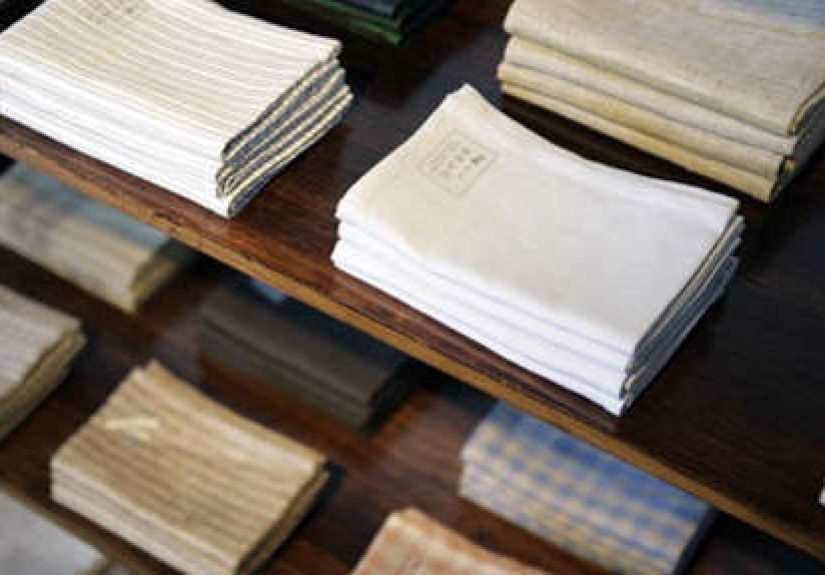
There is also the simple fact that linen is useful. Good linen is breathable, durable, absorbent, and known to soften over time. That means Fog Linen products do not just photograph well; they earn their keep. Kitchen cloths and towels are especially beloved for this reason. They handle moisture well, dry quickly, and develop character the more they are washed and used. In other words, they improve with age, which is more than can be said for many people after a group text meltdown.
The practical side of linen also explains why Fog Linen has remained relevant for so long. These are not novelty objects. They are repeat-use tools. The appeal comes from repetition: the cloth you reach for every morning, the apron that hangs near the stove, the tray that catches keys and receipts and all the tiny debris of modern life. Fog Linen understands that beautiful routines are built from small, repeatable gestures.
Signature Fog Linen Pieces Worth Knowing
Kitchen cloths and aprons
If Fog Linen had a hall of fame, kitchen cloths would absolutely be in it. They are among the brand’s best-known products for a reason. They are simple, durable, and easy to integrate into daily use. They also embody the brand’s larger philosophy: one humble object, thoughtfully made, can shift the feeling of an entire space. A good kitchen cloth does not change your life in the cinematic sense, but it might make your sink area feel 40 percent less depressing, which frankly counts.
Aprons follow a similar logic. Fog Linen aprons are popular because they look easy and feel unfussy. They are not precious. They are the kind of aprons that suggest actual cooking, actual baking, actual wiping of hands, and the occasional emergency moment involving tomato sauce. They look equally at home in a serious kitchen and in a tiny apartment where “hosting” means balancing snacks on a cutting board and hoping everyone is chill.
Placemats, napkins, and table linens
Fog Linen has a gift for making table settings feel relaxed rather than overproduced. The linens do not aim for formal grandeur. They make everyday meals feel a touch more deliberate. A placemat here, a runner there, a set of napkins that do not look like they were purchased during a panic-buy at a big-box store five minutes before guests arrived. It is low-key polish, which is often the most effective kind.
This is one of the smartest things about the brand. It does not demand total commitment. You do not need to replace your entire dining setup. One or two pieces can change the tone of the table. Fog Linen is excellent at that kind of low-volume, high-impact styling.
Brass trays, baskets, and small home accessories
Beyond textiles, Fog Linen’s brass and metal items have built a strong following. These are the quiet supporting actors of the line: trays, hooks, holders, and storage pieces that add texture without visual noise. They often have a handmade irregularity that keeps them from feeling slick or mass-produced. That slight imperfection is part of the charm. It says, “I have personality,” but in a whisper, not in a reality-show confessional.
These accessories also show how Fog Linen thinks about the home as a working environment rather than a static display. A tray is not just decorative. It is a landing pad. A hook is not just pretty. It is infrastructure. This is design that respects the fact that people have mail, jewelry, towels, scissors, charging cables, and all the other tiny objects that somehow multiply when the lights go out.
How to Bring the Fog Linen Look Home
Start with utility, not decoration
The smartest way to approach Fog Linen style is to begin where you already have friction in your home. Maybe your kitchen towels are sad. Maybe your entryway is a graveyard for keys and receipts. Maybe your dining table only appears dressed for special occasions, and the rest of the year it looks like a paperwork hostage situation. Start there.
Fog Linen works best when it solves a problem while improving the atmosphere. Replace the disposable-feeling towel with a linen cloth. Add a tray where clutter collects. Swap in a few napkins that make weeknight dinners feel less accidental. The point is not to “achieve an aesthetic” in one giant leap. The point is to make ordinary routines smoother and nicer.
Keep the palette quiet
Fog Linen’s appeal comes partly from its restraint. The colors tend to sit comfortably in a room rather than trying to dominate it. Natural tones, washed neutrals, muted stripes, and softened checks all help create that easy, relaxed look. If you want to channel the same mood, resist the urge to over-style. Let the materials do the work.
This is especially effective when mixing Japanese and Western influences, something often associated with the brand. A simple linen runner on a farmhouse table, a brass tray on a painted dresser, or a soft apron hanging in a modern kitchen can bridge styles without strain. Fog Linen is one of those rare brands that looks convincing in a city apartment, a coastal cottage, a brownstone kitchen, or a slightly chaotic family house where at least one person is always looking for the scissors.
Why “Japan Week: Fog Linen” Still Feels Relevant
The phrase “Japan Week: Fog Linen” could easily sound like a niche design footnote from another era, but the reason it still resonates is simple: people are tired of clutter, tired of disposable stuff, and tired of homes that look good online but feel annoying in real life. Fog Linen offers a different proposition. Buy less. Use it more. Let it age. Let it soften. Let it belong to the rhythm of your home.
That mindset aligns beautifully with a broader interest in Japanese-inspired living, where daily rituals matter and useful beauty is not considered an oxymoron. Fog Linen makes that philosophy approachable. You do not need to rebuild your home or commit to a strict minimalist doctrine. You just need a few better tools and a willingness to appreciate objects that do their jobs with grace.
And maybe that is why the brand has such lasting appeal. Fog Linen does not try to impress you in the loud, obvious way. It sneaks up on you. First it is a kitchen cloth. Then it is an apron. Then suddenly you are rearranging your shelves, buying fewer but better things, and explaining the superiority of linen to a friend who did not ask but is now weirdly convinced.
The Experience of Living With Fog Linen Energy
Living with Fog Linen energy is less like making a dramatic design statement and more like quietly upgrading the quality of your day. You notice it in tiny moments first. The kitchen cloth feels dry again faster than expected. The placemat gives lunch a little structure. The brass tray near the door catches the coins, keys, and general evidence of your daily unraveling. Nothing about the experience is flashy, and that is exactly why it works.
Imagine a Saturday morning. Light comes into the kitchen in that flattering way it never seems to manage on weekdays. Coffee is brewing. The counter is still carrying the aftermath of breakfast prep, but the space does not feel frantic. There is a folded linen cloth by the sink, an apron draped over the back of a chair, and a tray holding the odds and ends that usually migrate across every available surface. The room feels settled. Not staged, not spotless, just settled. Fog Linen has a gift for creating that feeling.
Part of the experience is sensory. Linen has texture. It does not pretend to be perfectly smooth or artificially polished. It creases, relaxes, and softens in a way that makes it feel alive. That quality changes the emotional tone of a room. A cotton towel can be useful, but linen often feels thoughtful. A brass catchall can be practical, but when it has a slightly irregular handmade quality, it also feels personal. The result is a home that reads as intentional without becoming uptight.
There is also something psychologically pleasant about objects that improve through use. So many household goods begin their lives looking perfect and end up disappointing you almost immediately. Fog Linen pieces tend to move in the opposite direction. Wash them, wear them, use them daily, and they become more familiar and more comfortable. That creates a different kind of attachment. It is not the preciousness of owning something fancy. It is the affection that grows from repetition.
That is why the Fog Linen experience often changes how people shop. Once you get used to objects that are simple, useful, and long-lasting, overly decorative items can start to feel noisy. You begin to ask better questions: Will I actually use this? Will it age well? Does it make my routine easier? Does it add calm or clutter? It is not that your personality disappears into a beige void. It is that your home starts working with you instead of against you.
And perhaps the nicest part is that Fog Linen does not demand perfection from the person using it. Your life can still be messy. Your counters can still collect mail. You can still forget the groceries in the trunk and discover them like an archaeologist later. Fog Linen does not require you to become a serene lifestyle guru who journals before dawn. It simply supports better habits with better objects.
So the experience of Fog Linen is not really about buying into a trend. It is about noticing how a home feels when the things inside it have been chosen with care. It is the comfort of utility, the softness of natural material, and the pleasure of restraint. It is less about performance and more about rhythm. Over time, that rhythm becomes the real luxury: a home that is calm, functional, and quietly beautiful, even on the kind of day when dinner is scrambled eggs and the to-do list is still laughing at you from across the room.
Conclusion
Fog Linen has earned its reputation not by being loud, but by being reliably good. It turns ordinary household categories into opportunities for calm, texture, and usefulness. For anyone exploring Japanese-inspired interiors, slow living, or simply better home basics, Fog Linen is worth paying attention to. It proves that style does not have to be performative to be memorable and that the best design often begins with the items you touch every day.
If “Japan Week: Fog Linen” sounds modest, that is fitting. Modesty is part of the appeal. This is a brand built on the idea that small things matter: the cloth in your hand, the tray by your keys, the napkin on the table, the apron that makes cooking feel less like a chore and more like a ritual. In a culture hooked on bigger, louder, shinier, Fog Linen makes a compelling case for quieter pleasures. And honestly, that may be the most stylish move of all.