Table of Contents >> Show >> Hide
- Why This Story Matters Beyond One Brand
- What Happened to JuiceBox
- The Bigger Problem: Software Tethering and “Bricked by Business Model”
- Rescue Paths for JuiceBox Owners
- How to Buy Your Next Charger Without Repeating This Nightmare
- What Policy Is Signaling (And Why Homeowners Should Care)
- Practical “Anti-Overlord” Setup for Home EV Charging
- Real-World Example Scenarios
- Conclusion: Own the Hardware, Own the Outcome
- Extended Experience Report (500+ Words): Life After the JuiceBox Wake-Up Call
If you’ve ever bought a smart EV charger, patted yourself on the back, and whispered, “Look at me, charging in the future,” this one’s for you. Because the future got weird. Fast.
In the great EV home-charging gold rush, many of us bought internet-connected chargers for the same reasons we buy smart thermostats and robot vacuums: convenience, scheduling, tracking, and that warm glow of “I am now a technology person.” But what happens when your “smart” charger is only smart because a company’s cloud says soand that company taps out?
Welcome to the JuiceBox saga: a cautionary tale, a right-to-repair wake-up call, and surprisingly, a story of community-powered rescue. This guide breaks down what happened, why it matters for every EV owner (not just JuiceBox households), and how to future-proof your charging setup so you’re never at the mercy of a corporate off switch again.
Why This Story Matters Beyond One Brand
JuiceBox’s situation became a headline because it was dramatic: hardware still on the wall, still electrically capable, but suddenly at risk of losing core connected features. That’s not just annoyingit’s a bigger issue called software tethering, where physical products depend on remote services that owners don’t control.
And this isn’t just an EV issue. It’s the same pattern you see in smart home gadgets, appliances, and wearables. The lesson is universal: if a product can be “de-featured” remotely, ownership gets fuzzy.
For EV drivers, though, the stakes are higher. Charging is not optional. It’s not like a smart toaster losing bagel mode. If home charging becomes unreliable, your daily commute, utility bill, and peace of mind all take a hit.
What Happened to JuiceBox
The short timeline
Enel X Way North America announced it would stop operations in the U.S. and Canada in October 2024, and users were told app and software services would be affected. Residential chargers could still deliver power, but connected functions were at risk; commercial scenarios were impacted even more severely by backend dependency.
Public backlash followed. Temporary transition arrangements kept some services alive longer while customers looked for alternatives. But the core trust problem didn’t disappear: owners realized critical functionality depended on decisions outside their homes, circuits, and wallets.
Why owners felt blindsided
- The hardware wasn’t dead. The wall unit still existed and still had value.
- The software dependency was opaque. Many buyers didn’t fully understand how much required cloud services.
- Smart features were part of the purchase value. Scheduling, tracking, user permissions, and load management weren’t “extra fluff” for many households.
Imagine paying for a treadmill and then discovering your legs still work but the belt now requires a monthly handshake from a server in another state. That’s the emotional vibe here.
The Bigger Problem: Software Tethering and “Bricked by Business Model”
Let’s define the villain clearly:
Software tethering = a product’s useful functionality is tied to remote software/services the owner does not control.
Consumer advocates have pushed regulators to address this pattern because it can turn still-functional devices into e-waste, impose surprise costs, or degrade product value post-sale.
Meanwhile, U.S. consumer-protection conversations are heating up around support transparency. If smart devices need updates to stay secure and functional, buyers should know support timelines before they buynot after a press release and a panic thread.
Rescue Paths for JuiceBox Owners
Not every rescue path is right for every owner. Your best option depends on your technical comfort, safety constraints, and whether you prioritize “just charge my car” or “full local smart control.”
Path 1: Keep it simple, keep charging
If your unit still supplies power reliably, you can move most scheduling logic to your vehicle. Many EVs already support departure-time charging, battery limits, and off-peak windows directly in-car or in the automaker app.
- Set charge windows in the car (overnight off-peak).
- Set target state-of-charge (for battery health and cost control).
- Use utility time-of-use rates as your schedule anchor.
This approach strips complexity and often works surprisingly wellespecially if you only charge one vehicle.
Path 2: Community software bridge (proxy approach)
A community project known as JuicePass Proxy emerged to keep certain JuiceBox workflows alive by proxying device traffic into local/home-automation contexts, including MQTT/Home Assistant setups.
This path is for tinkerers, not “set-it-and-forget-it” users. But it demonstrates a powerful point: with open tooling and community effort, users can reclaim control from closed ecosystems.
Who it suits: homelab users, Home Assistant fans, networking-comfortable DIYers.
Who should skip it: anyone who wants no-maintenance charging or has zero interest in local infrastructure.
Path 3: Hardware brain transplant
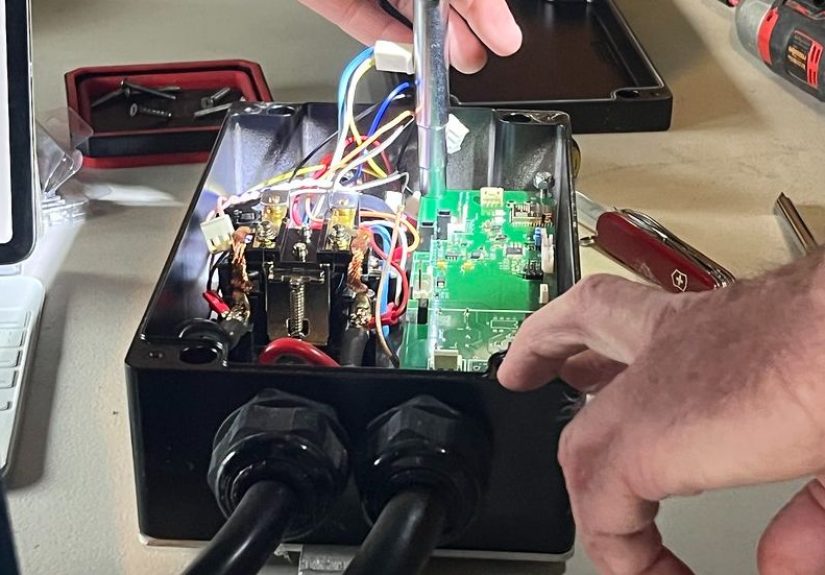
Another rescue route swaps internal control electronics for open EVSE control stacks (such as OpenEVSE-based replacements for compatible models). This can restore local control and standards-based integrations like HTTP/MQTT/OCPP in supported contexts.
Think of it as putting a modern open-source brain into a still-useful body. It’s like restoring a classic car with a new engine, except this one also talks to your energy dashboard.
Important: mains-voltage work is serious business. If a retrofit involves enclosure opening, wiring, or board replacement, use a qualified professional and applicable code compliance.
Path 4: Full migration to new hardware
Sometimes the most practical answer is replacement. For many households, replacing a compromised charger is faster and lower-risk than maintaining a workaround. Some vendors have offered migration incentives for affected users in the past.
If you replace, don’t just shop by amperage and price. Shop by control model.
How to Buy Your Next Charger Without Repeating This Nightmare
1) Require graceful offline behavior
Your charger should still initiate and complete charging sessions if internet connectivity disappears. “Cloud optional” beats “cloud mandatory.”
2) Prefer open protocols and documented local control
Look for meaningful interoperability signals (for example, OCPP support where relevant, local API access, or local network control options). If a spec exists but is locked down in practice, that’s not true openness.
3) Demand a published software-support policy
Before buying, ask: “How long will firmware/app/security updates be provided?” If support duration is impossible to find, treat that as a risk flag, not a trivia challenge.
4) Confirm standards and compatibility
In North America, connector and communication ecosystems are evolving (J1772 legacy compatibility, NACS/J3400 momentum, adapter realities). Buy for your car today and your likely car tomorrow.
5) Safety first, always
Use properly rated circuits, qualified installation, and compliant hardware. Smart features are nice; electrical safety is non-negotiable.
What Policy Is Signaling (And Why Homeowners Should Care)
Public policy for charging infrastructure increasingly emphasizes reliability and interoperability. U.S. federal charging standards discussions have explicitly addressed the need for charging systems to remain functional when network connectivity is disrupted and have leaned toward standards-based communication frameworks for ecosystem compatibility.
Why does this matter for your garage? Because expectations set in public infrastructure often migrate into private market norms. If “works when offline” is good for highways, it should be good for your driveway too.
Separately, regulators and consumer groups are spotlighting the transparency gap in smart-device support timelines. That pressure can eventually reshape warranty language, disclosure practices, and buyer protection around connected hardware.
Practical “Anti-Overlord” Setup for Home EV Charging
Step-by-step blueprint
- Baseline the electrical side: verify breaker, conductor sizing, and continuous load settings with an electrician.
- Set in-vehicle scheduling first: make the car your primary schedule brain.
- Treat charger apps as optional: use them for convenience, not dependency.
- Export or snapshot key settings: keep records of current limits, schedules, and load-sharing values.
- Segment your network: if using connected chargers, isolate IoT traffic for security hygiene.
- Choose reversible automations: if your smart home fails, charging should still work.
- Plan an exit strategy: know your fallback if a vendor sunsets software.
Checklist for evaluating “freedom-friendly” EV chargers
- Charges locally without cloud login
- Transparent update/support policy
- Open/local integration options (API, MQTT, OCPP where applicable)
- Clear load-management behavior
- Standards compatibility and future connector planning
- Strong safety certifications and installer support
- No mandatory subscription for core charging functionality
Real-World Example Scenarios
Scenario A: Single EV, cost-focused household
They stop relying on charger-cloud schedules and use the vehicle’s off-peak charging timer. Result: electricity cost control remains stable, and internet outages no longer affect overnight charging.
Scenario B: Two EVs, shared panel constraints
They prioritize dynamic load management and choose a setup with local-first control. They get smart balancing without full cloud dependency, reducing both panel stress and “app panic.”
Scenario C: DIY smart home enthusiast
They adopt a community integration path, monitor charging in Home Assistant, and keep telemetry local. Result: more flexibility, more responsibility, and fewer surprises from remote policy changes.
Conclusion: Own the Hardware, Own the Outcome
The JuiceBox rescue story is bigger than one brand or one shutdown date. It’s a preview of a connected-hardware future where consumers either accept remote control over local devicesor insist on resilient, user-centered design.
If you remember one line, make it this: your EV charger should keep doing its core job even when the cloud has a bad dayor a corporate reorg.
Corporate platforms can add value, sure. But they should be a layer of convenience, not a single point of failure. The best home charging setup is safe, standards-aware, cost-efficient, and robust when disconnected. In other words: boring in all the best ways.
And if you’ve been through the JuiceBox rollercoaster, you already know this truth at a spiritual level: there is no “smart” feature more valuable than reliability.
Extended Experience Report (500+ Words): Life After the JuiceBox Wake-Up Call
The first time I heard a neighbor say, “My charger still works, but my control panel vanished,” I thought it was a Wi-Fi hiccup. It wasn’t. Over the next few weeks, our local EV chat went from “Which tires are best?” to full-on digital disaster recovery. No one was trying to become an embedded-systems engineer; we just wanted our cars ready by 7:30 a.m.
Household one was the most practical: they removed every fancy dependency they could. They set charging windows in the car, capped state-of-charge at 80%, and stopped opening the charger app entirely. Their verdict after a month: lower stress, same electricity bill trend, fewer “did the charger actually start?” anxiety checks at midnight.
Household two had two EVs and a finite panel budget, which made load-sharing non-negotiable. Their old workflow depended on app visibility and remote controls they no longer trusted. They rebuilt around local logic. It took a weekend, several cups of coffee, and one confusing router setting, but eventually they had a stable setup where each vehicle got what it needed overnight without tripping breakers. Their favorite phrase became: “If the internet dies, charging survives.”
Household three was the classic enthusiast home: rack-mounted mini server, Home Assistant dashboards, labels on every cable, and a suspicious number of backup batteries. They tested community tools, proxy options, and telemetry paths until they could monitor charging locally with clear alerts. Was it effortless? No. Was it empowering? Absolutely. Their takeaway: people don’t mind complexity when it buys them independence.
Then there was the “I am done with experiments” household. They replaced hardware and treated the old charger as a tuition fee for learning about lock-in risk. They now ask every vendor three questions before buying any smart device: “How long are updates guaranteed? What happens if your cloud goes away? Can I still use core features locally?” They said this new purchase process feels less exciting than impulse buyingbut infinitely cheaper than regret.
The shared emotional arc across all four homes was surprisingly similar:
- Stage 1: confusion (“Is it me, the app, or the car?”)
- Stage 2: anger (“I paid for this feature set!”)
- Stage 3: adaptation (“Okay, what can I control locally?”)
- Stage 4: maturity (“Never again without an exit plan.”)
The biggest practical lesson was that software dependency hides in plain sight. Shiny features can distract from the core contract: deliver safe, predictable charging when needed. A lot of owners now separate “must-have” from “nice-to-have.” Must-have: charging reliability, safe current limits, clear status, schedule certainty. Nice-to-have: fancy analytics, cloud gamification, and social badges about “green miles.”
There was also a social lesson. Community mattered. People shared screenshots, breaker settings, migration checklists, and calm, non-judgy guidance for less technical neighbors. Someone printed a one-page “Emergency Charging Fallback” sheet and taped it inside their garage cabinet. It included: local charge instructions, breaker reset protocol, contact for electrician, and “if all else fails, use Level 1 overnight.” That sheet saved more time than any app notification.
Six months later, nobody described their setup as perfect. But most described it as resilient. And that wordresilientis the real victory. The households that adapted best weren’t the ones with the fanciest gear; they were the ones that reduced single points of failure and kept core charging local.
If you’re living through a similar transition, here’s the honest, hopeful ending: the first week feels chaotic, the first month feels manageable, and eventually your setup becomes quieter, simpler, and more trustworthy than before. You may lose some bells and whistles. You gain control. And in EV life, control is worth a lot more than a pretty app icon.