Table of Contents >> Show >> Hide
- The TV Moment That Hit Viewers Right in the Feelings
- Why “A Natural Woman” Was the Perfect Choice
- The “Mi Tierra” Performance Added Even More Meaning
- Kelly Clarkson’s Secret Weapon Is That She Still Sounds Like a Fan
- Gloria Estefan Brought Legacy, Warmth, and Serious Star Presence
- Why Fans and Viewers Responded So Strongly
- What This Duet Says About Music on Television Right Now
- Experiences Related to “Kelly Clarkson Sings Emotional Duet With Gloria Estefan on TV”
- Conclusion
- SEO Tags
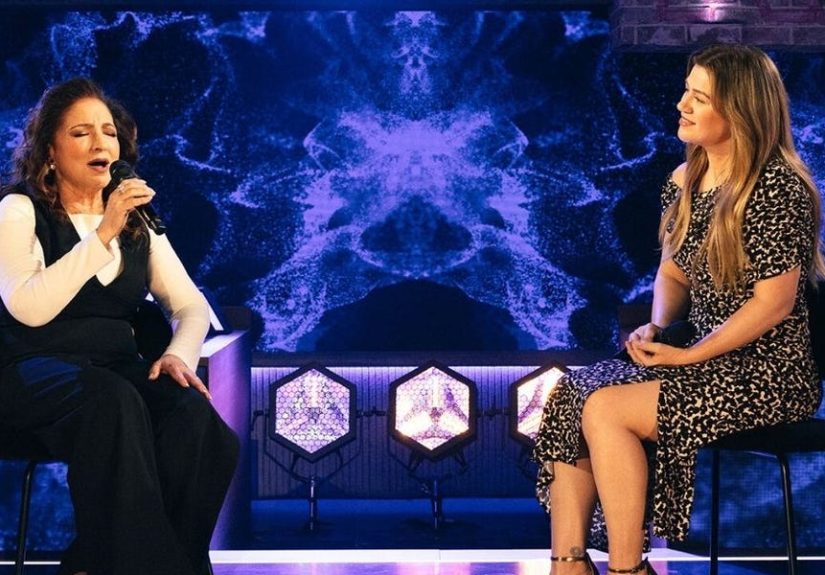
Some TV moments are nice. Some are polished. And then there are the ones that make you sit up on the couch, lower your snack mid-bite, and think, “Well, that was absolutely worth turning the television on for.” Kelly Clarkson’s emotional duet with Gloria Estefan belongs in that last category. When the two singers shared the stage on Songs & Stories with Kelly Clarkson, the result was more than a celebrity collaboration. It felt like a meeting of eras, styles, and emotional instincts that somehow clicked at exactly the right moment.
The performance quickly stood out because it offered something that music fans always claim they want and rarely get in full: genuine chemistry, musical respect, and two artists who did not seem remotely interested in trying to out-sing each other. They simply sang. And because both Kelly Clarkson and Gloria Estefan know how to tell a story through a melody, the duet landed with more force than a flashy TV stunt ever could.
At the center of the buzz was their performance of (You Make Me Feel Like) A Natural Woman, a song with enough emotional history to make almost any singer nervous. Tackling it on television is a bold choice. Tackling it with Gloria Estefan, while also discussing music memories, legacy, and the emotional roots of performance, is a full “go big or go home” decision. Thankfully, no one went home. Instead, viewers got one of the most memorable TV music moments of the season.
The TV Moment That Hit Viewers Right in the Feelings
Part of what made the duet so effective was the format of the show itself. Songs & Stories with Kelly Clarkson was built to let music breathe. Rather than rushing artists through tiny sound bites and applause breaks every 14 seconds, the series gives Clarkson room to talk with her guests about their songs, their careers, and the experiences behind their music. That setup matters. A performance usually lands harder when the audience knows why the song matters.
That is exactly what happened with Gloria Estefan’s episode. Estefan did not arrive merely as a guest promoting a project. She showed up as a living piece of pop history. Kelly, meanwhile, stepped into the conversation not just as a host but as an obvious fan. That fan energy is a huge part of Clarkson’s appeal. She never fakes reverence. When she admires someone, you can hear it, see it, and probably measure it on the Richter scale.
So when the two women moved into A Natural Woman, the song did not feel randomly selected. It felt earned. The performance carried the emotional weight of admiration, memory, and mutual respect. That is why viewers responded so strongly. It was not just technically impressive. It was emotionally coherent. Those are not always the same thing, especially on TV.
Why “A Natural Woman” Was the Perfect Choice
There are songs you sing, and there are songs you have to survive. (You Make Me Feel Like) A Natural Woman is firmly in the second category. It has a towering legacy because of its connection to Carole King, Gerry Goffin, and Aretha Franklin, and any new performance inevitably invites comparison. That sounds terrifying for regular humans, but Kelly Clarkson and Gloria Estefan are not exactly regular humans when it comes to live vocals.
What made their version work was restraint. Neither singer turned the performance into an Olympic event for vocal acrobatics. Yes, the power was there. Yes, the control was obvious. But the focus stayed on the emotion of the song rather than on proving who could hit the nearest chandelier note. Clarkson brought her trademark clarity and emotional openness. Estefan added warmth, polish, and the kind of seasoned phrasing that makes a song feel lived-in instead of merely rehearsed.
The result was a duet that sounded intimate without becoming small. It honored the original spirit of the song while still feeling fresh enough for a modern TV audience. That balance is hard to strike. Too much imitation and the performance becomes karaoke with better lighting. Too much reinvention and people start clutching their pearls on social media. Clarkson and Estefan found the sweet spot in between.
Two Voices, Two Strengths, One Emotional Center
Kelly Clarkson’s voice is often described as powerful, and that is true, but power is only half the story. Her real gift is emotional transparency. She sounds like she means what she sings, even when covering someone else’s material. Gloria Estefan’s strength is different. She brings elegance, rhythmic intelligence, and emotional steadiness. Put those qualities together, and the duet feels balanced instead of crowded.
That balance matters because emotional songs can collapse if one singer leans too dramatic while the other stays too detached. Here, both artists met in the middle. Clarkson’s openness invited the viewer in. Estefan’s calm authority gave the performance shape. One brought spark, the other brought glow, and together they created a performance that felt rich rather than overcooked.
The “Mi Tierra” Performance Added Even More Meaning
If the English-language duet gave viewers goosebumps, the episode’s Mi Tierra moment added cultural depth and a little extra heart. Kelly Clarkson singing in Spanish alongside Gloria Estefan was not just a fun gimmick or a viral-content shortcut. It reflected Clarkson’s willingness to step outside her comfort zone and Estefan’s generosity in making space for that vulnerability.
That is a major reason the episode connected beyond simple fan excitement. Estefan’s music has long represented more than crossover success. She helped bring Latin pop to a broad mainstream American audience and opened doors for generations of artists who came after her. So when Clarkson joined her on Mi Tierra, the performance carried symbolic value. It was not just one singer covering another. It was an acknowledgment of cultural influence, musical history, and the emotional power of songs rooted in identity.
Clarkson’s approach also helped. She did not present herself as an expert. She approached the song with enthusiasm, humility, and visible affection for Estefan’s work. That combination is hard not to like. It made the performance feel human. Viewers love polish, sure, but they also love courage. Watching a major star challenge herself in real time, while clearly honoring the artist beside her, gave the whole episode extra emotional texture.
Kelly Clarkson’s Secret Weapon Is That She Still Sounds Like a Fan
There is a reason Clarkson works so well in this kind of music-centered television format. She has the chops of a major vocalist, but she also retains the excitement of someone who still cannot quite believe she gets to sing with the people she grew up admiring. That quality has fueled everything from her famous cover segments to her interviews. She does not perform interest. She radiates it.
That matters in a duet like this because the audience can feel when a collaboration is built on genuine admiration. Clarkson was not trying to flatten Gloria Estefan into a nostalgia package. She treated Estefan like what she is: a foundational figure in American pop and Latin music history. That energy helped shape the performance. The duet felt like a conversation between artists, not a promotional exercise with microphones.
Clarkson also understands television rhythm. She knows when to joke, when to pause, and when to let a song take over. In lesser hands, a moment like this might have been overexplained. Instead, the music did the heavy lifting. Frankly, that was a smart move. When two vocal powerhouses are already in the room, nobody needs a long speech to explain that it is a good idea.
Gloria Estefan Brought Legacy, Warmth, and Serious Star Presence
Gloria Estefan’s role in the episode cannot be reduced to guest-star sparkle. She brought the kind of presence that only comes from a career built across decades, genres, and audiences. Estefan is one of those artists whose music history is woven into larger conversations about crossover success, immigrant identity, and the mainstream embrace of Latin sounds. She has done the hard part already. She does not need to prove she belongs on the stage. She simply walks on it and the stage adjusts accordingly.
That confidence helped make the duet feel emotionally secure. Estefan did not need to dominate the song. She understood its emotional architecture and moved within it beautifully. Her warmth also came through in the conversation around the performances. That made the entire segment feel welcoming rather than formal. There was reverence, yes, but there was also ease.
And that ease is underrated. The best duets often sound like friendship translated into harmony. Even when the artists are not longtime collaborators, the performance works if they create the illusion of trust. Clarkson and Estefan managed that effortlessly. The vibe was less “watch two stars execute a media strategy” and more “watch two musicians enjoy the rare pleasure of singing a great song together.”
Why Fans and Viewers Responded So Strongly
Media coverage around the duet repeatedly emphasized one word: emotional. That description makes sense, but it is worth unpacking. Viewers were not emotional simply because the song was beautiful. They were emotional because the performance triggered several kinds of memory at once.
For some fans, Clarkson represents a certain era of 2000s pop resilience: big choruses, bigger feelings, and a voice that could turn heartbreak into cardio. For others, Estefan represents a different but equally important era: the rise of Latin crossover success, Miami Sound Machine, and a catalog that helped reshape what mainstream American pop could sound like. Put those histories in one frame, and you get more than nostalgia. You get a feeling of continuity.
There is also the current TV landscape to consider. Audiences are overloaded with content that is chopped, memed, clipped, and served in bite-size bits before it has time to mean anything. A full-bodied musical moment can still break through, especially when it feels live, sincere, and musically competent. Call it revolutionary, or call it a reminder that television still works when talented people do talented things in front of cameras. Either way, it landed.
What This Duet Says About Music on Television Right Now
The Clarkson-Estefan moment also highlights why music TV still matters. In an age dominated by streaming playlists and algorithm-fed clips, a well-produced televised performance can still create communal attention. It gives viewers a shared cultural beat. Not a manufactured scandal. Not a clickbait feud. Just a song, performed well, by artists who understand how much a song can carry.
That is part of the reason Songs & Stories with Kelly Clarkson feels smart. It recognizes that audiences are still hungry for context. People do not just want tracks; they want stories. They want to know why an artist chose a song, what memory it unlocks, what risk it carries, and why the performance matters in that specific room on that specific night.
The duet with Gloria Estefan delivered exactly that. It was not trying to go viral first and be meaningful later. It was meaningful first. The internet simply noticed.
Experiences Related to “Kelly Clarkson Sings Emotional Duet With Gloria Estefan on TV”
Watching a moment like this also reminds people of their own experiences with music, and that may be the biggest reason the duet resonated. Almost everyone has a song that transports them instantly. It might be the song that played during a long car ride with family, the one your mother cleaned the house to on a Saturday morning, or the one you heard after a breakup when your dignity was hanging on by one dramatic thread. A great TV duet taps into those private memories even while millions of people watch the same performance.
That is what this Clarkson-Estefan moment did so well. It felt public and personal at the same time. One viewer may have seen Kelly Clarkson and remembered growing up during the American Idol era, when she became the rare reality-show winner who turned hype into a lasting career. Another viewer may have seen Gloria Estefan and remembered hearing Conga, Coming Out of the Dark, or Mi Tierra at family parties, weddings, or holiday gatherings where three generations somehow knew every word. The duet became a bridge between those emotional timelines.
There is also something deeply relatable about watching one artist honor another in real time. Anyone who has ever met a mentor, worked beside someone they admired, or finally had the chance to do something they once only imagined can understand the emotional current running through that kind of performance. Clarkson’s fan-to-peer energy is so visible that it makes the viewer feel the stakes. You are not just hearing a song. You are watching a dream unfold in professional lighting.
For bilingual and bicultural viewers, the episode likely had even more layers. Seeing Clarkson take on Mi Tierra with sincerity and respect added a different kind of emotional payoff. It suggested that songs tied to heritage and cultural memory can still be shared across audiences without being flattened or stripped of meaning. That matters. Music often does its best work when it does not erase difference but celebrates connection through it.
There is also the simple experience of hearing grown artists sing with maturity. That sounds obvious, but it is rarer than it should be. Many performances today are engineered for maximum reaction and minimum depth. This one offered the opposite. It had patience. It had listening. It had phrasing that came from lived experience rather than pure vocal gymnastics. For viewers who miss that kind of musical storytelling, the duet probably felt like a glass of cold water in a desert of noise.
And finally, moments like this remind audiences why they fell in love with music in the first place. Not for charts alone. Not for branding. Not for fan wars that make the internet feel like a school cafeteria with Wi-Fi. But for the rare instant when a performance makes time slow down. Kelly Clarkson and Gloria Estefan created that kind of instant. You do not need to be a superfan of either artist to feel it. You just need to recognize what happens when talent, respect, and emotional truth show up in the same room at the same time.
Conclusion
Kelly Clarkson singing an emotional duet with Gloria Estefan on TV worked because it gave viewers something increasingly rare: a musical moment with real feeling, real context, and real respect between the artists involved. Their performance of (You Make Me Feel Like) A Natural Woman delivered the vocal fireworks people hoped for, but it was the warmth, humility, and history surrounding the duet that made it memorable. Add the cultural resonance of Mi Tierra, and the episode became more than just another celebrity appearance. It became a reminder that great music television still knows how to stop people in their tracks.
In other words, yes, the duet was emotional. But more importantly, it was earned. And in the crowded world of modern entertainment, that may be the most powerful note of all.