Table of Contents >> Show >> Hide
- What This Cooktop Is (and Why People Shop It)
- Design and Build Quality
- Cooking Performance and Heating Elements
- Downdraft Ventilation Performance
- Installation and Fit Guide (Read This Before You Buy)
- Pros and Cons
- Who Should Buy the KitchenAid 30 in. Downdraft Vent Ceramic Glass Electric Cooktop?
- Care, Cleaning, and Long-Term Ownership Tips
- Real-World Experience With the KitchenAid 30 in. Downdraft Vent Ceramic Glass Electric Cooktop
- Final Verdict
Some kitchens are easy. You have a giant wall for a hood, plenty of cabinet space, and enough room to host a cooking show. Then there are real kitchens: islands, open-concept layouts, remodeled spaces, and “please don’t ruin my sightlines” requests. That’s exactly where the KitchenAid 30 in. Downdraft Vent Ceramic Glass Electric Cooktop earns its keep.
This model (commonly listed as KCED600GSS for stainless trim, with a black-trim sister version in some stores) is built for homeowners who want a clean cooktop look and integrated ventilation without a separate range hood. In other words, it is trying to solve two jobs at once: cook well and vent well, while still looking polished in a modern kitchen.
In this in-depth guide, we’ll break down what it does well, where it asks for compromises, what to know before installation, and what real owners tend to like (or grumble about). If you are shopping for a 30-inch downdraft electric cooktop, this one deserves a serious look.
What This Cooktop Is (and Why People Shop It)
The KitchenAid KCED600GSS is a 30-inch radiant electric cooktop with a ceramic glass surface and an integrated downdraft vent. The downdraft system pulls smoke, steam, and odors downward at the cooking surface instead of relying on an overhead hood. That makes it especially appealing for:
- Kitchen islands where a hood would block views
- Open-plan kitchens where a ceiling hood would dominate the room
- Remodels replacing older downdraft cooktops
- Homes with venting limitations (with an optional duct-free conversion setup)
KitchenAid positions this cooktop as a premium option, and it shows in the details: stainless controls, a smooth black ceramic glass top, multiple specialty heat settings, and a built-in ventilation system with a multi-speed fan. It is not an induction unit, so it behaves like a classic radiant electric cooktop (with the familiar strengths and quirks that come with that).
Design and Build Quality
Clean, Modern, and Built for Open Kitchens
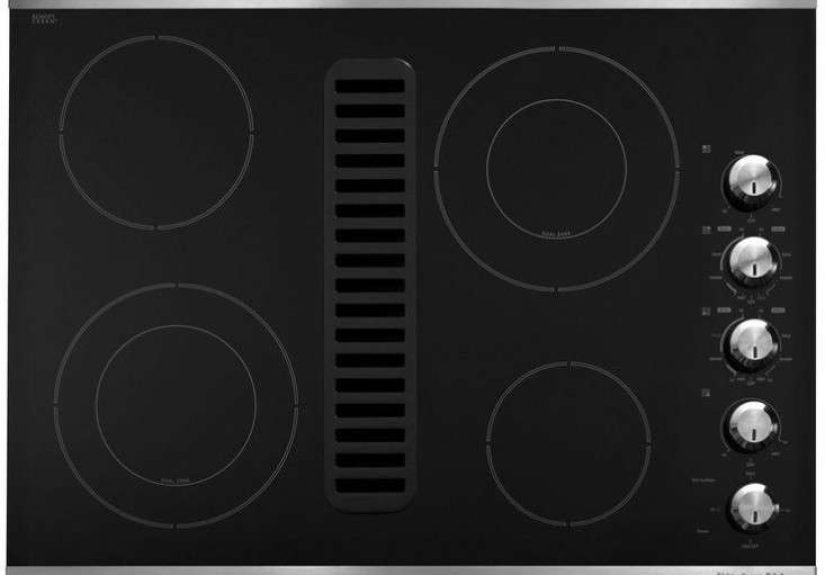
The first thing people notice is the look. This cooktop has the minimalist, upscale style most shoppers want in a modern kitchen: a dark ceramic-glass surface framed by stainless trim (on the stainless version), plus metal knobs on the side. It looks sharp in islands, especially in kitchens where appliances are visible from the living or dining area.
KitchenAid also includes a CookShield finish on the glass surface, which is designed to help resist scratches and keep the top looking better over time. That said, “more resistant” is not the same as “indestructible.” Ceramic-glass surfaces still reward good habits (more on that in the care section), and owners who drag cookware around like they are sanding a deck may not love the results.
Knob Controls Instead of Touch Controls
This model uses knob controls, not touch sliders. That is a plus for a lot of people. Knobs are quick, obvious, and easy to use, especially when you are actively cooking and your hands are messy. There is no menu diving, no missed taps, and no wondering whether the control panel is locked.
If you prefer tactile controls and a traditional “turn it and cook” experience, this is a strong point in KitchenAid’s favor.
Cooking Performance and Heating Elements
Four Elements with Useful Range
The cooktop includes 4 radiant elements, and the burner layout is designed for flexibility instead of just raw heat. You get a mix of sizes and outputs, including specialty elements for both higher-power cooking and gentler heat.
- 10-inch Even-Heat Ultra element for bigger cookware and higher-demand cooking
- 6-inch Even-Heat element with low-temp capability for delicate tasks
- 9-inch / 6-inch dual-ring element for cookware size flexibility
- Additional 6-inch element for everyday pots and pans
Based on manufacturer specs and retailer data, the element power outputs are in the range shoppers expect for a premium radiant cooktop, with a high-output 3,200W element, a 3,000W dual-ring element, and lower-output elements suited for simmering, melting, and general use. This combination makes it easy to run a “real dinner” setup: sear on one burner, simmer on another, keep a sauce stable on a low burner, and boil on the dual-ring zone.
Even-Heat and Low-Temp Cooking
KitchenAid leans into the Even-Heat story here, and for good reason. The dedicated simmer and melt capabilities are genuinely useful if you cook things that do not respond well to temperature drama (looking at you, chocolate, butter, cream sauces, and anyone reheating leftovers without scorching them).
For everyday cooking, this means less babysitting on low heat and better control than a basic “small/medium/large” burner setup.
Downdraft Ventilation Performance
Built-In Venting Without a Hood
The headline feature is the integrated downdraft ventilation system. KitchenAid rates the fan at 300 CFM with a 3-speed fan control. In practical terms, that is enough for typical cooking tasks like sautéing, simmering, pan-frying, and many searing tasks, especially when the pan is centered and the fan is on the right speed.
Downdraft systems are all about kitchen layout and airflow tradeoffs. They are excellent when you do not want a hood, but they do not behave exactly like a large overhead vent, especially with tall stockpots or heavy, high-plume cooking. Steam rises (rude, but true), so placement and fan speed matter.
The good news: KitchenAid gives you a convertible venting option with a separate duct-free conversion kit (sold separately), which can be a lifesaver in kitchens where running ductwork is difficult or expensive.
Who Will Be Happiest with This Downdraft Design?
If your cooking style is mostly weeknight meals, sauces, breakfast, pasta, stir-fries, and the occasional sear, the downdraft setup is usually a very smart solution. If you regularly blacken steaks indoors, deep-fry like it is a county fair, or use oversized canning pots, you may need to be more realistic about what 300 CFM at counter level can do.
Installation and Fit Guide (Read This Before You Buy)
Product and Cutout Dimensions
The KitchenAid 30-inch downdraft cooktop is commonly listed at approximately:
- Product width: 30 7/8 inches
- Product depth: 22 1/16 inches
- Visible height (above-counter profile): 3 5/8 inches
Typical cutout requirements are roughly:
- Cutout width: 28 7/8 inches
- Cutout depth: 21 1/8 inches
Here is the part people miss: the downdraft assembly below the counter needs much more room than the top profile suggests. Retailer and spec-sheet measurements show a much taller assembled/vent section below the countertop, which affects cabinet planning and duct routing.
Electrical and Cabinet Planning
This is a 240V electric cooktop and typically requires a 40A circuit. It is also commonly listed as not including a power cord, so plan for that during installation. (This is normal, but it still surprises people every single time.)
Another key point: this downdraft setup generally does not install over a built-in wall oven because the fan/motor/ductwork take up the cabinet space below. If your dream layout includes “cooktop on top, wall oven directly under it,” this particular model is probably not your match.
Pro Tip for Remodelers
If you are replacing an older downdraft unit (especially older JennAir/KitchenAid-style setups), measure everything twice: cutout width/depth, cabinet depth, and duct path. A lot of “same size” cooktops are close, but not identical. The 30-inch label is only the starting point.
Pros and Cons
What This KitchenAid Cooktop Does Really Well
- Integrated downdraft ventilation keeps your sightlines clean and avoids a separate hood
- Strong element mix with high-output burners plus simmer/melt-friendly options
- Dual-ring element adds flexibility for different pan sizes
- Knob controls are simple and reliable for everyday use
- Premium look with ceramic glass and stainless trim/knobs
- Duct-free conversion option helps with tough installations
Things to Think About Before Buying
- Ceramic glass needs care and can show smudges or scratches if you are rough with cookware
- Downdraft performance depends on cooking style and pot height
- No built-in wall oven below in many installations due to vent hardware
- No power cord included (common, but still a line item)
- Premium category pricing compared with basic 30-inch electric cooktops
Who Should Buy the KitchenAid 30 in. Downdraft Vent Ceramic Glass Electric Cooktop?
This cooktop is a great fit if you want a premium electric cooktop with downdraft ventilation and your kitchen layout makes an overhead hood awkward, unattractive, or impossible.
It is especially smart for:
- Island kitchens where a ceiling hood would block light or views
- Open-concept remodels where appliance aesthetics matter
- Homeowners replacing an older downdraft cooktop who want a modern upgrade
- Cooks who want both searing power and gentle simmer control
It may be less ideal if you want induction performance, extra smart features, or the ability to install a wall oven directly underneath.
Care, Cleaning, and Long-Term Ownership Tips
A ceramic-glass cooktop can look gorgeous for years, but it rewards consistency. Here are the habits that help:
- Lift pans instead of dragging them. Dragging is the fastest way to dull the finish.
- Clean after cooking, not next weekend. Baked-on residue becomes a personality trait if left too long.
- Use cooktop-safe cleaner. Avoid harsh abrasives that can haze the surface.
- Match pan size to burner size. You get better performance and less wasted heat.
- Use the fan speed intentionally. Turn it up early when searing, not after the room smells like onions forever.
Owners who treat the surface well tend to be much happier long term. Owners who treat it like cast iron… usually leave very passionate reviews.
Real-World Experience With the KitchenAid 30 in. Downdraft Vent Ceramic Glass Electric Cooktop
Let’s talk about what living with this cooktop actually feels like, because spec sheets never tell the whole story. In day-to-day use, the biggest win for many homeowners is not just the cooking performance; it is how the cooktop changes the room. If your kitchen is open to the living area, this model keeps the visual line clean. No big hood hanging in the middle of the conversation. No “industrial kitchen” vibe unless you actually want that.
Owners who renovated older kitchens often describe this as both a functional upgrade and a design upgrade. The glass surface looks modern, the stainless trim feels premium, and the integrated vent solves a problem without adding another appliance overhead. In homes where the cooktop faces guests, this matters more than you might think. It is one of those purchases that people notice even when they do not know the model number.
On the cooking side, users tend to like how quickly the larger elements heat and how flexible the burner layout feels. The dual-ring element is especially handy if your cookware rotates between small saucepans on weekdays and larger pots on weekends. The low-heat settings also get a lot of practical praise because they make the cooktop feel more controlled than older radiant models. Melting butter, holding a sauce, or reheating leftovers is less of a guessing game.
The downdraft fan is another area where experience depends on expectations. People who understand what downdraft is designed to do are usually happy: it captures everyday cooking odors, steam, and a lot of surface-level smoke without requiring a hood. People expecting restaurant-level extraction during very high-heat cooking sometimes feel underwhelmed. That is not a flaw unique to KitchenAid; it is the reality of downdraft versus overhead ventilation. Starting the fan early and using the right speed makes a noticeable difference.
The most common complaints are exactly the ones you would expect with a ceramic-glass cooktop. The surface can show smudges, and it can scratch if pans are dragged or if gritty debris gets trapped under cookware. Many owners still say cleanup is easy overall, but “easy to clean” and “never shows marks” are not the same thing. This is a shiny black glass surface, not a magic portal.
A few ownership notes come up repeatedly during installation and early use. First, the unit needs proper planning below the counter because of the downdraft hardware. Second, the power cord may need to be purchased separately depending on your setup. Third, this is a cooktop for people who want dependable controls and proven design, not a smart-appliance dashboard. No apps, no voice assistant, no auto-start venting tricks. Just knobs, heat, and a fan.
In short, the real-world experience is strongest when the buyer matches the product to the kitchen: open layout, no hood preferred, radiant electric is acceptable, and the owner is willing to care for ceramic glass properly. In that scenario, this KitchenAid can feel like the “finally, this kitchen makes sense” upgrade.
Final Verdict
The KitchenAid 30 in. Downdraft Vent Ceramic Glass Electric Cooktop is a premium, practical solution for kitchens where an overhead hood is not ideal. Its biggest strength is how well it combines design and function: a sleek ceramic-glass electric cooktop with integrated ventilation, versatile burner options, and user-friendly controls.
It is not trying to be everything. It is not an induction showpiece. It is not a smart-home gadget. It is a thoughtfully designed downdraft electric cooktop made for real kitchens, especially islands and open layouts. If that is your situation, this model checks a lot of boxes and does it with style.