Table of Contents >> Show >> Hide
- The Thanksgiving Dessert Drama, Explained
- Why This Was Never Really About Cake vs. Pie
- What Good Thanksgiving Etiquette Actually Looks Like
- The Psychology Behind the “Back-Up Pie” Problem
- Why So Many Readers Defended the Daughter
- The Real Lesson: Thanksgiving Needs Fewer Tests and More Trust
- Related Experiences: Why Holiday Food Fights Feel So Familiar
- Conclusion
- SEO Metadata
Note: Body-only HTML, ready to paste into a CMS.
Every family has that one Thanksgiving story that gets retold for years. Sometimes it involves an overcooked turkey. Sometimes it involves a political argument that starts with “I’m just asking questions” and ends with someone aggressively buttering a roll. And sometimes, somehow, it becomes a full-blown dessert scandal.
That is exactly why this now-viral Thanksgiving drama hit such a nerve online. On the surface, it sounds almost too ridiculous to be real: a woman is asked to bring dessert, proudly shows up with a homemade cake, and then watches her mother quietly sideline it in favor of a surprise “back-up” pie. She leaves dinner upset, the family calls her immature, and the internet collectively says, “Oh no, this is not about pie.”
Because it really is not.
This kind of holiday blowup lands so hard because it taps into something bigger than pumpkin versus cheesecake. It is about control. It is about trust. It is about what happens when a family gathering stops feeling like a celebration and starts feeling like a public performance, complete with one person getting quietly demoted between the mashed potatoes and the whipped cream.
And yes, for the record, if someone asks you to bring dessert and you show up with a maple cheesecake, that should be greeted like a blessing. Not a threat.
The Thanksgiving Dessert Drama, Explained
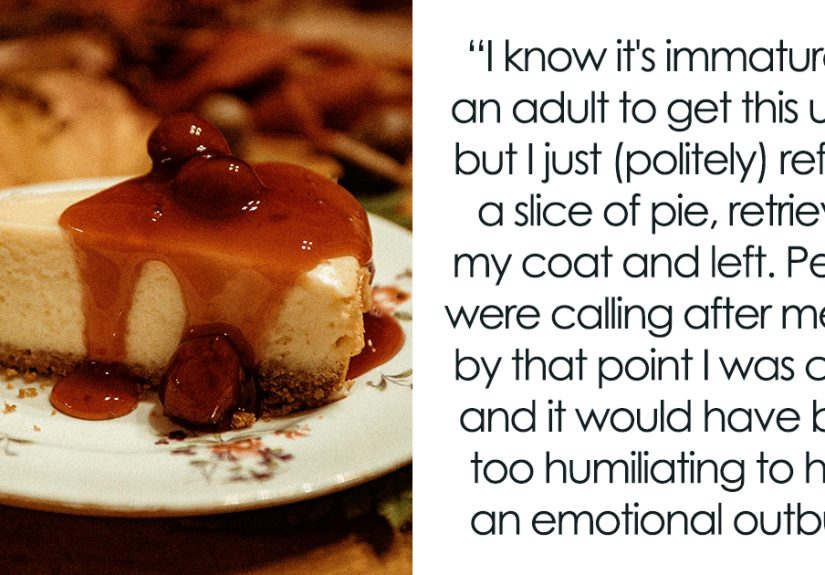
The story making the rounds centers on a woman who said she already had a strained relationship with her mother before the holiday even began. According to the account that spread online, her mother asked her to handle dessert for Thanksgiving. She made a maple cheesecake, put care into it, and arrived expecting that this was her contribution to the family meal.
Then came the plot twist worthy of a holiday sitcom written by someone who has definitely cried in a guest bathroom before: her mother had made a pumpkin pie “as a backup.” Not as an extra dessert. Not as a fun second option. As a backup. Worse, the pie came out first, the cheesecake was reportedly told to stay in the kitchen, and when other guests showed interest in trying it, the moment was managed away with the kind of smile that should come with warning labels.
No screaming match. No dramatic plate toss. The daughter simply left.
That exit is exactly why so many readers sided with her. Walking out did not read like random overreaction. It read like the last straw after a thousand smaller moments, the kind that family members often dismiss because each one looks minor in isolation. A sarcastic comment here. A little belittling there. A tradition weaponized in the name of “helping.” Add enough of those together and eventually even a slice of pie can feel like a personal attack wearing cinnamon.
Why This Was Never Really About Cake vs. Pie
If you are wondering why such a small act caused such a big emotional response, welcome to the strange universe of family dynamics, where dessert is never just dessert and “I made a backup” can translate to “I did not trust you to do this right.”
That is what made this incident sting. In healthy gatherings, a back-up dish is insurance. In tense gatherings, it can feel like a verdict. The difference is tone, timing, and intent. If a host privately keeps extra gravy in the fridge because Uncle Dan thinks pepper is a personality trait, that is just smart planning. If a host publicly replaces the dish they assigned to someone else, that is not planning. That is messaging.
The message here was loud even if nobody raised their voice: I expected you to fail, so I made sure you could not fully succeed.
Holiday meals are emotional because food is emotional. Recipes carry identity, memory, and status. The person carving the turkey is not just carving turkey. The person baking the pie is not just baking pie. These roles can become little family thrones, and some people do not surrender them gracefully. When a new dessert enters the chat, it can feel less like a sweet ending and more like a coup.
That is why the internet did not see a petty dessert disagreement. It saw a textbook power play with graham cracker crust.
What Good Thanksgiving Etiquette Actually Looks Like
One reason this story resonated is that modern holiday etiquette is surprisingly clear on the basics: communicate before the meal, coordinate dishes, appreciate what people bring, and do not humiliate a guest or contributor at the table. That is not fancy etiquette. That is just basic decency with napkins.
If You Assign a Dish, Respect the Dish
When you ask someone to bring dessert, you are not simply outsourcing sugar. You are inviting them to participate in the event. If you later decide you also want a traditional pie, the normal move is simple: tell them ahead of time. “Bring your cheesecake, and I’m making pumpkin pie too.” Problem solved. Now it is abundance. Now it is a dessert table. Now America wins.
What you do not do is create a secret backup and then act shocked when the person you sidelined feels sidelined.
Hosts Set the Tone
Hosts do not need to be perfect, but they do have power. They decide whether a gathering feels generous or tense, warm or competitive. A good host makes room for people. A controlling host makes room for their own narrative. There is a huge difference between “Look at all the wonderful things everyone brought” and “Actually, let’s keep that in the kitchen.”
That tiny choice can turn a holiday table into a ranking system.
Guests Want Appreciation, Not Auditions
Most guests are not looking for applause. They just do not want to feel embarrassed. If someone spends time making a dish, the socially normal response is gratitude. Even if the dish is not your favorite. Even if your heart belongs to pumpkin pie forever. Even if your grandmother’s recipe has its own fan club and headshot.
You can honor tradition without making someone else feel disposable.
The Psychology Behind the “Back-Up Pie” Problem
Holiday stress has a special talent for shrinking everyone’s patience and enlarging everyone’s triggers. Family gatherings also tend to revive old roles at incredible speed. Independent adults walk through the front door and suddenly become the teenager who was criticized for their haircut, the sibling who was never taken seriously, or the daughter who somehow still cannot bring the “right” dessert at age 32.
That is what makes passive-aggressive behavior so effective and so maddening. It often arrives disguised as practicality, concern, or tradition. Nobody says the harsh part directly. They just create a scene in which the meaning hangs in the air like steam over green beans.
And because the behavior is subtle, the injured person often gets framed as the problem for reacting. “Why are you upset?” “It’s only pie.” “You’re being dramatic.” This is the emotional equivalent of stepping on someone’s foot and then critiquing their posture.
In reality, people rarely leave holiday dinners over one isolated moment. They leave because one moment confirms a pattern. The cake gets hidden, but what really walks out the door is a pile of accumulated hurt.
Why So Many Readers Defended the Daughter
The public reaction to this story was revealing. Many readers did not just comment on the mother’s behavior. They recognized it instantly. That matters.
There is a reason stories like this spread so quickly around the holidays: people have lived some version of them. Maybe not with pie, but with side dishes, seating charts, parenting critiques, gifted sweaters, guest room politics, or one legendary gravy incident nobody is emotionally prepared to revisit.
Readers understood that the daughter’s exit was not elegant, but it was understandable. In some families, staying at the table and pretending nothing happened is considered maturity. In reality, sometimes leaving is the most adult thing a person can do. Not because it fixes everything, but because it prevents a hurtful moment from turning into a bigger spectacle.
There is also something refreshing about refusing to accept a fake version of peace. Plenty of families specialize in surface harmony. Everybody smiles, the tension gets buried under whipped topping, and the person who was slighted is expected to absorb it for the sake of the holiday. That arrangement looks calm from the outside, but it usually comes at one person’s expense.
People are getting less willing to pay that price.
The Real Lesson: Thanksgiving Needs Fewer Tests and More Trust
The funniest part of this whole mess is that the solution was absurdly easy. Serve both desserts.
That is it. That is the revolutionary strategy. Put out the pumpkin pie. Put out the maple cheesecake. Let people make reckless, joyful dessert choices. Let an uncle stack both on one plate like he is building edible architecture. Let the cousins debate which one wins. Let the table be a table, not a tribunal.
When family members treat contribution like competition, gatherings become exhausting. But when they treat contribution like collaboration, holidays get lighter. More delicious, too.
The best Thanksgivings are not the ones where every dish is perfect and nobody says anything weird. Those do not exist. The best Thanksgivings are the ones where people extend grace, communicate clearly, and avoid turning every tradition into a loyalty test.
In other words: less emotional sabotage, more dessert.
Related Experiences: Why Holiday Food Fights Feel So Familiar
If this “back-up pie” saga felt weirdly personal to a lot of readers, that is because versions of it happen all the time. Not always with a mother and daughter. Not always with cheesecake. But the emotional blueprint is practically embroidered onto America’s holiday tablecloth.
Take the classic duplicate-dish showdown. One person is told to bring stuffing, salad, or dessert. They spend money, time, and maybe a small piece of their soul on it. They arrive carrying a dish like a proud contestant on a cooking show, only to discover someone else made the same thing “just in case.” Suddenly the assigned contribution is not a contribution anymore. It is an alternate. A reserve player. The emotional impact is immediate: we did not trust your part of the meal to matter.
Then there is the stealth replacement move, a holiday tradition nobody asked for. The homemade rolls are quietly left in the foil while store-bought ones get plated. The guest’s salad never makes it to the table because “there was already enough food.” The allergy-friendly dessert stays in the fridge because the host wants the prettier pie on display. These may sound small, but they land hard because food is effort made visible. When the effort disappears, people do not just feel overlooked. They feel erased.
Another painfully common experience is the “joke” that is not a joke. Someone tastes a dish and says, “Well, it’s…creative.” Or, “This is definitely your style.” Everyone laughs just enough to make the target seem humorless if they object. That kind of comment is one of the oldest tricks in the passive-aggressive playbook. It creates plausible deniability for the speaker and instant self-doubt for the person on the receiving end.
And then there is the family member who treats tradition like private property. Maybe Grandma always made the pecan pie, so when someone younger volunteers a dessert, it is viewed less as help and more as an invasion. Instead of saying, “I’d really love to keep that tradition this year,” the person stages a silent competition and hopes the table gets the message. It is amazing how many adult conflicts could be avoided by one honest sentence spoken five days earlier.
What links all of these experiences is not the menu. It is the power dynamic. Holiday meals are supposed to be about sharing, but in tense families they can become little status checks. Who gets thanked? Who gets corrected? Who gets ignored? Who gets to define what counts as “real” Thanksgiving food? Those questions are rarely spoken aloud, but they shape the emotional temperature of the room.
That is why people remember these moments for years. Not because the pie was unforgettable, but because the feeling was. A hidden cake, a swapped dish, a joke at someone’s expense, a contribution dismissed in public; none of it looks major from ten thousand feet. Up close, though, it can tell someone exactly where they stand in the family pecking order.
Which is also why the fix is not complicated, even if it is not always easy: communicate early, appreciate effort loudly, and never use food to score emotional points. There is no prize for winning Thanksgiving by making someone else feel small. The real flex is making the table feel big enough for everyone.
Conclusion
So no, this woman did not leave Thanksgiving because her mother made pie. She left because the pie came with a message, and the message was louder than dessert should ever be.
That is the reason this story keeps traveling. It is messy, recognizable, funny in a painfully specific way, and just serious enough to make people wince. It reminds us that holiday etiquette is not really about forks, centerpieces, or whether whipped cream counts as a personality. It is about respect. About not setting people up to feel foolish in front of the people who are supposed to know them best.
And if your family holiday ever starts drifting toward emotional chaos, here is one simple rule to keep taped inside your brain like a recipe card: when in doubt, serve both desserts and spare everybody the character development.