Table of Contents >> Show >> Hide
- What “Learning Through Play” Actually Means
- Why Play Works So Well for Preschoolers
- What Kids Learn During Play (Yes, Even When It Looks Like “Just Playing”)
- Free Play vs. Guided Play: Which One Is “Better”?
- What to Look for in a High-Quality Play-Based Preschool
- Questions Parents Should Ask on a Preschool Tour
- Common Myths About Play-Based Learning (and the Reality)
- How Parents Can Support Learning Through Play at Home
- When to Worry (and When to Relax)
- Conclusion: Play Is Preschool’s Superpower
- Experiences That Bring Play-Based Preschool to Life
If you’ve ever watched a preschooler turn a cardboard box into a spaceship, a bakery, and a “very important office” in the span of seven minutes, you’ve already witnessed the
central truth of early childhood: play isn’t the break from learningplay is the learning.
And yet, many parents still feel a tiny pang of worry when they tour a preschool and see blocks, dress-up clothes, sensory bins, and a dramatic-play corner that looks like
a miniature coffee shop. Where are the worksheets? The flashcards? The tiny briefcases full of tiny homework?
Take a deep breath. Play-based preschool doesn’t mean “chaos with glue sticks.” It means your child is practicing language, math, science, self-control, and friendship skills
in the most developmentally appropriate way possible: by doing, experimenting, pretending, negotiating, building, and asking approximately 900 “why” questions per hour.
What “Learning Through Play” Actually Means
Learning through play (often called play-based learning) is an approach where children build skills and knowledge through hands-on experiences driven by curiosity.
The best classrooms use a smart blend of:
- Child-directed (free) play: kids choose, invent rules, and follow their own ideas.
- Guided play: adults set up an inviting challenge or “scene,” and children steer the action.
- Playful learning games: rules-based activities that build turn-taking, attention, and early academics.
A strong play-based preschool is still highly intentional. Teachers plan environments, select materials, observe learning, and nudge children forward with thoughtful questions.
The vibe is “joyful workshop,” not “free-for-all.”
Why Play Works So Well for Preschoolers
1) Play builds brain architectureone conversation at a time
Young children learn best through warm, responsive back-and-forth interactions with caring adults. When a teacher (or parent) responds to a child’s idea“You made a bridge!”
“Tell me about it!”that “serve-and-return” rhythm strengthens the foundation for language, memory, and higher-level thinking.
2) Play trains executive function (the “air-traffic control” of the brain)
Preschool learning isn’t just knowing letters and numbers. It’s being able to use themwhile paying attention, waiting your turn, remembering directions, coping with frustration,
and trying again. Play naturally rehearses these executive function skills:
- Inhibitory control: “I want the red truck, but I’ll wait.”
- Working memory: “First we build the road, then the garage.”
- Cognitive flexibility: “Okay, the tower fell. New plan.”
3) Play makes learning stick because kids are motivated
Play is meaningful to children. When learning is connected to their goals (“Our pretend restaurant needs menus!”), attention rises, practice increases, and skills become usable in real life.
It’s the difference between memorizing a word and actually using it to negotiate who gets to be the chef.
What Kids Learn During Play (Yes, Even When It Looks Like “Just Playing”)
Language and early literacy
Pretend play is a language engine. Kids narrate roles, explain plans, and invent stories. They also practice the social side of communicationlistening, taking conversational turns,
and adjusting their words based on who they’re talking to (a friend, a teacher, a “customer,” or a stuffed dinosaur with strong opinions).
Example: In a pretend grocery store, children label items, write shopping lists with scribbles that gradually resemble letters, and “read” signs. Teachers can add menus,
recipe cards, or simple books that connect to the theme without turning play into a pop quiz.
Math and early problem-solving
Blocks and construction toys quietly teach big concepts: number sense (How many blocks?), measurement (taller/shorter), geometry (shapes), patterns, balance, symmetry, and spatial reasoning.
Example: Kids building a ramp experiment with angles and speed. A teacher might ask, “What happens if we make it steeper?”which is basically preschool physics, minus the lab goggles.
Science and inquiry
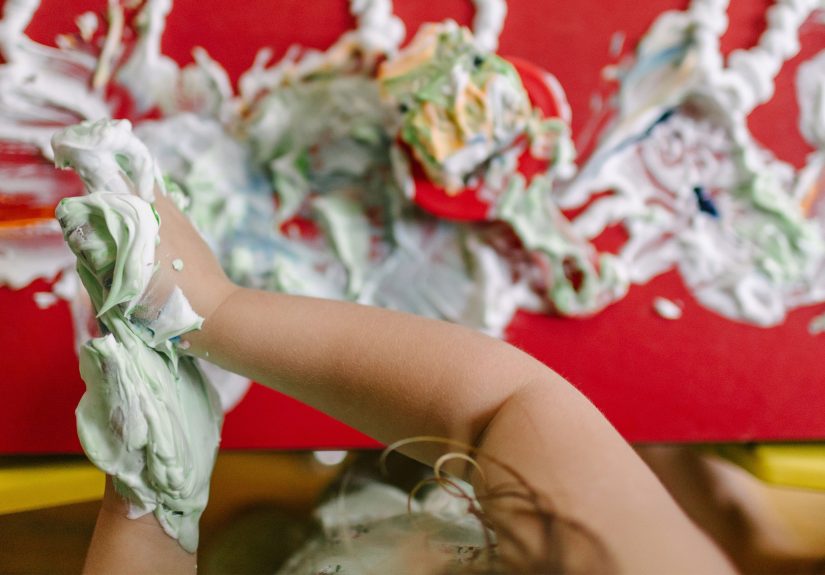
Sensory play, nature exploration, water tables, and simple experiments encourage observation, prediction, and cause-and-effect reasoning.
Children practice the scientific method in kid-sized steps: try, notice, adjust, try again.
Example: At the water table, children test which objects sink or float. Add cups, funnels, and tubes and you’ve got volume, flow, and a surprisingly intense debate about why the sponge is “cheating.”
Social-emotional skills and friendship “engineering”
Preschool is where children practice being people around other people. Play gives them real scenarios to learn:
- Sharing space and materials
- Negotiating roles (“You be the doctor, I’ll be the pet dragon.”)
- Repairing conflict (“I didn’t like that. Can we try again?”)
- Building empathy and cooperation
These skills are a major part of kindergarten readiness. A child who can join a group, manage disappointment, and persist through a challenge is set up for long-term success.
Physical development
Play supports fine motor skills (cutting, drawing, building, manipulating small objects) and gross motor skills (running, climbing, balancing, dancing).
Outdoor play is especially valuable for healthy growth, confidence, and stress relief.
Free Play vs. Guided Play: Which One Is “Better”?
The best preschools don’t force you to choose like it’s a reality show: “Only one type of play may survive.”
Children benefit from both.
- Free play builds creativity, independence, and self-directed problem-solving. Kids learn to generate ideas and manage their own plans.
- Guided play is where teachers skillfully connect play to learning goalswithout hijacking it. Adults set the stage, then follow the child’s lead.
Guided play example: A teacher sets up an “ice cream shop” with scoops, pom-poms, cones, and a simple price chart. Kids take orders, count scoops, compare quantities,
and practice polite customer talk. No worksheets neededmath and language are baked in (or, more accurately, frozen in).
What to Look for in a High-Quality Play-Based Preschool
Not all “play-based” programs are created equal. Use these signs to tell the difference between meaningful playful learning and “we put out toys and hope for the best.”
1) Teachers are engaged observers and thoughtful guides
In a strong classroom, teachers circulate, listen, and join play strategically. They ask open-ended questions:
“What do you think will happen next?” “How could we solve that?” “Tell me about your plan.”
They help children stretch their thinking without taking over.
2) The environment invites exploration
Look for a variety of open-ended materials (blocks, loose parts, art supplies, pretend-play props, books, sensory tools) organized so children can access them independently.
You should see evidence that the room is designed for children, not just decorated for adults.
3) There’s predictable structure, not rigid control
Play-based doesn’t mean “no routine.” Young kids thrive with a rhythm: arrival, play/work time, small groups, outdoor time, meals/snacks, stories, rest.
Structure supports self-regulation and reduces stress.
4) You’ll see documentationeven if you don’t see worksheets
Some parents expect paper proof. But play-based assessment often looks like teacher notes, photos, short observations, and samples of children’s work over time.
Ask how teachers track progress in language, social skills, and early academics.
5) Behavior guidance teaches skills (instead of just punishing)
Preschoolers are learning emotional regulation in real time. A quality program helps children name feelings, solve conflicts, practice calming strategies, and repair harm.
Look for calm, consistent adult responsesnot shame, threats, or constant time-outs for normal preschool behavior.
Questions Parents Should Ask on a Preschool Tour
- “How do you balance child-directed play and guided play?”
- “What does a typical day schedule look like?”
- “How do you support early literacy and math through play?”
- “How do you handle conflicts between children?”
- “How do you communicate learning progress to families?”
- “How much outdoor play do children get each day?”
- “How do you support children with different learning needs?”
Pro tip: If the answers are vague (“They just play!”) or purely academic (“We do worksheets to prepare them for real school”), that’s useful informationjust not the kind you’re hoping for.
Common Myths About Play-Based Learning (and the Reality)
Myth: “If there are no worksheets, my child won’t learn academics.”
Reality: Preschool academics are best learned through concrete experiencestalking, building, sorting, counting, storytelling, exploring, and pretending.
Worksheets can be developmentally mismatched for many preschoolers, especially if they replace movement and hands-on learning.
Myth: “Play-based means kids do whatever they want.”
Reality: High-quality play-based classrooms are carefully designed. Children have choices within clear boundaries.
They learn classroom routines, kindness, and safetyskills that matter for kindergarten readiness.
Myth: “My child needs to read early to be successful.”
Reality: Early success is strongly tied to communication skills, curiosity, persistence, and social-emotional development.
A child who can focus, ask for help, and bounce back from frustration is in a great position for future learning.
How Parents Can Support Learning Through Play at Home
Keep it simple: the best toys don’t do all the work
Open-ended materials (blocks, dolls, cars, play food, crayons, boxes, scarves, tape) invite children to create, not just press buttons.
The goal isn’t a house full of stuffit’s a few flexible tools that can become anything.
Try “guided play” without turning into a cruise director
Join your child’s play and gently add learning moments:
- In the kitchen pretend-play: “How many plates do we need?”
- With blocks: “What could make the tower more stable?”
- With toy animals: “Which ones live in water? How do you know?”
- During dress-up: “Tell me the story of who you are today.”
Protect time for boredom (it’s the doorway to creativity)
When every minute is scheduled, kids don’t get to practice generating their own ideas. A little unstructured time helps children learn to initiate play,
problem-solve, and persist. Boredom is not an emergency. It’s an invitation.
Use everyday routines as play opportunities
Play doesn’t only happen with “kid activities.” It happens while sorting socks, washing toy dishes, counting stairs, making up songs in the car,
or telling silly stories at bedtime. These moments build language and connectiontwo of the biggest learning multipliers.
When to Worry (and When to Relax)
Children develop at different rates, and preschool is a wide range of “normal.” Still, it’s reasonable to ask questions if you notice ongoing struggles like:
- Persistent difficulty joining play with others (not just shyness at first)
- Frequent intense meltdowns that don’t improve with support and routine
- Limited communication compared with peers (especially if your child seems frustrated by not being understood)
- Very restricted play (always the same action, little pretend play, difficulty shifting)
A high-quality preschool will talk with you respectfully, share observations, and suggest next steps if neededwithout labeling your child as “bad” or “behind.”
If concerns persist, your pediatrician and local early intervention or school district resources can help.
Conclusion: Play Is Preschool’s Superpower
Learning through play in preschool isn’t a trendy slogan. It’s a practical match between how young children develop and how they learn bestthrough active exploration,
warm relationships, and meaningful challenges.
The goal isn’t to raise a tiny scholar who can recite the alphabet while filing taxes. The goal is to raise a confident learner: a child who can communicate,
collaborate, solve problems, manage big feelings, and stay curious when things get tricky.
So if your child comes home with sand in their shoes, paint on their elbow, and a dramatic story about how the block tower “bravely survived an earthquake,”
congratulations. That’s not mess. That’s educationwith better special effects.
Experiences That Bring Play-Based Preschool to Life
Parents often say their “aha” moment happens when they stop looking for the traditional paper trail and start listening to the language coming out of their child.
One parent described a drive home where their four-year-old explained, in exhausting detail, how the class built a “city” with blocks, decided where the hospital should go,
and argued (politely!) about whether the bridge needed guardrails. That story sounded like playbecause it wasbut it also included planning, compromise, early engineering,
and the kind of vocabulary you don’t get from circling answers on a worksheet.
Teachers frequently share another common experience: the “quiet child” who blossoms through pretend play. In many classrooms, a child who speaks very little during group time
suddenly becomes a confident communicator in the dramatic-play areataking orders at the pretend café, assigning roles (“You cook, I’m the cashier”), and practicing conversational
turn-taking in a low-pressure setting. Parents later notice the same shift at home: more storytelling, more imaginative scenarios, and a new willingness to talk about feelings,
especially when a stuffed animal is the one “having a hard day.”
Families also talk about how play-based learning can change their evenings. Instead of asking, “What did you learn today?” (and getting the classic preschool response: “Nothing.”),
they ask, “What did you build? What did you pretend? Who did you play with?” The answers are suddenly specific: “We made a ramp and the car went FAST,” or “We had a vet clinic
and I helped the puppy because it was scared.” Those details give parents a clearer window into real developmental growthproblem-solving, empathy, and persistencethan a stack of
identical worksheets ever could.
Guided play produces its own set of memorable moments. Parents often notice their child reenacting classroom themes at home: turning couch cushions into a “bus,” using paper scraps
as “tickets,” and counting everyone’s seatscomplete with a stern announcement that “the driver needs quiet to focus.” That’s not just cute; it’s executive function practice
(attention, rules, memory) wrapped in giggles. Many caregivers find that when they follow the child’s lead and add a gentle challenge“How many tickets do we need?” or “What should
we do if the bus is full?”their child stays engaged longer and begins to tolerate frustration more easily because the goal feels meaningful.
Finally, parents sometimes share a surprisingly emotional experience: watching their child learn conflict skills in real time. In play-based classrooms, disagreements happenbecause
real humans are involved. But when teachers coach children to use words, take turns, and repair friendships (“I didn’t like that. Can I have a turn next?”), families often see a
spillover at home. Siblings start negotiating toys with slightly fewer dramatic sound effects. Children begin naming feelings instead of launching into instant rage mode. It’s not
magic, and it’s not perfectbut it’s progress, built through daily practice in the safest place to learn: play.