Table of Contents >> Show >> Hide
- Who Is Lindsey Adelman?
- Why Lindsey Adelman Lights Became So Influential
- Signature Collections That Define the Brand
- Materials, Craft, and the Handmade Advantage
- How to Style Lindsey Adelman Lighting in Real Interiors
- Why Homeowners and Designers Keep Coming Back
- A 500-Word Experience: What It Feels Like to Live With Lindsey Adelman Lights
- Conclusion
Some lighting fills a room. Lindsey Adelman lights start a conversation, steal a glance, and then casually behave like sculpture that learned how to glow. In a design world crowded with fixtures that seem content to be “nice,” Adelman’s work has always aimed for something harder to fake: atmosphere with a pulse. Her pieces feel organic and engineered at the same time, as if a chandelier wandered into a chemistry lab, found religion in a glassblowing studio, and came out looking fabulous.
That tension is the secret sauce. Adelman’s lighting is often delicate but never timid, luxurious but rarely stiff, expressive without becoming visual chaos. From the now-iconic Branching Bubble to the modular Agnes, from the dreamy color-play of Paradise to newer experimental directions like LaLAB and Andromeda, her body of work shows how light can move beyond utility and become narrative. In other words, yes, these fixtures illuminate a room. They also have opinions.
Who Is Lindsey Adelman?
Lindsey Adelman is a New York lighting designer whose studio, launched in 2006, helped redefine contemporary decorative lighting for a generation of architects, interior designers, and homeowners who wanted more than a predictable ceiling fixture. Trained in industrial design, she built a practice that sits right on the edge between sculpture and function. That edge is where the magic happens.
What makes her work stand out is not just technical skill or good taste, though she has plenty of both. It is the way her studio treats light as a physical, emotional, and spatial experience. Her fixtures often combine hand-blown glass with machined metal, rope, chain, and other tactile materials, creating a visual rhythm that feels human rather than sterile. The result is a kind of high-design electricity: refined, expressive, and a little mischievous.
Adelman’s rise also mirrors a larger shift in American interiors. Lighting used to be the finishing touch many homeowners chose after selecting the sofa, rug, paint color, and perhaps emotional support throw pillow. Adelman helped move lighting to center stage. In many rooms, her fixture is not the garnish. It is the plot twist.
Why Lindsey Adelman Lights Became So Influential
The appeal of Lindsey Adelman lighting starts with contradiction. Her pieces are airy yet substantial, industrial yet handcrafted, structured yet loose enough to suggest growth, movement, and even chance. This balance is why designers return to her work again and again: it gives a room shape without flattening its personality.
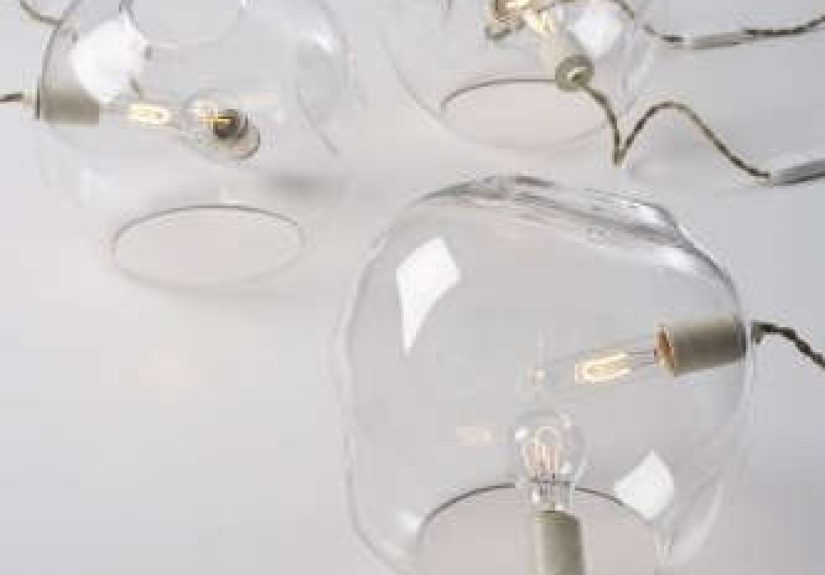
Her early breakthrough came with the Branching Bubble series, which translated the logic of natural branching systems into luminous brass frameworks fitted with hand-blown glass globes. The design felt fresh because it did not mimic a traditional chandelier. It seemed to expand into the room the way a tree limb, vein pattern, or constellation might. That organic structure made it dramatic, but the transparency of the glass kept it from feeling heavy.
This was a big deal. Decorative lighting had long been split into familiar camps: classic chandeliers, minimalist modern fixtures, industrial pendants, and the occasional crystal explosion trying very hard to be unforgettable. Adelman’s work offered another route. It was sculptural enough for collectors, practical enough for interiors, and emotionally resonant enough for anyone who has ever wanted their home to feel less like a catalog and more like a living environment.
The Design Language Behind the Glow
Look closely at a Lindsey Adelman piece and you will notice recurring themes: exposed structure, visible joints, asymmetry, handmade surfaces, and an appreciation for materials that show their character instead of hiding it. Brass is not just polished into submission. Glass is not always uniform and obedient. Rope, chain, and hardware are allowed to remain part of the visual story.
That honesty matters. It gives the work a sense of construction, as though the fixture is revealing how it became itself. In an era when so many luxury products try to erase every sign of process, Adelman’s lights often celebrate it. They let you see the thinking, the assembly, the fragility, and the engineering all at once.
Signature Collections That Define the Brand
Branching Bubble
If Lindsey Adelman has a greatest hit, this is probably it. Branching Bubble remains one of the most recognizable luxury lighting collections of the past two decades. The formula sounds straightforward on paper: branching metal arms and glowing glass globes. In real life, it is much more poetic. The fixtures can feel botanical, celestial, or almost molecular depending on the setting and scale.
What keeps the series relevant is its flexibility. A branching fixture can serve as the focal point above a dining table, soften the architecture of a stairwell, or bring sculptural drama to a living room with tall ceilings. It makes a strong statement without shouting over everything else in the space. It is confident, not needy. More fixtures should try that.
Agnes
The Agnes collection, created with Roll & Hill, reveals another side of Adelman’s design mind. Instead of globes, the fixture uses glowing tubular forms arranged through articulated joints. Originally conceived around the idea of a candelabra, Agnes feels modular, linear, and slightly futuristic while still carrying an old-world romance. It is one of those rare designs that can look equally at home in a crisp modern apartment or a richly layered historic interior.
The brilliance of Agnes lies in its adaptability. Because the system can be configured in multiple ways, it invites customization without losing its identity. That kind of design intelligence is harder than it looks. Plenty of products are technically customizable; few still feel elegant after the client, contractor, designer, electrician, and well-meaning uncle have all had opinions.
Knotty Bubbles, Clamp, and Other Experimental Turns
Adelman never built her reputation by repeating herself too comfortably. Collections like Knotty Bubbles introduce rope and binding as visual and conceptual elements, pairing hand-blown glass with knotwork that feels tactile, symbolic, and slightly rebellious. The series has a softness and tension that makes it memorable, especially in interiors that need something less polished and more emotionally textured.
The Clamp lights lean into utility and hardware with a theatrical wink. They explore how seemingly ordinary mechanisms can become beautiful when scaled, refined, and arranged with intention. Adelman has always had a knack for taking parts that might read as industrial and making them feel almost intimate.
Paradise, LaLAB, and the New Frontier
In more recent years, Adelman’s studio has pushed further into storytelling, color, and experimentation. Paradise introduced mold-blown glass shapes in varied forms and hues, mixing a sense of wanderlust with an almost jewel-like softness. The collection feels more playful than some of her earlier work, but it is still anchored by a deep understanding of composition and materiality.
Then came LaLAB, an experimental platform that gave Adelman room to explore one-off and limited-edition illuminated works outside the parameters of standard studio production. This move mattered because it clarified something many fans already suspected: the designer was not just making premium fixtures. She was building an evolving language around illumination, one that could move between design object, installation, and fine art.
That spirit continues in newer work such as Andromeda and Illuminated Mobiles II, where geometry, suspension, and a more instinctive visual vocabulary push her practice into even more expressive territory. These pieces show an artist still willing to surprise herself, which is usually the best sign that the work will keep surprising everyone else too.
Materials, Craft, and the Handmade Advantage
One reason Lindsey Adelman lights hold their own in luxury interiors is that they reward close inspection. From a distance, you notice the silhouette. Up close, you start to appreciate the craft: the blown glass, the metalwork, the joints, the finishes, the way opacity and transparency are balanced. These are not fixtures that depend on a single glamorous photo angle. They have dimensional integrity.
That matters for real-life interiors, where lighting is experienced in motion. You see it when walking through a hallway, from the side of a sofa, from the kitchen island while pretending not to snack before dinner. A fixture that only looks good head-on is basically an online dating profile with excellent lighting and no follow-through.
Adelman’s studio is also known for made-to-order production and collaboration with artisans, which helps explain why the work feels precise without looking mass-produced. There is intention in the way each material behaves. Glass catches and diffuses light differently than metal. Rope adds warmth and irregularity. Chain introduces motion and edge. The best Adelman pieces use those differences as part of the composition rather than smoothing them away.
How to Style Lindsey Adelman Lighting in Real Interiors
The smartest way to use Lindsey Adelman lights is to let them do what they do best: create tension, shape, and atmosphere. That does not mean every room needs to become a dramatic set piece. It means understanding the role of the fixture in the overall composition.
In Dining Rooms
A branching chandelier or an Agnes fixture above a dining table adds architectural rhythm and soft glamour. It works especially well when the table itself is simple, allowing the light to become the sculptural moment. Think oak slab, matte stone, or dark lacquer rather than a furniture piece already trying to perform a jazz solo.
In Living Rooms
Large Lindsey Adelman fixtures can act as visual anchors in open-concept spaces. Because many of her designs are airy rather than bulky, they help define the room without making the ceiling feel crowded. This is especially useful in homes that want a statement piece but do not want the visual heaviness of a traditional crystal chandelier.
In Bedrooms and Intimate Spaces
Sconces, smaller pendants, or lower-scale pieces from more experimental collections can add warmth and personality to bedrooms, reading corners, and dressing spaces. These are the settings where the emotional side of her work really shines. The light is not just decorative; it changes the mood of the room, turning it from functional to cinematic.
With Different Design Styles
One of Adelman’s greatest strengths is range. Her lights work in minimalist interiors because they add dimension without clutter. They work in eclectic homes because they bring sculptural intrigue. They work in traditional spaces because the handmade materials and elegant proportions keep them from feeling cold. If anything, the main requirement is confidence. Lindsey Adelman lighting likes a room that knows who it is, or at least is willing to fake it convincingly until the guests leave.
Why Homeowners and Designers Keep Coming Back
Lindsey Adelman lights have become a shorthand for thoughtful luxury, but not the obvious kind. They signal taste, yes, though more importantly they signal curiosity. Choosing one of her fixtures suggests that the homeowner or designer cares about atmosphere, craft, and visual storytelling, not just brand recognition.
There is also a practical reason for her staying power: the work photographs beautifully but lives even better. Many designer pieces look amazing in editorial spreads and slightly awkward in real rooms. Adelman’s best fixtures manage to be iconic without being impossible. They elevate a space while still allowing people to sit down, eat dinner, host friends, and argue about what movie to watch. Design should aim high, but it should still leave room for actual life.
And that may be the deepest reason her work has endured. It treats light as part of living, not just decorating. Her fixtures are expressive, but they are never merely symbolic. They illuminate faces, tabletops, corners, conversations, and quiet evenings. They do the practical work while carrying artistic weight. That balance is rare. It is also why so many people see a Lindsey Adelman light once and then spend the next several months reorganizing their taste around it.
A 500-Word Experience: What It Feels Like to Live With Lindsey Adelman Lights
Seeing Lindsey Adelman lighting in a showroom is one thing. Living with it is another experience entirely, and frankly, the difference is a little unfair to every ordinary fixture you have ever owned. In a showroom, you admire the composition, the materials, the silhouette. At home, you notice how the light changes your habits. You walk into the room more slowly. You glance upward more often. You start dimming other lamps because suddenly they feel like background actors who forgot their lines.
Morning is usually the quiet surprise. A Lindsey Adelman fixture often has enough transparency, reflectivity, and sculptural detail to stay visually alive even when it is turned off. Sunlight catches the glass, metal, or chain and turns the piece into a daytime object, not just a nighttime tool. That means the room never feels like it is waiting for dark to become interesting. It already has tension and movement before a switch is flipped.
By late afternoon, the mood changes. This is where her fixtures really start to earn their reputation. As natural light softens, the piece begins to glow rather than simply switch on. In the best cases, it feels less like illumination and more like atmosphere gathering itself. Reflections show up on nearby walls. Metal picks up warmth. Glass starts holding light the way a good singer holds a note, with presence and control. It is subtle, but it shifts the room emotionally. Even a simple dinner starts to feel a little more intentional, a little less Tuesday.
There is also something deeply satisfying about the way these lights create company. Not literal company, to be clear; if your chandelier starts giving advice, call someone qualified. But visually, Adelman’s work keeps a room from feeling empty. It creates a sense of structure overhead or at the wall, almost like a suspended sketch. In large rooms, that can make the architecture feel more intimate. In smaller rooms, it can make the space feel curated rather than crowded. The fixture does not just occupy air. It organizes it.
Guests usually respond in one of two ways. The first is immediate recognition: “Wait, is that Lindsey Adelman?” The second is the slow stare of someone trying to figure out why the room feels so good. That second response may be even better. Great lighting does not always announce itself by name. Sometimes it just alters the chemistry of the space so thoroughly that people sit longer, talk more, and wonder why your home suddenly feels far more put together than their own.
And then there is the emotional side. Lindsey Adelman lights have a handmade, slightly unpredictable quality that keeps them from feeling cold. Even when the lines are clean and the finishes are refined, there is usually a trace of irregularity, softness, or visible construction that reminds you a person imagined this, touched this, and made choices that were not purely about efficiency. That human quality matters more than people think. It keeps luxury from becoming lifeless.
In the end, living with Lindsey Adelman lighting feels less like owning a fixture and more like having a permanent mood-setting device that also happens to be very, very good-looking. It is design that performs daily, not just decor that waits for compliments. And yes, after a while it may ruin lesser chandeliers for you. Consider yourself warned.
Conclusion
Lindsey Adelman lights matter because they proved decorative lighting could be intelligent, emotional, handmade, and architecturally powerful all at once. Her work did not just give people beautiful fixtures to buy. It changed expectations about what lighting could do in a room. Whether you are drawn to the branching elegance of Branching Bubble, the modular poetry of Agnes, the tactile experimentation of Knotty Bubbles, or the newer creative expansions of LaLAB and Andromeda, the through line is clear: this is lighting with a point of view.
And in interiors, a point of view is everything. Anyone can brighten a room. Much fewer designers can make it feel alive.