Table of Contents >> Show >> Hide
- The tiny design problem hiding in plain sight
- Meet Jody Leach: “simple, honest, clear” (and quietly funny)
- What the Herbivore planter is (and why it works)
- Why it showed up at Tent London: context matters
- Material spotlight: what “china clay” brings to the table
- How to style the Herbivore planter (without turning your kitchen into a jungle)
- Plant care basics: keep the herbs alive long enough to brag about them
- Troubleshooting: common herb problems (and the non-dramatic fixes)
- Why Herbivore feels like design (not décor)
- Conclusion: a smarter home for your herbs
- Experience Add-On: What London Design Week Feels Like Through the Lens of Herbivore
You know that moment when you bring home a supermarket herb pot, set it on a “temporary” saucer,
and then spend the next week wondering why every small plate in your house has become a plant accessory?
Congratulations: you have discovered the secret side quest of modern urban living.
At London Design Weekspecifically in the orbit of the London Design Festival shows like Tent London
product designer Jody Leach surfaced with a calm, ceramic “fix” for this very specific chaos:
the Herbivore planter, designed to corral those standard supermarket herb pots into a tidy, intentional setup.
It’s the kind of object that makes you say, “Wait… why didn’t this exist already?”
The tiny design problem hiding in plain sight
Supermarket herbs are a little miracle: basil, mint, parsleyinstant kitchen confidence, zero commitment.
But the packaging is usually a thin plastic pot that drips, stains, and looks like it just sprinted out of a greenhouse
and into your home without changing clothes.
Leach’s approach starts with a practical observation: many major supermarkets sell herbs in similarly sized “starter” pots.
If the pot size is standardized, the solution can be standardized toowithout looking standardized.
Why this matters (beyond aesthetics)
- Water control: Overwatering is easy when you can’t see what’s happening at the bottom of a pot.
- Countertop hygiene: Standing water + wood counters = stress you didn’t order.
- Plant health: Roots need air as much as they need moisture; soggy soil can spiral fast.
- Daily friction: When the setup is annoying, you’re less likely to keep herbs thriving.
Meet Jody Leach: “simple, honest, clear” (and quietly funny)
Jody Leach is a UK product designer whose work leans into the idea that everyday objects should behave better
in modern lifeespecially in small spaces where every surface is doing double duty.
His design philosophy is refreshingly direct: find the annoying bit, then remove the annoying bit.
The Herbivore planter is born from that exact spirit. It doesn’t try to reinvent gardening.
It just asks: “What do people actually do with supermarket herbs once they get them home?”
And then it gives that reality a proper home of its own.
What the Herbivore planter is (and why it works)
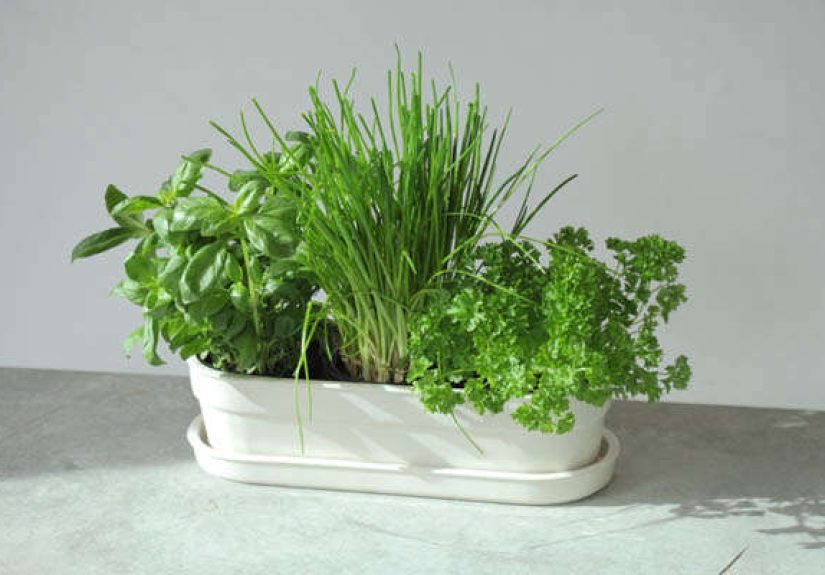
At its core, Herbivore is an indoor planter designed to hold three standard supermarket herb pots
in one clean, unified ceramic form. Think of it like a parking garage for basil, parsley, and chives
but, you know, prettier and with better drainage.
Key features that make it feel “designed,” not just “made”
- Three-pot capacity: Built to neatly accommodate three common herb pots, so the lineup looks intentional.
- Drainage holes + matching tray: Lets you use it as a true planter (not only a holder), while protecting surfaces.
- Glazed ceramic finish: Easy to wipe down; visually calm; fits most kitchen styles without yelling for attention.
- China clay construction: Made from china clay in Stoke-on-Trentan area with deep ceramics heritage.
The genius is that it solves two problems at once:
you can drop supermarket herbs in as-is for immediate order or repot and actually grow herbs longer-term.
It’s a bridge between “I bought basil because I had good intentions” and “I am now a person who has an herb garden.”
Why it showed up at Tent London: context matters
Tent London has a reputation for spotlighting emerging ideas and independent makerswork that’s often
more experimental, more human-scale, and more likely to start with a real-life problem than a glossy trend forecast.
Herbivore fits that vibe perfectly: it’s not trying to be a sculptural statement for a museum plinth.
It’s trying to keep your kitchen from looking like a plant daycare center.
Design weeks are basically “real life, but curated”
The best design week finds are often the ones that make you rethink your daily routine. A clever object can:
- make a habit easier (watering, harvesting, cleaning),
- make a space calmer (visual clutter drops fast),
- and make you more likely to use the thing you already bought (hello, herbs).
Material spotlight: what “china clay” brings to the table
“China clay” is commonly associated with kaolin, a high-whiteness clay used in ceramics and porcelain bodies.
In practical terms, it helps produce crisp, bright ceramic forms that take glaze wellmeaning a planter can be both refined
and resilient in a messy, wet environment like a kitchen.
A glazed ceramic surface is also a quiet functional upgrade: wipeable, stain-resistant, and less likely to hold onto that
mysterious “soil dust” film that seems to appear five minutes after you clean.
How to style the Herbivore planter (without turning your kitchen into a jungle)
The Herbivore planter is happiest when it looks like it belongsso treat it like part of your kitchen setup,
not a separate “plant corner.”
3 styling recipes that actually work
- The Everyday Cook Trio: basil + flat-leaf parsley + chives. Classic, useful, and the scents are unbeatable.
- The Tea-and-Cocktail Crew: mint + lemon balm + thyme. Great for iced tea, garnish, and “I suddenly host now.”
- The Mediterranean Mood: rosemary + oregano + sage (note: these like to dry a bit between waterings).
Put it near your cutting board station. If you have a window, aim for bright light. If you don’t, consider a small grow light.
The point is to make herbs easy to reachbecause convenience is the real fertilizer.
Plant care basics: keep the herbs alive long enough to brag about them
1) Drainage isn’t optional (sorry)
Containers need drainage so excess water can leave the soil and roots can breathe.
If water collects in a tray, don’t let it sit there foreverempty it after watering.
Herbs are forgiving… until they aren’t.
2) Decide: “holder mode” or “grow-for-real mode”
Holder mode: Drop supermarket pots into Herbivore as they are. This is the fastest way to reduce clutter.
You’ll still water the individual pots, and you’ll still want to avoid standing water.
Grow-for-real mode: Use Herbivore as the planter itself. That means repotting into a good potting mix,
keeping drainage clear, and giving herbs enough light to stop them from growing tall and flimsy like they’re auditioning for a drama.
3) Light: the difference between “lush” and “sad spaghetti”
Many culinary herbs do best with strong lightoften several hours per day. If your herbs stretch, pale, or lean dramatically,
they’re telling you the lighting situation is not it.
4) Water: the top-inch rule (a simple sanity saver)
A useful rhythm for many indoor herbs is to water thoroughly, then wait until the top inch of soil feels dry before watering again.
Some herbs (like thyme and oregano) prefer drying a bit between waterings; others (like basil) like more consistent moisture.
When in doubt, check the soil before you “help.”
5) Soil and airflow: small upgrades, big results
- Use a quality potting mix that drains well (garden soil indoors tends to compact).
- Don’t cram plants too tightlyairflow helps reduce mildew and pests.
- Harvest often to encourage bushier growth (and because that’s the whole point).
Troubleshooting: common herb problems (and the non-dramatic fixes)
Problem: Yellowing leaves
Often a sign of overwatering or poor drainage. Check whether water is lingering in the tray and whether the soil stays wet for days.
Let things dry slightly, and make sure the planter’s drainage path is clear.
Problem: Herbs collapse after “doing great” for a week
Supermarket herbs are frequently grown fast and crowded. Consider splitting and repotting, especially basil and mint,
so roots have room and moisture is more evenly distributed.
Problem: Thin, leggy growth
That’s usually a light issue. Move closer to a window or add a small grow light.
Rotate the planter every few days so plants don’t lean like they’re chasing gossip.
Why Herbivore feels like design (not décor)
A lot of “kitchen accessories” are basically vibes with a price tag. Herbivore is different:
it starts with a behavior (buying herbs), identifies a pain point (mess + clutter),
and builds a form that improves the routine without demanding extra effort.
It’s also a quiet nod to making things well: produced in England, using ceramics know-how connected to Stoke-on-Trent,
a place long associated with pottery and industrial ceramics.
Even if you never think about clay bodies and glazes while chopping cilantro,
the object still carries that craft intelligence into your daily life.
Conclusion: a smarter home for your herbs
The Herbivore planter doesn’t ask you to become a gardener. It simply makes it easier to act like one.
It tames the visual clutter of supermarket herb pots, respects the need for drainage, and looks right at home in a modern kitchen.
Whether you treat it as a neat “holder” or a true planter for growing herbs longer-term,
it’s a reminder that the best design isn’t loudit’s useful.
Experience Add-On: What London Design Week Feels Like Through the Lens of Herbivore
If you’ve never experienced a major design week, imagine a city temporarily turning into a giant, walkable “ideas showroom.”
Instead of one building with everything inside, the energy ripples across neighborhoodsshowrooms, pop-ups, exhibitions,
and temporary installations stacked like a playlist you’ll never finish in one sitting.
It’s exciting and slightly overwhelming in the same way a really good bookstore is overwhelming:
you want to see everything, but your brain can only carry so many “favorites” at once.
In that environment, the most memorable objects are often not the biggest or the shiniest. They’re the ones that make people stop,
laugh a little, and say, “That’s exactly my problem.” Herbivore lands in that sweet spot.
You don’t need a design degree to understand it. You just need to have bought basil one time and watched it leak on your counter.
At a show like Tent London, the vibe tends to lean bright, talent-forward, and discovery-drivenless “museum hush,”
more “friendly buzz.” People move in clusters, coffee in hand, bouncing between booths and pointing at details:
the curve of a handle, the joinery on a chair, the finish on a ceramic glaze.
And when you come across an object like Herbivore, the conversation shifts from “Isn’t that pretty?” to “Waithow does that work?”
That’s the tell. When design week crowds start talking about how they’d use something at home, the object has crossed the line
from “interesting” to “desirable.” With Herbivore, you can practically hear the scenario-building:
“I’d put it by the sink.” “No, windowsill.” “I’d do basil, mint, and parsley.” “I’d finally stop using my plates as saucers.”
It’s funny because it’s trueand because everyone seems to have invented the same accidental system for herbs
(a system that mostly involves improvisation and mild regret).
There’s also a particular satisfaction in seeing a calm object in a busy environment. Design weeks can be visually intense:
bold colors, experimental forms, huge graphics, dramatic lighting. Herbivore is the opposite.
It’s quiet. It’s white. It’s about function first. That restraint can feel like a palate cleanser,
the way a simple dish can be the best thing on a complicated tasting menu.
And then there’s the deeper “experience” piece: design weeks make you pay attention to daily life again.
You leave noticing the details you normally ignorethe awkward kitchen corner, the messy cable situation,
the way plants never quite look settled on a countertop. Herbivore represents that whole mindset:
you can improve your home not by buying more stuff, but by choosing one thing that removes friction.
The best souvenirs from design week aren’t always flashy; they’re the objects that make your routine smoother
and your space calmer every single day after you get home.
In other words, Herbivore is design week energy translated into real life:
a small idea, executed well, that quietly upgrades your everyday.