Table of Contents >> Show >> Hide
- What happened in that “meltdown” moment?
- Who is Luigi Mangione, and what is the case about?
- Why that phrase hit a nerve: “insult to Americans’ intelligence”
- Extradition and the “don’t say a word” reality check
- The case moved from viral clip to legal trench warfare
- The “Marvel movie” complaint and the spectacle problem
- So… was the outburst a “meltdown,” a message, or a mix?
- Five grounded takeaways if you’re following this case
- Experiences around moments like this: what it’s like when a courthouse becomes a stage
- For courthouse staff: controlled chaos with rules older than the building
- For reporters: the tightrope between informing and amplifying
- For locals and bystanders: curiosity, discomfort, and accidental participation
- For defense and prosecution teams: every second is evidence (even when it isn’t)
- For families connected to the case: the most painful part is the replay button
- Conclusion: the soundbite isn’t the verdict
- SEO Tags
A viral courthouse moment, a serious criminal case, and the awkward truth that the loudest sentence in the room is rarely the most informative one.
The clip is short, the volume is high, and the internet did what it does: it picked a single line, put it on loop, and treated it like a complete documentary.
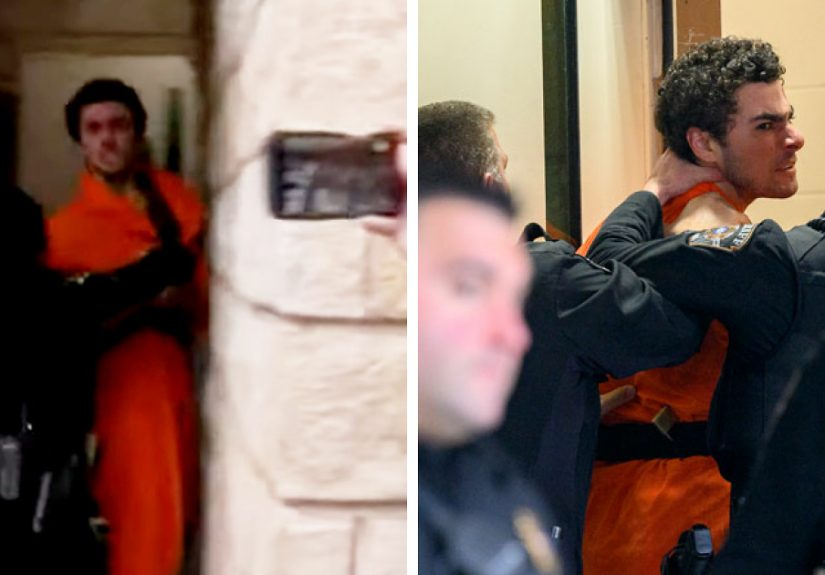
In the video, Luigi Mangionehandcuffed and being hustled toward a courthousetwists toward cameras and shouts that what’s happening is “completely out of touch”
and “an insult to the intelligence of the American people.” It’s the kind of soundbite that travels faster than context, and it landed in the middle of a case
involving the killing of UnitedHealthcare CEO Brian Thompson.
But here’s the uncomfortable, very American reality: courthouse drama makes great viral content, yet it usually tells you more about pressure, perception, and
public anger than it does about evidence, legal standards, or what a jury will actually hear. So let’s do the unsexy thingslow down, lay out what’s known,
and explain why this “meltdown” became cultural kindling.
What happened in that “meltdown” moment?
The moment in question occurred outside a Pennsylvania courthouse as Mangione was being escorted into a hearing connected to extradition proceedings. Video
showed him turning toward reporters while officers guided (and, frankly, sped-walked) him inside. In that brief window, he yelled that the situation was “completely
out of touch” and “an insult to the intelligence of the American people.”
Two important details often get lost in reposts:
- It’s not clear what he was specifically referencing. Multiple reports noted the remark was made quickly and without explanation.
- Courthouse entrances are controlled chaos. Cameras, deputies, lawyers, and tight security procedures create a pressure-cooker where a single outburst can become “the story.”
In other words: the clip is real, the quote is widely reported, but the meaning is mostly inferred by the audience. And when a crowd is already primed to interpret
itone way or anotherinference turns into certainty within about seven seconds.
Who is Luigi Mangione, and what is the case about?
Luigi Mangione has been charged and accused in connection with the killing of UnitedHealthcare CEO Brian Thompson, who was shot in Midtown Manhattan
in December 2024, according to major U.S. reporting on the case. Mangione has pleaded not guilty to charges in both state and federal court.
Authorities say he was arrested days later in Altoona, Pennsylvania, after a tip led police to him at a McDonald’s. From there, the case branched into multiple legal
tracksPennsylvania matters tied to the arrest, New York state charges, and a federal prosecution that includes allegations that could make the case death-penalty
eligible depending on rulings and charging theories.
That’s a lot of legal machinery for any defendantespecially in a case this public. It’s also why the internet’s favorite framing (“He snapped because he’s right!” or
“He snapped because he’s guilty!”) is emotionally satisfying but intellectually flimsy. Court cases don’t run on vibes. They run on motions, evidence rules, and whether a
judge believes a constitutional line was crossed.
Why that phrase hit a nerve: “insult to Americans’ intelligence”
The line went viral because it’s built like a perfect rhetorical grenade:
it’s short, it’s accusatory, and it flatters the listener. It doesn’t just say “this is unfair.” It says, “you’re smart, and they think you’re not.”
That’s catnip to a social media algorithm.
But the reaction also taps into something bigger than one defendant. Reporting around the case has noted that Mangione became a polarizing figure, with some people
framing him as a symbol of anger at U.S. healthcare costs and insurance practiceseven as public officials condemned the killing. That’s the combustible mix:
a high-profile victim, a charged national conversation about healthcare, and a defendant whose public moments get interpreted as political messaging.
When that’s the backdrop, a shouted sentence doesn’t stay a sentence. It becomes a Rorschach test:
- To some viewers, it sounds like a protest against a system that feels rigged.
- To others, it sounds like deflection, theater, or an attempt to seed doubt.
- To nearly everyone, it sounds like something you can argue about without reading a single court filing.
That last point matters, because “argument without paperwork” is basically the national pastime.
Extradition and the “don’t say a word” reality check
The courthouse meltdown clip came from a stage of the process that is often misunderstood: extradition. When a person is arrested in one state and wanted in another,
there’s a proceduresometimes contestedabout transferring custody.
In Mangione’s case, reporting described him contesting extradition at that time, which can involve filings like a writ of habeas corpus and timelines for warrants and
transfers. This is where the “meltdown” moment becomes oddly strategic, even if it looks purely emotional. Why?
- Everything becomes narrative. In a high-profile case, attorneys worry about what potential jurors might absorb from headlines and clips.
- Speech can create risk. Anything a defendant blurts out can be interpreted, paraphrased, or used to paint a picturefairly or unfairly.
- Lawyers prefer silence. One widely reported exchange from the early proceedings had Mangione’s lawyer bluntly instruct him not to speakbecause a courthouse is not open-mic night.
If you’re wondering why defense attorneys sometimes look like they’re trying to telepathically zip their client’s lips: it’s because they are.
The case moved from viral clip to legal trench warfare
Once the cameras stop, the actual contest begins: motions, hearings, and fights about what evidence a jury can see. In Mangione’s New York state case, reporting has
described extensive pretrial litigation, including efforts by the defense to suppress statements and physical evidence tied to the arrestarguments that police questioned
him before providing Miranda warnings and that officers searched a backpack without a warrant.
These disputes can sound technical, but they’re often the whole ballgame. A suppression ruling can shape the trial more than any viral video ever could. It also puts a
spotlight on the constitutional guardrails that apply even in the most emotionally charged cases.
Meanwhile, the federal case has raised an additional, enormous stake: the death penalty. Reporting in January 2026 described arguments over whether prosecutors met legal
requirements for a death-penalty-eligible charge and noted that a federal judge discussed a tentative schedule that could place jury selection in September, with trial timing
affected by whether capital punishment remains on the table.
One more wrinkle reported along the way: Mangione has seen at least some success narrowing parts of the state case, with accounts noting that state terrorism charges were
thrown out in 2025. That doesn’t end the prosecutionfar from itbut it illustrates why lawyers fight hard on pretrial issues. They can change what the case “is,” legally,
before a jury ever sits down.
The “Marvel movie” complaint and the spectacle problem
There’s another thread in this story that the meltdown clip accidentally highlights: the uneasy relationship between law enforcement optics and a defendant’s right to a fair
trial. Reporting has described defense arguments that the arrest and early public presentation were turned into a showlanguage that framed it as a kind of cinematic spectacle
and that public commentary, including high-profile statements, could prejudice the case.
Prosecutors, for their part, have argued that intense pretrial publicity is not unusual in notorious cases and that careful jury selection can address it. That back-and-forth is a
familiar tug-of-war: defense teams emphasize contamination of the jury pool; prosecutors emphasize procedure and safeguards.
Here’s the irony: the same footage that fuels the spectacle can also become evidence that spectacle exists. When a defendant is marched past cameras, any reactionsilence,
a grim stare, a shoutturns into a public artifact. And public artifacts are hard to unsee.
So… was the outburst a “meltdown,” a message, or a mix?
Probably a mix. Human beings don’t compartmentalize perfectly, especially when shackled, surrounded, and followed by a small army of microphones.
Think of it this way:
- Stress response: The immediate pressure of a public escort can trigger anger, panic, or impulsive speech.
- Messaging instinct: Some defendants believe the public is a second juryand try to “argue” through soundbites.
- Identity defense: A shouted line can be an attempt to reclaim control in a moment designed to strip it away.
The problem is that a courthouse is not a place where control is negotiated. It’s a place where control is assignedby the judge, by procedure, and by the law.
A viral clip might win a comment section, but it does not win a suppression hearing.
Five grounded takeaways if you’re following this case
- Separate the clip from the case. The outburst is real, but it does not explain what evidence exists or what will be admissible at trial.
- “Not guilty” matters. Mangione has pleaded not guilty, and the legal system is built around proving charges in court, not in feeds.
- Pretrial fights are decisive. Miranda questions, warrant issues, and search justifications can shape the entire trial landscape.
- Public anger can distort interpretation. U.S. healthcare frustration is real; that doesn’t mean every shouted sentence is a coherent policy statement.
- Spectacle cuts both ways. High-profile policing and high-profile coverage can prejudice perceptionsof the defendant, the victim, and the process itself.
Experiences around moments like this: what it’s like when a courthouse becomes a stage
Viral courthouse clips often feel like the main event, but for the people physically present, they’re usually the loudest five seconds in a long day of logistics.
Based on how reporters, court-watchers, attorneys, and local communities typically describe these scenes, the “experience” is less like a movie and more like a messy
backstage hallway where everyone is trying not to trip over the cables.
For courthouse staff: controlled chaos with rules older than the building
Courthouse staffclerks, deputies, security officersare trained to treat high-profile defendants the same way they treat everyone else: safely, predictably, and on schedule.
The public rarely sees the prep work: rerouted entrances, extra screening, taped-off areas, and contingency plans for crowds. When a defendant yells on the way in, the staff
isn’t thinking about the quote going viral. They’re thinking about spacing, pressure points, and whether the crowd’s energy is spiking. In that environment, “hurry him inside”
isn’t dramait’s risk management.
For reporters: the tightrope between informing and amplifying
Journalists at scenes like this have two jobs that often collide: capture what happens and avoid turning a moment into a megaphone. A shouted line is newsworthy, but it’s
also incomplete. The best reporters try to frame it accuratelywhat was said, when, and what is unknownbecause they know a single sentence can eclipse the facts of a case.
You can practically feel the editorial debate happening in real time: “Do we lead with the shout?” “Do we contextualize it?” “If we don’t run it, will people accuse us of
hiding it?” The internet doesn’t wait for nuance, but newsrooms still have to try.
For locals and bystanders: curiosity, discomfort, and accidental participation
When a national case lands in a local courthouse, residents get drafted into someone else’s story. Some people show up out of curiosity; others get stuck behind barricades on
the way to lunch. There’s a weird social pressure in the crowd: you don’t want to be the person who’s cheering at the wrong moment, but you also don’t want to look indifferent
if everyone else is reacting. And if a defendant turns and yells? Suddenly you’re not just a bystanderyou’re part of the footage.
For defense and prosecution teams: every second is evidence (even when it isn’t)
Lawyers watch these moments like chess players watching a clock. Defense teams worry about jury contamination and “character” narratives: a shout can be spun as rage, guilt,
instability, or defiance. Prosecutors watch for anything that might later matter in motions, credibility fights, or security issues. The irony is that the loudest moment may have
no legal relevanceyet it can become the emotional frame through which the public views every filing that comes afterward.
For families connected to the case: the most painful part is the replay button
Familiesespecially the victim’s loved onesoften experience the coverage as repetition without relief: the same courthouse entrances, the same headlines, the same arguments
about what the clip “really means.” Viral moments can crowd out empathy, turning a tragedy into a debate prompt. Even when coverage is careful, social media can be brutal:
people reduce human loss to a meme template. That’s why responsible reporting and responsible sharing matter. It’s possible to follow the case closely without treating it like
entertainment.
In short: when a courthouse becomes a stage, everyone gets a rolewhether they auditioned or not. And the audience at home tends to forget there are real stakes behind the
theatrics: due process, a grieving family, and a justice system that cannot run on trending audio.
Conclusion: the soundbite isn’t the verdict
Luigi Mangione’s shouted line“an insult to Americans’ intelligence”is memorable because it’s engineered to be. But a criminal case isn’t decided by the best quote, the
cleanest clip, or the most confident comment thread. It’s decided by admissible evidence, credible testimony, and whether prosecutors can prove charges beyond a reasonable doubt.
If you take anything from this story, let it be this: when a viral moment makes you feel certain, that’s your cue to slow down. Certainty is the algorithm’s favorite product.
The courtroom’s favorite product is procedure. And procedure, while less exciting, is how the system (ideally) prevents outrageany outragefrom replacing proof.