Table of Contents >> Show >> Hide
- Meet Little Oil Art: A “Color Magician” With a Gentle Superpower
- What Makes Her Illustrations Feel So Warm?
- A Cozy Tour of Her Most Magnetic Themes
- Recognition and Professional Work: More Than Just a Pretty Feed
- Why This Kind of Art Hits So Hard Right Now
- How to Enjoy (and Learn From) Warm, Magical Illustration
- Conclusion: A Little Magic You Can Actually Keep
- Warm-Glow Experiences: What These Illustrations Feel Like in Real Life
You know that oddly specific, deeply human moment when you open your phone “for one minute,” then somehow
end up emotionally adopted by a drawing of a cat staring at the moon like it’s paying rent? Welcome.
In a world that’s loud, fast, and occasionally held together with iced coffee and denial, the art of Taiwanese
illustrator, designer, and animator Little Oil Art (also credited as Jhao-Yu Shih)
feels like a soft exhale. Her work doesn’t shout for attention. It gently taps your shoulder, offers you a cup of
“good night tea,” and quietly rearranges your mood with color.
This article explores what makes Little Oil Art’s illustrations feel so cozy and magical, how her style blends
storybook warmth with dreamy symbolism, and why these images land so wellespecially when your brain is
running 37 tabs, including one labeled “anxiety.”
Meet Little Oil Art: A “Color Magician” With a Gentle Superpower
Little Oil Art has built a career that moves fluidly between illustration, graphic design, and animation. That
matters because you can feel the storytelling DNA in her images: they don’t behave like single pictures so
much as paused scenes from a longer dream. Her characters often look like they were caught mid-thought, mid-wish,
or mid-huglike the world is quiet enough to hear your own feelings.
On her own platform, she describes her creative life as a mix of illustration, design, and animation work, and
she’s known for fantasy-like color that earned her the nickname “color magician.” Her favorite motifscats, stars,
and the moonshow up again and again, not as gimmicks, but as emotional shorthand: companionship, wonder, and the
calm of night.
Why her background in animation changes everything
Animation teaches you to communicate with posture, lighting, pacing, and moodsometimes without a single word.
That’s a big reason Little Oil Art’s work feels so cinematic. Even still illustrations carry a sense of movement:
drifting starlight, floating fabric, the hush of a room after someone whispers something kind.
You’ll also notice how her compositions guide your eyes like a storyboard: foreground comfort, midground detail,
background wonder. The result is an image that feels “big” even when it’s intimatelike a small bedroom that
somehow contains an entire galaxy.
What Makes Her Illustrations Feel So Warm?
Warmth in illustration isn’t just “use orange.” If it were, every traffic cone would be a therapist. Warmth is a
mix of color choice, lighting, subject matter, and the tiny signals that tell your brain: you are safe here.
1) Color that behaves like a blanket
Little Oil Art favors rich, tertiary huescolors that feel lived-in instead of neon. Her palettes often glow like
lamplight, moonlight, or the last inch of sunset. That kind of color selection is emotionally persuasive: warm
colors can suggest comfort and closeness, while cooler tones can add calm and quiet. She plays both sides like a
proinviting you in with warmth, then letting you rest inside the cool hush of night.
2) Everyday magic instead of “big fantasy”
Her work is magical, but not in the “dragon tax audit” way. It’s the softer kind: hanging stars at night, giving
someone a star, sitting under mistletoe with a cat, or watching fireworks like they’re personal letters from the
sky. Many of her print titles read like little reminders you’d want taped to your fridgeif your fridge was also a
portal to a kinder universe.
3) Micro-stories that let you finish the sentence
A lot of cozy art works because it doesn’t over-explain. The image gives you a mood and a few clues, then lets you
complete the story with your own memories. That’s powerful. Your brain likes participation. It likes being trusted.
Little Oil Art’s scenes often include small narrative anchorstea cups, books, soft animals, a window, a moonso you
can step into the moment without needing a tour guide.
4) A signature storybook style (fresh, but rooted)
One U.S. design feature described her illustrations as mixed-media portraits colored with rich hues and draped in a
storybook style that feels fresh while still echoing local tradition. That’s a great way to put it: her work feels
modern and shareable, but not disposable. It has the timeless “I could keep this forever” energy.
A Cozy Tour of Her Most Magnetic Themes
If you binge Little Oil Art’s illustrations (and yes, that’s a normal and healthy activity), you’ll notice recurring
themes that work like emotional landmarks. They make her universe feel consistent, like a place you can return to
when your day gets weird.
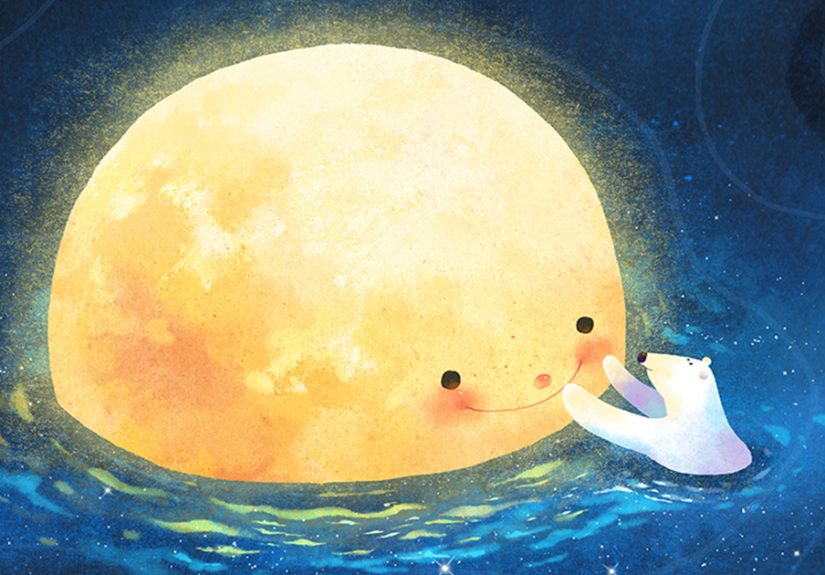
Moonlight, stars, and the comfort of night
Nighttime in her work is rarely scary. It’s protective. The stars aren’t cold; they’re friendly. The moon isn’t
distant; it’s attentive. This matters because night is when many people finally feel their feelingswhen the noise
of the day stops and the internal monologue gets a microphone. Her imagery makes that moment feel less lonely.
Cats as emotional sidekicks
Cats in illustration can be many things: comedy, mystery, chaos. In Little Oil Art’s world, they’re companions.
Sometimes they’re the main character; sometimes they’re a cozy detail (a wreath, an ornament, a sleepy curl at the
edge of the scene). They function like a visual promise: someone is here with you, even if your only plans tonight
involve pajamas and avoiding your email.
Small rituals that make life feel gentle
Tea, bedtime, quiet holidays, hugging days, lazy daysher work highlights tiny rituals that people forget to value
until they disappear. This is the secret engine of “warm inside” art: it celebrates what’s already good, but easy to
overlook. In a culture obsessed with optimization, her illustrations feel like permission to simply be.
Wonder without irony
A lot of modern content is allergic to sincerity. Everything has to be a joke, a clapback, or a performance. Little
Oil Art’s work dares to be earnest. It says: awe is still allowed. Tenderness is still cool. You can look at the
universe and feel grateful without immediately making it a meme. (Although, to be fair, a moon-gazing cat could
absolutely become a meme and still be emotionally valid.)
Recognition and Professional Work: More Than Just a Pretty Feed
Cozy does not mean casual. Little Oil Art’s craft has been recognized in major illustration circles, including
awards and honors in U.S.-based annuals and competitions. She has also worked across design and animation projects,
building a professional footprint that matches the polish you see in her images.
Awards that signal serious craft
She has been credited in contexts connected to Communication Arts’ illustration competition ecosystem and has also
been recognized by 3×3: The Magazine of Contemporary Illustration. For example, 3×3’s Annual No.14 includes her as
a Bronze winner in the professional animation category for a piece titled “Circus,” where she is credited as art
director (also under the name Little Oil). Another 3×3 annual (No.18) lists her with a Merit recognition in
professional books published for “Bed time words between you and me,” where she is credited across design roles.
Design, prints, and the “take it home” effect
Her work isn’t meant to live only on a screen. You can find her art offered as prints and products through major
U.S.-based print platformsfitting, because her images are basically interior design for your nervous system.
People don’t just want to “like” this art; they want to live with it.
Why This Kind of Art Hits So Hard Right Now
If you’ve noticed the rise of “cozy illustration,” “whimsical art,” and “gentle surrealism” across social platforms,
you’re not imagining it. People are hungry for visual experiences that regulate the nervous system instead of
demanding more attention.
Warm art as stress relief (yes, there’s research)
We’re not saying a drawing can pay your bills. But research does suggest that engaging with artespecially making
itcan support stress reduction. For example, a study out of Drexel University found that many participants showed
lowered cortisol after a period of art-making, regardless of skill level. That lines up with what so many people
report informally: art helps the mind unclench.
And even if you’re not making art, simply spending time with images that communicate safety and tenderness can help
your brain shift gears. It’s like switching from “emergency mode” to “human mode.”
Cozy visuals fight doomscrolling with softness
Doomscrolling is basically your brain eating junk food at 2 a.m. Cozy illustration is the emotional equivalent of a
warm meal: it doesn’t erase reality, but it helps you return to it with more capacity. Little Oil Art’s work offers
that reset without preaching, without performative positivity, and without pretending everything is fine.
How to Enjoy (and Learn From) Warm, Magical Illustration
You don’t have to be an artist to benefit from artist energy. Here are a few ways to let cozy illustration actually
improve your daybeyond a quick double-tap.
Try the “30-second story” exercise
Pick one illustration and write a single sentence that starts with: “Right before this moment…” Then write one
sentence that starts with: “Right after this moment…” That’s it. You’ve just turned viewing art into a micro
journaling practice.
Steal the palette (politely)
If you create anythingslides, photos, mood boards, even a living roomnotice how Little Oil Art balances warm glow
with cool quiet. Try a “moonlight + lamplight” combo: one warm accent, one calm base, and one tiny surprise color.
Your eyes will thank you.
Make a comfort gallery
Curate ten images that make your chest feel lighter. Save them in a folder called something honest like “DO NOT
SPIRAL.” The point isn’t aesthetic; it’s emotional first aid. Your future self will respect you for it.
Conclusion: A Little Magic You Can Actually Keep
Little Oil Art’s illustrations feel warm because they are built with intention: storybook composition, cinematic
lighting, and motifs that translate directly into comfortcats, stars, moonlight, and small rituals that remind you
life can be gentle.
In a time when so much content is optimized to provoke, her work is optimized to soothe. It invites you to slow
down, remember wonder, and feel human againwithout requiring you to buy a self-help book or become someone who
“wakes up at 5 a.m. to meditate.” (No offense to those people. I assume they’re real. I’ve just never seen one in
the wild.)
If you’re looking for art that feels like a warm lamp in the corner of your mind, these magical illustrations are
a beautiful place to startand a surprisingly good place to return.
: experiences section (added at the end, as requested)
Warm-Glow Experiences: What These Illustrations Feel Like in Real Life
Let’s talk about the experience of encountering cozy, magical illustrationnot in an abstract “art appreciation”
way, but in the very practical “my day was trash and then a moon-cat fixed my posture” way.
The first experience is often instant deceleration. You’re scrolling quickly, barely processing
anything, and then an image appears that’s clearly not trying to win a shouting contest. It’s quiet. It’s tender.
Your eyes slow down before you consciously decide to slow down. That’s not a small thing. So many modern visuals
are designed to spike attention; warm illustration is designed to invite attention. There’s a difference between
being grabbed and being welcomed.
The second experience is emotional recognition without exposure. Warm illustrations frequently show
feelings we all carryloneliness, hope, affection, nostalgiabut they do it indirectly. A cat curled under a
Christmas ornament doesn’t demand you talk about your childhood. A person hanging stars at night doesn’t interrogate
your life choices. But somehow you still feel seen. It’s like the art is saying, “I understand,” without forcing
you to explain.
Third, there’s the experience of safe imagination. Some fantasy art is epic and intenseswords,
battles, dramatic lighting, and a soundtrack your nervous system did not consent to. Cozy magical illustration does
the opposite. It offers a fantasy that feels domesticated (in the best way): magic that happens in kitchens, on
rooftops, by windows, under blankets, in the presence of animals and tea. The imagination isn’t used to escape
reality forever; it’s used to make reality feel more livable.
Fourth is the “I want this near me” effect. People often discover warm illustration online and then
quickly realize they don’t just want to see it oncethey want it in their physical space. That’s why prints matter.
Hanging a comforting image on a wall is like installing a mood shortcut. It becomes background support for your day.
When you walk past it, you get a tiny reminder: softness exists. Wonder exists. Your life can include beauty even
when nothing is resolved yet.
Fifth is the experience of better self-talk. Warm illustration tends to model gentleness. Even when
the characters look tired, the scene often says “rest is allowed.” Even when the palette leans dark, the light
suggests “you’re not alone.” Over time, that changes the tone of your internal voice. Not dramatically, not
overnightbut enough that you might catch yourself thinking, “Okay, we can handle this,” instead of, “Everything is
on fire and it’s my fault.”
Finally, there’s creative contagion. After spending time with art that feels safe and magical, many
people feel a gentle urge to make somethingsketch, journal, cook, decorate, write a tiny poem, rearrange a corner
of their room. That’s the best kind of inspiration: not pressure, not competition, just a small desire to add
warmth to the world. Cozy illustration doesn’t just comfort you; it quietly teaches you how to comfort yourself.
SEO tags in JSON format, placed at the end (as requested)