Table of Contents >> Show >> Hide
- Why Choose a Decorative Basket Instead of a Wreath?
- Best Basket Styles for Front Door Decor
- What You Need to Make a Decorative Basket Wreath Alternative
- How to Make a Decorative Basket Step by Step
- How to Hang a Decorative Basket Without Damaging Your Door
- Design Tips for a Basket That Looks Expensive
- Seasonal Decorative Basket Ideas
- Common Mistakes to Avoid
- Experiences and Lessons from Making a Decorative Basket as a Wreath Alternative
Wreaths have had a long, glorious run on front doors everywhere. They are classic, charming, andlet’s be honestsometimes a little too expected. If you want something that feels just as welcoming but a bit more interesting, a decorative basket might be your new favorite front-door move. It delivers the same cozy hello as a wreath, but with more texture, more flexibility, and a little more personality. In other words, it says, “Welcome to my home,” without sounding like every other porch on the block.
A door basket works beautifully because it blends function and style. You get the woven texture of wicker, rattan, willow, or metal; the softness of florals or greenery; and the chance to change the look from season to season without rebuilding the whole thing from scratch. Spring basket? Easy. Summer basket? Absolutely. Fall basket full of faux leaves and mini gourds? Now we’re talking. Winter greenery with berries and ribbon? Very yes.
If you have been looking for a front door decorating idea that feels fresh, easy to customize, and surprisingly forgiving for beginners, this is it. Below, you will learn why a decorative basket makes such a smart wreath alternative, what materials work best, how to build one step by step, and how to style it so it looks intentional instead of like you accidentally hung a picnic tote on your door and hoped for the best.
Why Choose a Decorative Basket Instead of a Wreath?
A decorative basket as a wreath alternative offers something a traditional wreath does not: shape freedom. Wreaths are usually circular and fairly fixed in design. Baskets can be oval, cone-shaped, rectangular, shallow, deep, rustic, polished, farmhouse, cottage, or modern. That means you can match your home’s style more easily, whether your front door leans coastal blue, classic black, modern white oak, or cheerful “I buy too many seasonal doormats and regret nothing” red.
Another big advantage is dimension. A basket naturally creates depth because it has a front, sides, and interior space to fill. Instead of attaching everything to a flat frame, you can tuck stems, greenery, branches, bows, and accents into the basket for a looser, layered arrangement. The result often feels softer and less formal than a wreath. It is more like a styled floral moment and less like geometry homework.
Decorative baskets also make seasonal updates easier. Keep the same base basket throughout the year and swap the filler. Use faux tulips and eucalyptus for spring, ferns and hydrangeas for summer, wheat stems and amber leaves for fall, then evergreens, pinecones, and red berries for winter. One basket can become your overachieving décor MVP.
Best Basket Styles for Front Door Decor
Not every basket is a great front-door basket. Some are too floppy, too deep, too small, or shaped in a way that makes arranging stems feel like wrestling spaghetti. The best choices are sturdy, lightweight enough to hang safely, and visually strong enough to be seen from the curb.
Wall Baskets
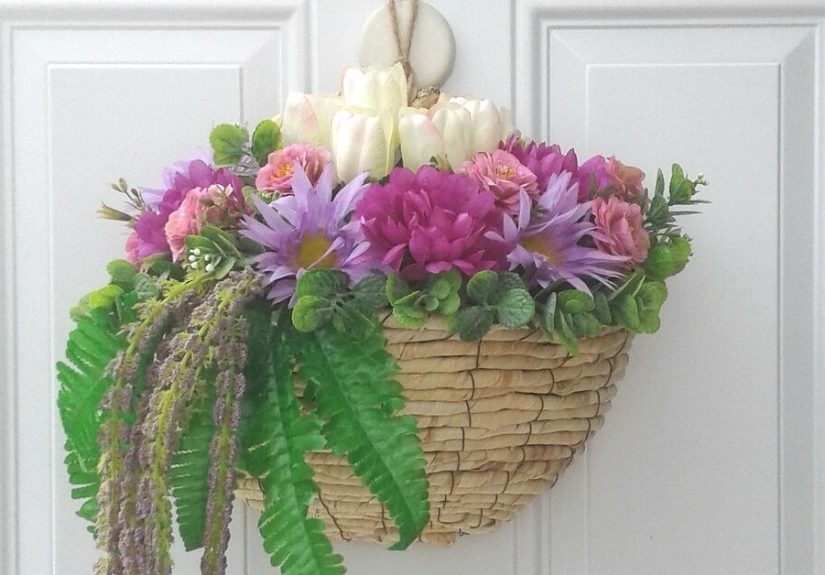
Wall baskets are one of the easiest options because they are already designed to sit flat against a surface. They usually have a broad front opening, which makes arranging flowers and greenery simple. These are perfect if you want a polished look with less fuss.
Cone Baskets
Cone-shaped baskets are especially popular for seasonal door décor. Their tapered shape gives you that classic “spilling florals” effect, which looks elegant and full. If you like cottage, vintage, or farmhouse style, this option is a natural fit.
Shallow Wicker or Rattan Baskets
A shallow basket works well when you want the arrangement to feel more natural and less bulky. These are great for understated, year-round looks using greenery, neutral ribbon, and a restrained color palette.
Metal Baskets
Metal baskets can feel more industrial or vintage depending on the finish. They are especially pretty in fall and winter when filled with textured greenery, branches, berries, or dried stems. Just make sure the basket is not so heavy that your hanging method starts questioning its life choices.
What You Need to Make a Decorative Basket Wreath Alternative
One of the best things about this DIY project is that the materials are simple and flexible. You do not need a craft room that looks like a reality show finale. A few basics will do the job.
Basic Supplies
- A decorative basket
- Faux or fresh greenery
- Faux or fresh flowers
- Basket filler, floral foam, or crumpled paper for support
- Floral wire or zip ties
- Ribbon for a bow or hanging loop
- Wire cutters or sturdy scissors
- Hot glue gun for accents, if needed
- An over-the-door hook, ribbon hanger, or adhesive hanging method
For outdoor use, faux stems are often the easiest choice because they hold shape longer and require almost no maintenance. Fresh greenery can be beautiful, but it tends to last best on a covered porch and in cooler weather. If your front door gets blasted by afternoon sun like it owes the weather money, faux materials are usually the more practical option.
How to Make a Decorative Basket Step by Step
Step 1: Pick Your Basket and Test the Size
Before you start arranging anything, hold the basket up against your front door and step back. The scale should feel intentional. Too tiny, and it disappears. Too large, and it looks like the door is wearing an enormous purse. A medium-size basket usually works best for a standard front door, while double doors may benefit from one basket on each side or a more symmetrical setup.
Step 2: Add Filler to Create Structure
Place floral foam, moss, kraft paper, or another lightweight filler inside the basket. This gives the stems something to grip and helps keep the arrangement from collapsing into a sad little botanical puddle. If the basket has large gaps, line the inside first so smaller pieces do not slip through.
Step 3: Start with Greenery
Greenery creates the base and sets the shape. Begin with longer stems around the edges and back, then add shorter pieces toward the front. Let some pieces drape naturally for softness. You want the basket to feel lush, not like you shoved every stem into the same exact inch of space.
Eucalyptus, ferns, lamb’s ear, faux cedar, olive branches, magnolia leaves, and seeded greenery all work well. If you want a year-round basket, greenery can do most of the visual heavy lifting while flowers act as supporting actors instead of divas.
Step 4: Add Focal Flowers
Once the greenery is in place, add your larger blooms. Hydrangeas, peonies, ranunculus, roses, tulips, or sunflowers can create a strong focal point depending on the season. Use odd numbers when possible for a more natural look. Place the main flowers slightly forward and upward rather than sticking straight out to the sides.
Step 5: Layer in Texture and Accent Pieces
This is where the basket gets personality. Add berries, dried stems, mini branches, feathers, pinecones, faux lemons, lavender sprigs, wheat stalks, or seasonal picks depending on the look you want. Texture is what makes a basket arrangement feel styled instead of store-bought in the most obvious way.
Step 6: Add a Bow or Ribbon
A ribbon can completely change the mood of your project. Burlap or muted linen ribbon feels rustic and farmhouse-friendly. Velvet looks rich in winter. Gingham reads cheerful and casual. A simple black-and-white striped ribbon can add contrast to a bright floral basket and make it feel more designed.
Place the bow at the handle, off to one side, or near the lower portion of the arrangement depending on the basket shape. Do not automatically center everything. Sometimes a slightly off-center bow is what keeps the whole piece from looking stiff.
Step 7: Secure It for Hanging
If the basket does not already have a hanging loop, attach sturdy floral wire or a strong ribbon to the handle or frame. Test the balance before hanging. You do not want the basket to tilt forward and dump your beautiful arrangement into the bushes. That is not whimsical. That is annoying.
How to Hang a Decorative Basket Without Damaging Your Door
Hanging matters more than people think. Even the prettiest basket will not look right if it sits crooked, bangs against the door, or leaves scratches behind.
For many front doors, an over-the-door hanger is the easiest solution. It is simple, adjustable, and usually the least commitment-heavy option. Ribbon can also work well: attach it to the basket, bring it over the top of the door, and secure it on the inside using an appropriate hook. If you are using adhesive methods, be sure the surface and weight are compatible.
To protect the door, place a bit of felt, foam tape, or another soft barrier on the back of the basket where it touches the surface. This small detail can prevent scuffing and help keep the basket from shifting every time someone closes the door like they are auditioning for an action movie.
Design Tips for a Basket That Looks Expensive
Stick to a Defined Color Palette
The quickest way to make your decorative basket look elevated is to limit the palette. Choose two or three main colors, then repeat them throughout the arrangement. For example, green, white, and soft blue feels calm and classic. Green, blush, and cream feels romantic. Rust, wheat, and olive feels perfect for fall.
Use Varying Heights
Give the arrangement movement by mixing stem lengths. Let some greenery spill lower, some florals sit mid-level, and one or two taller pieces rise above the rest. This creates depth and keeps the design from looking flat.
Mix Textures
Woven basket texture already gives you a strong starting point. Build on it with soft petals, airy greenery, matte leaves, glossy berries, or rough natural elements like twigs and pinecones. Texture makes a neutral design feel rich and layered.
Consider the Whole Entryway
Your basket should work with the rest of the porch, not fight it for attention. A small front porch often looks best with a restrained basket and perhaps one or two complementary elements like a mat or lantern. A larger porch can handle more drama, such as matching planters, layered doormats, or symmetrical accents.
Seasonal Decorative Basket Ideas
Spring Basket
Use faux tulips, daffodils, greenery, and a soft ribbon. Think fresh, airy, and cheerful. Pastels work beautifully here, especially against a dark front door.
Summer Basket
Try hydrangeas, eucalyptus, ferns, and lemon leaf branches. This is the season for brighter color, fuller florals, and a relaxed, abundant look.
Fall Basket
Mix leaves in rust and gold, dried wheat, berry stems, mini faux pumpkins, and plaid or velvet ribbon. A fall basket can be dramatic without becoming a pumpkin explosion.
Winter Basket
Choose cedar, pine, magnolia leaves, pinecones, red berries, and a classic bow. If you want it to last beyond the holidays, skip overt holiday symbols and keep the design more evergreen-focused.
Common Mistakes to Avoid
- Using a basket that is too small for the door
- Overstuffing the arrangement until it loses shape
- Mixing too many colors without a plan
- Using heavy materials without checking the hanging method
- Ignoring how sun, rain, and wind affect the display
- Forgetting to add protection to the back of the basket
A decorative basket should feel collected, welcoming, and easy on the eyes. If it looks like every floral pick in the craft aisle got invited to the same party, edit it down.
Experiences and Lessons from Making a Decorative Basket as a Wreath Alternative
The first time I made a decorative basket for a front door, I assumed it would be easier than a wreath because there was no circular form to wrestle with. That part was true. What surprised me was how much more creative the basket felt. A wreath tends to guide you toward symmetry. A basket gives you room to build something looser, more natural, and honestly more forgiving. If one stem is slightly off, it often looks charming rather than wrong. That alone can be a confidence boost for beginners.
One of the biggest lessons people learn quickly is that the basket itself matters more than expected. A beautiful arrangement in a flimsy basket still looks flimsy. A simple arrangement in a well-shaped basket, on the other hand, can look incredibly polished. I have seen plain wicker baskets become standout front-door décor just because the shape was right and the materials were edited well. It is a good reminder that style is not always about adding more. Sometimes it is about choosing better.
Another common experience is realizing that front-door décor has to work from a distance. Up close, tiny flowers and delicate ribbons may seem adorable. From the curb, they can disappear. People often get the best results when they use a few larger focal elements, strong greenery, and ribbon that has enough width to hold its shape. Outdoor décor has to perform a little harder than indoor décor. It is basically on stage all day.
Seasonal swapping is where decorative baskets really shine. Many people start with a spring version, then realize how easy it is to update the same basket throughout the year. That makes the project feel less like a one-time craft and more like a reusable decorating system. Once the structure is in place, changing the mood is simple. Pull out the tulips, tuck in eucalyptus and hydrangeas, then later switch to wheat stems or evergreens. Suddenly you are not making four separate projects a year. You are just styling one smart base in different ways.
There is also something especially inviting about a basket on a door. It feels relaxed, almost collected over time, rather than overly formal. Guests tend to notice it because it is slightly unexpected. It suggests warmth and personality in a way that feels approachable. Not fussy. Not overly precious. Just welcoming. And that may be the biggest reason this wreath alternative has become so popular: it brings charm without trying too hard. It says your home is cared for, creative, and lived in. Which, frankly, is a better message than “I panic-bought a wreath at the last minute because the porch looked empty.”