Table of Contents >> Show >> Hide
- Table of Contents
- Why Superstar Saga Still Rules
- Mario & Luigi: Superstar Saga Rankings
- Ranking #1: The 10 Best Things Superstar Saga Does (In Order)
- Ranking #2: Top 8 Boss Battles (Most Memorable to Most “I Need a Snack Break”)
- Ranking #3: Best Bros. Attacks (How Often You’ll Use Them + How Satisfying They Feel)
- Ranking #4: Beanbean Kingdom Areas, Ranked by Vibes
- Ranking #5: The Funniest “Design Choices” (Not Quotes, Just Chaos)
- Opinions: What Holds Up (and What Faceplants a Little)
- Opinion #1: The combat is still the gold standard for “active” turn-based play
- Opinion #2: The pacing is mostly excellent… until it suddenly isn’t
- Opinion #3: The writing is funny because it’s confident, not because it’s loud
- Opinion #4: The 3DS remake is a great version of a great game (even if you ignore the side mode)
- Best Ways to Play & How to Enjoy It in 2025
- Player-Style Experiences (): What It Feels Like to Play Superstar Saga
- Final Thoughts
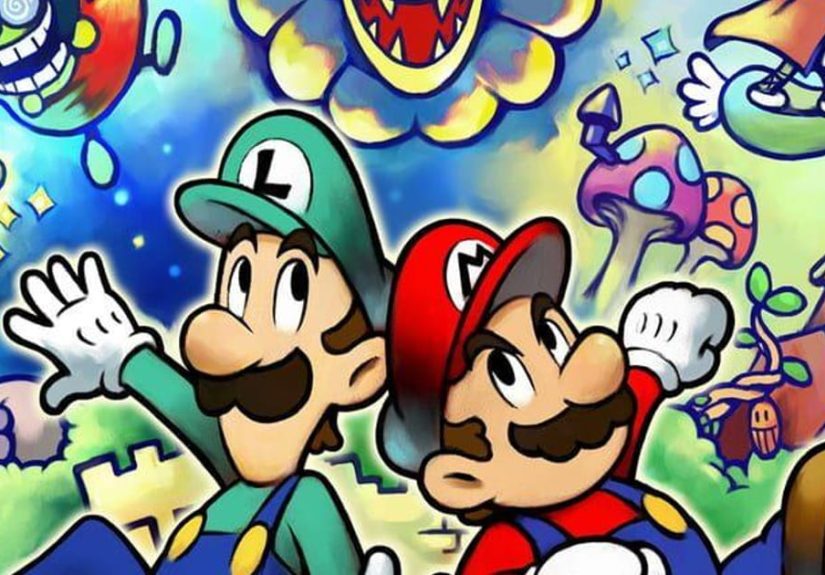
If you’ve ever wanted proof that an RPG can be both strategically crunchy and laugh-out-loud goofy,
Mario & Luigi: Superstar Saga is basically Exhibit Awearing a green hat and insisting it’s fine, actually, really fine.
This is the game that turned the Mario brothers into a two-person comedy troupe with timing-based combat, slapstick exploration, and a villain lineup
that somehow feels more “Saturday morning cartoon” than Bowser… while still being legitimately threatening when it counts.
This article is a big, opinionated love letter with receipts (not links): rankings, hot takes, and practical context for why the game still popswhether you’re
revisiting the original Game Boy Advance release, sampling the 3DS remake, or discovering it through modern re-releases. We’ll rank the bosses, Bros. Attacks,
and Beanbean Kingdom locations, then wrap with honest opinions about what holds up, what doesn’t, and why that’s part of the charm.
Why Superstar Saga Still Rules
Superstar Saga doesn’t just “have humor.” It’s built on humorits pacing, animations, character reactions, and the way it treats the Mario universe
like a toy box that’s been gently shaken to see what rattles. But underneath the jokes is a surprisingly disciplined RPG structure:
you explore, unlock field abilities (“Bros. Moves”), and fight in turn-based battles where you’re rarely allowed to go on autopilot.
The secret sauce is engagement. Even basic attacks ask you to pay attention. Defending isn’t “press A to not die,” it’s learning enemy tells,
timing dodges, and turning your brain into a tiny rhythm game. That constant involvement makes the moment-to-moment gameplay feel fresh in a way
a lot of RPGsespecially handheld-era RPGsstruggle to match.
Add in the Beanbean Kingdom setting (a whole new neighborhood of weird), a villain duo with a memorable energy, and a surprising number of minigames and
side diversions, and you get a game that still feels like Nintendo and AlphaDream were trying to out-creative themselves every twenty minutes.
Mario & Luigi: Superstar Saga Rankings
Rankings are inherently chaotic. Your favorite boss might be my personal sleep paralysis demon. Still, that’s the funso here are
rankings and opinions that balance nostalgia, design quality, and “how often I yelled ‘OKAY THAT’S FAIR’ at my screen.”
Ranking #1: The 10 Best Things Superstar Saga Does (In Order)
- Timing-based combat that stays interactive Attacks and defenses keep your hands and brain busy, not just your menu cursor.
- Brother teamwork as a core mechanic Switching between Mario and Luigi for puzzles and combat feels natural, not gimmicky.
- Comedic animation and “silent” storytelling Reactions, poses, and physical comedy land even without voice acting.
- Bros. Moves that actually change exploration You don’t just get keys; you get new ways to interact with the world.
- Villains who aren’t just “Bowser, again” The story has its own identity, while still using classic Mario flavor.
- Boss fights that teach patterns Many bosses feel like small skill exams, not stat checks.
- Fast, readable RPG progression Level-ups feel meaningful without requiring spreadsheets (unless you want spreadsheets).
- Mini-games that break up the pace They’re not all winners, but they keep the experience lively.
- Distinct regions with memorable “identity” You can describe areas in one sentence and people will nod like, “Yup.”
- Charm that survives replay Even when you remember the beats, the delivery still works.
Ranking #2: Top 8 Boss Battles (Most Memorable to Most “I Need a Snack Break”)
- Final showdown (the endgame gauntlet) A stress test of everything you learned, with real “final boss energy.”
- Cackletta (major mid/late fight) Iconic villain fight design: aggressive, theatrical, and not here to be polite.
- Queen Bean A classic “figure out the gimmick” battle that rewards observation over button-mashing.
- Chuckolator Big, dramatic, and an excellent example of the game’s love for absurd spectacle.
- Popple & Rookie (your favorite chaotic duo) Their repeat appearances make them feel like rivals, not random obstacles.
- Trunkle A boss that feels like the Beanbean Kingdom itself decided to fight you personally.
- Mom Piranha Great “learn-and-react” battle rhythm, and a reminder that plants in Mario games are never just plants.
- Wiggler Not the hardest, but a memorable personality boss: funny, frustrating, and oddly endearing.
Note: Some players will swap #2 and #1 depending on how they feel about difficulty spikes. I respect your truth. I also fear your reflexes.
Ranking #3: Best Bros. Attacks (How Often You’ll Use Them + How Satisfying They Feel)
- Knockback Bros. Reliable, powerful, and feels like you’re filing taxes… with violence.
- Chopper Bros. Great damage and a strong “I practiced this and now I’m unstoppable” vibe.
- Thunder Bros. Flashy, effective, and thematically perfect for a game that loves dramatic little animations.
- Fire Bros. A crowd-pleaser with satisfying rhythmwhen you nail the timing, it feels like you earned it.
- Cyclone Bros. Stylish and fun, even when it’s not the most efficient option.
- Bounce Bros. Great “special move” energy, especially when you need a change of pace.
- Splash Bros. Solid utility, and it’s weirdly satisfying to pull off cleanly.
- Swing Bros. Not bad, but tends to get replaced once your heavier hitters come online.
The real meta is this: your “best” Bros. Attack is often the one you can execute consistently under pressure. If your hands panic, your tier list changes.
Ranking #4: Beanbean Kingdom Areas, Ranked by Vibes
- Beanbean Castle Town The heart of the setting: quirky, lively, and the kind of place you’d visit… if it weren’t constantly under threat.
- Woohoo Hooniversity A perfect blend of goofy theme and “okay why is this actually tense?”
- Chucklehuck Woods Weird, whimsical, and full of “Nintendo decided to do a bit and committed to it.”
- Hoohoo Mountain Classic early-game adventure energy with a strong “we’re really doing this” climb.
- Beanbean International Airport A concept that’s funny on paper and surprisingly memorable in play.
- Stardust Fields A strong opener that sets the tone: colorful, odd, and mechanically instructive.
- Joke’s End Cool in concept, but can feel like it’s trying to “final dungeon” a little too hard.
- Bowser’s Castle (Beanbean edition) The vibes are intense, but sometimes you’re just thinking, “Let me save. Let me breathe.”
Ranking #5: The Funniest “Design Choices” (Not Quotes, Just Chaos)
- Bowser as a reluctant teammate Always good for tension, comedy, and occasional accidental heroism.
- Fawful’s… everything A character so specific the game practically invents a dialect around him.
- Luigi’s anxious hero energy He’s brave, but also one jump-scare away from leaving the chat.
- The game’s commitment to physical comedy The Bros. communicate with gestures, and it’s funnier than it has any right to be.
- Mini-games that appear like surprise snacks Sometimes delicious, sometimes weird, always unexpected.
Opinions: What Holds Up (and What Faceplants a Little)
Opinion #1: The combat is still the gold standard for “active” turn-based play
The battle system is the main reason Superstar Saga has such staying power. You’re not just choosing actions; you’re performing them.
That keeps even random encounters from becoming background noise. It also makes improvement feel personal: when you’re better, you feel it immediately.
Opinion #2: The pacing is mostly excellent… until it suddenly isn’t
Superstar Saga is usually good about momentum: new mechanics arrive, you use them, then you move forward. But there are moments where the game
asks for extra backtracking or throws a difficulty bump that can feel like it came from a different game entirely. Not constant, not a dealbreaker
just enough that you notice.
Opinion #3: The writing is funny because it’s confident, not because it’s loud
The humor doesn’t rely on one joke repeated forever. It’s in the timing, the animation, the absurdity of the Beanbean Kingdom, and the way characters
react like they’re just as surprised as you are. It’s playful, but it rarely feels lazyan underrated difference.
Opinion #4: The 3DS remake is a great version of a great game (even if you ignore the side mode)
The enhanced 3DS release modernizes visuals and adds quality-of-life touches that make replays smoother. The extra side content can be hit-or-miss depending
on your taste for lighter strategy modes, but the main adventure remains the star. If you’re deciding between versions, consider what you value more:
the crisp pixel-era feel, or the newer presentation and conveniences.
Best Ways to Play & How to Enjoy It in 2025
Pick your “best way to play” based on what you care about
- If you want classic vibes: the original look and feel has a handheld-era punch that still holds up.
- If you want smoother modern comfort: the remake’s improvements and presentation can make long sessions feel easier.
- If you want convenience: modern availability options can make it much easier to actually start (and finish) the game.
Combat tip: practice defense like it’s offense
Superstar Saga rewards players who treat dodging and countering as part of their damage output. If you learn enemy tells early, you’ll spend less time
healing and more time styling. The funny part is: the “best build” often isn’t complicatedit’s just being consistent with timing.
Build tip: use Beans intentionally, not randomly
Beans can feel like a “nice bonus” until you realize they’re a steady way to shape each brother. A simple approach:
pick a role for eachone more offense-leaning, one more survivability/support-leaningthen commit. The game gives you room to experiment,
but focus helps the difficulty spikes feel less spiky.
Sanity tip: don’t grind unless the game explicitly forces your hand
If a boss is flattening you, grinding can helpbut usually the bigger gain is understanding patterns and tightening your action commands.
A few levels are nice; a better rhythm is permanent.
Player-Style Experiences (): What It Feels Like to Play Superstar Saga
Playing Mario & Luigi: Superstar Saga today feels like opening a time capsule that still has fresh air inside.
The first “experience moment” usually arrives fast: you land your first clean string of timed jumps, dodge an enemy hit by a hair, and suddenly the game
clicks. It’s not just a turn-based RPG anymoreit’s a turn-based RPG that’s asking you to show up and participate. That feeling turns ordinary encounters
into tiny performance challenges. You stop thinking, “What should I pick?” and start thinking, “Can I execute this cleanly?”
The early hours are especially satisfying because the game teaches without lecturing. You learn that Mario and Luigi aren’t just two characters in the party;
they’re a puzzle mechanism. One button, one brother, one brain cell at a time. Then the world starts to get weirder. A town doesn’t just have NPCs; it has
personality. A villain doesn’t just monologue; they act like they’re auditioning for “Most Extra Person Alive.” The result is an experience that feels light,
but not shallowlike a comedy show that’s secretly doing advanced choreography.
Midgame is where players often report the best “flow” experience: you’re strong enough to feel clever, but not so overpowered that timing stops mattering.
You develop habitssaving before suspicious doors, hoarding items you swear you’ll use later (you won’t), and picking a couple of Bros. Attacks you can
perform reliably even when your hands are sweaty. Boss fights become mini-stories: you lose once, learn the trick, then win with a cleaner run that makes
you feel like you improved as a player, not just as a number on a stat screen.
Then comes the late-game stretch, where Superstar Saga sometimes shows its sharp edges. You might feel the tension spike, the fights demand more precision,
and the game occasionally tests your patience. But even that can become part of the experience. For many players, the endgame isn’t memorable because it’s
“fair”it’s memorable because it’s dramatic. It’s the kind of final act that makes you lean forward. When you finally win, you don’t feel like you watched
the credits; you feel like you earned them.
And that’s the lasting experience takeaway: Superstar Saga is still fun because it treats you like an active participant in the joke and the challenge.
It’s charming, yesbut it’s also a game of small skills. You get better at timing. You get better at reading patterns. You get better at staying calm when a
boss does something rude. In other words, it’s comedy… with consequences. And somehow, that’s exactly why it still works.
Final Thoughts
Mario & Luigi: Superstar Saga earns its reputation by doing two hard things at once: making an RPG that stays mechanically engaging,
and making a Mario story that’s genuinely funny without losing momentum. The rankings will always vary (that’s the point), but the core truth is consistent:
the game’s best ideas still feel fresh. Whether you’re here for boss battles, Bros. Attacks, or just the sheer absurdity of the Beanbean Kingdom,
Superstar Saga remains a golden example of how personality and systems can power each other instead of competing for attention.