Table of Contents >> Show >> Hide
- The Cat Behind the Viral Headline
- Why Corduroy’s Story Resonated So Deeply
- What Helps a Cat Live a Very Long Life?
- Senior Cats Are Not “Less Than” Cats
- Was Corduroy the Oldest Cat Ever?
- What Pet Owners Can Learn From a Record-Breaking Cat
- Experiences People Often Describe After Adopting an Older Shelter Cat
- Conclusion
Note: This headline is commonly associated with Corduroy, the Oregon cat Guinness World Records recognized as the world’s oldest living cat in 2015 at age 26. Many popular retellings describe him as a shelter adoptee, while Guinness’s own summary states that Ashley Reed Okura had him from kittenhood. To keep this article accurate and useful for publication, the story below preserves the requested title while clearly separating verified record facts from broader retellings.
Every now and then, the internet gives us a story so delightfully specific that it feels custom-built to melt human hearts. A cat. Twenty-six years old. Still strutting around like he pays the mortgage. A record breaker. A beloved companion. And, depending on which retelling you first saw, either the ultimate proof that cats have nine lives or the ultimate proof that some felines are simply too stubborn to read the expiration date.
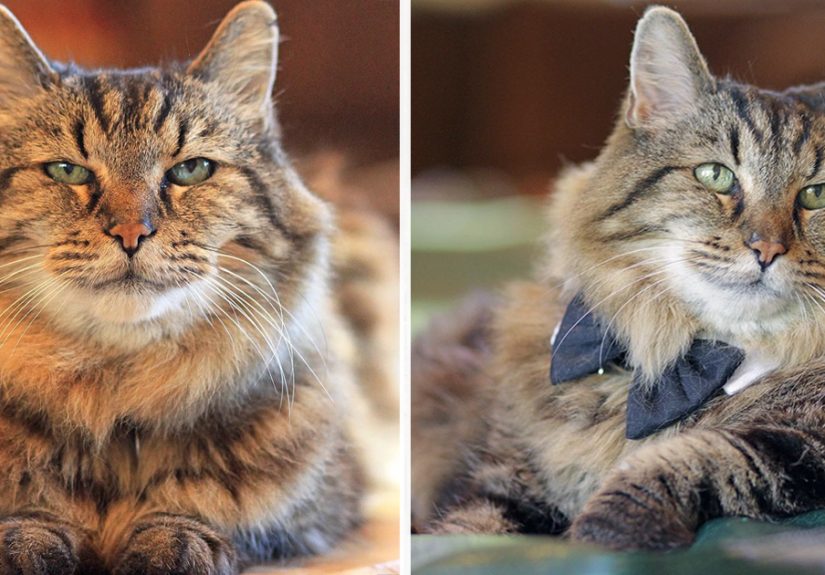
The cat behind this famously shared headline is Corduroy, a fluffy Oregon feline who was recognized by Guinness World Records as the oldest living cat in 2015. At a time when many house cats live somewhere in the teens, Corduroy had already crossed into full-blown legend status. He was old enough to make younger cats look like interns. He was also old enough to make pet parents everywhere ask the same question: How does a cat live that long?
That question is what makes Corduroy’s story so much more than a cute viral animal feature. Yes, the headline is irresistible. Yes, the photos are the sort of thing that causes people to abandon productivity for ten full minutes. But the deeper reason this story sticks is because it touches on three big ideas at once: the power of lifelong companionship, the overlooked magic of older cats, and the everyday care that helps pets reach their golden years with comfort and dignity.
The Cat Behind the Viral Headline
Corduroy lived with Ashley Reed Okura in Sisters, Oregon, and Guinness confirmed his record in August 2015 after he turned 26. Coverage at the time described him as a cat who still loved to roam, nap, hunt, and generally behave as though “elderly” was more of a suggestion than a fact. Reports also noted his taste for sharp cheddar and mice, which is either a quirky diet detail or the most Oregon sentence ever written about a cat.
What made Corduroy especially memorable was not just his age, but his attitude. He did not sound like a delicate, porcelain record-holder being protected inside a velvet display case. He sounded like a cat being a catcurious, active, mildly mischievous, and very aware that the world was his personal stage. That personality helped turn him from a Guinness entry into a genuine folk hero of pet culture.
It also helped that his life story carried emotional weight. Ashley had known him essentially since kittenhood, which gave the relationship a rare, nearly whole-life arc. In a world where everything feels temporary, a 26-year bond between a person and a cat hits like a freight train made of whiskers.
Why the shelter angle matters
The “adopted from a shelter” detail became one of the most repeated parts of the headline because it makes the story even more powerful. People love a second-chance narrative, and for good reason. Whether Corduroy came directly from a shelter or from a kitten situation that later coverage simplified into that phrase, the public response reveals something important: audiences instinctively understand that animals who begin life without certainty can still become unforgettable companions.
That part of the story matters because senior and overlooked cats in shelters are often passed over. Kittens tend to get the spotlight. Older cats, meanwhile, sit there being polite, experienced, and emotionally available, which frankly sounds like a far better dating profile than most humans can offer. Corduroy’s fame reminds people that age does not reduce a cat’s worth. In many cases, it increases it.
Why Corduroy’s Story Resonated So Deeply
Animal stories go viral all the time, but not all of them endure. Corduroy’s did because it lived at the intersection of novelty and meaning. The novelty was obvious: a 26-year-old cat is extraordinary. The meaning ran deeper. People saw in him a symbol of loyalty, continuity, and hope. If a cat can stay by someone’s side for more than two decades, maybe some good things really do last.
There is also something beautifully democratic about cats in stories like this. Corduroy was not a celebrity pet wearing sunglasses on a yacht. He was not a designer breed living in a penthouse with an agent. He was a household cat from Oregon. He had dirt-under-the-paws energy. He felt accessible. His story suggested that remarkable animals do not always come from rare bloodlines or luxury conditions. Sometimes they come from ordinary homes where they are simply loved, watched over, and allowed to be themselves.
That message lands especially well in the shelter-adoption conversation. Older cats and mixed-breed cats are often overlooked because they are not seen as “special” at first glance. Corduroy’s story flips that assumption on its head. Special does not always announce itself with fireworks. Sometimes special is just a cat who keeps showing up year after year, becoming part of the furniture, the family mythology, and eventually the record books.
What Helps a Cat Live a Very Long Life?
Here is the least glamorous but most useful answer: there is no single magic trick. No enchanted salmon smoothie. No secret moon ritual. No feline anti-aging serum hidden in a crystal bottle. Exceptional longevity usually comes from a combination of factors, including genetics, regular veterinary care, solid nutrition, healthy weight, low stress, enrichment, and a safe environment.
1. Routine veterinary care matters more than people think
Experts generally consider cats seniors at around age 10, and age-related changes often begin showing up between roughly 7 and 12. That means a cat does not wake up one day, blow out a birthday candle, and suddenly become “old.” Aging is gradual. Because of that, regular checkups become increasingly important. Many veterinarians recommend more frequent wellness exams for older cats so problems like kidney disease, thyroid issues, dental disease, arthritis, or weight changes can be caught earlier.
That is one of the biggest lessons hidden inside Corduroy’s legend. Long-lived cats are not just lucky. They are usually observed carefully. The people who share their lives notice appetite shifts, mobility changes, litter box habits, hydration, mood, sleep, and grooming. Longevity is part biology, part vigilance.
2. Nutrition and weight control play a huge role
A cat does not need a trendy menu to thrive, but it does need appropriate nutrition over time. As cats age, hydration, calorie balance, and tailored diet choices matter more. Senior cats may need food changes based on dental comfort, kidney function, body condition, or other medical factors. Older cats can lose weight unexpectedly, gain weight because they move less, or eat normally while hiding a condition that deserves attention. A long life is easier to support when food is treated as health care, not just bowl filler.
3. Environment can make senior years easier
Older cats often benefit from surprisingly simple adjustments: low-sided litter boxes, easier access to favorite resting places, extra water stations, predictable routines, soft bedding, and less need to jump like an Olympic gymnast every time they want a snack. Aging is not a disease, but it does come with physical changes. A cat that seems “moody” may actually be uncomfortable. A cat that seems “confused” may need a more consistent environment. A cat that avoids the litter box may be telling you the stairs have become rude.
4. Indoor safety usually supports longevity
Most feline-care guidance agrees that indoor living reduces many risks and generally supports longer lives. That is why Corduroy’s story should be read as an extraordinary exception, not a standard formula. Reports about him emphasized that he spent time outdoors and stayed active, but that does not mean every cat should be turned loose in pursuit of immortality. What his story really demonstrates is that cats thrive when their lives include movement, stimulation, and close human attention. The “secret” is not recklessness. It is engagement.
Senior Cats Are Not “Less Than” Cats
One of the most valuable takeaways from this story has nothing to do with world records. It is this: older cats are deeply adoptable. In shelters, senior cats are often overlooked because adopters assume they will be expensive, fragile, boring, or heartbreakingly short-term. Real life is usually more nuanced.
Older cats often arrive with serious advantages. Their personalities are more settled. Their energy level is easier to understand. Many already know the house rules, have strong litter box habits, and are done with the kind of chaos that makes kittens delightful in theory and destructive in your curtains. Senior cats can be affectionate, funny, calm, and incredibly present. Some adopters even say older cats seem more intentional with their love, as if they understand the value of finally being safe.
That is why Corduroy’s popularity mattered beyond cute headlines. He gave visibility to an uncomfortable truth: many wonderful cats are ignored simply because they are not tiny anymore. But a cat does not lose value by aging. If anything, age often adds depth. An older cat has survived enough to become interesting. It has preferences. Opinions. Boundaries. Character. In other words, it becomes what every great novelist hopes to create and every cat already is.
Was Corduroy the Oldest Cat Ever?
This is where precision matters. Corduroy was recognized as the oldest living cat in 2015 at age 26. That is not the same as being the oldest cat ever recorded. That all-time verified mark belongs to Crème Puff of Austin, Texas, who lived to 38 years and 3 days. Later, in 2022, Guinness recognized Flossie as the oldest living cat at nearly 27.
Why bring that up in an article about Corduroy? Because accuracy is part of good storytelling. And, honestly, the truth is still plenty amazing. You do not need to inflate a cat’s résumé when the cat already made it to 26 and became famous for being a cheddar-loving legend. That is a perfectly respectable career.
More importantly, distinguishing between “oldest living cat” and “oldest cat ever” helps readers trust what they are reading. Viral animal stories often get flattened into one-line claims that sound catchy but lose context. A better article does the opposite: it keeps the charm while adding clarity.
What Pet Owners Can Learn From a Record-Breaking Cat
The most practical lesson from Corduroy’s story is not “try to raise a record holder.” It is “treat your cat’s later years like they matter,” because they do. Watch behavior changes. Prioritize veterinary visits. Protect mobility. Support hydration. Keep weight in check. Make the home easier to navigate. And if you are considering adoption, do not scroll past the older cat in the back of the profile lineup just because a kitten is doing acrobatics in the front row.
Corduroy’s life also underscores the emotional reality of long-term pet companionship. A cat who stays with you for twenty-plus years is not “just a pet.” That cat becomes a witness to your life. It sees homes, routines, holidays, losses, recoveries, and the weird phase where you thought those curtains were a good idea. The older the cat gets, the more it becomes stitched into the family’s memory. That may be the real reason stories like this spread so widely: people recognize that a very old cat is not only rare, but sacred in an ordinary, domestic way.
Experiences People Often Describe After Adopting an Older Shelter Cat
If there is one pattern that comes up again and again in stories about senior-cat adoption, it is surprise. People expect a quiet, sleepy animal who mostly wants a windowsill and a respectful amount of silence. Sometimes they do get that. But they also often discover a cat with a huge personality, very specific opinions, and a stunning ability to become the emotional center of a home within days.
Many adopters describe the first week with an older shelter cat as a lesson in patience. The cat may hide under a bed, peek from behind furniture, and evaluate every household sound as if conducting a formal audit. Then, little by little, the routine settles in. A tail appears in the doorway. A cautious head bump arrives during breakfast. One evening the cat decides your lap is acceptable, and suddenly you are no longer a stranger but staff. It is a quiet kind of trust, but it can feel enormous.
Another common experience is relief. Senior cats are often easier to read than kittens. They tend to show their likes and dislikes clearly. You quickly learn whether they prefer soft beds or sun patches, whether they tolerate company or would rather run a one-cat kingdom, whether they want a gentle brushing session or a hard pass with judgment. That clarity can make the bond feel unusually honest. There is less guessing and more relationship.
Adopters also talk about gratitudenot in a magical, movie-script way, but in the everyday rhythm of companionship. A cat who has been uprooted, surrendered, or overlooked in a shelter often seems to settle into comfort with remarkable seriousness. The first deep nap in a safe room, the first confident walk to the food bowl, the first stretch in a patch of sunlight: these moments can feel disproportionately moving. You realize that “home” is not an abstract idea for an animal. It is warmth, predictability, water, a clean litter box, and someone who comes back.
There can be bittersweet feelings too. People who adopt senior cats know, at least in theory, that their time may be shorter. But many describe an unexpected shift in perspective. Instead of measuring the relationship by how many years it might last, they begin measuring it by quality. Did the cat feel safe? Was the cat comfortable? Was it known, loved, and respected? In that sense, older cats often teach a better version of attachmentless about possession, more about stewardship.
And then there is the comedy, because older cats do not stop being funny just because they qualify for the feline equivalent of a retirement discount. Senior cats can still be dramatic about dinner, territorial about one chair in the entire house, weirdly obsessed with one shoelace, or convinced that 3 a.m. is an excellent time to sing the song of their people. Age may slow the knees, but it does not necessarily reduce the theater.
That is why stories like Corduroy’s matter. They validate what many adopters already know from experience: an older cat is not a consolation prize. It is not the pet version of picking what is left. It is often a brilliant companion with a formed identity and a tremendous capacity to connect. When people open their homes to senior shelter cats, they are not choosing the end of a story. They are choosing a meaningful chaptersometimes a funny one, sometimes a tender one, and almost always one worth telling.
Conclusion
Corduroy’s fame was built on a simple premise that still works like magic: here was a 26-year-old cat from Oregon living proof that love, routine, and individuality can add up to something extraordinary. Whether readers arrive for the record, the shelter angle, or the sheer delight of seeing a cat outlive expectations, they leave with a richer message. Older cats deserve attention. Senior pets deserve homes. And the animals we welcome into our lives can end up shaping our stories far longer than we ever imagined.
So yes, meet the world’s oldest cat aged 26 who was adopted from a shelteror, more precisely, meet the legendary Corduroy, the record-breaking feline whose story helped millions look at older cats a little differently. That may be his most lasting achievement of all.