Table of Contents >> Show >> Hide
- A Viral Story With a Very Real Emotional Core
- Why the Name “Dixie” Is So Loaded
- When Bullying Turns a Name Into a Daily Stress Test
- Was the Mother Right To Say Yes?
- Why Chosen Names Can Be Powerful
- The Cultural Debate Is Bigger Than One Family
- What Parents Can Learn From This Moment
- Experiences Related to This Topic Show Why Names Matter More Than People Think
- Conclusion
Picking a baby name is usually treated like a joyful little ceremony. Parents flip through books, argue over syllables, veto weird spellings, and hope the final choice feels timeless, meaningful, and at least somewhat safe from future mockery on a middle school bus. What they do not usually expect is that a name will grow up carrying a full backpack of history, politics, and playground cruelty.
That is exactly why one mother’s decision to let her teenage daughter change her name has struck such a nerve online. The story is simple on the surface: a mom said yes when her daughter asked to stop using the name she had been given at birth. But the reason the moment resonated goes far beyond a routine teenage identity shift. The girl had been relentlessly bullied, not only because her name invited crude jokes, but because many people also associated it with a darker chapter of American history.
In other words, this was never just about a name tag. It was about what happens when language, history, school culture, and identity all crash into one poor kid’s hallway experience before first period.
A Viral Story With a Very Real Emotional Core
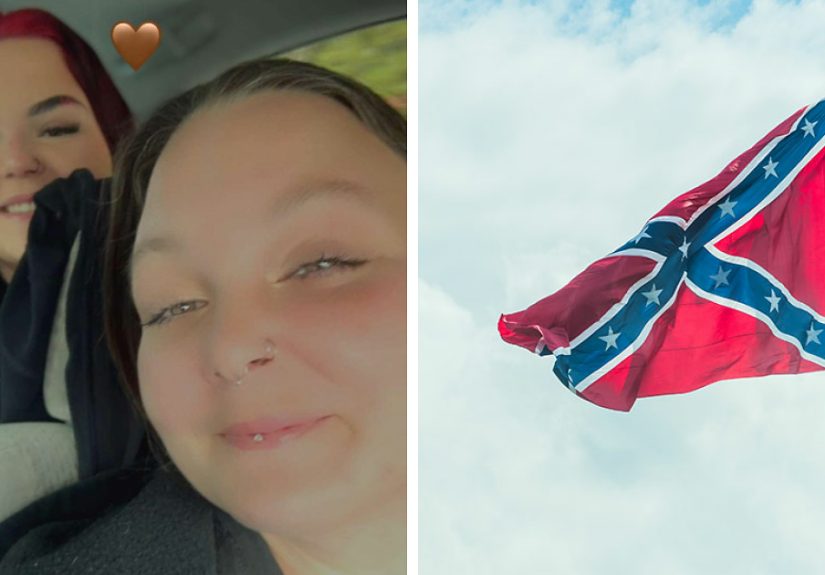
The mother at the center of the story, Tennessee mom Danielle Remp, said she agreed to her 16-year-old daughter’s request to change her name with virtually no hesitation. Her reasoning was refreshingly direct: if her daughter is a good kid, doing well in school, and feels better about herself with a different name, why would she say no?
That response may sound obvious to some parents and wildly controversial to others. Welcome to the internet, where a child could announce she prefers waffles over pancakes and somehow trigger a civilization-level debate. But beneath the predictable hot takes, this story raises a serious question: when a child says, “This name does not feel like me anymore, and it is making my life harder,” what should a parent actually do?
In this case, the teen wanted to stop going by Dixie and start going by Skye, a name her mother had originally wanted for her when she was born. According to reported interviews, the daughter said classmates mocked her with crude nicknames like “Dixie Dust” and “Dixie Normous,” and the name also led some peers to accuse her of racism. That is a rough load for any teenager to carry, especially in an environment where social humiliation can spread faster than cafeteria gossip and linger longer than mystery meat.
Why the Name “Dixie” Is So Loaded
It is not just an old-fashioned Southern nickname
Part of the reaction to this story comes from the fact that “Dixie” is not a neutral word to many Americans. Historically, it has been used as a nickname for the Southern United States, particularly the states associated with the Confederacy. Historians trace the popular rise of the term to the 19th century, especially through the song “Dixie,” which became strongly linked to the Confederate South.
That historical context matters. To some people, the word sounds quaint, nostalgic, or simply regional. To others, it signals Confederate memory, slavery-era romanticism, and the long American habit of polishing up ugly history until it looks like a decorative porch sign. That gap in interpretation is exactly why the name can feel harmless in one room and explosive in another.
There is also the cultural backstory of the song itself. It came out of the minstrel tradition, a form of entertainment built in part on racist caricature and blackface performance. So while some defenders of the term insist it is “just history,” the reality is that history is the issue. The baggage is not accidental. It is baked in.
Names do not stay frozen in time
One reason this story feels so current is that America has spent the past several years reassessing symbols and language that were once treated as normal background noise. Statues have come down. Institutions have rebranded. Schools and companies have retired terms once defended as tradition. And in 2020, even the Dixie Chicks dropped “Dixie” and became simply The Chicks.
That does not mean every person named Dixie intended anything political. Of course not. Most names are chosen in love, not ideology. But intent is only one piece of the puzzle. Public meaning matters too. A name can begin as a family preference and later become a social burden because the culture around it changes. Kids, unfortunately, are often the first people to weaponize that shift.
When Bullying Turns a Name Into a Daily Stress Test
Adults sometimes underestimate how brutal name-based bullying can be. They hear “teasing” and imagine mild nonsense from a 1990s sitcom. But real bullying is not a one-off joke tossed into the breeze. It is repetition. It is humiliation. It is the slow grind of hearing your identity dragged through the hallway until even attendance feels personal.
Bullying experts and public health agencies have long warned that verbal harassment, name-calling, taunting, rumor-spreading, and social exclusion are not harmless rites of passage. They can contribute to anxiety, depression, low self-esteem, academic problems, and broader mental health struggles. Once a child starts bracing for mockery before they even leave the house, the issue has already become more serious than “kids being kids.”
That is what makes this story so relatable to many families. Plenty of parents know the feeling of seeing their child come home quieter than usual, suddenly hate school, or try to laugh off something that clearly hurts. A name may seem small on paper, but in practice it is one of the first things the world uses to address you, categorize you, and, sometimes, target you.
In that sense, letting a child change a name is not always about surrendering to bullies. Sometimes it is about removing a pressure point that never should have been there in the first place.
Was the Mother Right To Say Yes?
From a parenting standpoint, the most striking part of this story is not that the daughter wanted a different name. It is that the mother listened without turning the moment into a courtroom drama. She did not say, “Come back when you are 30 and have a PowerPoint.” She treated her daughter’s distress as real, not theatrical.
That matters. Parents are constantly told to teach resilience, and that is fair. Kids do need coping skills, perspective, and confidence. But resilience is not the same thing as forcing a child to keep wearing something that no longer fits. We would not tell a teenager to keep running in a shoe that is cutting into their heel just because character matters. At some point, the practical response is simply: get a better shoe.
Names are more complicated than shoes, obviously, because they also involve family history, parental attachment, identity, and paperwork that feels designed by a committee of tired staplers. But the principle still stands. A supportive parent does not have to romanticize suffering in order to raise a strong kid.
There is also a deeper emotional truth here. The daughter did not pick a random flashy rebrand because she got bored on a Tuesday. She chose Skye, a name her mother had once wanted for her, and described it as a name that actually felt like her. That makes the change sound less like a rebellion and more like a reclamation.
Why Chosen Names Can Be Powerful
Research on chosen names, especially in youth identity contexts, suggests that being able to use a name that feels authentic can be associated with better mental health outcomes. While not every situation is the same, the broader point is straightforward: names are not trivial labels. They are personal, social, and emotional anchors.
When someone says, “This is the name that makes me feel like myself,” dismissing that statement as dramatic misses the point entirely. A chosen name can represent comfort, agency, safety, or relief. It can be the difference between feeling like you are being called into a room and feeling like you are being put on display.
That is especially important during adolescence, when identity is already under renovation. Teenagers are figuring out who they are while their hormones are acting like unlicensed contractors and their peers are reviewing every move like unpaid critics. If a name becomes a source of chronic distress, changing it may be less about escaping reality and more about creating a healthier one.
The Cultural Debate Is Bigger Than One Family
This story also landed when Americans are still arguing over what to do with words and symbols tied to the Confederacy. Some people believe removing them erases history. Others argue the opposite: that continuing to celebrate or normalize them erases the actual history of slavery, racism, and exclusion by wrapping it in a warm blanket labeled heritage.
The truth is that a name can carry multiple meanings at once. A parent may hear sweetness, vintage charm, or regional pride. A teenager at school may hear insults. A classmate may hear Confederate nostalgia. A historian may hear a term popularized through a racist minstrel tradition and later adopted as a symbol of the South during and after the Civil War.
All of those interpretations can exist at the same time, which is exactly why families now have to think harder about names than previous generations sometimes did. The social meaning of a name is not set by the parent alone. It is shaped by history, community, media, and the people shouting it across a hallway.
What Parents Can Learn From This Moment
Listen before you defend the original choice
Parents often feel understandably attached to the names they pick. Those names may honor relatives, memories, places, or values. But when a child says the name is causing pain, the immediate goal should not be defending the parent’s taste from 16 years ago. The goal should be understanding the child standing in front of you now.
Separate tradition from impact
A name can have sentimental value and still create problems in the present. Those two truths are not enemies. A family can honor the love behind an original name while also admitting that the world has changed, and that the child living with the consequences gets a real vote.
Do not confuse support with weakness
Saying yes to a name change is not necessarily “giving in.” In many cases, it is an act of trust. It tells a child, “I believe you when you tell me what this feels like.” That kind of support often strengthens a child far more than a lecture about toughening up ever could.
Experiences Related to This Topic Show Why Names Matter More Than People Think
This story may feel unique because of its viral framing, but the underlying experience is not unusual. Across the United States, families, schools, and institutions have been forced to confront the fact that names do not live in a vacuum. They gather meaning over time, and sometimes that meaning becomes too heavy to ignore.
One of the clearest examples came from country music. In 2020, The Dixie Chicks became The Chicks, dropping a word they no longer wanted attached to their public identity. That was not a small tweak done for aesthetics. It reflected a broader cultural acknowledgment that “Dixie” carries Confederate associations many Americans no longer want normalized, especially in mainstream branding.
Education has faced similar reckonings. California’s Dixie School District voted to become the Miller Creek Elementary School District after public debate over the name’s associations. In Utah, Dixie State University was renamed Utah Tech University after years of controversy. In both cases, supporters of change argued that the old name brought unnecessary baggage and sent the wrong message. Opponents often argued for preserving tradition. Sound familiar? It is essentially the same debate this Tennessee family faced, just with bigger buildings and more microphones.
Then there are the quieter, less public experiences that never make national headlines. Kids get nicknamed in ways they hate. Students anglicize or shorten names to avoid ridicule. Teenagers ask teachers to use different names because the original one feels embarrassing, unsafe, or disconnected from who they are becoming. Many adults can still remember being called the wrong thing, the cruel thing, or the thing that turned them into a punch line for an entire semester. That stuff sticks.
What this suggests is simple: names are emotional infrastructure. They shape first impressions, influence how comfortable someone feels in public, and can become either a source of pride or a source of stress. When a young person asks for a change, the request is often about much more than phonetics. It may be about dignity, belonging, or a desire to stop feeling like a walking debate topic.
That does not mean every uncomfortable name should be retired at the first rude comment. But it does mean parents should pay attention when the discomfort becomes chronic, social, and deeply personal. The best responses usually combine listening, context, and flexibility. Families can preserve the story behind the original name while still choosing a future that feels lighter for the child carrying it.
In that sense, Danielle Remp’s decision taps into something larger than one girl becoming Skye. It reflects a growing cultural understanding that names are lived experiences. If a name becomes a source of shame, conflict, or relentless harassment, changing it is not necessarily an erasure. Sometimes it is an upgrade in peace of mind. And honestly, peace of mind is a pretty good thing to put on a birth certificate’s sequel.
Conclusion
The story of a mom allowing her daughter to change a so-called “racist” name after relentless bullying resonates because it sits at the intersection of parenting, identity, and American history. On one level, it is about a teenager who was tired of being mocked. On another, it is about how words from the past still shape life in the present.
What makes the mother’s response stand out is not that she picked a side in a culture war. It is that she picked her child. She listened, believed, and acted. In a world where parents are often pressured to treat every youth decision like a slippery slope, that kind of calm support feels surprisingly radical.
Maybe that is the real lesson here. A name should feel like home, not a trap. And when it stops feeling that way, helping a child choose something better is not weakness. It is love with paperwork.