Table of Contents >> Show >> Hide
- Why This BHG Brownie Recipe Still Works
- What Makes a Brownie Fudgy Instead of Cakey?
- The Secret Behind That Shiny, Crackly Top
- Why Moms Love Recipes Like This
- How To Make This Kind of Brownie Turn Out Better Every Time
- How This Brownie Recipe Fits Modern Tastes
- Why Nostalgia Makes Brownies Taste Even Better
- What 55 Years of Brownies Looks Like in Real Life
- Final Thoughts
Some families pass down jewelry. Some pass down holiday china. Mine? We pass down a brownie recipe that never, ever makes it to a second day without suffering mysterious corner-related losses. My mom has been making this Better Homes & Gardens brownie recipe for 55 years, which means these brownies have survived the Nixon era, disco, low-fat dessert propaganda, several kitchen remodels, and at least three generations of people pretending they were “just cutting a tiny piece.”
And honestly, I get it. This is the kind of brownie recipe that doesn’t need a drumroll, a blowtorch, or a sprinkle of flaky salt the size of roof shingles. It works because it understands the assignment: deep chocolate flavor, a moist and fudgy center, a gentle chew, and edges that feel just structured enough to keep the middle from stealing the whole show. It is old-school in the best way. Dependable. Unfussy. A little nostalgic. A little bossy. Very delicious.
If you count backward 55 years from today, you land in the early 1970s, when Better Homes & Gardens was already a trusted American kitchen institution. Its cookbook legacy goes back to 1930, and by the 1970s it had become the kind of source families leaned on for reliable, repeatable home cooking. That matters, because this brownie recipe feels exactly like that kind of kitchen wisdom: practical, clear, and designed to work even when life is chaotic and someone is asking where the good spatula went.
Why This BHG Brownie Recipe Still Works
The genius of this classic BHG brownie recipe is not that it is flashy. It is that the formula is smart. The traditional version uses butter, unsweetened chocolate, sugar, eggs, vanilla, flour, and a small amount of baking soda. That’s it. No ten-step hydration schedule. No complicated layering. No ingredient that requires a side quest to a specialty market.
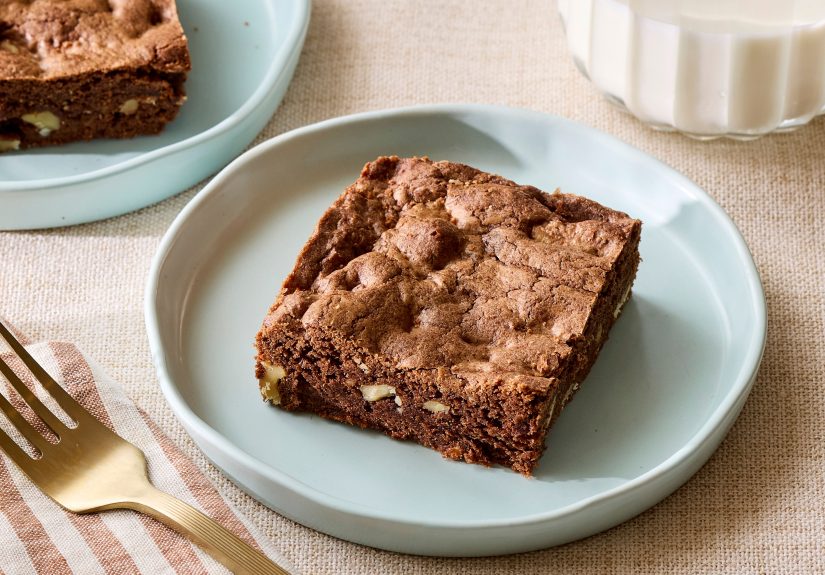
What makes that combination special is balance. There is enough fat from the butter and chocolate to keep the brownies rich, enough sugar to create that beautiful top and tender bite, and just enough flour to hold everything together without turning the pan into chocolate cake wearing a brownie costume. That low-flour profile is one of the biggest reasons the texture lands on the fudgy side instead of drifting into cakey territory.
That is also why this recipe has such staying power. A lot of trendy brownie recipes chase extremes. They want to be either wildly gooey or aggressively tall. This one is more sensible than that. It knows most home bakers want brownies that cut cleanly, travel well, taste intensely chocolaty, and still make everyone at the table say, “Wait, who made these?” It is the culinary equivalent of a reliable friend who shows up early, brings napkins, and somehow also has excellent hair.
What Makes a Brownie Fudgy Instead of Cakey?
If you have ever wondered why one brownie tastes dense and decadent while another tastes like chocolate cake that took a wrong turn, the answer usually comes down to ratios. Fudgy brownies rely on more fat and sugar relative to flour. Cakey brownies move in the opposite direction, using more flour and often more leavening to create extra lift.
The BHG version my mom swears by lands in the sweet spot. It has enough structure to slice neatly, but not so much that it loses its chew. It also uses melted chocolate instead of relying on cocoa powder alone, which gives the brownies a fuller chocolate profile and a softer, richer texture. That is part of why the flavor feels round and classic rather than sharp or dry.
Another important detail is restraint. This recipe does not ask you to beat the batter into oblivion. In fact, one of the reasons it works so well is that the eggs and flour are stirred in only until combined. That keeps the crumb tender. Brownies are not trying to become sponge cake. They are trying to become the reason people “accidentally” visit your kitchen twice in one evening.
The Secret Behind That Shiny, Crackly Top
Ah yes, the brownie top. The glossy, papery, delicately crackly surface that makes a pan of brownies look like it has its life together. Bakers love to argue about how to get it, but the broad consensus is pretty simple: sugar matters, and how it is handled matters even more.
When sugar is dissolved well into warm fat or thoroughly combined with eggs, it helps create that signature top during baking. Some bakers swear by warming butter and sugar together. Others emphasize whipping eggs and sugar until the mixture looks lighter and smoother. Either way, the common idea is the same: properly integrated sugar helps form that thin, shiny crust brownie lovers dream about when they should probably be focusing on taxes.
The BHG brownie recipe takes a classic home-kitchen route. The chocolate and butter are melted first, then cooled slightly before sugar goes in, followed by eggs and vanilla. It is simple, sensible, and wildly effective. My mom never explained the food science when I was growing up. She just called it “doing it the right way,” which, in fairness, is how a lot of family culinary wisdom gets passed down.
Why Moms Love Recipes Like This
There is a special category of recipes that mothers, grandmothers, aunts, and neighborhood legends tend to keep forever. They are not always the fanciest recipes. They are the recipes that behave. They work in real kitchens with imperfect ovens, distracted kids, missing measuring spoons, and somebody opening the refrigerator every eight seconds like the answers to life are hiding behind the mustard.
This BHG brownie recipe belongs in that category. It is straightforward enough for a weeknight, special enough for birthdays, and sturdy enough for potlucks, bake sales, and the kind of school function where every dessert arrives in a pan and nobody bothers with labels because everyone is too busy hunting the brownies anyway.
That practical magic is exactly why recipes from brands like Better Homes & Gardens became such fixtures in American households. They were tested, explained clearly, and built for ordinary cooks who wanted reliable results. In other words, they were not trying to impress a panel of judges. They were trying to feed people something wonderful. That is a very different mission, and frankly, it tastes better.
How To Make This Kind of Brownie Turn Out Better Every Time
Use good chocolate, even in a simple recipe
You do not need imported chocolate guarded by a velvet rope, but quality matters. In a recipe with a short ingredient list, every flavor shows up to work. If the chocolate tastes flat, the brownies will too. A classic brownie like this rewards decent ingredients because there is nowhere for weak flavor to hide.
Do not overmix once the flour goes in
Once flour hits the bowl, your job is no longer to show enthusiasm. Your job is to show self-control. Stir just until the batter comes together. Overmixing can push the texture toward dense in the wrong way, with toughness instead of chew.
Do not overbake
This is the hill brownie lovers will die on, and they are correct. Pull the pan when the center looks set and a tester gives you moist crumbs rather than wet batter. If you wait for a completely clean toothpick, you may end up with brownies that taste fine but miss that dreamy fudgy middle.
Let them cool before cutting
I know. Waiting is rude. But cooling is part of the recipe, not an annoying suggestion invented by joyless people. As brownies cool, the structure settles and the texture shifts from soft and fragile to dense, rich, and sliceable. Hot brownies are delicious. Fully cooled brownies are great brownies.
Choose your pan wisely
Metal pans tend to bake brownies more evenly than glass. If you have ever gotten gummy centers and overdone edges, the pan may be part of the problem. The classic BHG approach also uses a lined square pan, which makes lifting and cutting easier and saves you from that tragic moment when the first brownie comes out looking like a landslide.
How This Brownie Recipe Fits Modern Tastes
One reason this old recipe still feels current is that it is easy to adapt without losing its soul. Want a deeper chocolate note? Add a touch of espresso powder. Want a more dramatic edge? Sprinkle the top with chopped walnuts or chocolate chips. Want a tiny bit of tangy richness? The BHG version even plays nicely with frosting variations, including cream cheese-based toppings.
But here is the crucial thing: the brownie itself does not need rescuing. It is already good. That is why it has lasted. The best legacy recipes are not fragile antiques. They are sturdy foundations. You can dress them up for a party or leave them gloriously plain for a Tuesday night when the weather is weird and the group chat is exhausting.
And maybe that is the real secret of a 55-year brownie recipe. It is not just about flavor. It is about usefulness. A recipe lasts when it keeps meeting people where they are. This one has probably shown up after long workdays, before church suppers, during holiday weekends, after breakups, before graduations, and in all those odd little in-between moments when dessert feels less like luxury and more like emotional support with corners.
Why Nostalgia Makes Brownies Taste Even Better
Food nostalgia is powerful because it folds memory into flavor. A brownie is never just a brownie when it arrives carrying the whole mood of a house with it. Suddenly you are not only tasting chocolate, butter, and vanilla. You are tasting a Saturday afternoon, a flour-dusted countertop, the sound of the oven door closing, and the totally reasonable family debate over whether edge pieces are superior. For the record, this debate will never end. Nor should it.
That emotional layer is part of why vintage recipes keep winning. They remind us that good home baking is not supposed to feel intimidating. It is supposed to feel generous. The pan sits on the counter. People wander by. Somebody asks if they are cool yet. Somebody else ignores the answer. The brownies disappear unevenly, because the world is imperfect and corners are irresistible.
In that way, this BHG brownie recipe is more than a dessert. It is a little edible time machine. One bite can pull a whole room backward. Suddenly the kitchen feels warmer. The day feels softer. And whoever made the brownies becomes, at least for ten minutes, the most popular person in the building.
What 55 Years of Brownies Looks Like in Real Life
In real life, a 55-year brownie recipe does not live in a pristine binder with matching tabs and no splatters. It lives in a kitchen drawer. It lives on a stained recipe card with softened corners, or in a red-plaid cookbook with a spine that has seen things. It lives in memory too, in that half-recited family shorthand that sounds like, “Melt the chocolate first,” or “Don’t forget to let it cool a bit,” or the classic maternal instruction, “You’re stirring too hard.”
My favorite part of a recipe like this is that it grows up with the family. At first, you are the kid who gets to lick the spoon and ask every four minutes if the brownies are done. Later, you are the teenager “helping,” which mostly means stealing batter and offering opinions nobody requested. Then one day, without warning, you are the adult making the same brownies in your own kitchen, using the same little habits you once rolled your eyes at. You smooth the batter into the pan exactly the way your mom did. You tap the pan on the counter. You pretend you are only going to have one square. History repeats itself, deliciously.
These are also the brownies that show up for life’s unglamorous moments, which is how you know they are the real deal. Fancy desserts get invited to holidays and dinner parties. Brownies handle the rest. They show up when someone gets good news and when someone needs cheering up. They get packed into lunchboxes, dropped off for neighbors, set out at card tables, and wrapped in foil for road trips. They are just as welcome at a birthday as they are at a Tuesday-night family dinner where everyone is tired and nobody wants a lecture from a croquembouche.
I think that is why the recipe has lasted in my mind. It never demanded the perfect mood or the perfect table. It just showed up and did its job beautifully. The brownies were rich without being fussy, special without being precious, and reliable enough that my mom could make them almost on autopilot. And yet they never felt ordinary when they came out of the oven. The smell alone could improve the general attitude of an entire household.
Even now, the experience is the same. The first whiff of chocolate and butter still feels like a signal that something good is happening. The pan still looks a little too small for how fast people gather around it. The first cut is still slightly dramatic. And the first bite still delivers that familiar combination of chewy edge, fudgy center, and deep cocoa comfort that makes you understand, instantly, why this recipe has remained in rotation for 55 years. Some recipes endure because they are innovative. This one endures because it is beloved. And in a home kitchen, beloved beats trendy every single time.
Final Thoughts
There are countless brownie recipes on the internet, many of them excellent, some of them suspiciously eager to sell you a lifestyle. But a classic Better Homes & Gardens brownie recipe that a mom has trusted for 55 years offers something rarer: proof. Proof that simple ingredients, smart technique, and repetition can create a dessert that outlives trends.
So yes, my mom’s been making this BHG brownie recipe for 55 years. And after all that time, it still delivers exactly what a brownie should: rich chocolate flavor, a fudgy bite, a little crackle on top, and the comforting sense that some things in life actually do stay wonderful. Frankly, that may be the sweetest part of all.