Table of Contents >> Show >> Hide
- From WFIRST to Roman: Why the Name Change Mattered
- Who Was Nancy Grace Roman?
- What the Roman Space Telescope Will Actually Do
- Why the Rename Resonates Beyond Astronomy
- WFIRST’s Legacy Lives On in Roman’s Mission Design
- Examples of What Roman Could Reveal
- The Human Experience of a Telescope Named for a Pioneer
- Conclusion
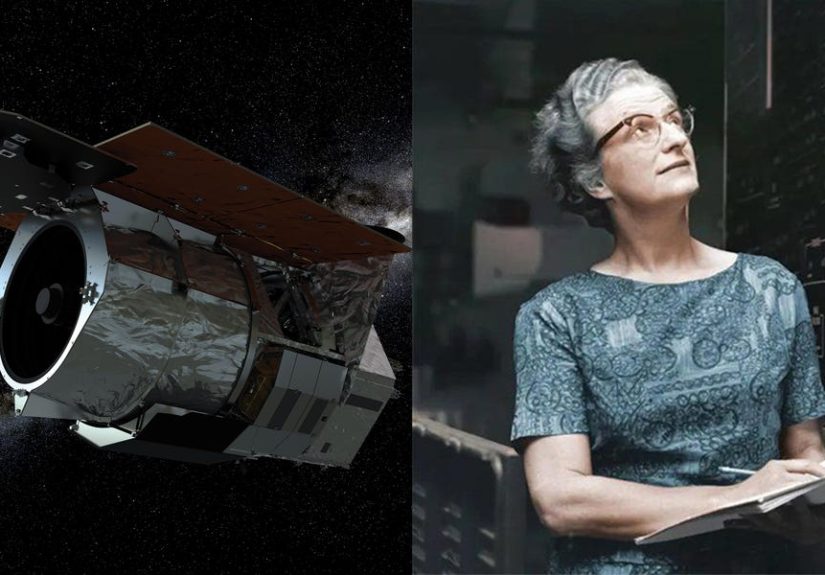
Some telescope names sound like they were created by a committee locked in a room with stale coffee and a spreadsheet. WFIRST, short for the Wide Field Infrared Survey Telescope, definitely had that energy. Useful? Yes. Memorable? Only if you enjoy acronyms the way some people enjoy tax forms. So when NASA renamed WFIRST after astronomer Nancy Grace Roman, the change felt bigger than a branding update. It felt like a correction, a tribute, and a quiet act of historical honesty all at once.
The new name, the Nancy Grace Roman Space Telescope, does more than honor one accomplished scientist. It highlights the legacy of a woman who helped build modern space astronomy before it was fashionable, before it was well funded, and certainly before it was easy for women to be heard in rooms full of gatekeepers. If Hubble became the superstar, Roman was one of the people helping write the set list, book the venue, and make sure the lights turned on.
This story matters for more than nostalgia. The telescope formerly known as WFIRST is one of NASA’s most ambitious observatories, designed to investigate dark energy, exoplanets, and the large-scale structure of the universe. By naming it after Nancy Grace Roman, NASA tied the future of discovery to one of the architects of its past. That gives the mission a human center, and frankly, science stories are always better when the humans are included.
From WFIRST to Roman: Why the Name Change Mattered
A mission with a giant scientific job description
Before it became Roman, WFIRST was already a major priority in U.S. astronomy. The mission was designed as a wide-field infrared observatory capable of surveying enormous patches of sky with impressive precision. In plain English, it is built to do cosmic big-picture work without sacrificing detail. That combination is exactly what astronomers need when trying to understand why the universe is expanding faster over time, how galaxies evolve, and how common planets are throughout the Milky Way.
NASA’s decision to rename the mission did not change its scientific ambitions, but it changed the emotional and historical frame around them. Instead of sounding like an engineering placeholder, the observatory now carries the name of a real person whose career helped make space telescopes thinkable in the first place.
More than a ceremonial gesture
It is easy to be cynical about renamings. Sometimes they are cosmetic. Sometimes they are corporate theater with better typography. This one is different. Nancy Grace Roman was NASA’s first Chief of Astronomy and a foundational force in the agency’s space-science vision. She advocated for a future in which astronomy would not be limited by Earth’s blurry atmosphere. That idea sounds obvious now because Hubble, Webb, and other missions made it feel inevitable. It was not inevitable when Roman was fighting for it.
Naming the telescope after her sends a simple message: the future of astronomy did not appear out of nowhere. It was built by people with foresight, persistence, and the ability to keep arguing for big ideas even when others were not yet convinced.
Who Was Nancy Grace Roman?
The astronomer who refused to stay in the margins
Nancy Grace Roman was born in 1925 and developed an interest in the sky early in life. That may sound like the opening scene of every science biography ever written, but in her case the interesting part is what came next. She pursued astronomy during an era when women in science were routinely underestimated, redirected, or told to pick a more “suitable” field. Roman did not accept the hint. She studied astronomy, built a strong research career, and eventually became one of the most important scientific leaders in early NASA history.
She worked at NASA during a transformative period, when the space program was beginning to define not only its engineering identity but also its scientific purpose. Roman was instrumental in helping establish space astronomy as a serious, strategic priority. She understood that if telescopes could observe from above Earth’s atmosphere, astronomers would gain access to sharper, broader, and more powerful views of the cosmos.
Why she is called the “Mother of Hubble”
Roman is often called the “Mother of Hubble,” and that nickname is not just cute science-world branding. It reflects her role in advocating for the kind of long-term space-based astronomy program that eventually produced the Hubble Space Telescope. Hubble may be the celebrity poster on the bedroom wall, but Roman helped get the band together.
She did not single-handedly invent Hubble, of course. That would make for a tidy headline and a bad history lesson. What she did do was help shape the institutional support, scientific momentum, and policy framework needed for such a telescope to exist. That kind of leadership rarely gets turned into movie montages, but it changes history just the same.
What the Roman Space Telescope Will Actually Do
Studying dark energy without pretending the universe is simple
One of Roman’s biggest science goals is to help astronomers investigate dark energy, the mysterious phenomenon associated with the accelerating expansion of the universe. This is where astronomy becomes beautifully rude. Just when scientists thought gravity should be slowing cosmic expansion down, the universe replied, “Actually, I’m doing the opposite.” Roman is designed to help measure that behavior with much greater precision.
By surveying vast numbers of galaxies and cosmic structures, Roman will help researchers track how the universe has expanded over time. Those observations could sharpen models of cosmic evolution, test ideas about gravity, and improve our understanding of what dark energy might be. In science, “might be” is not weakness. It is honesty wearing a lab coat.
A planet hunter with a giant field of view
Roman is also expected to become a powerful exoplanet mission. Unlike some telescopes that specialize in close-up investigations of specific worlds, Roman will take a wider statistical approach. Its surveys are expected to detect many planets using gravitational microlensing, a method that notices what happens when a foreground object bends and magnifies the light of a more distant star.
This matters because microlensing can reveal planets that other detection methods often miss, including worlds far from their stars and even free-floating planets that drift through space without a sun of their own. In other words, Roman is not just looking for neat planets. It is looking for the weird cousins too, and astronomy is more fun when the weird cousins show up.
The Wide Field Instrument and the coronagraph
The Roman Space Telescope includes a Wide Field Instrument and a coronagraph. The wide-field capability is one of the mission’s defining strengths. Roman’s primary mirror is the same size as Hubble’s, but its field of view is dramatically larger, allowing it to sweep the sky much more efficiently. That means it can do large-area cosmic surveys that would take far longer with narrower instruments.
The coronagraph is especially exciting because it is designed to block starlight and help astronomers directly image faint objects near bright stars, including some exoplanets and disks of dust around other solar systems. It is also a technology demonstration, meaning it is not just doing science; it is helping test techniques that could shape future planet-imaging missions. Roman is not only asking big questions. It is also rehearsing for astronomy’s next act.
Why the Rename Resonates Beyond Astronomy
History gets clearer when names get specific
Science often remembers discoveries more easily than it remembers the people who had to fight for the tools that made those discoveries possible. Renaming WFIRST after Nancy Grace Roman helps fix that imbalance. It reminds readers, students, and future scientists that astronomy has been shaped not only by famous observatories, but by the people who fought to make those observatories real.
That matters especially because Roman’s career reflects broader themes in American scientific history: the growth of NASA, the rise of space-based observation, and the barriers women faced in research and leadership. Her story is not only about personal achievement. It is about structural change. And structural change, while less glamorous than rocket launches, is usually what makes rocket launches possible.
Representation is not fluff; it is infrastructure
When young scientists see a major NASA mission named after Nancy Grace Roman, they get more than a history lesson. They get a signal about who belongs in the story of discovery. Representation in science is often dismissed as symbolic, but symbols shape expectations, and expectations shape opportunity. A telescope named for a pioneering woman astronomer tells future researchers that their ambition is not an interruption to science. It is part of the tradition.
Roman’s name also expands the public conversation around famous space telescopes. Many people know Hubble. More are learning Webb. Roman adds another name to that constellation, and it is a name tied not just to a machine but to leadership, persistence, and scientific vision.
WFIRST’s Legacy Lives On in Roman’s Mission Design
The acronym changed, but the ambition did not
Some readers may wonder whether the Roman mission is fundamentally different from WFIRST. The clearest answer is no and yes. No, because it is the same mission lineage, the same broad scientific purpose, and the same long-term observatory concept that developed under the WFIRST banner. Yes, because a name changes how a mission is understood in public memory.
WFIRST described what the telescope would do: observe the universe in the infrared with a wide field of view. Roman adds the human story. It anchors a technical mission in a historical narrative. Instead of sounding like an anonymous machine with great optics, the telescope now carries the identity of someone who helped create NASA’s astrophysics culture.
A bridge between Hubble, Webb, and the next generation
Roman also occupies a fascinating place in NASA’s lineup of observatories. Hubble delivered iconic imagery and transformational science across decades. Webb is opening extraordinary infrared windows on the early universe and distant worlds. Roman complements both by bringing scale. It is designed to collect sweeping, statistically powerful data sets that can reveal patterns across the cosmos.
That makes Roman less like a single dramatic close-up and more like a cinematic aerial shot, except the aerial shot is of galaxies, dark matter structure, and a suspicious number of possible planets. If Hubble taught the public to fall in love with space imagery and Webb deepened that wonder, Roman may help scientists connect isolated marvels into broader cosmic logic.
Examples of What Roman Could Reveal
Cosmic expansion with sharper evidence
Roman’s wide surveys could improve how astronomers measure the expansion history of the universe. Better measurements mean tighter tests of competing explanations for cosmic acceleration. Maybe dark energy behaves like a cosmological constant. Maybe gravity behaves differently on the largest scales than expected. Maybe the universe has another twist prepared, because it enjoys keeping astrophysicists humble.
A richer census of planetary systems
Roman’s microlensing observations could dramatically improve the census of planetary systems in our galaxy. Instead of focusing only on hot, easy-to-spot planets near their stars, Roman can help fill in the broader population map, including colder planets farther out and wandering worlds with no parent star. That matters because a census changes theory. Once astronomers know what kinds of planets are common, rare, or bizarrely abundant, they can build better models of how planetary systems form and evolve.
Technology that points to future Earth-like planet imaging
The coronagraph demonstration is another reason Roman matters. Directly imaging exoplanets is incredibly difficult because stars are bright and planets are faint. That is the cosmic equivalent of trying to photograph a firefly hovering next to a lighthouse. Roman’s coronagraph helps advance the methods needed to reduce that glare, and those lessons could feed into future missions designed to image more Earth-like worlds.
The Human Experience of a Telescope Named for a Pioneer
There is also a more personal side to this story, one that does not always make it into mission briefings. For students, educators, amateur skywatchers, and people who simply like the idea of human beings doing brave, smart things with mirrors and mathematics, the renaming of WFIRST to the Nancy Grace Roman Space Telescope changes the emotional texture of the mission.
Names shape experience. “WFIRST” sounds like something you accidentally type when your hands slip on the keyboard. “Roman” sounds like a person, a legacy, and a conversation starter. When teachers talk about the telescope in classrooms, they are not just introducing a future NASA observatory. They are introducing a scientist who pushed past cultural barriers, argued for big ideas, and helped define what space astronomy could become. That makes the mission easier to teach, easier to remember, and honestly, easier to love.
For many women in science, the name carries a special weight. Space exploration has often been presented through a handful of famous male names, even though the history of astronomy is filled with women who calculated, observed, organized, advocated, and led. Seeing Roman’s name on a flagship mission does not erase those old imbalances, but it pushes back against them. It says that the story of exploration is bigger than the usual shortlist.
For longtime followers of NASA, the renaming also creates a satisfying historical loop. Hubble changed the public imagination by turning distant galaxies, nebulae, and deep time into something visually immediate. Roman helped lay the groundwork for that era. Now a telescope bearing her name is preparing to explore the next layer of cosmic questions. There is something deeply moving about that sequence. It feels less like a bureaucratic decision and more like a relay race in which one generation finally hands the baton to the person who helped mark the track.
The experience extends beyond professionals. Amateur astronomers, science writers, museum visitors, and curious teenagers all meet space science through stories as much as through data. A mission named after Nancy Grace Roman gives people a story with texture. It offers a character, a history, and a reason to care before the first science images even arrive. The public does not fall in love with science through instrument specifications alone. It falls in love through meaning.
And then there is the emotional experience of waiting. Roman has been years in the making, and like most major space projects, it has required patience, engineering discipline, and a tolerance for schedules that behave more like weather forecasts than commandments. Following such a mission can feel like tracking a long-anticipated symphony performance: you know the orchestra is tuning, the hall is filling, and something extraordinary is coming, but the beauty is partly in the build-up. Every construction milestone, every test, every updated mission detail adds to the sense that this telescope is not just hardware. It is an inheritance of effort.
That is why the renaming matters. It changes the experience of the mission from “Here comes another observatory” to “Here comes a scientific future connected to a person who helped make that future possible.” It adds memory to momentum. And in a field devoted to studying light that has traveled for millions or billions of years, that seems exactly right.
Conclusion
The story of NASA WFIRST named after pioneering astronomer Nancy Grace Roman is about more than a telescope title change. It is about how institutions remember their builders, how science honors vision, and how future discoveries are often rooted in past persistence. Roman helped shape NASA’s astronomy ambitions when space-based observation was still a bold idea. The telescope that now bears her name is poised to investigate dark energy, reveal new worlds, and expand our understanding of the universe on a grand scale.
That makes the rename feel not only appropriate, but elegant. The mission once known mainly by an acronym now carries the name of a scientist who made modern space astronomy possible. In a universe full of mystery, that part is refreshingly clear.