Table of Contents >> Show >> Hide
- Why NASA Bet Big on an Electric X-Plane
- The Crazy-Smart Part: Distributed Electric Propulsion
- Why Electric Flight Is So Hard
- Did the X-57 Fail Because It Never Flew?
- So What Comes Next? Meet the New Generation
- What “Revolutionizing Electric Flight” Actually Means
- Why This Story Still Matters
- Extended Perspective: The Experience of Watching Electric Flight Grow Up
Electric aviation has a PR problem and a physics problem. The PR problem is that every sleek rendering makes it look as if we are one optimistic LinkedIn post away from boarding silent, zero-emission airliners powered by fairy dust and good intentions. The physics problem is that airplanes are rude enough to insist on lift, range, safety, and not catching fire. NASA’s X-plane program exists precisely for this kind of reality check. It takes big ideas, drags them into the lab, bolts them to real hardware, and asks the least glamorous but most important question in aerospace: will this actually work?
That is what made the X-57 Maxwell so fascinating. NASA did not just want to build an airplane with batteries instead of gas. It wanted to rethink how an airplane wing, propulsion system, and certification strategy could work together in an electric future. In other words, the agency was not merely swapping the engine. It was trying to rewrite the recipe. And like many ambitious recipes, this one involved heat, complexity, and a few moments where the kitchen definitely smelled “experimental.”
The result is one of the most important electric-flight stories of the past decade. Yes, the X-57 ultimately did not fly. No, that does not make it a failure. In fact, its biggest contribution may be that it exposed exactly how hard electric flight really is while handing the industry a thick stack of lessons on batteries, motor controllers, airworthiness, distributed propulsion, and safety. If aviation is ever going to go cleaner, quieter, and more electric, it will owe a lot to projects like this one that did the unglamorous homework.
Why NASA Bet Big on an Electric X-Plane
The X-plane label is not handed out because something looks cool in a rendering. It is reserved for research aircraft meant to test breakthrough technologies. NASA’s X-57 Maxwell was especially notable because it became the agency’s first all-electric experimental aircraft and its first crewed X-plane in two decades. That alone made it headline material. But the real reason people in aerospace paid attention was the design philosophy behind it.
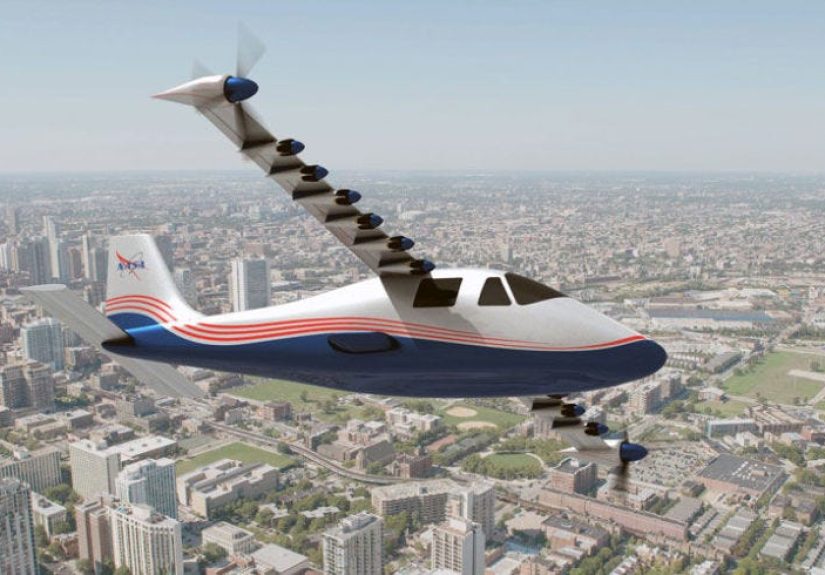
The X-57 was built from a Tecnam P2006T light airplane, but NASA’s plan was far more radical than a simple electric retrofit. The program’s endgame envisioned a final configuration with 14 electric motors: 12 smaller high-lift motors spread across the wing’s leading edge and two larger cruise motors mounted near the wingtips. Those smaller motors were designed to blast air over the wing during takeoff and landing, generating extra lift at low speeds. Once the aircraft reached cruise, the high-lift propellers would stop, and the larger cruise motors would handle the rest.
That matters because airplane wings are a classic engineering compromise. Bigger wings help with low-speed lift, which makes takeoff and landing easier, but bigger wings also create more drag in cruise. Smaller wings are more efficient at speed, but they are less forgiving when the airplane is moving slowly. NASA’s electric solution was delightfully sneaky: use electric propulsion to make the wing behave as if it were larger during low-speed operations, then enjoy the efficiency of a much smaller wing in cruise. It is the aerodynamic version of wearing running shoes to the airport and somehow also packing dress shoes in the same carry-on.
The Crazy-Smart Part: Distributed Electric Propulsion
The phrase distributed electric propulsion sounds like something invented by a committee that wanted to charge by the syllable, but the idea is elegant. Electric motors can be smaller, lighter, and more flexible in placement than conventional piston engines or turbines. That opens the door to spreading propulsion across the airplane instead of hanging one or two big engines in the usual places.
NASA explored that idea early through LEAPTech, short for Leading Edge Asynchronous Propeller Technology. In one of the more delightfully NASA ways to test a wing, researchers mounted a motor-packed experimental wing on top of a truck and drove it across Rogers Dry Lake. Those ground tests used a 31-foot wing section with 18 electric motors and showed that the accelerated airflow could generate more than double the lift of an unblown wing. Translation: the weird idea was not just weird. It was promising.
That early work fed directly into the X-57 concept. NASA’s long-term design target was bold: a 500 percent increase in high-speed cruise efficiency, zero in-flight carbon emissions, and a much quieter community noise footprint compared with conventional piston aircraft. That is the kind of ambition that makes engineers smile and program managers reach for antacids.
Why Electric Flight Is So Hard
Batteries Are the Boss of the Whole Story
If you want to understand why electric airplanes are still mostly demonstrators instead of everyday commuters, start with the battery. Electric motors are excellent. They are efficient, responsive, and relatively simple. Batteries, on the other hand, are heavy, thermally fussy, and stubbornly less energy-dense than jet fuel. This is the central drama of electric aviation: the motor is ready for the future, but the battery keeps asking for a few more years.
NASA’s X-57 made that challenge impossible to ignore. The aircraft eventually carried two 400-pound lithium-ion battery packs in its cabin, and its design had to account for more than 5,000 individual battery cells. That is not just a lot of stored energy. That is a lot of stored responsibility. The pack had to deliver useful performance while also containing heat, preventing thermal runaway, and staying within acceptable safety margins in an aircraft environment where “pull over and call roadside assistance” is not a serious option.
Battery safety became one of the project’s defining engineering battles. NASA and its partners had to redesign and validate the battery system so it could safely handle a flight profile and isolate dangerous temperature spikes before they escalated. The agency also used the project to push practical battery knowledge into the public domain, which is a huge deal for an industry still trying to prove that electric flight can be more than a fancy prototype and a press release.
Heat, Electronics, and Airworthiness Are Not Side Quests
The X-57 also showed that electric aviation is not just “planes, but with cords.” The power electronics were every bit as critical as the motors and batteries. NASA developed cruise motor controllers using silicon carbide transistors and reported about 98 percent efficiency, a major step because wasted electrical energy turns into heat, and heat is the gremlin that moves into every advanced aircraft project uninvited.
Then there is certification. Even the best electric aircraft concept is going nowhere without regulators understanding how to evaluate it. That is why NASA repeatedly framed X-57 as an airworthiness and design-learning platform, not simply a prototype. The project’s mission included sharing its design and certification lessons with regulators and standards bodies so future aircraft developers would not have to start from scratch. In the real world, revolutionizing flight does not happen when the airplane gets a cool nickname. It happens when the data are good enough for engineers, regulators, and manufacturers to trust them.
Did the X-57 Fail Because It Never Flew?
This is where the story gets interesting, because the honest answer is both yes and no.
On the narrowest definition, yes: the X-57 did not complete the dramatic proof-of-concept flight sequence that many people expected. NASA announced in 2023 that the aircraft would not make a first flight. The agency cited several barriers to safe flight, including mechanical issues discovered late in the program and a lack of critical components needed to develop experimental hardware. For a project meant to push into the sky, ending on the ground is an undeniably painful outcome.
But the broader and smarter answer is no. X-57 still succeeded at doing something the aviation industry desperately needs: making the challenges visible before companies bet billions on production aircraft. It helped define what safe electric propulsion integration really demands. It produced battery, motor-controller, thermal-management, electromagnetic-interference, and airworthiness knowledge that other developers can use. NASA has been explicit that the project’s goal was to create a test platform and share lessons with regulators and industry, not to deliver a commercial product.
In other words, X-57 was less a failed moonshot than a brutally honest lab report. It proved that electric aviation is promising, but also that the jump from clever concept to certified airplane is much longer than many headlines suggested. That is not a glamorous lesson. It is, however, an extremely valuable one.
So What Comes Next? Meet the New Generation
If the X-57 was NASA’s electric-flight pathfinder, the next chapter is more diversified and more pragmatic. NASA’s newest X-plane, the X-66A, is not an all-electric aircraft. Instead, it is focused on ultra-efficient airliner design, specifically a transonic truss-braced wing configuration that could help future single-aisle aircraft use up to 30 percent less fuel when combined with advances in propulsion, materials, and systems architecture.
That shift tells us something important. NASA is not betting everything on one silver-bullet technology. It is attacking aviation emissions from multiple angles: cleaner propulsion, smarter aerodynamics, more efficient structures, and hybrid-electric systems that can cut fuel burn before battery technology is ready for larger fully electric aircraft.
This is also where NASA’s Electrified Powertrain Flight Demonstration project enters the picture. EPFD is aimed at ground and flight testing electrified propulsion technologies for hybrid-electric aircraft. Instead of waiting for miracle batteries to arrive and save the day wearing a cape, NASA is working with industry on practical systems that can reduce fuel use and emissions sooner. That is a less cinematic strategy, sure. But it is also how real revolutions usually happen: not in one giant leap, but in a series of stubborn, test-stand-powered advances.
What “Revolutionizing Electric Flight” Actually Means
The popular imagination tends to hear electric flight and picture a jet-sized Tesla with wings. NASA’s work suggests a more nuanced future. In the near term, the biggest gains are likely to come from small aircraft, regional platforms, hybrid-electric systems, and targeted improvements in efficiency and noise. Full battery-electric flight may first make the most sense in short-range applications where lower operating costs, quieter propulsion, and lower direct emissions can outweigh range limitations.
For larger aircraft, the revolution may arrive in layers. Better motors. Better thermal systems. Better batteries. Better certification methods. Better wings. Better hybrid architectures. All of those pieces matter, and NASA’s recent work reflects that reality. The X-57 taught the industry how difficult integrated electric aviation really is. The X-66A is testing aerodynamic efficiency at transport scale. EPFD is pushing hybrid-electric propulsion closer to real-world flight research. It is not one revolution. It is a stack of them.
And that may be the healthiest way to think about it. The future of cleaner aviation is unlikely to be a single grand unveiling where everyone gasps and a giant curtain drops off a battery-powered 737. It is more likely to be a chain of increasingly credible demonstrations that quietly make old assumptions look outdated. The revolution will not arrive all at once. It will taxi, test, overheat, get redesigned, pass a certification review, and then come back with better data.
Why This Story Still Matters
NASA’s next great electric-flight X-plane mattered not because it promised instant transformation, but because it forced aerospace to confront the details. It treated electric aviation as an engineering problem, not a branding exercise. That distinction is everything.
The X-57 Maxwell pushed forward the conversation on distributed electric propulsion, battery safety, thermal management, power electronics, and certification. Even without a first flight, it helped move electric aviation from hand-wavy optimism toward disciplined knowledge. The X-66A and hybrid-electric demonstrators now carry that mission into the next phase, where efficiency, emissions reduction, and real-world operability matter just as much as scientific novelty.
So yes, NASA’s next great X-plane did try to revolutionize electric flight. In a way, it still is. Not because one airplane solved everything, but because the program made the industry smarter. In aviation, that is how the future usually arrives: one test, one redesign, one hard-won lesson at a time.
Extended Perspective: The Experience of Watching Electric Flight Grow Up
One of the most interesting experiences connected to NASA’s electric-flight push is realizing how different the public version of innovation feels from the engineering version. Publicly, these programs arrive as glossy renderings, dramatic headlines, and hopeful phrases like revolutionary, sustainable, and next generation. Inside the engineering world, the experience is far more detailed and, honestly, far more impressive. It is about discovering that the future of aviation may hinge on things ordinary passengers never think about: the heat profile of a battery pack, the vibration behavior of a motor under load, the fail-safe logic inside a controller, or the exact way airflow changes over a wing when a propeller wakes it up at low speed.
That tension is what makes the X-57 story so memorable. It was exciting enough to capture the imagination of aviation fans, yet stubborn enough to remind everyone that airplanes do not care about hype. They care about physics. Following the project over time felt a little like watching a brilliant student tackle the hardest exam in school. You could see the intelligence, the preparation, and the originality. You could also see the moments where the questions got nastier than expected.
There is also a surprisingly human side to these programs. Experimental aviation is not just a showcase for machines; it is a showcase for patience. Engineers spend years chasing problems that sound small until you remember they are attached to an aircraft carrying high voltages and complex failure modes. A battery redesign is not a footnote. A controller test is not housekeeping. A decision to end a program without flying is not a shrug. It is a sign that safety culture still matters more than headlines, and that may be the most reassuring experience of all for anyone who hopes to someday board cleaner aircraft with confidence.
For the broader aviation industry, the experience of projects like X-57 has been clarifying. The dream of electric flight remains alive, but it is now less naive. The conversation has matured from “Can we make an electric plane?” to “Which missions make sense first, what technology thresholds still matter, and how do we certify these systems responsibly?” That is real progress. Mature questions are often a stronger sign of innovation than flashy answers.
And for readers, travelers, and future passengers, there is something oddly inspiring about that. NASA’s work reveals that the path to cleaner aviation is not magic. It is method. It is a long chain of experiments that slowly remove uncertainty from ideas that once sounded impossible. Watching that process unfold can be less cinematic than a blockbuster breakthrough, but it is more satisfying in the long run. It means the future is being built by evidence, not vibes.
So the experience surrounding NASA’s electric-flight X-plane effort is really the experience of seeing aviation evolve in public. You watch optimism collide with constraints, constraints produce better questions, and better questions produce more credible technology. That is not a disappointment. That is progress wearing work boots. And if electric aviation eventually becomes normal, quieter, and cleaner, it will be because programs like X-57 endured the awkward, difficult growing-up phase on behalf of the rest of the industry.