Table of Contents >> Show >> Hide
- What is neural foraminal stenosis?
- What causes neural foraminal stenosis?
- Symptoms: What does it feel like?
- How doctors diagnose neural foraminal stenosis
- Treatment options: From conservative care to surgery
- When is surgery considered?
- Recovery, prognosis, and living well with foraminal narrowing
- Conclusion
- Real-world experiences related to neural foraminal stenosis (about )
Think of your spine like a high-rise building: each level (vertebra) has hallways and doorways where important “tenants” come and go.
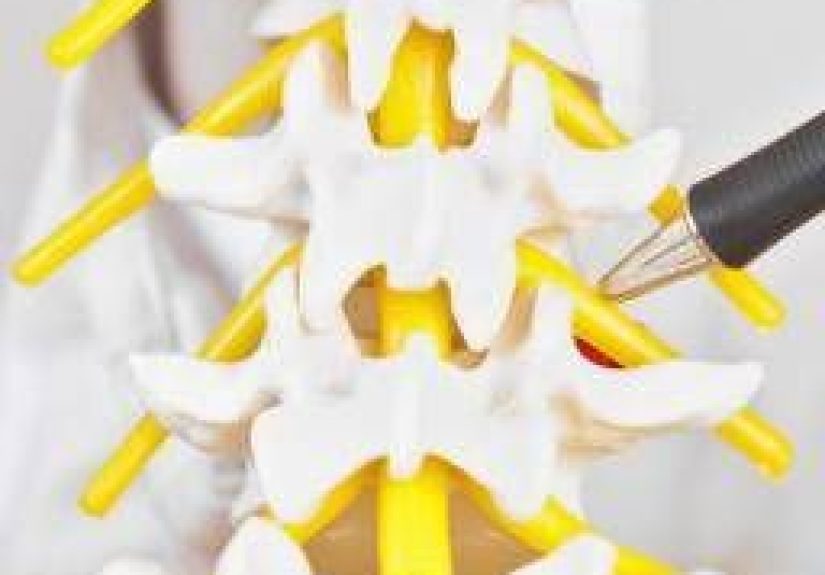
The neural foramen are those doorwayssmall openings on both sides of the spine where nerve roots exit on their way to your shoulders, arms,
hips, legs, and everything in between. When those doorways get cramped, the nerves complain. Loudly.
Neural foraminal stenosis (also called foraminal stenosis or neural foraminal narrowing) is a common spine condition in which one or more of
these openings narrow enough to irritate or compress a spinal nerve root. The result can be pain, tingling, numbness, or weaknessoften traveling along a predictable path,
like a bad rumor that refuses to stay in one room.
What is neural foraminal stenosis?
Stenosis simply means “narrowing.” In neural foraminal stenosis, the narrowing happens in the foramen, the bony canal between adjacent vertebrae.
Each foramen is bordered by bone, joints, discs, and soft tissuesso any change that steals space can crowd the nerve root.
Where it happens in the spine
- Cervical foraminal stenosis (neck): may irritate nerves going to the shoulder, arm, and hand.
- Thoracic foraminal stenosis (mid-back): less common, but can cause band-like pain around the chest or abdomen.
- Lumbar foraminal stenosis (low back): may affect nerves traveling into the buttock, leg, and foot (often called sciatica when it follows the sciatic nerve pathway).
Foraminal stenosis vs. “spinal stenosis”
People often hear “spinal stenosis” and assume it’s one single thing. In reality, stenosis can occur in different spaces:
the central canal (where the spinal cord or cauda equina runs), the lateral recess, or the foramen.
Neural foraminal stenosis is specifically about narrowing at the nerve root exit.
What causes neural foraminal stenosis?
Most cases are linked to degenerative, wear-and-tear changes that gradually remodel the spine over time. That said, “degenerative” doesn’t mean “doomed.”
It means tissues have changedoften in ways that can be managed.
Common causes
- Arthritis and bone spurs (osteophytes): Facet joint arthritis can enlarge joint surfaces and create bony overgrowth that narrows the foramen.
- Disc height loss (degenerative disc disease): As discs dry out and flatten, the vertical space of the foramen can shrinklike a doorway that’s slowly sinking.
- Bulging or herniated disc: Disc material can protrude into the foramen, contributing to nerve root compression.
- Thickened ligaments and joint capsules: Soft tissues can stiffen or thicken with aging and inflammation, taking up room.
- Spondylolisthesis: A vertebra slips forward relative to the one below it, changing alignment and narrowing nerve passageways.
- Scoliosis or degenerative curvature: As the spine curves or rotates, the foramina can become asymmetrically narrowed.
Less common contributors
- Congenitally narrow anatomy: Some people are born with smaller spaces and develop symptoms earlier.
- Trauma or fractures: Injury can change alignment or create swelling that crowds the foramen.
- Cysts, tumors, or infection: Rare, but possible causes of nerve compression that require prompt evaluation.
- Post-surgical scar tissue: In some cases, tissue changes after spine surgery can contribute to narrowing.
Symptoms: What does it feel like?
Here’s the tricky part: some people have significant narrowing on imaging and feel fine, while others have mild narrowing and significant symptoms.
Symptoms depend on whether the nerve is irritated, how long it’s been irritated, your activity patterns, and other factors.
Typical symptoms of foraminal stenosis
- Radiating pain (radiculopathy): pain that travels along the nerve pathway (e.g., neck into arm, low back into leg).
- Tingling or “pins and needles” in an arm/hand or leg/foot.
- Numbness in a specific area (often described as “my thumb and index finger go dead” or “the outside of my calf feels weird”).
- Weakness in muscles served by that nerve (e.g., grip strength, ankle lifting, or pushing off when walking).
- Worse with certain positions, especially spinal extension (arching backward), which can further narrow foraminal spaces.
Cervical vs. lumbar: a quick example
Cervical foraminal stenosis may show up as neck pain plus symptoms down one armsometimes with certain neck positions, typing, or sleeping posture.
Lumbar foraminal stenosis often presents as low back pain with leg symptomssometimes worse when standing upright or walking downhill (extension),
and sometimes better when leaning forward (flexion), like resting on a shopping cart.
Red flags that deserve urgent care
Most cases are not emergencies, but seek prompt medical evaluation if symptoms include rapidly worsening weakness, new trouble walking, or new bowel/bladder control issues.
These can signal more serious nerve involvement.
How doctors diagnose neural foraminal stenosis
Diagnosis usually starts with a detailed history (what you feel, where you feel it, what triggers it) and a focused neurologic exam.
Clinicians look for patterns in sensation, strength, reflexes, and provocative movements that suggest a particular nerve root is irritated.
Imaging and tests
- X-ray: Can show alignment issues, arthritis changes, disc space narrowing, or spondylolisthesis.
- MRI: Often the go-to test because it visualizes discs, nerves, and soft tissues that may be compressing the nerve root.
- CT scan: Useful for detailed bony anatomy and bone spurs; sometimes used when MRI isn’t an option.
- EMG/Nerve conduction studies: Occasionally used to clarify nerve involvement or distinguish from peripheral nerve problems.
- Selective nerve root blocks: In some cases, an injection can help confirm which nerve root is the main pain generator.
Imaging reports may mention “mild,” “moderate,” or “severe” foraminal narrowing. These terms matter, but they matter most when they match symptoms and exam findings.
A report alone isn’t a diagnosisit’s a clue.
Treatment options: From conservative care to surgery
The good news: many people improve without surgery, especially when symptoms are mild to moderate and there’s no progressive neurologic deficit.
Treatment is usually stepwisestarting with the least invasive options and escalating only if needed.
1) Activity modification and “spine-friendly” habits
- Identify triggers: Repeated extension, long periods of standing, or certain overhead activities may worsen symptoms.
- Adjust mechanics: Improve workstation ergonomics, take movement breaks, and avoid “weekend warrior” spikes in activity.
- Sleep and daily posture: Small changes (pillows, side-sleeping support, neutral neck position) can reduce nightly irritation.
2) Physical therapy and targeted exercise
Physical therapy often focuses on mobility, core stability, and nerve-friendly movement patterns.
Programs commonly include hip mobility, hamstring flexibility, gentle nerve glides, postural training, and strengthening of trunk and glute muscles.
In the cervical spine, therapy may emphasize scapular stability, posture, and range-of-motion strategies that reduce nerve irritation.
3) Medications (when appropriate)
Clinicians may recommend short-term medications to reduce pain and inflammationoften starting with over-the-counter options.
Depending on symptoms, prescription options for nerve pain may be considered. Medication choices depend on your health history,
other meds, and the risks/benefits for youso this should be personalized with a clinician.
4) Injections and procedures
For persistent radicular pain, some patients consider epidural steroid injections or selective nerve root injections.
These can reduce inflammation around the nerve root and may provide temporary relief that helps you participate more effectively in rehab.
Results vary: some people get significant improvement; others get little or short-lived benefit.
5) Lifestyle factors that can meaningfully help
- Weight management: Less load can reduce mechanical stress on the spine.
- Smoking cessation: Smoking can impair tissue health and is linked with worse spine outcomes.
- Strength and walking tolerance: Consistent, manageable activity often beats occasional intense workouts.
- Stress and sleep: Pain is amplified by poor sleep and chronic stressaddressing these can improve coping and function.
When is surgery considered?
Surgery is usually reserved for people who have:
persistent, function-limiting symptoms despite adequate conservative treatment,
progressive weakness, or imaging findings that clearly match a severe pinch point.
Common surgical approaches
- Foraminotomy/foraminectomy: Removes bone or tissue to widen the foramen and relieve nerve root compression.
- Microdiscectomy: Removes herniated disc material that’s pressing on the nerve root (when disc herniation is the main culprit).
- Laminectomy or decompression procedures: More common when multiple stenosis types coexist (central canal + foraminal narrowing).
- Spinal fusion: Considered when there is instability (such as certain cases of spondylolisthesis) or when decompression would create instability.
- Minimally invasive options: Depending on anatomy and surgeon expertise, smaller incisions and targeted decompression may be possible.
No surgery is “one-size-fits-all.” A surgeon considers where the narrowing is, whether there’s instability, how many levels are affected,
and whether symptoms fit a single nerve root pattern. The goal is straightforward: make space for the nerve and protect spinal stability.
Recovery, prognosis, and living well with foraminal narrowing
Prognosis depends on the cause, severity, duration of nerve compression, and how well the care plan matches your situation.
Many people manage symptoms effectively with conservative care, especially when they build consistent habits rather than chasing quick fixes.
What tends to help long-term
- Consistency: A reasonable plan you can maintain beats an “all-or-nothing” approach.
- Strength + mobility: Keeping hips, core, and upper back strong can reduce stress on the narrowed segment.
- Smart pacing: Break long tasks into smaller chunks to avoid flare-ups.
- Follow-up when symptoms change: New weakness or function loss deserves timely reassessment.
Questions to ask at an appointment
- Which nerve root do my symptoms most likely involve?
- Do my MRI/CT findings match my exam and symptoms?
- What is the recommended first-line plan (PT, meds, injections), and what’s the timeline?
- What signs would mean I should contact you sooner?
- If surgery is discussed: what procedure, why that one, and what are the expected benefits and risks?
Conclusion
Neural foraminal stenosis is a common form of spinal narrowing that can irritate or compress a nerve root as it exits the spine.
It’s often driven by age-related changes like disc height loss, arthritis, and bone spursbut symptoms and severity don’t always match what a scan shows.
The best outcomes usually come from a stepwise plan: targeted physical therapy, activity adjustments, thoughtful pain management, and procedures or surgery only when clearly needed.
If symptoms are persistent, worsening, or include new weakness, getting a timely evaluation can help you move from “What is happening?” to “Here’s the plan.”
Real-world experiences related to neural foraminal stenosis (about )
People often describe neural foraminal stenosis not as a single dramatic moment, but as an annoying pattern that slowly becomes impossible to ignore.
It might start with a faint “electric” twinge when you turn your head to back out of a parking space, or a leg ache that shows up halfway through a grocery run.
At first, it’s easy to blame your shoes, your chair, your mattress, your age, or that one time you tried to “lift with your legs” but your spine got the memo late.
A common experience is the way symptoms seem to follow a route. Instead of pain staying politely in the neck or lower back, it travels:
down the shoulder into the forearm, into a thumb and index finger; or from the low back into the buttock, the outside of the calf, and into the foot.
That traveling quality is one reason people feel both relieved and confusedrelieved because the pattern suggests “nerve involvement” (a real thing with a name),
and confused because it doesn’t behave like a typical muscle strain.
Many people notice that posture and position are powerful “volume knobs.” Standing for a while, walking downhill, or arching the back can turn the symptoms up.
Leaning forwardonto a counter, a cart, or even just resting hands on thighscan turn them down.
It’s not magic; it’s biomechanics. Flexion can open certain spaces in the spine, while extension can narrow them.
Once people connect those dots, daily life becomes less mysterious: they pace activities, take movement breaks, and stop trying to “power through”
the exact positions that reliably provoke nerve irritation.
Another theme is the emotional roller coaster of imaging. Some people expect their MRI to “explain everything,” only to learn that many adults have narrowing without major symptoms.
Others feel dismissed until an exam finally matches the story: weakness in a specific muscle group, a reflex change, or classic radicular pain.
The best experiences tend to happen when patients and clinicians treat imaging as one piece of the puzzlepaired with symptoms, function, and exam findings.
When conservative care works well, people often describe a “stacked wins” effect. Physical therapy gives them a toolkit: how to move, what to strengthen,
how to reduce flare-ups, and how to return to walking or exercise without poking the nerve every day.
If an injection helps, the relief can create a window to build strength and confidencenot because the injection “fixed” the spine,
but because it made rehab possible when pain was loud.
And yes, there’s often a surprisingly practical victory: learning that progress can look like “I can stand 10 minutes longer,”
“I can sleep through the night,” or “I can carry laundry without the zing down my leg.”
Neural foraminal stenosis may be common, but living better with it is rarely accidentalit’s usually the result of a plan that’s realistic, repeatable,
and tailored to the way your symptoms actually behave.