Table of Contents >> Show >> Hide
- Jump to a Moment
- Quick Facts (Because Your Brain Loves Shortcuts)
- 2000: The Theater Meet-Cute (A.K.A. “The Berlin Circle Did Something”)
- 2001: On-Screen Sparks (And Yes, There Was a Plumber)
- 2002: The Real Proposal (After the Fake Ones)
- 2003: The Surprise Backyard Wedding (Plot Twist: You’re at a Wedding)
- 2004–2008: Building a Marriage, Not a Brand
- 2009–2015: The Parks and Rec Era (Ron Swanson vs. Tammy 2, Now With Extra Love)
- 2016–2017: Taking Love on the Road (Summer of 69: No Apostrophe)
- 2018: The Memoir Years (The Greatest Love Story Ever Told)
- 2019–2020: Podcasting… In Bed (Yes, Literally)
- 2023–2024: The Last of Us, the Push That Mattered, and the Awards Moment
- Why Their Marriage Works (And Why It Doesn’t Feel Like a PR Campaign)
- Experience Notes: You Can Borrow From Their Playbook
- Conclusion
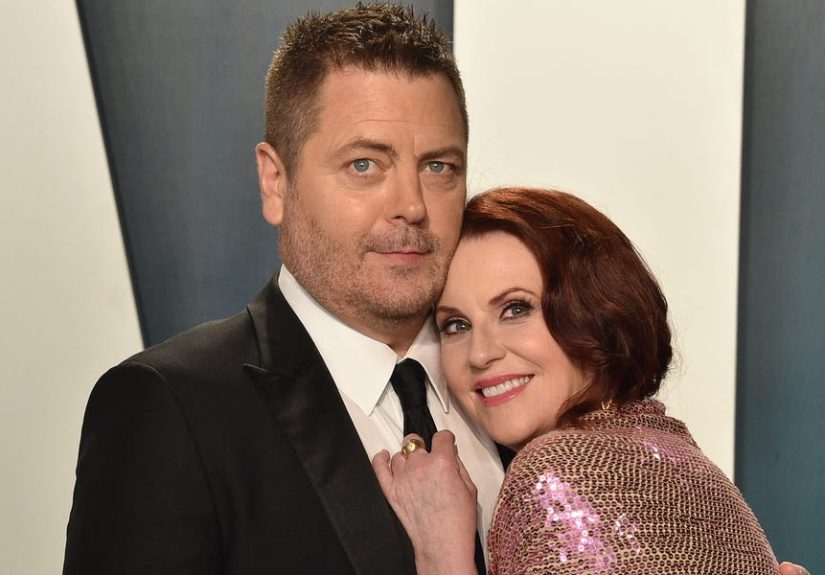
Hollywood marriages have a reputation for evaporating faster than a free snack tray at craft services.
And yetlike a perfectly cured piece of lumber in Nick Offerman’s workshopNick Offerman and Megan
Mullally’s relationship has only gotten sturdier with time. Their love story is part theater-kid fate,
part grown-up practicality, and part “wait… did he just propose with a coin?”
Below is a detailed, easy-to-follow Nick Offerman and Megan Mullally relationship timeline,
from their first meeting onstage to building a life that blends romance, comedy, and a suspiciously effective
set of rules that could save the rest of us from texting “u up?” to our spouses from the couch.
Quick Facts (Because Your Brain Loves Shortcuts)
- Met: 2000, while performing in a theater production in Los Angeles
- Engaged: 2002, in London
- Married: September 20, 2003, in a surprise backyard wedding
- Famous “rule”: They try not to spend more than two weeks apart for work
- Worked together: Multiple times (TV, live shows, podcast, book)
- Public vibe: Equal parts romantic, ridiculous, and refreshingly honest
2000: The Theater Meet-Cute (A.K.A. “The Berlin Circle Did Something”)
The origin story begins where all the best relationship origin stories begin: a play with feelings,
a theater company, and two performers who didn’t show up to find loveyet somehow did.
In 2000, Megan Mullally and Nick Offerman met while performing in
The Berlin Circle with the Evidence Room Theatre Company in Los Angeles.
Why this matters
Plenty of celebrity couples meet at fancy parties, brand events, or “accidentally” in front of paparazzi.
Megan and Nick met doing the work. Theater is intimate in a way that’s hard to fake: you’re sweating under
lights, you’re vulnerable onstage, and you’re learning how another person thinks in real time.
They also had an age gapMullally was in her early 40s and Offerman was in his late 20sand they’ve never
treated that like a scandal or a punchline. It’s simply part of the math. The real equation was mutual humor,
mutual respect, and the kind of chemistry you don’t need a PR firm to explain.
2001: On-Screen Sparks (And Yes, There Was a Plumber)
About a year after meeting, their worlds overlapped on television in a way that felt like the universe
winking at them. Offerman appeared on Will & Grace in 2001his first multi-camera sitcom experience
playing a plumber opposite Mullally’s iconic Karen Walker.
What made it memorable
It’s one thing to date someone in private. It’s another to do comedy together, on a set with timing,
marks, and a live audience. Their dynamic worked because it wasn’t trying too hard. The humor landed,
and their comfort level didn’t look manufactured. It looked like two people who genuinely liked each other,
and also enjoyed being ridiculous for a living.
2002: The Real Proposal (After the Fake Ones)
If you’ve ever joked your way into a serious conversationcongrats, you understand the Offerman-Mullally method.
Their engagement story is famously layered with humor. Early on, a playful “was that a proposal?” bit became
a running gag. Then came a trip where Offerman escalated the joke with staged proposals that were, by design,
absurd.
And then he did it for real
The actual proposal happened in London in 2002. The difference wasn’t the location (London is romantic, sure),
or even the ring. The difference was Offerman’s energynervous, sincere, and unmistakably real. Mullally has
described knowing instantly because the vibe changed from comedy sketch to real life.
It’s a very “them” moment: humor as foreplay, sincerity as the commitment.
2003: The Surprise Backyard Wedding (Plot Twist: You’re at a Wedding)
On September 20, 2003right before the 55th Primetime Emmy Awardsthe couple got married in their backyard
in Los Angeles. The guest list was tiny (around 20 people), and the best part is that many of those guests
thought they were coming to a regular pre-Emmys party. Surprise: vows.
Why a surprise wedding fits their brand of un-branding
This wasn’t a “sponsored wedding content series.” It was a home, a handful of loved ones, and a decision to
keep the moment intimate. That low-key approach became a theme: they share plenty publicly, but their marriage
isn’t a product. It’s a partnership.
2004–2008: Building a Marriage, Not a Brand
After the wedding, they did something quietly radical in Hollywood: they lived like normal people who happen
to be funny professionals. Not boringjust grounded. They worked, they collaborated when it made sense, and
they prioritized the relationship over the circus.
The “rules” era begins
Over time, they became known for practical relationship boundaries, including a widely discussed “two-week rule”:
they try not to spend more than two weeks apart due to work. That’s not a romantic poemit’s logistics with love.
The point isn’t control; it’s choosing each other in the calendar, not just in theory.
Choosing their own version of family
They’ve also been open about not having children, emphasizing that they never felt an intense, natural pull
toward parenthood. They’ve spoken candidly about trying, about reality, and about being at peace with the life
they built together. It’s a reminder that “happily ever after” doesn’t come with one required blueprint.
2009–2015: The Parks and Rec Era (Ron Swanson vs. Tammy 2, Now With Extra Love)
For many fans, Parks and Recreation is where the couple became pop-culture legend. Offerman’s Ron Swanson
is the patron saint of woodworking, breakfast foods, and emotional repression done for comedy. Mullally played
Tammy 2Ron’s chaotic ex-wifebringing tornado energy and impeccable timing.
Why their on-screen chaos works
Watching your spouse play your character’s worst nightmare could be… awkward. For them, it’s a playground.
Their comedic rhythm is sharp because they know each other’s instincts. They can go bigger, stranger, and funnier
while staying safebecause the trust is already there.
Off-screen, they’ve also talked about being unusually “together” as a coupleworking, traveling, and generally
preferring each other’s company to the glamorous nonsense. Some interviews even mention they’ve shared one email
address at points, which is either the sweetest thing you’ve ever heard or the most terrifying shared inbox
imaginable. Possibly both.
2016–2017: Taking Love on the Road (Summer of 69: No Apostrophe)
By the mid-2010s, they leaned into a new format: live touring. Their comedy/variety show
Summer of 69: No Apostrophe explored their relationship with the kind of honesty that makes some people
clutch pearls and others laugh until they wheeze.
From stage show to TV special
The tour’s popularity eventually helped it become a televised special (announced in early 2017).
The title alone signals the tone: playful, suggestive, and a little nerdy. “No Apostrophe” is the kind of
grammar joke you make when you’re deeply comfortable with your spouse and mildly concerned about punctuation.
2018: The Memoir Years (The Greatest Love Story Ever Told)
In 2018, they put their story into print with The Greatest Love Story Ever Told, an oral-history-style
memoir built from conversations between the two of themplus photos, stories, and little surprises that make it
feel more like hanging out with them than reading a standard celebrity autobiography.
What the book adds to the timeline
The big takeaway isn’t just the “how we met” details. It’s the texture: the way they talk to each other, the way
humor and affection coexist, and the way they treat marriage like a living thingmaintained, enjoyed, and occasionally
roasted for comedic excellence.
2019–2020: Podcasting… In Bed (Yes, Literally)
In late 2019, they launched In Bed with Nick and Megan on the Earwolf network, with episodes beginning
in early December. The premise is exactly what it sounds like: they record from their bed, often with a guest,
talking about life, relationships, and whatever chaos is currently happening in the world.
Why the format makes sense for them
A podcast recorded in bed sounds like a gimmickuntil you remember this couple’s entire vibe is “intimacy plus jokes.”
It’s not shock value; it’s comfort. The setting matches their public dynamic: unfiltered, affectionate, and very
willing to laugh at themselves.
2023–2024: The Last of Us, the Push That Mattered, and the Awards Moment
In 2023, Offerman delivered one of the most widely praised dramatic performances of his career in HBO’s
The Last of Us. The sweet part: Mullally reportedly helped nudge him into taking the role when his
schedule made him hesitate. She read the script and basically told him, in loving spouse language,
“You’re doing this. Pack a coat.”
When support becomes a turning point
That’s the kind of partner move that doesn’t make headlines as often as it should: not jealousy, not ego, not
competitionjust conviction that your person should do the thing they’ll be proud of forever.
The acclaim followed. Offerman’s work on the series earned major awards attention, including an Emmy win for
his guest performance. It’s a nice reminder that long marriages aren’t just about staying togetherthey’re about
pushing each other forward.
Why Their Marriage Works (And Why It Doesn’t Feel Like a PR Campaign)
1) They treat humor like a tool, not a weapon
Jokes can either build intimacy or bulldoze it. Their style is playful rather than cruel. Even when they overshare,
the vibe is “we’re on the same team,” not “I’m winning this argument in public.”
2) They collaborate, but they don’t fuse into one person
They’ve worked together in theater, television, live performance, and podcasting. But collaboration is an option,
not a requirement. The relationship has its own identity separate from the projects.
3) They use practical boundaries (the unsexy superpower)
The famous two-week rule is a calendar decision that protects intimacy. They’ve also talked about setting aside
time where work takes a back seatlike a firm “no work” stance around holidays. It’s not glamorous; it’s effective.
4) They normalize choosing a nontraditional path
From the surprise wedding to the honest conversations about not having kids, they’ve modeled a relationship that
prioritizes compatibility over checking boxes. That honesty tends to age well.
Experience Notes: You Can Borrow From Their Playbook
You don’t need to be a famous comedian or own a perfectly sanded canoe to steal a few relationship habits from
Nick Offerman and Megan Mullally. What makes their timeline interesting isn’t the celebrityit’s the repeatable
choices hiding inside the jokes.
First, consider the “rule” concept. Most couples avoid rules because they sound like a chore chart. But the
two-week rule is basically a love-protection policy: it forces the calendar to reflect the relationship.
In real life, the equivalent might be “no more than three consecutive nights of separate bedtime” or “one shared
meal a day when possible.” It’s not about control. It’s about preventing the slow drift that happens when you’re
always “busy” and never intentionally together.
Second, notice how they blend collaboration with autonomy. Many couples either avoid working together (fear of
conflict) or overdo it (turning the relationship into a business partnership). Their model suggests a third option:
collaborate when it’s fun and meaningful, then return to being spousestwo separate adults who choose each other.
If you’ve ever tried to do a “couple project” (renovation, business, even planning a big trip), you know how quickly
it can turn into a negotiation about fonts and feelings. One practical fix: assign ownership. One person drives the
plan, the other gives input at set checkpoints. That structure keeps love from being swallowed by logistics.
Third, protect private rituals. Their podcast-in-bed premise is extreme, but the principle is simple: create a space
that belongs to the relationship, not the world. For normal people, that could be a weekly “no screens” hour, a
Sunday morning coffee walk, or a shared hobby that isn’t optimized, monetized, or posted. The ritual matters because
it becomes a reliable return pointthe place you meet again after the week gets weird.
Fourth, support each other’s growth loudly and specifically. Mullally pushing Offerman toward The Last of Us
role is a great example of saying, “I see the bigger version of youand I’m going to help you get there.” In everyday
terms, this looks like reading your partner’s cover letter, encouraging therapy, insisting they apply for the job they
think they’re not ready for, or simply being the person who says, “You’d be great at this,” until they believe it.
Finally, keep humor affectionate. You don’t need spicy comedy specials to do this. The daily version is inside jokes,
playful teasing that never targets insecurities, and the willingness to laugh mid-conflict when you realize you’re
fighting about something dumb. If you can’t laugh together, everything gets heavier. If you can laugh together,
you still have a bridgeespecially on the days when romance feels more like laundry and less like fireworks.
Their relationship timeline is entertaining, sure. But the real magic is that it’s built from choices that are available
to the rest of us: pick each other in the schedule, protect your rituals, cheer each other on, and never underestimate
the power of a well-timed joke that says, “I’m with you.”
Conclusion
Nick Offerman and Megan Mullally’s love story is a reminder that long-lasting relationships aren’t powered by
grand gestures alone. They’re powered by consistency, shared laughter, and the kind of practical boundaries that
keep intimacy from getting buried under work, travel, and noise. Their timelinefrom a theater production in 2000
to a surprise wedding, creative collaborations, and career highsshows what happens when two funny people take
each other seriously in the ways that count.