Table of Contents >> Show >> Hide
- What exactly is blood oxygen?
- What is a normal blood oxygen level?
- When is blood oxygen considered low?
- What causes low blood oxygen?
- How is blood oxygen measured?
- When should you worry about a low reading?
- Can you safely improve your blood oxygen level?
- Myths and realities about blood oxygen gadgets
- Real-life experiences related to blood oxygen levels
- Bottom line
Thanks to smartwatches, fitness trackers, and tiny gadgets that clip onto your finger, more people than ever are checking their
blood oxygen level at home. But once you see a number on the screen (95, 92, 89… yikes), the big question is:
“Is this normal or should I panic?”
The short answer: most healthy adults have a blood oxygen saturation (SpO₂) between about 95% and 100%. Numbers
that dip under 90% are generally considered low and can signal hypoxemiaa lower-than-normal level of oxygen in your
blood. But, as with most things in medicine, context matters: your health history, altitude, and
symptoms all change how worried you should be.
In this guide, we’ll walk through what counts as a normal blood oxygen level, what “low” really means, when to call your doctor, and how blood oxygen
is measured. We’ll also look at real-life examples of people dealing with low blood oxygen to make all these numbers feel a little more human.
Important: This article is for general education only and is not a substitute for professional medical advice. If you’re worried
about your oxygen level or having symptoms like trouble breathing, chest pain, or confusion, seek urgent medical care right away.
What exactly is blood oxygen?
Your blood oxygen level is a measure of how much oxygen your red blood cells are carrying. Most of that oxygen rides along on a
protein called hemoglobin. When we talk about oxygen levels in everyday life, we’re usually talking about one of two measurements:
- Oxygen saturation (SpO₂ or SaO₂): the percentage of hemoglobin binding sites in your blood that are carrying oxygen.
- Partial pressure of oxygen (PaO₂): the amount of oxygen dissolved in arterial blood, measured in millimeters of mercury (mm Hg).
That fingertip gadget you use at homea pulse oximeterestimates your oxygen saturation as a percentage. In hospitals, doctors can
also draw blood from an artery and run an arterial blood gas (ABG)</strong) test to directly measure PaO₂ and other values.
What is a normal blood oxygen level?
For most healthy adults at sea level, a normal blood oxygen saturation reading looks like this:
| Measurement | Normal Range (Typical Adult) | What It Means |
|---|---|---|
| SpO₂ (pulse oximeter) | 95% – 100% | Normal oxygen saturation |
| SpO₂ | 90% – 94% | Borderline/low; may need evaluation depending on context |
| SpO₂ | < 90% | Low (hypoxemia); often needs prompt medical attention |
| PaO₂ (arterial blood gas) | 75 – 100 mm Hg | Normal oxygen levels in arterial blood |
Normal ranges for healthy adults
In most guidelines and medical references, a pulse oximeter reading of about 95–100% is considered normal in otherwise healthy
adults and children. If your number occasionally dips to 94% while you’re resting,
that doesn’t automatically mean something is terribly wrong, but it should at least get your attentionespecially if you also feel short of breath.
Normal may be different for some people
Not everyone is aiming for the exact same “perfect” number. Doctors know that “normal” oxygen saturation can be lower when:
- You have chronic lung diseases like COPD or severe asthma. Your provider may be comfortable with a target like 88–92% instead of
95–100%. - You live at a high altitude, where there’s simply less oxygen in the air.
- You have certain heart conditions or changes in hemoglobin that alter how your body carries oxygen.
If you have a chronic condition, your doctor is the best person to tell you what oxygen range is safe for you. In other words, don’t be
surprised if your friend’s “normal” is a few points higher than yours.
When is blood oxygen considered low?
When oxygen levels are lower than normal, doctors call it hypoxemia. That’s just the medical term for “low oxygen in the blood.”
Common thresholds used in practice include:
- SpO₂ < 90% on a pulse oximeter is generally considered low (hypoxemia).
- PaO₂ < 60 mm Hg on an arterial blood gas is considered low.
Symptoms of low blood oxygen
You might suspect your blood oxygen level is low if you notice symptoms like:
- Shortness of breath or difficulty breathing
- Fast breathing or racing heart
- Chest pain or tightness
- Headache, confusion, or feeling “foggy”
- Bluish coloring of lips, face, or fingertips
- Unusual fatigue, dizziness, or feeling like you “just can’t get enough air”
Very low oxygen levels can be life-threatening and need emergency care. If someone has severe trouble breathing, chest pain, confusion, or you see
blue lips or face, call emergency services right away.
Mild, moderate, and severe hypoxemia
Clinicians sometimes describe hypoxemia by level:
- Mild: SpO₂ 90–94% or PaO₂ 60–80 mm Hg
- Moderate: SpO₂ around mid-80s to high 80s
- Severe: SpO₂ below the mid-80s or PaO₂ < 50–60 mm Hg
These ranges may vary a bit depending on the guideline, but the overall idea is the same: the farther you drop below 90%, the more urgent the
situation becomes.
What causes low blood oxygen?
Low blood oxygen is usually a sign that something is interfering with the way oxygen gets from the air, into your lungs, into your blood, and finally
out to your tissues. Common causes include:
- Lung diseases: COPD, asthma, pneumonia, COVID-19, pulmonary fibrosis, or fluid in the lungs can all reduce oxygen exchange.
- Heart problems: Certain types of heart failure or congenital heart defects affect how well oxygenated blood circulates.
- Blood clots: A pulmonary embolism (a clot in the lungs) can suddenly block blood flow and cause a dangerous drop in oxygen.
- Sleep apnea: In obstructive sleep apnea, breathing repeatedly stops during sleep, leading to repeated oxygen drops that can go as
low as 70–60% in severe cases. - High altitude: Less oxygen in the air means less oxygen in your blood unless your body has time to adapt.
- Anemia or abnormal hemoglobin: Even with normal lungs, if you don’t have enough red blood cells or hemoglobin, your oxygen-carrying
capacity falls. - Hypoventilation: Breathing too slowly or too shallowly (from certain medications, neuromuscular diseases, or obesity hypoventilation
syndrome) can lower oxygen levels.
How is blood oxygen measured?
Pulse oximeter: the fingertip favorite
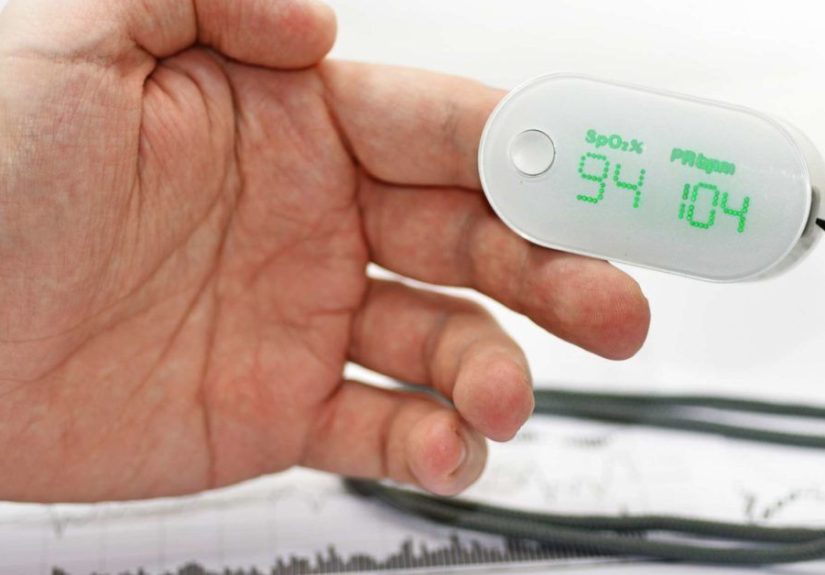
A pulse oximeter is a small device that clips onto your finger (or sometimes toe or earlobe). It shines light through your skin and
analyzes how much is absorbed by oxygenated vs. deoxygenated hemoglobin to estimate your SpO₂.
To get the most accurate reading at home:
- Make sure your hand is warm, relaxed, and resting below heart level.
- Remove dark nail polish or artificial nails from the finger you’re using.
- Stay still and wait a few seconds until the number stops bouncing around.
- Check that the pulse shown on the device matches your actual pulse (it proves the device is “seeing” your blood flow).
Even with perfect technique, pulse oximeters are estimates. Skin tone, circulation problems, movement, and even strong light can affect the reading.
That’s why the FDA and other organizations remind people not to rely on a single number alonesymptoms and context matter.
Arterial blood gas (ABG): the gold standard
In clinics and hospitals, providers can draw blood from an artery (usually in your wrist) and run an arterial blood gas test. This
gives detailed information including:
- PaO₂ – oxygen level in arterial blood
- PaCO₂ – carbon dioxide level
- pH – how acidic or basic your blood is
- Bicarbonate and other values that help assess lung and kidney function
ABGs are more invasive and not something you do at home, but they’re extremely helpful when doctors need precise information about how well your lungs
and body are handling oxygen and carbon dioxide.
When should you worry about a low reading?
Seeing a number on your pulse oximeter is one thing. Deciding what to do about it is another. Here’s a general, symptom-aware way to think about it
(always follow your own doctor’s thresholds if they’ve given you specific instructions).
- 95–100%: Typically considered normal in healthy adults at rest. No immediate action needed if you feel well.
- 93–94%: Borderline. Recheck in a few minutes after resting, warming your hands, and removing nail polish. If it stays in this range,
especially with symptoms like shortness of breath, call your healthcare provider for advice. - < 90%: Generally low. This often deserves prompt medical attention, especially if you did not expect it and you feel unwell.
- Severe symptoms at any number: If you have trouble breathing, chest pain, confusion, can’t speak in full sentences, or you see blue
lips or face, get emergency help immediatelyeven if the oximeter hasn’t dropped much yet.
Remember: a “good” number with bad symptoms is still a reason to seek help. Devices can malfunction, and other problems (like heart
attacks or blood clots) may not show up as a dramatic oxygen change right away.
Can you safely improve your blood oxygen level?
A few simple strategies can sometimes nudge your oxygen level upbut they are not a substitute for proper medical care when you’re truly sick.
Short-term, at-home steps
- Change your position: Sit upright, dangle your legs, and avoid slouching to give your lungs room to expand.
- Practice deep, slow breathing: Try breathing in through your nose for 4 counts, hold for 2, then exhale slowly through pursed lips for 6.
- Get to fresh air: Move away from smoke, fumes, or strong indoor pollutants.
- Calm anxiety: Anxiety can make you breathe fast and shallow. Slowing down your breathing can improve your numbers and how you feel.
These are supportive measures. If your oxygen level is truly low due to a medical problem, you may need supplemental oxygen and
treatment for the underlying cause.
Long-term strategies
- Manage chronic lung and heart conditions with the treatment plan your provider recommends.
- Quit smoking and avoid secondhand smoke or vaping aerosols.
- Stay active as your doctor allowsregular exercise can improve how efficiently your body uses oxygen.
- Stay up to date on vaccines (like flu and pneumonia) to reduce the risk of infections that can lower oxygen levels.
- Maintain a healthy weight to reduce strain on your lungs and heart.
Myths and realities about blood oxygen gadgets
Let’s clear up a few common misconceptions:
- “My smartwatch oximeter is medical-grade.” Not quite. Wearables can be helpful for trends, but they’re not cleared as medical
devices for diagnosis or treatment decisions. - “Smartphone camera apps can replace a real pulse oximeter.” Many studies and health organizations caution against relying on phone
apps for accurate oxygen readings. - “If my oxygen number is fine, I can ignore symptoms.” Definitely not. A reassuring number does not cancel out serious symptoms.
- “A slightly low number always means something is wrong.” Not always. Measurement errors, cold fingers, or minor issues can cause
small dips. Persistent or symptomatic lows, however, need evaluation.
Real-life experiences related to blood oxygen levels
To make all these numbers feel more real, let’s walk through a few composite examples based on common scenarios patients describe. These aren’t actual
individuals, but the stories reflect typical experiences people have with blood oxygen concerns.
Maria’s “just in case” pulse oximeter
Maria is a 45-year-old teacher who bought a pulse oximeter during the COVID-19 pandemic “just in case.” Months later, she catches a respiratory virus.
She feels tired but isn’t sure if it’s “bad enough” to call her doctor. Her oximeter shows:
- 98% while she’s watching TV
- 95–96% when she walks up the stairs and then sits down
- Back to 97–98% after a few minutes of rest
Maria does what many of us doshe spirals into an internet search. But her numbers are still in the normal range. She checks in with her doctor’s
office, where a nurse reminds her to pay attention to symptoms: if she starts struggling to breathe, develops chest pain, or can’t speak in full
sentences, she should seek urgent care. Otherwise, rest, fluids, and monitoring are reasonable.
Maria’s story illustrates something important: a normal oxygen level can be reassuring, but it’s not the only thing that matters.
It’s one piece of a bigger picture that includes fever, heart rate, breathing, and how you feel overall.
James and sleep apnea: Silent drops overnight
James is 52, works at a desk all day, and snores louder than a freight train. His partner notices he sometimes seems to stop breathing for a few
seconds at night. James feels exhausted every morning and has headaches he blames on “too much coffee.”
His doctor suspects obstructive sleep apnea and orders a sleep study. During the test, his oxygen saturation drops from the mid-90s
into the low 80s over and over again while he sleeps. During the day, his pulse oximeter reading looks fine, but the
repeated nighttime dips are straining his heart and blood vessels and raising his blood pressure.
With CPAP treatment, those overnight dips improve dramatically. James still loves coffee, but now he wakes up actually feeling rested. His story is a
reminder that:
- Your daytime oxygen reading can be normal even if you have serious nighttime drops.
- Symptoms like snoring, morning headaches, and daytime sleepiness are just as important as “the number.”
Linda living with COPD: Personalized targets
Linda is 68 and has moderate COPD after many years of smoking. Her lung capacity is reduced, and her doctor has told her that a “perfect” 98% is not
necessarily realisticor even requiredfor her.
At home, her resting SpO₂ usually sits around 90–92%. When she walks slowly around her apartment, it might briefly dip into the high 80s before
climbing back up. Her pulmonologist has set a personal goal: keep her oxygen around 88–92% at rest, use her inhalers as prescribed, and call if it
drops below 88% or if she feels more breathless than usual.
Linda’s experience highlights a key point: “normal” for one person may be too strict or not appropriate for someone else, especially
with chronic lung disease. This is why a one-size-fits-all number you find on the internet can be misleading.
Sam’s “tech panic” moment
Sam is 30, generally healthy, and loves tracking everythingsteps, sleep, heart rate, and yes, SpO₂on his smartwatch. One night he scrolls through
his data and sees a handful of readings around 92–93% while he was apparently asleep. Cue instant anxiety.
When he brings this up at a checkup, his doctor explains that wearables can be off by several percentage points and aren’t designed to diagnose
medical problems. During the visit, his oxygen saturation in the clinic is a comfortable 98%. He has no shortness of breath, chest pain, or other
concerning symptoms.
The takeaway from Sam’s story isn’t to throw your gadgets awayit’s to use them wisely:
- Look for trends, not isolated “weird” data points.
- Use readings as a reason to start a calm, informed conversation with your provider, not to self-diagnose serious disease overnight.
Bottom line
Your blood oxygen level is a helpful indicator of how well your lungs, heart, and blood are working together to deliver oxygen to your
body. For most healthy adults, 95–100% on a pulse oximeter is normal, and values under 90% are generally considered
low.
But the number never tells the whole story. Your personal medical history, symptoms, and your provider’s guidance all matter just as muchif not
morethan what shows up on that little screen. Use blood oxygen readings as a tool, not a source of panic. And when in doubt, reach out to your
healthcare team. They can help you interpret your numbers, set realistic targets, and decide when a low reading is worth a closer look.