Table of Contents >> Show >> Hide
- Why This No-Knead Focaccia Works
- Ingredients for No-Knead Skillet Focaccia
- How to Make No-Knead Skillet Focaccia
- Tips for the Best Skillet Focaccia
- Easy Variations to Try
- What to Serve with No-Knead Focaccia
- How to Store and Reheat Focaccia
- Common Mistakes to Avoid
- Why Home Bakers Love This Recipe
- Final Thoughts
- Experience and Inspiration: Why No-Knead Skillet Focaccia Keeps Winning People Over
There are few kitchen victories more satisfying than pulling a golden, olive-oil-kissed focaccia out of the oven and acting like you casually do this sort of thing every afternoon. No big deal. Just a lofty, crisp-edged, deeply savory bread with a tender middle and dramatic dimples that look like they belong in a bakery window. The best part? This no-knead skillet focaccia recipe is wonderfully low-maintenance. No stand mixer. No elaborate shaping. No upper-body workout disguised as “artisan baking.” Just a bowl, a spoon, a skillet, and a little patience.
If you have ever wanted to make homemade focaccia but felt intimidated by bread recipes full of stern instructions and emotional pressure, this version is for you. The dough is wet, rustic, and forgiving. Time does most of the work. Your main responsibilities are stirring, waiting, dimpling, and resisting the urge to eat it before it cools enough not to burn the roof of your mouth. That last part is admittedly advanced-level behavior.
Why This No-Knead Focaccia Works
A great skillet focaccia is all about contrast. You want a crisp, lightly fried bottom, deeply golden edges, and a soft, airy crumb that can catch olive oil in every little pocket. Using a cast-iron skillet helps create that ideal texture because it holds heat well and encourages a beautifully browned crust. Meanwhile, a higher-hydration dough helps produce the open, fluffy interior people dream about when they say things like, “I’m really into bread right now.”
The magic of a no-knead focaccia bread recipe comes from time. Instead of kneading the dough to develop gluten quickly, you let the flour and water mingle peacefully for hours. During that rest, gluten forms on its own, yeast gets to work, and flavor develops. It is a very efficient arrangement. The dough does the labor; you get the compliments.
Ingredients for No-Knead Skillet Focaccia
This recipe keeps the ingredient list simple, which is exactly what focaccia deserves. At its core, it is humble bread elevated by technique, olive oil, and confidence.
For the dough
- 3 1/4 cups bread flour or all-purpose flour
- 1 1/2 teaspoons kosher salt
- 1 teaspoon instant yeast
- 1 1/2 cups lukewarm water
- 2 tablespoons extra-virgin olive oil
For the pan and topping
- 3 to 4 tablespoons extra-virgin olive oil, divided
- 1 to 2 teaspoons flaky sea salt
- 1 tablespoon chopped fresh rosemary, optional
- Freshly ground black pepper, optional
You can absolutely start with the classic rosemary-and-sea-salt route, then branch out later. Focaccia is generous that way. It welcomes olives, cherry tomatoes, caramelized onions, thinly sliced garlic, Parmesan, and other good decisions.
How to Make No-Knead Skillet Focaccia
1. Mix the dough
In a large bowl, whisk together the flour, salt, and instant yeast. Pour in the lukewarm water and 2 tablespoons olive oil. Stir with a wooden spoon or sturdy spatula until no dry flour remains. The dough will look shaggy, sticky, and somewhat unimpressed with your expectations. Perfect.
Cover the bowl tightly with plastic wrap, a lid, or a clean towel. Let it rise at room temperature for 3 to 4 hours, or until puffy and roughly doubled. If your kitchen is cool, it may take longer. Bread is not lazy. It is just temperature-sensitive.
2. Oil the skillet generously
Pour 2 tablespoons olive oil into a 10-inch cast-iron skillet. Swirl it around so the bottom and sides are thoroughly coated. Do not be stingy here. Focaccia and olive oil are in a committed relationship. The oil helps create the signature crisp bottom and prevents sticking.
3. Transfer and rest the dough
Scrape the dough into the oiled skillet. Turn it once or twice so it gets lightly coated in oil. Cover and let it rest for 20 to 30 minutes. This gives the dough time to relax, making it easier to stretch without fighting back like a fitted sheet.
4. Stretch it gently
With oiled fingertips, gently press and stretch the dough toward the edges of the skillet. If it keeps springing back and refusing cooperation, let it rest for another 10 minutes, then try again. Eventually it will settle into the pan.
Cover and let it rise again for 30 to 60 minutes, until noticeably puffy. This second rise helps create a lighter crumb and gives the finished bread more loft.
5. Dimple and top
Preheat your oven to 425°F. Drizzle the remaining 1 to 2 tablespoons olive oil over the top of the dough. Then, using your fingertips, press straight down all over the surface to create those iconic focaccia dimples. Be bold. You are not hurting the dough. You are giving it personality.
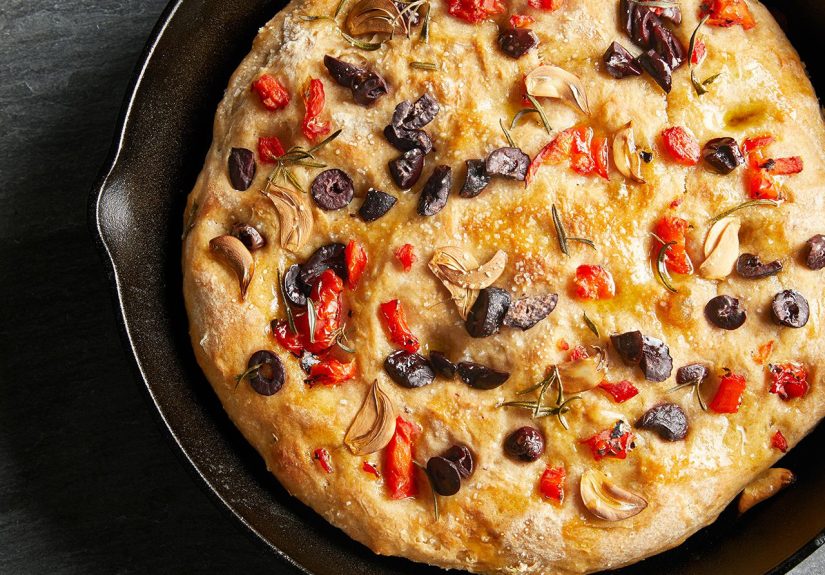
Sprinkle with flaky sea salt, rosemary, and black pepper if using. If you want to add sliced olives, halved cherry tomatoes, or thin onion ribbons, now is the moment.
6. Bake until golden
Bake for 22 to 28 minutes, or until the top is golden brown and the edges look crisp and deeply colored. If your oven runs cool, it may need another few minutes. Remove the skillet from the oven and let the focaccia rest for about 10 minutes before lifting it out.
Resist slicing it immediately unless you enjoy steam burns and crumb collapse. Warm bread rewards patience, even if only slightly.
Tips for the Best Skillet Focaccia
Use enough olive oil
This is not the time for timid drizzling. Olive oil is essential to the texture and flavor of homemade focaccia. It helps the crust crisp, enriches the dough, and gives each bite that classic savory finish.
Let time do the kneading
The beauty of a no-knead bread recipe is that gluten develops naturally as the dough rests. A longer fermentation, especially an overnight rest in the refrigerator, can improve both flavor and texture. If you want deeper complexity, mix the dough the night before and chill it. The next day, let it come closer to room temperature before transferring to the skillet.
Oil your hands, not your nerves
This dough is sticky. That is not a flaw. That is the plan. Oiled hands make it much easier to stretch and dimple the dough without a wrestling match.
Do not overload the top
A little restraint goes a long way. Toppings should complement the bread, not weigh it down. Thinly sliced vegetables, herbs, and modest amounts of cheese work best. If you bury the dough under half your produce drawer, the focaccia may bake up dense and soggy.
Easy Variations to Try
Rosemary sea salt focaccia
The classic. Aromatic, simple, and excellent with soup, salad, or dramatic cheese-board energy.
Cherry tomato focaccia
Press halved cherry tomatoes cut-side up into the dough before baking. They roast beautifully and add sweet, jammy bursts of flavor.
Garlic Parmesan focaccia
Add thin garlic slices and a shower of grated Parmesan during the last 10 minutes of baking for a savory, slightly crisp finish.
Olive and onion focaccia
Scatter sliced olives and very thin onion strips over the top for a punchier, Mediterranean-inspired version.
What to Serve with No-Knead Focaccia
This easy focaccia recipe is wonderfully versatile. Serve it warm with soup, alongside pasta, with eggs at brunch, or split and filled for sandwiches. It also makes an excellent snack with olive oil and balsamic vinegar for dipping, assuming you are the kind of person who can stop at one piece. I wish you strength.
It pairs especially well with tomato soup, roasted chicken, antipasto platters, hearty salads, or anything saucy enough to justify enthusiastic bread swiping. In many homes, focaccia does not technically need a main dish. It becomes the main event by accident.
How to Store and Reheat Focaccia
Like many great breads, focaccia is best the day it is baked. That is the golden hour. But leftovers are still very good if stored properly. Keep them loosely wrapped at room temperature for up to 2 days. For longer storage, freeze slices in an airtight container or freezer bag.
To reheat, place the bread in a 300°F oven for about 8 to 10 minutes. This brings back the crisp edges and revives the crumb far better than the microwave, which tends to make bread sad and rubbery.
Common Mistakes to Avoid
Using too little water
A wet dough is a feature, not a bug. It helps create that airy interior. If the dough feels more like a stiff sandwich loaf dough, the finished bread may be too tight and heavy.
Skipping the second rise
That extra proof in the skillet matters. It gives the dough a final lift and improves the overall texture.
Under-oiling the pan
If your goal is a crisp-bottomed cast-iron focaccia recipe, oil is non-negotiable. The pan should be well coated.
Overbaking out of fear
Yes, you want color. No, you do not want to bake it until it can be used as a home-defense tool. Pull it when the top is richly golden and the edges are crisp.
Why Home Bakers Love This Recipe
There is something deeply appealing about bread that looks fancy but behaves casually. This no-knead skillet focaccia recipe delivers bakery-style results without demanding advanced skills or expensive equipment. It is beginner-friendly, adaptable, and just dramatic enough to make dinner feel like an occasion.
It also teaches one of the best lessons in baking: not every great loaf needs aggressive handling. Sometimes the smartest move is simply to mix a sticky dough, let time do its thing, and trust the process. Focaccia rewards calm energy. It is basically the golden retriever of breads.
Final Thoughts
If you want a bread recipe that offers maximum reward for minimum fuss, this no-knead skillet focaccia deserves a permanent place in your rotation. It is crisp on the outside, tender in the middle, rich with olive oil, and endlessly adaptable. Whether you keep it classic with rosemary and flaky salt or dress it up with vegetables and cheese, the result is deeply comforting and surprisingly easy.
In other words, this is the kind of recipe that makes people think you have your life together. And honestly, if you can serve warm focaccia from a cast-iron skillet, maybe you do.
Experience and Inspiration: Why No-Knead Skillet Focaccia Keeps Winning People Over
One of the most charming things about a no-knead skillet focaccia recipe is the way it sneaks into real life and becomes part of a person’s routine. It is not just “a bread recipe.” It is a rainy Saturday project. It is the thing you bake when guests are coming over and you want your kitchen to smell like confidence. It is the emergency carb you make when dinner needs saving and the store-bought rolls are looking a little too store-bought.
Many home bakers discover focaccia after a run of disappointing bread attempts. Maybe they tried a complicated sourdough and ended up with a loaf that could double as landscaping material. Maybe they attempted a highly technical artisan bread recipe that required folds, steam, exact timing, and the emotional stability of a NASA engineer. Then along comes skillet focaccia with its shaggy dough, forgiving rise times, and breezy attitude, and suddenly bread feels fun again.
There is also something wonderfully tactile about the process. Pressing your fingertips into the dough to make dimples is oddly satisfying, somewhere between gardening and bubble wrap. The dough starts out sticky and messy, then slowly transforms into something glossy, puffy, and alive. Even beginner bakers can sense that change. You do not need years of experience to recognize when dough has gone from “slump in a bowl” to “future greatness.”
The skillet adds another layer of appeal. Cast iron makes the bread feel rustic and intentional, as if you were always the sort of person who bakes flatbreads in well-seasoned pans while casually discussing olive oil quality. It gives the crust real character too. The bottom turns crisp and almost lightly fried, while the center stays soft enough to tear apart with your hands. That contrast is a huge part of why people come back to focaccia again and again.
Then there is the flexibility. One baker makes it with rosemary and flaky salt because that is the classic. Another adds cherry tomatoes and garlic because the produce drawer is feeling optimistic. Someone else turns it into sandwich bread the next day, slicing it horizontally and stuffing it with turkey, mozzarella, and arugula. The same dough can feel elegant, cozy, practical, or slightly showy depending on how you top and serve it. That kind of range is rare in a recipe this simple.
Perhaps most of all, focaccia creates one of those little kitchen moments people remember. The first crackle as it comes out of the skillet. The sheen of olive oil on the surface. The way everyone suddenly appears in the kitchen asking whether it is ready yet. A good focaccia does not merely fill the bread basket. It changes the mood of the room. It says dinner matters, comfort matters, and yes, carbs are still capable of heroic things.