Table of Contents >> Show >> Hide
- Who Is the Artist Behind the One-a-Day Rule?
- Why Watercolor Tattoos Hit Different
- The Real Secret Is Not the Color, It Is the Process
- What Makes a Watercolor Tattoo Actually Last?
- Why People Travel for Work Like This
- The Bigger Lesson for Anyone Considering a Custom Tattoo
- What the Experience Feels Like: A 500-Word Reflection on One Day, One Tattoo
- Final Thoughts
- SEO Tags
Some tattoo artists run a studio like an airport terminal: next appointment, next stencil, next caffeine refill, next brave soul pretending their rib tattoo “doesn’t even hurt that much.” Ondřej Konupčík, the Czech artist better known as ONDRASH, took a very different road. His philosophy is disarmingly simple: one day, one tattoo, one client, full focus. In a world that often confuses speed with mastery, that approach feels almost rebellious.
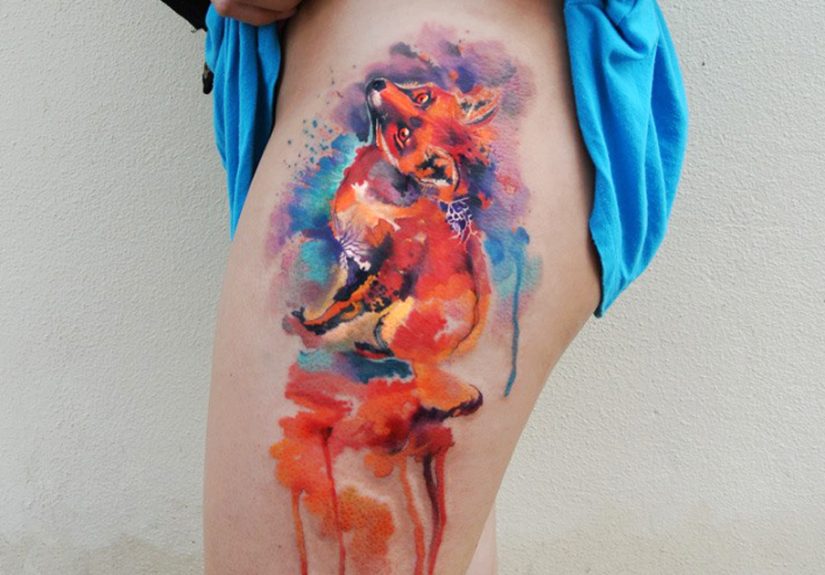
And honestly, it is a little refreshing. Watercolor tattoos already live in the danger zone between breathtaking and regrettable. Done badly, they can look like a juice box exploded on someone’s shoulder. Done brilliantly, they look like a painting that somehow wandered off a gallery wall and decided skin was a better canvas. ONDRASH built his reputation on landing firmly in the second category.
This is what makes his work so fascinating. Yes, the color is gorgeous. Yes, the splashes, smudges, drips, and abstract brushwork are wildly eye-catching. But the real story is not just that he creates beautiful watercolor tattoos. It is that he slows the entire process down, treats the tattoo like a collaboration instead of a transaction, and refuses to reduce a permanent piece of body art to “pick design number 14 and please sign here.” That is a huge reason people are drawn to his work in the first place.
Who Is the Artist Behind the One-a-Day Rule?
ONDRASH became internationally known for custom tattoos that combine watercolor energy, sketch-like movement, and a painter’s instinct for flow. His work often feels less like traditional flash and more like emotion translated into color. You can see echoes of watercolor painting in the soft fades, but also a strong sense of structure in the way darker tones, lines, and forms anchor the whole composition. That balance matters. Without it, watercolor tattoos can drift into pretty chaos. With it, they become unforgettable.
Part of his appeal is that he does not position himself as a tattoo vending machine. He does not lean on catalogs. He is not offering a quick menu of trendy symbols for people who walked in wanting a wolf, a feather, and maybe a moon if there’s time before lunch. His approach is much more personal. The client arrives with an idea, a memory, a mood, or sometimes just a life story that needs visual form. From there, the work becomes bespoke.
That custom-first mindset has helped distinguish him for years. It also explains why people respond so strongly to his tattoos online. They do not look mass-produced. They look intimate. Even when the motif is familiar, such as an animal, a bird, or a floral element, the final piece feels tailored to the body it lives on. The tattoo does not merely sit on the skin. It seems to belong there, which is a very different thing.
Why Watercolor Tattoos Hit Different
Watercolor tattooing has always had a bit of a rock-star reputation. It is vibrant, expressive, modern, and slightly dramatic in the best possible way. Traditional tattoo aesthetics often rely on bold outlines, dense shading, and iconic imagery. Watercolor pieces, by contrast, lean into softness, movement, and controlled unpredictability. They mimic brushstrokes, paint blooms, and color gradients, which makes them feel more spontaneous and painterly.
That softer look is exactly why people love them. They feel less rigid. They can be dreamy instead of blunt, emotional instead of purely decorative, and abstract instead of literal. A watercolor fox can feel more like a mood than a mascot. A bird can look like it is dissolving into motion. A floral piece can feel like spring had a stylish little breakdown and somehow improved everybody’s day.
But that beauty comes with a catch. Watercolor is one of those styles that is easy to admire and much harder to execute well. The tattoo still has to age on real human skin, not on a phone screen under flattering lighting and suspiciously optimistic filters. This is why artist selection matters so much. Color blending has to be intentional. Contrast has to be smart. Placement has to respect how the body moves. The best watercolor artists understand that softness still needs design discipline.
Not Just Pretty Splashes
The smartest thing about ONDRASH’s tattoos is that they rarely rely on color alone. Even when a piece looks airy or explosive, there is usually a framework underneath it. That might be stronger black detail, a more defined focal shape, or layered composition that gives the eye somewhere to land. In other words, the tattoo may look effortless, but it is not casual. It is engineered to feel free.
That distinction separates lasting art from temporary hype. Plenty of people adore watercolor tattoos in theory. Fewer understand why some of them continue to look compelling over time while others age like a forgotten party balloon. The difference is usually not the idea. It is the execution.
The Real Secret Is Not the Color, It Is the Process
If you stripped away the rainbow gradients and dramatic brush effects, the most impressive part of ONDRASH’s approach would still be the process. Doing one tattoo per day is not just a scheduling quirk. It is a quality-control system disguised as a philosophy. The artist gets time to think, refine, adjust, and stay fully present. The client gets something increasingly rare in any creative industry: attention that does not feel rushed.
That one-on-one time matters because custom tattooing is partly visual and partly psychological. People do not always arrive with perfect language for what they want. Sometimes they have symbols but no story. Sometimes they have a story but no symbol. Sometimes they think they want one thing, then realize the real tattoo is hiding somewhere beneath it. A patient artist can pull that out. A hurried one usually cannot.
This is why the “one day, one tattoo” idea works so well with watercolor and abstract work. These styles thrive on nuance. They need room for improvisation. The artist has to respond to body contours, scale, emotional tone, and how the design breathes on skin. It is much harder to do that when you are racing the clock and mentally halfway into the next appointment.
No Catalogs, No Copy-Paste
There is also something deeply appealing about refusing a catalog approach in an era of screenshot culture. So many tattoo decisions now begin with “I found this on Instagram.” Fair enough. Inspiration is useful. But inspiration is not identity. ONDRASH’s process pushes back against the copy-paste instinct by asking a more meaningful question: what should your tattoo look like, given your body, your story, and your emotional reason for getting it?
That is where the work becomes memorable. A tattoo is not automatically special because it is colorful. It becomes special when it feels inseparable from the person wearing it. This artist’s best pieces give that impression. They do not look borrowed. They look earned.
What Makes a Watercolor Tattoo Actually Last?
Here comes the less glamorous but very necessary part of the conversation: longevity. Watercolor tattoos are beautiful, but beauty does not exempt them from biology. Skin changes. Sun exists. Friction exists. Time remains deeply committed to its job. Anyone considering this style should be honest about that.
The best watercolor tattoos tend to age well when they are designed with contrast, thoughtful saturation, and enough structure to prevent the image from becoming visually mushy. Darker elements can help hold the design together. Strategic placement matters too. Areas of the body that take constant beating from sunlight, rubbing, or movement can challenge even excellent work.
Then there is aftercare, the part many people treat like a side quest when it is actually part of the main plot. Fresh tattoos need proper cleaning, hydration, and protection while healing. Long term, sunscreen is not optional if you care about preserving color. Watercolor work, especially lighter tones and softer fades, can lose some of its magic quickly if it is neglected. So yes, your tattoo may be art, but it also needs maintenance. Glamorous? Not exactly. Necessary? Absolutely.
This does not make watercolor tattoos a bad idea. It just makes them a grown-up idea. You should choose the style because you love it and understand it, not because it looked cool for five seconds on social media next to a caption about “main character energy.” Permanent art deserves better than temporary enthusiasm.
Why People Travel for Work Like This
People do not cross borders and wait months just because a tattoo artist can mix pretty colors. They do it because the work feels singular. With ONDRASH, the appeal has always been the combination of visual flair and personal investment. His tattoos often carry the emotional weight of custom storytelling while still delivering the immediate wow factor people crave from high-impact body art.
There is also a trust factor. Clients are more willing to surrender creative control when they sense that the artist cares about the final outcome as much as they do. The one-client-per-day structure sends exactly that message. It says this tattoo is not being squeezed between errands. It says the artist is not trying to “get through” you. It says your body is being treated like a serious canvas, not a booking slot.
And that feeling changes the experience. A tattoo appointment becomes less like a purchase and more like a collaboration. The client is not just buying technical skill. They are stepping into a process. For people who want their tattoo to mark a memory, transition, relationship, loss, breakthrough, or personal reinvention, that emotional layer matters just as much as the aesthetic one.
The Bigger Lesson for Anyone Considering a Custom Tattoo
The broader lesson here is not that everyone needs a watercolor tattoo from a Czech artist. Your passport may appreciate a quieter year. The real lesson is that the best tattoos are rarely rushed, generic, or disconnected from the person wearing them. Whether you want bold traditional work, fine-line minimalism, black-and-gray realism, or a splashy abstract piece that looks like a thunderstorm met an art supply store, the principles are the same.
Find an artist whose style actually matches your vision. Respect the healing process. Think beyond the first week and into the fifth year. Understand that originality is more valuable than trend-chasing. And, maybe most importantly, do not confuse a popular design with a meaningful one. A tattoo can be visually impressive and still feel empty. The goal is to avoid that weirdly expensive disappointment.
ONDRASH’s reputation lasts because his work suggests the opposite: that tattoos can be visually thrilling and emotionally precise. That they can feel spontaneous while being deeply considered. That color can be expressive without being careless. And that a slower process often produces stronger art. It is not a flashy life lesson, but it is a useful one. Perfection, or something close to it, usually requires time.
What the Experience Feels Like: A 500-Word Reflection on One Day, One Tattoo
Imagine walking into a studio knowing you are the only appointment that day. No buzzing parade of strangers. No artist glancing over your shoulder at the clock. No sense that your deeply personal design is being squeezed between a lunch break and somebody else’s impulse phoenix. Right away, the atmosphere changes. You are not entering a production line. You are entering a conversation.
That is a huge part of why an artist like ONDRASH fascinates so many people. The tattoo experience becomes immersive. It starts before the needle ever touches skin. There is the nervous energy, of course, because every tattoo appointment begins with the ancient human ritual of asking, “Was this a brilliant idea or a wildly decorative mistake?” But when the artist slows down and takes time to understand the meaning behind the piece, that anxiety often shifts. You feel seen, not processed.
Then comes the strange magic of translation. You describe a memory, a phase of life, a person you loved, a symbol you keep circling back to. None of those things are simple. They are messy, emotional, layered. Somehow, through sketching, discussion, and instinct, they begin to turn into visual language. This is where custom tattooing feels almost alchemical. A story becomes a shape. A feeling becomes color. A private memory becomes a composition with movement, contrast, and form.
During the tattoo itself, time behaves oddly. At moments, you are intensely aware of every sensation: the buzz of the machine, the heat in the skin, the tiny negotiations your pain tolerance starts trying to make with the universe. Then the process settles into rhythm. You talk. You go quiet. You think about the design. You think about nothing. You stare at the ceiling and make temporary peace with discomfort because the work unfolding on your body feels worth it.
With watercolor-inspired work, the experience can feel even more dramatic because you are watching a tattoo develop in layers. First there is structure. Then movement. Then color begins to bloom. The piece starts looking less like a plan and more like an event. What seemed abstract at first suddenly clicks. The design gathers momentum. It starts to feel alive. It is hard not to get a little emotional when that happens, even if you are not generally the type to get misty over pigment.
By the end of a full-day session, you are tired in a very specific way. It is not just physical fatigue. It is the exhaustion that comes from paying attention, from being vulnerable, from letting something permanent take shape in real time. And when you finally look at the finished tattoo, the impact is different from seeing a design online. It is yours. It follows the slope of your body, carries your story, and holds the memory of the day it was made.
That may be the most powerful thing about the one-day, one-tattoo philosophy. It turns the appointment into part of the meaning. The final artwork matters, obviously. But so does the experience of arriving with an idea and leaving with something far more personal than a decoration. In the best cases, the tattoo does not just mark the skin. It marks a moment in your life, and that is the kind of permanence people are really searching for.
Final Thoughts
One Day, One Tattoo: Czech Artist Makes Sure Each Watercolor Tattoo Is Perfect is more than a catchy headline. It captures an approach that feels increasingly rare and increasingly valuable. ONDRASH’s success did not come from treating watercolor tattoos like trendy eye candy. It came from taking them seriously as custom art, emotional storytelling, and technical craft.
That is why his work continues to resonate. The tattoos are beautiful, yes, but they also reveal something more durable than color: care. Care in how the design is built. Care in how the client is heard. Care in how the tattoo is given room to become exactly what it should be. For a style that can so easily become superficial in the wrong hands, that kind of discipline is what makes the difference between a fleeting trend and a lasting body of work.
And really, that is the whole point. If something is going to live on your skin for years, maybe giving it a full day is not excessive. Maybe it is just smart.