Table of Contents >> Show >> Hide
- The Crisis Is Still Here, Even If the Headlines Shifted
- Cheating Is Not Just About Patients Beating a Test
- The Lab Gold Rush: How Drug Testing Became a Cash Machine
- The Rehab Shuffle: Relapse as a Revenue Model
- Arizona Showed the Human Cost of Fraud at Scale
- Big Players Cheated Too
- What Honest Treatment Actually Looks Like
- How to Shrink the Industry of Cheating
- Conclusion
- Experiences From the Ground: What This Looks Like in Real Life
- SEO Tags
America’s opioid crisis has always had a body count. What it also has, less visibly but just as stubbornly, is a business model. Follow the money long enough and a grim pattern appears: people cheat drug tests, clinics overbill for testing, brokers shuffle vulnerable patients from one program to another, pharmacies ignore red flags, and companies sell dangerous products with marketing that looks slicker than the truth. Somewhere along the way, a public-health emergency became a revenue stream.
That is the real scandal behind the phrase “opioid cheating is a billion-dollar industry.” It does not describe just one scheme. It describes a whole ecosystem of evasion, manipulation, and profit-taking built around pain, addiction, and weak oversight. Some players cheat because they want to hide use. Others cheat because hiding use, prolonging relapse, or multiplying tests happens to pay extremely well. And when the incentives point in the wrong direction, patients and families end up paying the bill in the oldest currency there is: trust, health, and time they never get back.
To be clear, not every pain clinic is crooked, not every rehab center is a sham, and not every urine drug screen is a racket. Many clinicians, counselors, pharmacists, and treatment programs are doing difficult work honorably. But the opioid economy has repeatedly shown that wherever desperation and reimbursement collide, fraud loves to move in like it owns the place.
The Crisis Is Still Here, Even If the Headlines Shifted
Recent U.S. overdose data show progress, but not peace. Drug overdose deaths fell in 2024, and opioid-related deaths also declined. That is welcome news, the kind worth repeating twice. But “better than last year” is not the same thing as “fixed.” Tens of thousands of opioid-involved deaths still occurred, and fentanyl remains the dominant threat in many communities. In other words, the house fire may be smaller, but nobody should be roasting marshmallows yet.
That matters because fraud flourishes in crisis conditions. The more patients need monitoring, pain care, medication-assisted treatment, counseling, housing, and recovery support, the more opportunities bad actors have to turn legitimate services into billing engines. The opioid epidemic created enormous demand for treatment and oversight. Unscrupulous operators saw that demand and thought, in essence, “Lovely. Let’s monetize the emergency.”
Cheating Is Not Just About Patients Beating a Test
When most people hear the word cheating in this context, they picture someone trying to beat a urine drug test. That absolutely happens, and the market for products designed to help people evade detection is real enough to make toxicologists sigh into their coffee. In 2024, Quest Diagnostics said workforce drug-test tampering surged to the highest rate in more than 30 years of its reporting, with substituted urine specimens rising dramatically. That spike did not happen by magic. It happened because a market exists to help people conceal use.
But that is only the first layer. Opioid cheating also includes:
- patients attempting to manipulate testing and monitoring,
- labs and clinics billing for excessive or medically unnecessary drug screens,
- treatment operators using kickbacks or “body brokers” to fill beds,
- providers restarting the billing cycle when relapse keeps revenue flowing,
- pharmacies filling prescriptions despite obvious warning signs, and
- corporate promotion that downplays addiction risk while expanding sales.
Put differently, the cheating runs both upward and downward. Patients may game the system, but the system has also been known to game patients.
The Lab Gold Rush: How Drug Testing Became a Cash Machine
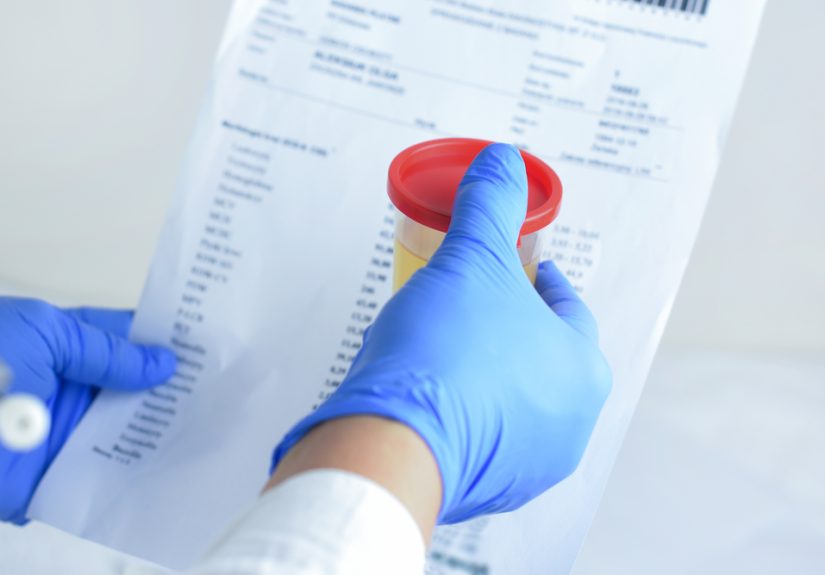
Urine drug testing can be clinically useful. In pain management, it may help confirm whether prescribed drugs are present, whether dangerous substances are also being used, and whether treatment plans need to change. In opioid treatment programs, testing can support monitoring and safety. Used well, it is a tool. Used badly, it becomes a slot machine with a lab requisition form.
That financial temptation is not theoretical. A Kaiser Health News investigation, later echoed in trade reporting, estimated that spending on urine screens and related genetic tests quadrupled from 2011 to 2014 to roughly $8.5 billion a year. Yes, billion with a “b.” When one category of testing grows that quickly in the middle of a crisis, it deserves more than a raised eyebrow. It deserves an audit, a flashlight, and probably a subpoena.
When Testing Stops Being Medicine and Starts Being Inventory
Federal cases show how the abuse works. In 2024, Precision Toxicology agreed to pay $27 million to resolve allegations that it billed federal programs for medically unnecessary urine drug tests and provided free items to physicians in exchange for referrals. According to the government, the lab promoted “custom profiles” that functioned like standing orders, encouraging large numbers of tests without individualized assessment. In plain English: the menu was driving the medicine, not the patient.
Another 2024 case involved Pacific Toxicology Laboratories, which agreed to pay $1 million to resolve allegations tied to double billing for urine drug testing already included in Medicare’s bundled payment for opioid treatment program services. That kind of billing behavior may look dry on paper, but its real-world meaning is simple: the public may have been charged twice while vulnerable patients remained the backdrop for someone else’s accounting trick.
And the pattern is not new. In Pennsylvania, a health care fraud case centered on medically unnecessary urine drug tests for chronic opioid patients involved more than $10 million in billings and more than $4 million paid by Medicare. When clinics own or direct specimens to in-house labs, the temptation is obvious. Every cup becomes revenue, every extra panel a little cha-ching.
The Rehab Shuffle: Relapse as a Revenue Model
If the lab side of opioid cheating is cynical, the addiction-treatment side can be downright grotesque. Congressional hearings and Senate materials have described patient brokering and addiction-treatment fraud schemes in which recruiters lure people into programs with free plane tickets, free housing, gifts, or cash incentives. The goal is not necessarily to connect someone with the right level of care. The goal is to “fill beds with heads.” It is ugly language because it reflects an ugly incentive structure.
In some reported schemes, relapse is not treated as failure. It is treated as repeat business. That is the logic at the heart of the so-called rehab shuffle: move a patient into treatment, bill insurance, send the patient to sober housing, bill again, test again, and if the patient relapses, start the cycle over. From an ethical standpoint, it is horrifying. From a cash-flow standpoint, it can be disturbingly efficient.
Kickbacks, Brokers, and the Price of a Human Being
Federal prosecutors have continued to pursue these cases. In 2024, a California addiction-treatment operator was convicted in a scheme involving nearly $2.9 million in illegal kickbacks paid to body brokers who referred patients. According to the Justice Department, some patients were paid in cash and some of that money was then used to buy drugs. That is not treatment. That is a carousel with a billing code.
Congress has also flagged how these schemes overbill for treatment and urine testing, deliver low-quality care, and sometimes provide no meaningful treatment at all. The cruelty is not accidental. The people targeted are often in active addiction, newly sober, isolated from family, or desperate for housing. In many schemes, vulnerability is not a side effect. It is the business plan.
Arizona Showed the Human Cost of Fraud at Scale
One of the clearest recent examples of treatment fraud colliding with human devastation came out of Arizona. HHS-OIG issued a consumer alert in 2023 warning about fraudulent behavioral health schemes targeting Native American communities. Investigative reporting later showed the staggering scale of the damage: Arizona’s Medicaid agency said the fraud may have cost taxpayers as much as $2.5 billion, while ProPublica reported that at least 40 Native American residents of sober living homes and treatment facilities in the Phoenix area died as the state struggled to respond.
The numbers are shocking, but the mechanism is familiar. Vulnerable people were recruited into housing and treatment settings that often failed to deliver real care while drawing Medicaid money. Once again, the opioid crisis did not merely produce suffering. It produced a marketplace where suffering could be invoiced.
That case also destroys the lazy assumption that opioid fraud is just about “bad choices” by individuals. Sometimes the bigger scandal is institutional. The patient may arrive sick, unstable, and poor. The operator arrives with paperwork, contracts, and reimbursement expertise. Guess which one is more likely to win the first round?
Big Players Cheated Too
It would be comforting to treat opioid cheating as a fringe problem involving sketchy labs and rogue sober homes. Unfortunately, the record does not allow that comfort. Some of the largest and most powerful players in the health care and pharmaceutical system have faced major allegations and settlements tied to opioids.
Purdue Pharma’s federal resolution remains one of the clearest symbols of how profit and opioid harm became tangled together. The Justice Department announced a resolution involving more than $8 billion, including criminal and civil components. The government alleged that Purdue promoted opioids to prescribers it knew were writing unsafe, ineffective, and medically unnecessary prescriptions, and that it engaged in kickback schemes to induce prescribing. Whatever legal chapter comes next in opioid litigation more broadly, the message from that case was unmistakable: the cheating did not stop at the clinic door.
Nor did it stop at the pharmacy counter. In 2025, Walgreens agreed to pay up to $350 million to resolve allegations that it illegally filled millions of invalid prescriptions for opioids and other controlled substances and then sought payment from federal health care programs. The government said these included prescriptions with obvious red flags, such as excessive quantities, early refills, and the notorious “trinity” combination of opioids, benzodiazepines, and muscle relaxants. When the gatekeepers stop guarding the gate, the whole neighborhood gets robbed.
What Honest Treatment Actually Looks Like
Here is the part that often gets buried under scandal: opioid use disorder is a treatable medical condition. The CDC is explicit that addiction is a disease, not a character flaw. SAMHSA is equally clear that medications such as buprenorphine, methadone, and naltrexone, combined with counseling and behavioral therapies, can improve survival, increase retention in treatment, and reduce illicit opioid use. In other words, real treatment exists. It is evidence-based, boring in the best way, and much less flashy than a scam.
That matters because fraud can poison public trust in legitimate care. Patients hear about fake sober homes, abusive brokers, padded bills, and unlawful prescribing, and they begin to suspect everyone. Families become wary. Clinicians become defensive. Regulators tighten rules. Sometimes the good providers end up buried under the paperwork created by the bad ones. That is the hidden tax of opioid cheating: it makes real recovery harder by turning trust into collateral damage.
How to Shrink the Industry of Cheating
No single fix will do it, but several things are obvious. First, reimbursement must reward evidence-based treatment, not sheer volume. Second, urine testing should be clinically justified, not reflexively ordered as if more panels automatically equal more care. Third, referral kickbacks and body-brokering schemes need aggressive enforcement. Fourth, pharmacies, prescribers, labs, and treatment centers should all expect sharper data analysis from regulators and payers. The Justice Department has already emphasized a more data-driven fraud strategy; that approach needs to stay permanent.
Just as important, the country has to stop confusing oversight with cruelty. Watching for fraud is not anti-patient. Done well, it is pro-patient, because the people most harmed by opioid cheating are almost always the people already carrying the heaviest burden. They are not the ones drafting custom test profiles or negotiating referral kickbacks. They are the ones trying to survive the machine.
Conclusion
The opioid crisis did not create greed, but it gave greed new costumes: clinical monitoring, recovery housing, speaker programs, pharmacy workflow, laboratory compliance, and insurance billing. That is why the phrase “opioid cheating is a billion-dollar industry” rings true. The cheating is not limited to one trick, one sector, or one kind of bad actor. It is a patchwork economy of concealment and exploitation built around a genuine medical emergency.
If America wants fewer opioid deaths, it needs more than naloxone, more than warnings, and more than public outrage after the next raid or settlement. It needs systems that make honesty easier than fraud and recovery more profitable than relapse. Until then, the worst operators will keep treating addiction not as a tragedy to solve, but as an invoice to maximize.
Experiences From the Ground: What This Looks Like in Real Life
The hardest part of writing about opioid cheating is realizing how ordinary it can look from the outside. A mother sees a brochure for treatment and thinks, “Maybe this is the place that finally helps my son.” A patient in chronic pain is told to provide another urine sample and assumes it is just standard medical procedure. A pharmacist stares at a stack of prescriptions and wonders whether the pressure to move faster is going to outrun common sense. Nothing in those moments looks cinematic. It looks administrative. That is what makes it dangerous.
For many patients, the first experience of the system is confusion. They are sick, scared, ashamed, or exhausted. They do not know which clinic is reputable, which test is necessary, or whether a “sober home” is truly sober. They often assume that if a place has a license, a website, a smiling receptionist, and a clipboard, someone must already have checked that it is legitimate. But in scam-heavy environments, the appearance of order can be part of the con. The paperwork becomes theater.
Families often describe a different kind of whiplash. They finally persuade a loved one to accept help, only to discover that “help” may come with constant transfers, odd billing, repeated testing, vague treatment plans, and people who seem far more interested in insurance details than clinical progress. Hope turns into suspicion. Suspicion turns into guilt. Then comes the awful question no family wants to ask: “Did we send them somewhere that made things worse?”
Honest clinicians feel a version of this frustration too. Many pain specialists and addiction physicians genuinely use monitoring tools to improve safety, not to create revenue. Yet they practice in a landscape shaped by scandal. They have to explain why a drug screen is being ordered, why a medication agreement matters, and why some programs are more restrictive than patients expect. In other words, they are not only treating illness. They are cleaning up the reputational mess left by bad actors who turned medical caution into a business hustle.
Pharmacists and nurses live with another pressure point: time. In large systems, speed is treated like virtue. Fill more scripts. Process more patients. Move the line. But health care is not a drive-thru, and opioids are not fries. The people working the counter or triaging the visit can feel the tension between productivity and judgment every day. When the system rewards volume, it quietly trains staff to ignore the tiny alarms that later sound obvious in court filings.
And then there are communities hit so hard that fraud becomes part of the trauma itself. In places where overdose, poverty, unstable housing, and limited access to treatment already overlap, a fake or predatory program is not just financial abuse. It is emotional vandalism. It teaches people that even when they finally ask for help, someone may still try to sell them back their own survival at an inflated price.
That may be the truest experience of all: opioid cheating leaves people feeling used. Used by drugs, used by systems, used by businesses that discovered there is money in every stage of the crisis. The only durable answer is to build a treatment and monitoring culture where patients feel protected instead of harvested. Until that happens, the paperwork may change, the logos may improve, and the slogans may get brighter, but the experience underneath will remain the same old hustle in a cleaner shirt.