Table of Contents >> Show >> Hide
- What “Oslo Shelving Unit” Usually Means (And Why It’s Confusing)
- Buy the Right Oslo Shelving Unit in 5 Minutes
- The Oslo Look: Why It Works in So Many Homes
- How to Style an Oslo Shelving Unit So It Looks Curated (Not Chaotic)
- Room-by-Room Ideas
- Safety & Stability: The Part You Shouldn’t Skip
- Assembly & Longevity Tips (So It Still Looks Good Next Year)
- Budget vs. Splurge: What You’re Really Paying For
- FAQ: Quick Answers People Actually Want
- Real-World Experiences With an Oslo Shelving Unit (Extra Detail)
- Conclusion: The Oslo Shelf That Actually Works for Real Life
If your home has ever felt like it’s being slowly overtaken by “stuff” (books, baskets, plants, that one candle you
swear is “seasonal” twelve months a year), a shelving unit can either save the day… or become a wobbly monument to
clutter. The good news: the Oslo shelving unit styleclean lines, airy structure, and a very
“Scandinavian design student who drinks oat lattes” vibetends to do the saving part well.
This guide breaks down what people usually mean when they search “Oslo shelving unit,” how to pick the right one for
your space and lifestyle, how to style it so it looks intentional (not like a garage sale with good lighting), and
how to keep it safeespecially in homes with kids or pets. Then, at the end, you’ll get a longer, real-world
experience section that reads like you’re borrowing wisdom from a friend who’s assembled one of these while hungry.
What “Oslo Shelving Unit” Usually Means (And Why It’s Confusing)
“Oslo” shows up on a lot of shelving across price points and styles. That’s because it’s used as a product name by
multiple brandsso you’ll see everything from sleek, minimal wood-and-metal etageres to fully custom shelving systems.
In other words, “Oslo” doesn’t guarantee one exact shelf. It’s more like a shared nickname for a family of shelves
that usually share these traits:
- Minimal silhouette: straight lines, open sides, no fussy trim.
- Visually light: open shelves and negative space (your walls can breathe again).
- Mixed materials: wood tones paired with metal frames are common.
- Display-forward: built to show off, not hide chaos (that’s what cabinets are for).
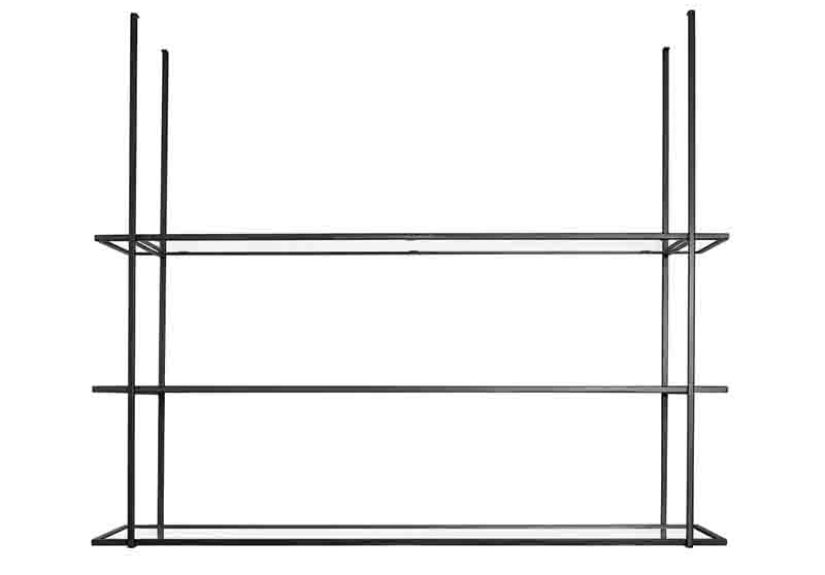
Example “Oslo” interpretations you’ll run into: a compact three-shelf etagere with laminated MDF shelves and a black
metal frame (great for small spaces), a customizable, made-to-order shelving unit with selectable dimensions and
bracket styles (great for “I want it to fit exactly here”), and premium solid-wood shelving aimed at the
investment-furniture crowd. Different productssame “clean and modern” vibe.
Buy the Right Oslo Shelving Unit in 5 Minutes
1) Measure like you mean it
A shelving unit can look “perfectly sized” online and then arrive in your home like a fridge in disguise. Measure:
width, depth, and heightplus walkway clearance. If it’s going in a living room, leave enough space so people aren’t
doing the sideways crab-walk to pass.
Pro tip: depth matters more than people think. Shallow shelves are great for decor and paperbacks. Deeper shelves
handle storage bins and larger books, but they can also encourage clutter if you’re not careful (because you’ll
definitely try to double-stack things and call it “layering”).
2) Decide: freestanding, wall-mounted, ceiling-mounted, or modular?
- Freestanding: easiest to move, easiest to style, easiest to accidentally wobble on uneven floors.
- Wall-mounted: cleaner look, less floor footprint, requires proper mounting.
- Ceiling-mounted systems: dramatic, architectural, and often customizable for height/length/depth.
- Modular: add more later, reconfigure when your life changes (or when you buy more booksagain).
If you’re the kind of person who knows exactly where you want the shelvesand you want them to fit like they were
born therecustomizable systems can be worth it. If you’re a renter, a lightweight freestanding Oslo-style unit may
be the path of least stress.
3) Understand materials (so your shelves don’t sag into a sad smile)
Many Oslo shelving units use a mix of wood (or engineered wood) and metal. Here’s the cheat sheet:
- Solid wood: beautiful, durable, often pricier, can last decades with care.
- Wood veneer over engineered core: “real wood look” with better cost control; quality varies.
- MDF/laminated MDF: smooth and budget-friendly; great for lighter loads and clean finishes.
- Metal frame: helps with rigidity, modern look, usually improves stability.
Engineered wood is common in affordable shelving, and it can be a smart choiceespecially when it’s properly designed
and supported. The key is treating it like what it is: strong in the right setup, not invincible. If you plan to
store heavy hardcovers, vinyl records, or anything that feels like a tiny boulder, pay attention to shelf thickness,
support points, and per-shelf weight ratings.
4) Look for per-shelf weight capacity (not just “overall capacity”)
Overall weight capacity sounds impressive, but per-shelf capacity is what keeps your shelves from bowing. If the
manufacturer doesn’t clearly state it, assume you’ll need to keep loads moderate and distribute weight evenly. For
book-heavy households, prioritize sturdier frames, thicker shelves, and shorter shelf spans.
The Oslo Look: Why It Works in So Many Homes
The design magic of an Oslo shelving unit is that it behaves like a neutral outfit: it goes with everything. It can
lean Scandinavian (light wood, minimal objects, calm palette), industrial (black
metal + wood tones), mid-century modern (warm wood, geometric styling), or even coastal
(lighter accessories, woven baskets, airy spacing).
The open format also makes rooms feel largerbecause your eyes can travel through the shelves instead of hitting a
solid wall of furniture. It’s storage that doesn’t visually shout “I own things!”
How to Style an Oslo Shelving Unit So It Looks Curated (Not Chaotic)
Use the “book + object + breathing room” formula
A shelf that’s 100% books can look heavy. A shelf that’s 100% decor can look like a home goods showroom. The sweet
spot is mixing function and personality:
- Stack some books vertically, some horizontally.
- Add one or two larger objects (a vase, bowl, framed photo, sculptural piece).
- Leave some negative space so the shelf doesn’t feel crowded.
Layer like you’re building a tiny stage set
Depth creates a designer look. If your shelf is deep enough, lean artwork toward the back and anchor it with books
or a heavier object in front. Add smaller pieces forward for dimension. The result reads as intentional, not random.
Repeat materials and colors (quietly)
You don’t need matching everything. You just need a few repeating notes: black metal (echoed in a frame), warm wood
(echoed in a bowl), a pop color that appears 2–3 times. Repetition makes shelves feel “styled,” even if you did it in
ten minutes while procrastinating.
Room-by-Room Ideas
Living room: the “bookcase as personality” move
An Oslo shelving unit can be your living room’s calm, structured backbone. Try:
- Bottom shelves: baskets for remotes, games, cords, and all the stuff you want to own but not see.
- Middle shelves: books + a few “I’m interesting” objects (travel photo, ceramic, vintage find).
- Top shelves: lighter decorplants, framed art, small sculptural pieces.
Home office: functional, but not soul-crushing
Use Oslo shelves to create zones: reference books, document boxes, supplies, and one shelf that’s purely aesthetic.
Yes, aesthetic. Your brain deserves a tiny reward for doing taxes.
Entryway: the “drop zone” that doesn’t look like a drop zone
Oslo-style open shelves are great in entryways if you control the chaos. Add labeled bins, a tray for keys, and one
basket per person. Without bins, entryway open shelves tend to become a museum of mail.
Kitchen/dining: open shelving, but with boundaries
Open shelves look airyuntil dust, grease, and visual clutter move in like they pay rent. If you use an Oslo shelving
unit near food, keep it curated: attractive canisters, dishes you use often, and items that don’t mind being seen.
Avoid turning it into storage for random packaging. Your shelves want to be pretty, not a snack pantry in disguise.
Safety & Stability: The Part You Shouldn’t Skip
Tall shelving can tip, especially if children climb, pets launch themselves like tiny furry torpedoes, or you load
heavy items high. Safety experts emphasize anchoring tall furniture to prevent tip-over injuries. If your Oslo shelving
unit is tall, narrow, top-heavy, or in a kid/pet zone, anchoring is a smart step.
Practical safety habits that help immediately:
- Place heavier items on lower shelves.
- Avoid putting tempting “climbable” items (like toys) on upper shelves.
- Use anti-tip hardware when recommended by the manufacturer.
- If you’re not comfortable installing anchors, ask an experienced adult or hire a pro.
Assembly & Longevity Tips (So It Still Looks Good Next Year)
Don’t rush the frame
Most wobble comes from rushed assembly and uneven floors. Tighten hardware gradually, check squareness as you go, and
use included levelers (or shims) if the unit rocks. “A little wobble” today becomes “why is this shelf auditioning to
be a metronome?” later.
Protect engineered surfaces
If your Oslo shelving unit uses laminated MDF or similar surfaces, treat it kindly: wipe spills quickly, avoid
soaking with water, and use coasters under plants. Small habits prevent swelling and peeling at the edges.
Prevent shelf sag
- Distribute weight evenly across the shelf.
- Put the heaviest books on the bottom shelf.
- If shelves are adjustable, ensure pins/brackets are fully seated and level.
- Avoid overloading long, unsupported spansespecially with dense items like textbooks.
Budget vs. Splurge: What You’re Really Paying For
The Oslo shelving unit “family” spans multiple budgets. Here’s what typically changes as the price rises:
- Budget Oslo shelves: laminated MDF/engineered wood with metal frames; lighter loads; great for decor and mixed storage.
- Mid-range Oslo shelves: thicker shelves, better hardware, improved finishes, sometimes veneer that looks convincingly “real.”
- High-end Oslo shelving: premium woods (often oak), craft-focused construction, and a more furniture-as-heirloom feel.
- Custom systems: fit-to-space dimensions, flexible configurations, and a built-in lookoften the most “architectural” option.
The right choice depends on your reality. If you rearrange furniture every six months, a lighter Oslo shelving unit is
a win. If you want a long-term “grown-up” piece that can carry serious weight and still look sharp, focus on stronger
materials and constructionand verify weight ratings.
FAQ: Quick Answers People Actually Want
Is an Oslo shelving unit good for heavy books?
It can beif the per-shelf capacity supports it and the shelf spans aren’t too long. Look for sturdier frames,
thicker shelves, and clear weight guidance. When in doubt, load heavy books low and spread weight out.
Do I really need to anchor it?
If the unit is tall, narrow, top-heavy, or in a home with kids/pets, anchoring is strongly recommended. It’s one of
those “annoying now, grateful later” tasks.
How do I keep it from looking cluttered?
Edit harder than you think you need to. Use baskets for small items, group decor in odd numbers (like threes), and
leave some empty space so the eye can rest. A shelf’s greatest superpower is also its greatest weakness: it shows
everything.
Real-World Experiences With an Oslo Shelving Unit (Extra Detail)
This section is based on common patterns people mention in product reviews, organizer advice, and home styling
discussionsbasically, the collective wisdom of folks who have lived with open shelving long enough to know where the
dust settles (spoiler: everywhere).
Experience #1: The “small apartment miracle”
People in apartments often love an Oslo shelving unit because it solves multiple problems at once: it stores things,
acts like a room divider when placed strategically, and still looks light enough that the room doesn’t feel cramped.
A common setup is using the bottom shelves for fabric bins (to hide chargers, mail, tools, and other “visual noise”)
and the middle shelves for books and a few decorative pieces. The big win here is that it creates the feeling of
“I’m organized” even when the bins contain pure chaos. The most frequent complaint? Open shelves make you confront
your stuff. If you’re prone to stacking random items, you’ll need a simple systemlike “nothing goes on the shelf
unless it has a home.”
Experience #2: The “I bought it for books and now I own a styling hobby”
A lot of people start with, “I just need book storage.” Then they discover shelf styling tips and suddenly they’re
rotating decor like it’s a seasonal clothing rack. Oslo-style shelves tend to encourage this because they look best
when there’s a balance of books, objects, and empty space. Owners commonly report that alternating book directions
(vertical/horizontal) makes shelves feel more dynamic, and using a couple of bookends or a tray keeps stacks from
looking messy. The learning curve is real, but it’s also kind of funlike a low-stakes design project where the
stakes are only your own eyeballs.
Experience #3: The “why is this shelf wobbling?” moment
Wobble stories are extremely common with tall, freestanding shelvesespecially on older floors that aren’t perfectly
level. The fix is usually not dramatic: re-tightening hardware after a few days, using included levelers, or adding
felt pads/shims to stabilize the feet. People often realize that the shelf felt stable during assembly, but after
moving it into place (and loading it), tiny shifts in alignment show up. A good rule is to assemble on a flat
surface, tighten evenly, and do a final check once it’s standing where it will live. If it’s tall and slender, many
reviewers say they feel much better after anchoring itless movement, less anxiety, and fewer “don’t touch the shelf”
warnings delivered like a sitcom parent.
Experience #4: The “open shelves collect dust… but I still love them” truth
Open shelving looks amazing and photographs even better. The tradeoff is maintenance. People regularly note that they
wipe shelves more often than they expectedespecially in living rooms with pets or in kitchens where airborne grease
and dust are real. The good news is that Oslo shelving’s open design makes cleaning quick: a microfiber cloth and a
two-minute reset is often enough. The more practical owners also use closed baskets on lower shelves so they can keep
frequently used items accessible without putting every single thing on display. If you want the look without the
constant upkeep, the most common “happy medium” strategy is mixing display shelves with a few closed storage pieces
nearby (like a credenza or cabinet) so the shelf can stay curated instead of becoming a storage emergency.
Experience #5: The “it finally looks grown-up” upgrade
One of the most positive themes is how quickly an Oslo shelving unit can make a room feel more finished. Even when
it’s not expensive, the clean lines and intentional styling can give the impression of a planned space. People often
mention that simply moving random items off countertops and into baskets on the shelf makes their home feel calmer.
The shelf becomes a visual anchorsomething that says “this room has a purpose.” The happiest owners tend to be the
ones who set simple rules early: heavy items low, one shelf reserved for “pretty,” and baskets for everything that
would otherwise become clutter. It’s not magicjust a structure that helps you act like the organized version of
yourself you keep meaning to become.
Conclusion: The Oslo Shelf That Actually Works for Real Life
The best Oslo shelving unit isn’t the one with the fanciest nameit’s the one that fits your space, carries what you
actually own, and looks good doing it. Measure carefully, choose materials that match your needs, prioritize per-shelf
weight capacity, and style with a mix of books, decor, and breathing room. If the unit is tall or will live near
kids/pets, anchoring is a smart, safety-first move. Do those things, and your Oslo shelving unit becomes what it was
meant to be: organized storage that looks like designnot like a confession.