Table of Contents >> Show >> Hide
- Why Spray Paint Is a Bistro Set’s Best Friend
- First: Figure Out What You’re Painting (Because Metal Is Not One-Size-Fits-All)
- Materials and Tools Checklist
- Step-by-Step: Outdoor Bistro Set Spray Paint Makeover
- Step 1: Pick Your Painting Day Like You’re Casting a Movie Role
- Step 2: Clean It Like You Mean It
- Step 3: Remove Rust and Loose Paint (The “Unpopular but Necessary” Part)
- Step 4: Scuff Sand for Adhesion (Yes, Even If It “Looks Fine”)
- Step 5: Tape and Mask Anything You Don’t Want Painted
- Step 6: Prime for Durability (Especially on Bare Metal and Rust)
- Step 7: Spray Paint Like a Calm, Confident Robot
- Step 8: Respect Dry Time vs. Cure Time
- Step 9: Optional TopcoatOnly If It’s Compatible
- Color and Style Ideas (Because “Black Again” Isn’t the Only Option)
- Common Mistakes That Make Paint Peel (And How to Avoid Them)
- How Much Paint Do You Need?
- Maintenance Tips to Keep It Looking Fresh
- Wrap-Up: A Small Makeover That Changes the Whole Patio Mood
- Extra: Real-World Experiences DIYers Learn After an Outdoor Bistro Set Spray Paint Makeover (About )
- 1) The Set Will Look Worse Before It Looks BetterThat’s Normal
- 2) “Thin Coats” Feels Slow… Until You See What Thick Coats Do
- 3) Spraying From Every Angle Is Not OptionalIt’s the Whole Game
- 4) Overspray Is Sneakier Than a Cat on Carpet
- 5) Curing Time Is Where Patience Pays Rent
- 6) Color Choice Has “Lifestyle Implications” (Yes, Really)
Your outdoor bistro set has officially entered its “seen better summers” era: a little rust freckles, a little peeling paint,
and a vibe that screams “I used to be cute!” The good news? You don’t need a new setor a second jobto make it look fresh again.
A smart spray paint makeover can turn that tired table-and-two-chairs combo into the kind of patio moment that makes neighbors
suddenly remember your name (and ask what color you used).
Hometalk-style makeovers are popular for a reason: they’re practical, budget-friendly, and wildly satisfying. In this guide,
we’ll walk through a real-world approach to transforming a metal bistro set with spray paintprep, primer, technique, color ideas,
and the “please don’t do this” mistakes that cause peeling by the next barbecue.
Why Spray Paint Is a Bistro Set’s Best Friend
Bistro sets are often made of metalwrought iron, steel, cast aluminumfull of curves, scrollwork, and tight corners.
That’s exactly where spray paint shines. A brush can miss crevices or leave lap marks; spray gets into the details fast,
making it ideal for patio furniture that’s more “twisty” than “flat.”
Spray paint is also great when you want a clean, factory-like finish without hauling out a paint sprayer. With the right prep,
you can get a smooth coat that holds up well outdoorsespecially if you pair it with the correct primer and give it enough time to cure.
First: Figure Out What You’re Painting (Because Metal Is Not One-Size-Fits-All)
Before you shake a can like a maraca, take 60 seconds to identify what you’re working with:
- Wrought iron/steel: Heavy, prone to rust. Usually needs rust removal + a rust-inhibiting primer.
- Cast aluminum: Won’t rust like iron, but paint can still flake if you skip scuffing and primer.
- Previously painted metal: If it’s peeling, you’ll need to remove loose paint and feather edges.
- Plastic/resin parts: Some bistro sets have plastic accentsthese often need paint made for plastic.
This matters because the best-looking paint job in the world won’t last if it can’t properly bond to the surface underneath.
Translation: prep is not optional. Prep is the whole relationship.
Materials and Tools Checklist
Here’s a practical setup that covers most outdoor bistro set spray paint makeovers:
- Drop cloth or cardboard (overspray is real and has zero respect for your driveway)
- Mild soap + water, plus a degreaser if the set is grimy
- Wire brush or wire brush drill attachment (for rust and flaky paint)
- Sandpaper: 60–80 grit (heavy rust), 120 grit (general scuff), 180–220 grit (final smoothing)
- Rags or lint-free cloths (and/or tack cloth)
- Painter’s tape + plastic sheeting/newspaper for areas you don’t want painted
- Rust-inhibiting primer (for iron/steel or rusty areas)
- Outdoor-rated spray paint (rust-preventive enamel or paint + primer for metal)
- Optional clear topcoat (only if your paint system recommends it)
- Gloves, eye protection, and a respirator or painting mask
Step-by-Step: Outdoor Bistro Set Spray Paint Makeover
Step 1: Pick Your Painting Day Like You’re Casting a Movie Role
Spray paint is picky about weather. Too hot, too cold, too humid, too windyand it’ll punish you with bubbles, rough texture,
or a finish that takes forever to harden. Aim for a mild, dry day with minimal wind. If your set is in direct sun,
move it into shade so the surface doesn’t heat up and flash-dry the paint mid-spray.
Step 2: Clean It Like You Mean It
Dirt, pollen, sunscreen handprints, mystery patio grimepaint does not want to stick to any of that. Wash the set with mild soap and water,
rinse well, and let it dry completely. If it’s especially oily or grimy (hello, outdoor eating area), use a degreaser and wipe it down again.
Pro tip: Don’t skip drying time. Painting over hidden moisture is like putting a raincoat on a wet dog and expecting everyone to be happy.
Step 3: Remove Rust and Loose Paint (The “Unpopular but Necessary” Part)
If your bistro set has rust, you have two goals: remove what’s loose and stabilize what remains. Start with a wire brush or sanding pad to knock off
flaky rust and peeling paint. Focus on:
- Edges where paint is lifting
- Welds and joints where moisture sits
- Chair feet and table base areas that touch damp ground
After brushing/sanding, vacuum or wipe away dust. If you still have stubborn rust spots, you can use a rust converter or rust-inhibiting primer
designed to lock down remaining oxidationthen topcoat as directed.
Step 4: Scuff Sand for Adhesion (Yes, Even If It “Looks Fine”)
If the existing finish is glossy or slick, lightly scuff sand it. You’re not trying to remove all paintyou’re creating tooth.
Think “gentle exfoliation,” not “sandstorm.”
Finish by wiping down dust thoroughly. Any leftover dust becomes texture, and not the trendy kind.
Step 5: Tape and Mask Anything You Don’t Want Painted
Mask off:
- Tabletops if you’re keeping a glass/mosaic insert
- Rubber feet, plastic caps, or wooden slats
- Bolts you’ll need to remove later
Lay down drop cloths or cardboard under the set, and give yourself room to walk around it. The goal is to spray from multiple angles without
doing the “awkward crouch-and-spin” that leads to missed spots and back pain.
Step 6: Prime for Durability (Especially on Bare Metal and Rust)
Primer is not just a boring undercoatit’s what makes your paint job last. Use a metal-appropriate primer, and if you’re dealing with rust,
choose one that’s rust-inhibiting. Apply in light, even coats.
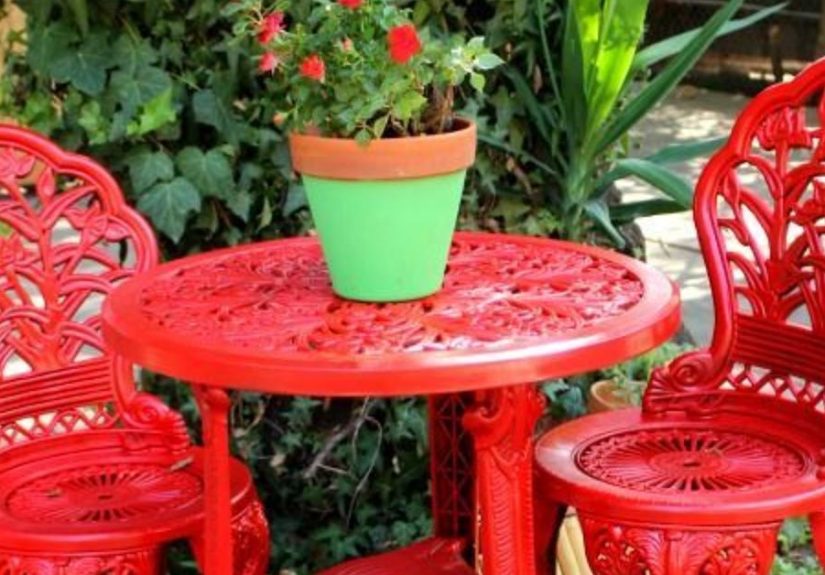
If you’re changing from a dark finish to a bright color (like a bold Hometalk-style Apple Red), primer helps your color look true and cover faster.
It also helps prevent that “why does this look patchy?” moment.
Step 7: Spray Paint Like a Calm, Confident Robot
Now the fun part. Great spray paint results come from consistency:
- Shake the can thoroughly (and keep shaking periodically)
- Hold the can the recommended distance from the surface
- Use smooth, sweeping passes with slight overlap
- Start spraying off the object, pass across it, and release after you’ve passed the edge
- Apply multiple thin coats instead of one thick “get it done” coat
Thin coats reduce drips and help the finish level out. Rotate around the furniture and hit it from different angles to reach the underside of
chair seats, scrollwork, and the back of table legs.
Step 8: Respect Dry Time vs. Cure Time
“Dry to the touch” is not the same as “ready for daily life.” A bistro chair that feels dry can still be soft underneath, meaning it can scratch
if you stack it, scrape it, or sit down in denim with rivets like you’re auditioning for a western.
Give the set the time it needs to fully cure (often a full day or more, depending on product and weather). The longer you let it harden,
the better it will resist scuffs and chips.
Step 9: Optional TopcoatOnly If It’s Compatible
A clear coat can add durability, but it’s not automatically requiredand it’s not always recommended with every finish.
If you’re using a specialty metallic, hammered, or textured spray, check the label and product guidance before sealing.
Using the wrong clear coat can dull a metallic sheen or cause odd reactions.
Color and Style Ideas (Because “Black Again” Isn’t the Only Option)
The classic Hometalk bistro set makeover often goes bold: bright red, cobalt blue, sunshine yellowcolors that turn a tiny patio corner into a destination.
Here are a few proven directions:
- Apple Red statement set: Perfect for cottage gardens, brick patios, and green-heavy landscaping.
- Oil-rubbed bronze refresh: A warm, classic look that hides dirt better than bright white.
- High-gloss black modern: Sleek and dramatic, especially with neutral cushions and lots of plants.
- Coastal blue or sage green: Calm, airy, and great for small balconies.
- Two-tone: One color for the frame, another for seat panels or tabletop accents (masking helps).
Want extra personality? Add a stencil on the tabletop or chair backs after the base color curesthen seal if your paint system allows it.
Just keep patterns simple so the set looks intentional, not like it lost a fight with a scrapbook aisle.
Common Mistakes That Make Paint Peel (And How to Avoid Them)
Mistake 1: Skipping Prep Because “It’s Just Patio Furniture”
Patio furniture lives a hard life: sun, rain, temperature swings, and the occasional guest who drags a chair like it owes them money.
Prep and primer are what help paint survive that.
Mistake 2: Spraying Too Close or Too Heavy
Heavy coats lead to drips and slow curing. If you see gloss pooling or a saggy drip forming, you’re too close, too slow, or both.
Back up, keep moving, and build coverage in layers.
Mistake 3: Painting in Wind or Dust
Wind carries overspray onto everything you love, plus it can blow debris into your wet paint. Set up a sheltered workspace if you can,
or create a simple windbreak with cardboard.
Mistake 4: Using “Whatever Can Was in the Garage”
Indoor spray paint on outdoor metal is a short-term relationship. Use an outdoor-rated formula and a compatible primer for the surface.
The goal is fewer re-dos, not more “character-building” weekends.
How Much Paint Do You Need?
Coverage depends on the set’s design (open metal scrollwork eats paint), but as a practical rule:
a small bistro table base plus two chairs often takes multiple cansespecially if you’re changing colors or covering rust.
Buying one extra can is cheaper than running out halfway through and trying to “blend” later (which is DIY code for “regret”).
Maintenance Tips to Keep It Looking Fresh
- Let the finish cure fully before using or stacking chairs.
- Use furniture pads where metal contacts metal to reduce scratching.
- Cover the set during harsh weather or store it in the off-season.
- Clean gentlyavoid harsh abrasives that can dull the finish.
- Touch up chips quickly to stop rust from spreading underneath.
Wrap-Up: A Small Makeover That Changes the Whole Patio Mood
A spray paint makeover is one of the fastest ways to upgrade an outdoor space. It’s also one of the most confidence-boosting DIY projects:
you can see the “before” and “after” immediately, and the transformation feels like magiceven though it’s really just prep, primer, and patience.
Whether you go classic black, calm coastal blue, or full Hometalk-bold red, the secret is the same: do the boring steps well,
then enjoy the fun part without rushing. Your morning coffee deserves a cute place to sit.
Extra: Real-World Experiences DIYers Learn After an Outdoor Bistro Set Spray Paint Makeover (About )
If you read enough bistro set makeover stories, you’ll notice a pattern: the paint is the easy part, and everything else is where the learning happens.
Here are the most common “experience-based” lessons DIYers tend to pick upusually right after they’ve already made the mistake once.
1) The Set Will Look Worse Before It Looks BetterThat’s Normal
The moment you start sanding and scraping, your bistro set enters an awkward phase: half-dull, half-scraped, with random bald spots that make it look
like it’s molting. This is the DIY equivalent of deep-cleaning your kitchen and discovering the true color of your grout. Don’t panic.
That ugly middle stage is proof you’re removing what would’ve caused peeling later.
2) “Thin Coats” Feels Slow… Until You See What Thick Coats Do
Most people start with good intentions and then, around coat two, get tempted to “finish it in one pass.” That’s when drips happen.
Bistro sets are full of vertical surfaces (chair legs, table base) where gravity is waiting for its moment. Thin coats dry faster, level better,
and are way less likely to create gummy spots that stay soft for days. DIYers who learn this once tend to become thin-coat evangelists forever.
3) Spraying From Every Angle Is Not OptionalIt’s the Whole Game
Open metal chair backs and decorative scrollwork look amazing… and also create a hundred places to miss. A common experience is flipping a chair over
the next day and discovering surprise bare patches like hidden “before” spots. The fix is simple: after each coat, walk around the furniture and
look at it from low angles, side angles, and underneath. Good lighting helps. So does humility.
4) Overspray Is Sneakier Than a Cat on Carpet
DIYers often report thinking they’ve protected the area, only to find a soft paint haze on a nearby planter, a concrete edge, or the bottom of their shoes.
A larger drop zone than you think you needplus a “spray direction awareness” momentgoes a long way. It’s also why many people prefer cardboard or
drop cloths that extend well beyond the furniture footprint.
5) Curing Time Is Where Patience Pays Rent
One of the most common real-life regrets is using the set too soon. Someone sets a cup down, drags a chair, or stacks pieces before they’re fully cured,
and suddenly there’s a fingerprint, a scratch, or a stuck-together contact point that peels when pulled apart. DIYers who wait the full cure time
(and keep pets, kids, and curious adults away) end up with a tougher finish that holds up longer.
6) Color Choice Has “Lifestyle Implications” (Yes, Really)
Bright colors look incredible, but they can show pollen, dust, and scuffs more than mid-tone or textured finishes. White looks crispuntil a rainstorm
splashes dirt into crevices. Dark colors can look sophisticated, but they may show dust or heat up in full sun. Many DIYers find their sweet spot in
satin finishes, slightly muted colors, or finishes like hammered/textured that hide minor imperfections and wear.
The takeaway from all these experiences is simple: the best bistro set makeovers aren’t just about paintthey’re about process.
Do the prep, respect the weather, build your coats, and let it cure. Then enjoy that “new set” feeling without the “new set” price.