Table of Contents >> Show >> Hide
- What “Palladian” Really Means (Without Sending You Back to Art History Class)
- Why Gold Is the Perfect Partner for Palladian Geometry
- Where Gold Palladian Wallpaper Looks Incredible
- Color Pairings That Make Gold Look Expensive (Not “Holiday Decoration Aisle”)
- Pattern Scale, Repeat, and the Secret to Not Going Cross-Eyed
- Peel-and-Stick vs. Traditional: Which One for Gold Palladian Wallpaper?
- Installation Playbook: How to Make It Look Like a Pro Did It
- Care and Longevity: Keeping Gold Gorgeous
- Cost, Value, and the “Accent Wall Saves Marriages” Strategy
- Styling Checklist: Making Palladian Gold Feel Effortless
- Real-World Experiences With Palladian Wallpaper – Gold (Extra )
- Conclusion
There are two kinds of people in the world: the ones who look at a wall and think, “Nice wall,” and the ones who look
at a wall and think, “This wall needs a grand entrance… preferably with arches.” If you’re here for
Palladian Wallpaper – Gold, congratulationsyou’re in the second group. Your walls aren’t trying to
be subtle. They’re trying to be architectural.
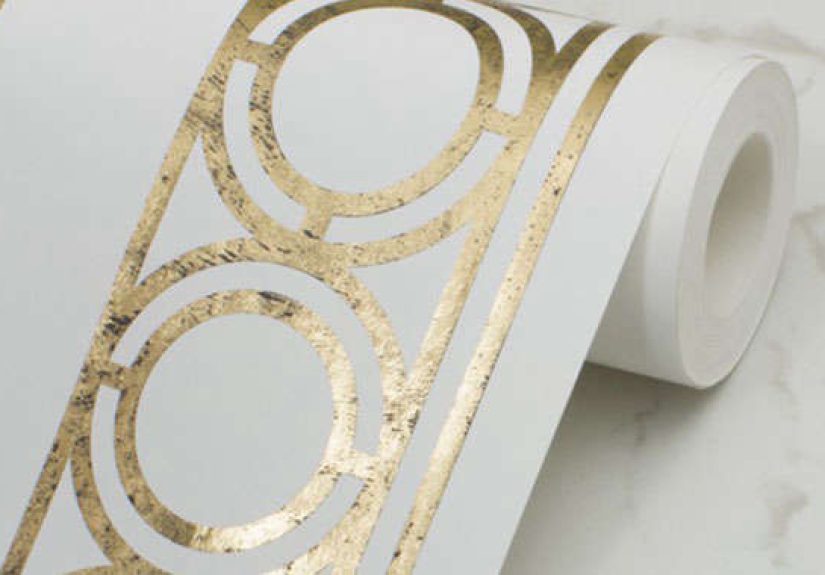
Palladian wallpaper takes the legendary “Palladian window” shapean arched center opening flanked by two rectangular
sidesand turns it into a repeating pattern that feels classic, symmetrical, and satisfyingly “put together.” Then you
add gold, and suddenly the whole thing goes from “tasteful” to “tasteful… but with a wink and a martini.”
What “Palladian” Really Means (Without Sending You Back to Art History Class)
“Palladian” points to Palladianism, a design tradition inspired by Renaissance architect Andrea
Palladio and his love of proportion, symmetry, and classical logic.[1] Even if you’ve never read a page of
architectural theory in your life, you’ve seen the influence: balanced façades, temple-like shapes, and that instantly
recognizable three-part Palladian windowarch in the middle, straight sides on the flanks.[2]
On wallpaper, that motif becomes a kind of visual “structure.” It makes a room feel more intentionallike someone
measured something. (Even if the only thing you measured was how far the couch can move before it hits the coffee
table.)
Why Gold Is the Perfect Partner for Palladian Geometry
Palladian patterns are orderly. Gold is… not shy. Put them together and you get the best of both: a disciplined pattern
with a warm, reflective finish that catches light and adds depth.
Designers often recommend using gold as a strategic “lift”it can read modern on graphic patterns, glam on textured
finishes, and surprisingly neutral when it’s brushed, antique, or softly metallic instead of mirror-shiny.[3]
That’s exactly why gold works so well here: the arches keep it grounded, and the gold keeps it interesting.
Gold finishes that play nicely with Palladian motifs
- Brushed gold: soft, warm, forgiving in real-world lighting.
- Antique gold: classic-with-character, great for traditional and transitional rooms.
- Champagne metallic: gold’s quieter cousinstill luminous, less “spotlight.”
- High-shine foil: dramatic and glamorous, but it will highlight wall imperfections (and life choices).
Where Gold Palladian Wallpaper Looks Incredible
A Palladian pattern already implies architectureso it thrives where architecture usually has something to say: entries,
passages, and those awkward little spaces that don’t know what they want to be when they grow up.
Entryways and hallways
If your entry is basically a “shoe storage corridor,” Palladian wallpaper can give it instant purpose. Gold adds warmth
(and makes the space feel brighter), while the arches create a rhythm that’s naturally flattering in narrow runs. Pro
tip: keep the rest simplelet the walls do the talking.
Powder rooms
Powder rooms are the runway show of the house: short, dramatic, and meant to be remembered. Wallpaper is practically a
tradition here, and gold looks especially good under sconces or a chandelier. If you want to commit to the drama, wrap
all four walls. If you want “confident, not chaotic,” do one feature wall behind the vanity.
Dining rooms and bar nooks
The Palladian motif brings formality; gold brings celebration. Together they’re great for dining rooms, a moody bar
corner, or anywhere you want the vibe to say, “Yes, we own real glassware.”
Bedrooms (behind the headboard)
A gold Palladian accent wall behind the bed can feel like a built-in “architectural headboard.” Balance it with
textileslinen, cotton, woolso the shine doesn’t take over the whole room.
Ceilings (for the brave and the bored)
Ceiling wallpaper is the interior design equivalent of ordering dessert first. It’s not necessary, but it is
delightful. Metallic gold up top can reflect ambient light and make a room feel tallerjust be sure you have patience,
the right tools, and a plan that includes breaks for snacks.
Color Pairings That Make Gold Look Expensive (Not “Holiday Decoration Aisle”)
Gold loves contrast. The trick is choosing supporting colors that feel intentional. Some of the most reliable pairings
lean on deep neutrals, soft whites, and a little dramaespecially black-and-white graphics, navy, and rich greens.[4]
Easy palettes to steal
- Gold + creamy white + warm wood: timeless, cozy, and very forgiving.
- Gold + navy: classic-meets-bold; looks amazing with brass hardware.
- Gold + charcoal + stone: modern and moody without feeling heavy.
- Gold + olive or sage: sophisticated and calm; great for bedrooms and dining rooms.
- Gold + black accents: graphic, crisp, and confidently modern.
Pattern Scale, Repeat, and the Secret to Not Going Cross-Eyed
Palladian motifs can be large and architectural or small and rhythmic. Your room’s size should guide the scale:
smaller spaces can handle bold patterns because you’re not staring at them all day; bigger rooms often look best with
patterns that feel proportionate and not overly busy.
If you’re using peel-and-stick (or any wallpaper with a strong repeat), plan your layout before you touch the wall.
Designers repeatedly stress that pattern alignment is where DIY confidence goes to be humbledso a dry fit and a smart
starting line are everything.[5]
Peel-and-Stick vs. Traditional: Which One for Gold Palladian Wallpaper?
Peel-and-stick is popular because it feels approachable: fewer tools, less mess, faster gratification. Traditional
wallpaper often wins on durability and long-term finish. Designers generally like peel-and-stick for rentals, nurseries,
or commitment-phobic decoratorsbut still warn that quality varies and that humidity can be a problem in moisture-heavy
bathrooms.[5]
Quick decision guide
- Choose peel-and-stick if: you want a temporary refresh, you’re decorating a short-term space, or you’re testing the gold-life.
- Choose traditional if: you want a smoother, more permanent finish, better seam longevity, or you’re papering a “forever” room.
- For metallic looks: prioritize wall prep and quality. Shine makes everything more noticeablegood and bad.
Installation Playbook: How to Make It Look Like a Pro Did It
Wallpaper isn’t hard in the way rocket science is hard. It’s hard in the way frosting a cake is hard: the second you
rush, everyone can tell.
1) Prep the wall like it’s going on a first date
Smooth, clean walls matterespecially with metallic finishes. Patch holes, sand bumps, and wipe dust. Removable
wallpaper in particular benefits from a clean, smooth surface, because texture telegraphs through and edges lift more
easily.[6]
2) Measure, then measure again (and still order a little extra)
Measuring for wallpaper is part math, part realism. You’ll need wall height, total wall width, and an understanding of
pattern repeat and waste. Many guides recommend working in consistent units and accounting for full-height stripsbecause
that’s how rolls disappear faster than you expect.[7]
Also: order extra. Between pattern matching, trimming, and the occasional “oops,” spare material is the difference
between “finished” and “why is there a mismatched strip behind the door.”[6]
3) Start with a plumb line, not optimism
Walls are rarely perfectly straight, which is rude but true. Pros mark a vertical plumb line and hang the first strip
to that line. If the first strip is off, the rest will follow like loyal little ducklingsstraight into chaos.[8]
4) Dry fit to “audition” your pattern
Before committing, hold panels up (or lay them out) to see where seams land and how the Palladian arches align. This is
where you decide whether the main motif should be centered on a focal wall or intentionally offset for a more modern,
graphic effect.
5) Use the right adhesive (and don’t wing it)
For traditional wallpaper, adhesive choice mattersespecially for heavier wallcoverings. Professional-grade clear
adhesives made for medium-to-heavy wallcoverings are commonly recommended through paint and supply channels.[9]
The goal is good tack plus enough open time to position strips accurately.
6) Metallic handling: treat it like fancy wrapping paper
Metallic finishes can crease, scuff, or show pressure marks more easily than matte paper. Use a smoothing tool gently,
keep hands clean, and avoid aggressive scrubbing. If you need to reposition, do it slowlyno dramatic yanks worthy of a
reality show.
Care and Longevity: Keeping Gold Gorgeous
The rule is simple: start gentle. Dust regularly with a soft cloth or vacuum brush attachment. For smudges, use minimal
moisture and mild soap only if the wallpaper is washableand test in a hidden area first.
For scuffs and marks on walls (especially in hallways), experts often recommend stepping up cleaning methods gradually,
beginning with the least abrasive approach to avoid damaging paint or wallpaper surfaces.[10]
Maintenance tips that actually work in real homes
- Dust firstwet cleaning on dusty wallpaper can smear dirt around.
- Spot test behind a door or near baseboards before cleaning visible areas.
- Skip harsh abrasivesmetallic finishes can dull if scrubbed aggressively.
- Control humidityuse ventilation in bathrooms and kitchens to protect seams and adhesive.
Cost, Value, and the “Accent Wall Saves Marriages” Strategy
Wallpaper can cost more than paint, especially once you factor in quality, pattern repeats, and extra rolls. Many home
guides recommend using wallpaper as an accent feature to get the impact without wallpapering your entire budget.[11]
With gold Palladian patterns, an accent wall often looks more intentional anywaylike a designed moment, not a
full-room takeover.
High-impact places for one-wall commitment
- Behind a console in the entry
- Behind the bed
- Behind open shelving (a dramatic backdrop)
- One dining-room wall paired with painted trim
Styling Checklist: Making Palladian Gold Feel Effortless
Once the wallpaper is up, styling is about restraint. Your walls already have arches and gold. Let the room breathe.
- Repeat the arch shape once or twice (mirror, art, headboard)not twenty-seven times.
- Use warm metals thoughtfully: brass and gold play nicely; add black or nickel for balance.
- Pick a trim color with intention: creamy white, soft greige, charcoal, or a deep complementary hue.
- Keep patterns in the room on a “one star at a time” rule: if the wallpaper is bold, choose simpler textiles.
- Light matters: warm bulbs soften gold; cooler bulbs make it feel sharper and more graphic.
Real-World Experiences With Palladian Wallpaper – Gold (Extra )
In real homes, gold Palladian wallpaper tends to create the same emotional arc: excitement, second-guessing, then
sudden attachmentlike adopting a cat that immediately acts like it owns the place. The first “experience” most people
have is with samples, and it’s worth savoring. Gold looks wildly different depending on time of day.
Morning light can make a champagne metallic read almost creamy. Afternoon light can push it warmer and more reflective.
Evening lamplight? That’s where gold wallpaper starts acting like a mood designer, making everything feel softer,
richer, and slightly more cinematic. Many decorators end up taping sample swatches to multiple walls just to watch the
finish change across lighting conditionsbecause “gold” is not one color; it’s a whole personality.
Another common experience: realizing the Palladian motif is essentially visual architecture, and it
affects how you place furniture. A sofa shoved off-center can suddenly look “wrong” because the wallpaper is so
symmetrical. This isn’t a bad thingit’s actually helpful. People often report that the pattern nudges them toward a
cleaner layout: art centered, console tables aligned, lamps paired. The wallpaper quietly becomes the room’s
organizational coach, minus the whistle.
Then there’s the “pattern-matching reality check.” Palladian designs often have strong vertical structurearches,
columns, framesand your eye spots misalignment fast. The most successful DIY installs usually involve three habits:
(1) a plumb line that keeps the first strip honest, (2) a dry layout that reveals how the arches land around outlets or
corners, and (3) patience when smoothing, especially if the finish is metallic. People who rush often end up with tiny
bubbles at seams that only appear at night when a lamp hits the wall at an angle. (Yes, wallpaper has a sense of humor.
No, it isn’t always kind.)
Corners and doorframes are another frequent story. In hallways, Palladian wallpaper looks amazinguntil a strip wraps a
corner and the pattern shifts in a way your brain can’t unsee. A practical experience many homeowners share is choosing
“sacrificial zones”: placing less visually critical parts of the repeat near corners, and saving the most satisfying,
centered motifs for the main sightline. In other words, you don’t force the wallpaper to behave everywhere. You let it
shine where it matters most.
Living with gold wallpaper also teaches a lesson about balance. At first, some people keep adding more:
gold frames, gold lamps, gold trays, gold everythinguntil the room starts to feel like it’s auditioning for an award
show. The better long-term experience is usually the opposite: let the wallpaper be the gold statement, and introduce
quieter textures elsewhere. Matte ceramics, linen curtains, natural wood, or black accents help gold feel elevated
instead of loud. Over time, many people find they love the wallpaper most in rooms where it becomes a warm backdrop to
everyday lifecoffee in the morning, getting ready in the powder room, hosting friendsbecause it makes ordinary moments
feel a little more intentional. And that’s the real win: not just “pretty walls,” but a space that feels finished,
welcoming, and confidently you.
Conclusion
Palladian Wallpaper – Gold is one of those rare design moves that can feel both classic and fresh at
the same time. The Palladian motif brings structure, symmetry, and architectural charm; gold brings warmth, light, and
a hint of glamour. Whether you commit to a full room or keep it strategic with an accent wall, the result is a space
that feels curatedlike it has a point of view (and maybe a well-organized bar cart).
If you’re on the fence, start with samples, watch them in your lighting, and pick a finish that matches your tolerance
for shine. Then measure carefully, install thoughtfully, and style with restraint. Your walls don’t need to scream.
They just need to glow.