Table of Contents >> Show >> Hide
If the backyard is your home’s backstage area, the patio is where the show happens. It’s where coffee tastes better, burgers taste heroic, and even folding chairs can briefly feel glamorous if the lighting is right. Great patio designs do more than fill empty square footage. They create a destination, extend your living space, and turn a plain patch of concrete, gravel, stone, or pavers into a place people actually want to use.
The best part is that good patio design is not reserved for sprawling magazine-worthy yards with infinity pools and suspiciously well-behaved throw pillows. A smart patio can work in a tiny side yard, a suburban backyard, a townhouse courtyard, or a narrow city space. What matters most is not the size. It is the strategy. When layout, materials, shade, lighting, greenery, and furniture work together, the patio stops feeling like “the outside area” and starts feeling like an outdoor room.
In this guide, we’ll break down what makes patio designs successful, which styles work best for different homes and lifestyles, and how to avoid the classic mistakes that leave outdoor spaces looking unfinished, overheated, or about as cozy as an airport gate. Whether you want a relaxed hangout, a dinner-party zone, a family-friendly backyard retreat, or a small patio that punches above its square footage, these ideas will help you design a space that feels beautiful, practical, and worth stepping away from your phone for.
Why Patio Designs Matter More Than People Think
A patio is often treated like an add-on, something homeowners deal with after the kitchen remodel, after the fence repair, after life calms down in the year 2047. But a well-designed patio has a real impact on how a home lives day to day. It creates extra usable square footage without four new walls and a dramatic permit process. It encourages more time outside. It improves how the yard connects to the house. And visually, it can make the whole property feel more intentional.
That is why so many strong patio designs borrow the logic of interior design. Indoors, every room has a purpose, a flow, a focal point, and a mood. Outdoors, the same rules apply. A patio should answer a few simple questions. Is this space for dining, lounging, entertaining, cooking, reading, or all of the above? How does someone move through it? Where does the eye land first? What makes it comfortable at noon, at sunset, and after dark?
Once you start thinking in those terms, patio design becomes much easier. You stop randomly buying outdoor pieces and start building an experience.
The Foundations of Great Patio Designs
1. Start with function before style
The fastest way to design a disappointing patio is to jump straight to color palettes and furniture sets before deciding how the space will actually be used. A patio for quiet morning coffee needs something different from a patio built for weekend grilling and six loud relatives who all insist they are “just helping.”
Start by choosing the primary purpose of the space. If it is a dining patio, prioritize table clearance, easy access to the kitchen, and durable surfaces under chairs. If it is a lounge patio, focus on deeper seating, side tables, layered lighting, and shade. If it is a multifunction space, divide the patio into zones so it does not feel like one big, confused rectangle full of mismatched intentions.
2. Treat the patio like an outdoor room
One of the smartest ideas in modern patio design is to create a sense of enclosure. That does not mean boxing everything in like a suburban fortress. It means giving the space visual boundaries so it feels purposeful. A fence can become a wall. A row of tall planters can define an edge. A pergola, umbrella, or shade sail can act like a ceiling. An outdoor rug can anchor a seating area the same way one does in a living room.
These boundaries matter even more in small patio designs. Ironically, a tiny patio often feels bigger when it looks intentional rather than empty. Defined zones, vertical planting, and a strong focal point make the area feel designed instead of accidental.
3. Create zones for better flow
Zoning is one of the most useful concepts in patio design. It helps large patios feel organized and small patios feel efficient. A dining table on one side, a pair of lounge chairs on another, and a fire pit area off to the edge instantly create a sense of rhythm and function.
You do not need a giant yard to make this work. A compact patio can still have mini-zones: a bistro set for meals, a bench with pillows for reading, and a slim planter wall to separate the two. Different materials can also define zones, such as pavers for the dining section and gravel for a fire pit nook. Done well, the patio feels layered and inviting rather than flat and one-note.
4. Choose the right patio material
Material choice affects everything: cost, maintenance, comfort, appearance, and durability. Concrete is affordable, versatile, and cleaner-looking than many people assume, especially when it is stained, scored, or softened with natural textures. Pavers are a favorite in many patio designs because they add pattern, polish, and flexibility. Natural stone offers a timeless look and rich variation, though it often comes with a higher price tag. Brick feels warm and classic. Gravel is budget-friendly, casual, and excellent for relaxed or cottage-style spaces.
The best material is the one that matches the architecture of the home and the way the patio will be used. A sleek contemporary house may suit large-format concrete pavers. A traditional home may look better with brick or bluestone. A laid-back backyard retreat may feel just right with gravel, greenery, and weathered wood. Also think practically: furniture legs, drainage, slip resistance, heat retention, and upkeep all matter more than a perfect Pinterest moment.
5. Connect the patio to the house
The strongest patio designs do not feel pasted onto the yard as an afterthought. They feel connected to the home. That connection can come from repeated colors, complementary materials, matching rooflines, or a layout that aligns naturally with doors and windows. When the patio picks up cues from the home’s interior and exterior, the transition feels seamless.
This is especially effective when indoor and outdoor spaces echo each other. A kitchen opening toward an outdoor dining patio feels intuitive. A living room that visually extends onto a lounge patio feels bigger. Repeating wood tones, black accents, neutral upholstery, or warm stone finishes can make the whole property feel more cohesive.
Popular Patio Design Ideas That Actually Work
Modern patio designs
Modern patios tend to rely on clean lines, restrained palettes, and strong geometry. Think oversized concrete pavers, low-profile furniture, sculptural planters, and a limited color story built around charcoal, sand, warm wood, black metal, and green foliage. The trick is to keep it streamlined without making it feel cold. A modern patio still needs softness, which can come from grasses, cushions, textured rugs, and warm lighting.
Covered patio designs
Ask any homeowner who has sat in full afternoon sun on a July day and they will tell you the truth: shade is not a luxury. It is a survival strategy. Covered patio designs are popular because they extend the hours and seasons a space can be used. A pergola, roof extension, pavilion, retractable awning, or large umbrella can make the difference between a patio that looks nice and a patio that actually gets used.
Covered patios also help unify furniture, lighting, and decor. Once the top of the space is defined, the patio feels more like a room. Add a pendant light or string lights, and suddenly the area has atmosphere instead of just exposure.
Small patio designs
Small patios work best when every element earns its keep. Choose scaled furniture rather than cramming in full-size pieces that make movement awkward. Use vertical space with wall planters, climbing vines, or a dark painted fence that lets greenery pop. A round table often fits better than a square one. A bench can offer seating without visual bulk. One loveseat may work better than four separate chairs.
And here is the small-space secret nobody loves hearing but everybody needs: do not overcrowd it. A tiny patio packed with too many objects feels smaller, not richer. Leave room to breathe. A little negative space is not empty. It is elegant.
Patio designs with fire features
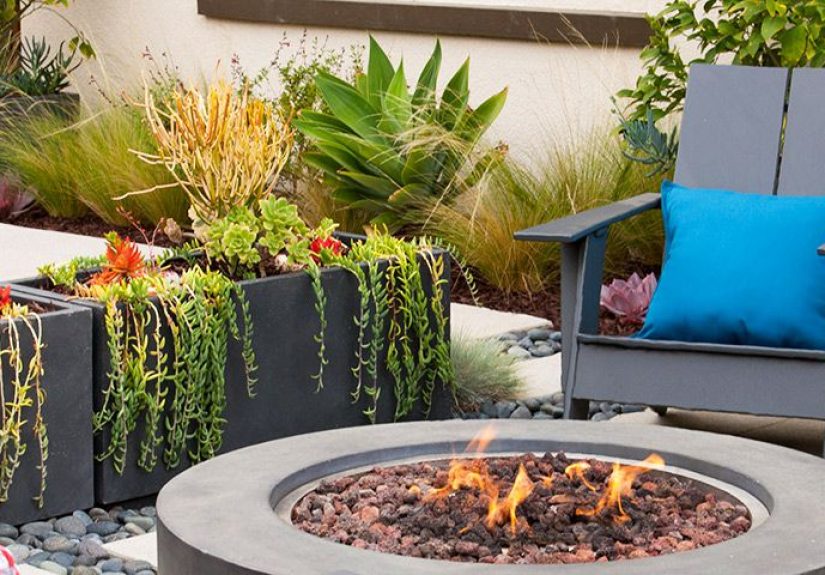
A fire pit or outdoor fireplace gives the patio an obvious focal point and helps the space work after sunset. Fire features are especially useful in lounge-oriented patios because they encourage conversation and draw people together. In bigger backyards, a fire feature can also create a third zone beyond dining and seating.
The key is proportion. A giant fireplace on a modest patio can feel dramatic in the wrong way, like wearing a ballroom gown to the grocery store. Choose a size that fits the patio and allows safe circulation around it.
Patio designs with outdoor kitchens
If entertaining is the goal, outdoor kitchens can make a patio feel genuinely high-functioning rather than just decorative. This does not have to mean a full chef’s station with every appliance known to mankind. Even a compact setup with a grill, prep counter, and a little storage can change how the patio gets used. Outdoor cooking zones work especially well when they sit close to indoor kitchens and dining areas, reducing the endless back-and-forth shuffle of plates, utensils, and forgotten condiments.
The Details That Make a Patio Feel Finished
Shade
Every successful patio design thinks about sun exposure. Pergolas, umbrellas, covered structures, curtains, and strategically placed trees all improve comfort and make the space more forgiving during hot weather. Shade also protects fabrics and furniture, which is good news for both your comfort and your budget.
Lighting
Lighting is what turns a decent patio into a place people linger. Layer it the same way you would indoors. Use overhead string lights or pendants for ambience, lanterns and sconces for warmth, and path or step lighting for safety. Good patio lighting should feel flattering, not like a parking lot interrogation.
Privacy
Privacy matters even in friendly neighborhoods. Tall planters, hedges, trellises, slatted screens, outdoor curtains, or climbing vines can soften sightlines without making the patio feel shut off. In many patio designs, privacy elements also become decorative features, adding texture and height where the space needs it.
Greenery
Plants do an incredible amount of design work. They soften hardscape, add color, create privacy, introduce movement, and make patios feel alive. They can also help bridge the gap between the built structure and the surrounding yard. If you want your patio to feel less like a slab and more like a retreat, greenery is not optional. It is the secret sauce.
Textiles and accessories
Patio designs feel more comfortable when they borrow from indoor spaces. Outdoor rugs, pillows, throws, weather-resistant curtains, and tabletop decor can instantly warm up a patio. This does not mean cluttering every surface. It means adding enough softness to make the space feel inhabited rather than staged.
Common Patio Design Mistakes to Avoid
Many patios fall short for the same reasons. The furniture is too large. There is no shade. The layout ignores foot traffic. Materials clash with the house. The lighting is either nonexistent or painfully bright. The space tries to do too much at once without zones, or too little without personality.
Another common mistake is ignoring maintenance and drainage. A beautiful patio that puddles after rain or bakes everything in direct sun will not feel beautiful for long. Smart patio designs think beyond the first week after installation. They consider real life: weather, dirt, storage, kids, pets, chair legs scraping across surfaces, and the fact that not everyone wants to spend Saturday resealing stone while muttering about “natural variation.”
What Living With Great Patio Designs Actually Feels Like
Here is something design galleries do not always show: the best patio designs succeed because of how they feel in daily life, not just how they photograph. A good patio changes routines in small but memorable ways. Morning coffee moves outside. Dinner gets carried out more often. Friends stop by and somehow stay longer. The dog claims the sunny corner like a tiny, furry landlord. Someone lights the string lights “just for a second,” and suddenly it is 10 p.m. and nobody wants to go in.
I have seen patios that looked modest on paper become the most loved part of a property because they were designed around real behavior. One homeowner used a narrow side yard that seemed almost useless. Instead of forcing in a bulky sectional, they added a slim café table, two comfortable chairs, wall planters, and gravel underfoot. That was it. But because the scale was right, the patio felt calm instead of cramped. It became their default breakfast spot, reading corner, and evening catch-up zone. The lesson was simple: when a patio fits your life, it does not need to be huge to feel valuable.
Another great example involved a family patio designed around movement. The adults wanted a dining table, the kids wanted open space, and everyone wanted shade. The final layout used pavers for the dining zone, a softer gravel edge for play and flexible seating, and a pergola that visually tied the space together. A storage bench pulled double duty, and planters softened the border without eating up too much room. The family did not talk about the patio in design language. They just said they used the backyard all the time now. Honestly, that is the real award.
There is also something deeply satisfying about patios that improve with age. The plants fill in. The wood gets a little character. The furniture cushions settle in. The lighting starts to feel familiar. Over time, the patio becomes less of a project and more of a backdrop for ordinary life. Birthday dinners happen there. Quiet phone calls happen there. Rain gets watched from under the cover. Someone drags a blanket out on a cool night and announces the patio is now “basically a vacation,” which is a bold claim, but not always an inaccurate one.
Even the frustrations can teach you what matters. A patio without enough side tables becomes a lesson in practicality. A dining set that is too large teaches the value of circulation. A space without shade quickly reveals that beauty and comfort need to be on speaking terms. Good patio design is rarely about perfection. It is about adjustment. The best spaces tend to evolve, becoming more personal, more useful, and more relaxed over time.
That is why patio designs are worth thinking through carefully. They are not just a style exercise. They shape how people gather, unwind, host, read, snack, celebrate, and breathe a little easier at the end of the day. And when a patio really works, you notice something funny: you stop thinking of it as part of the yard and start thinking of it as one of your favorite rooms.
Conclusion
The best patio designs combine beauty with logic. They consider how the space will be used, how it connects to the home, how it handles sun and weather, and how small details like lighting, greenery, and furniture scale affect comfort. Whether you love a crisp modern patio, a layered cottage retreat, a compact city hideaway, or a backyard built for entertaining, the goal is the same: create an outdoor space that feels intentional, welcoming, and easy to enjoy.
Forget the idea that a patio needs to be enormous or expensive to be impressive. A well-planned small patio can feel luxurious, and a large patio without structure can feel oddly empty. Design wins when the space reflects real life. Build around how you eat, host, relax, and move through the yard. Add shade. Add texture. Add a little glow after dark. Give the patio a reason to exist beyond “there was some room back there.” Do that, and your outdoor space will not just look better. It will live better too.