Table of Contents >> Show >> Hide
- What Does “My House, Not My Cat” Actually Mean?
- Why Random Cats Visit Your Home (And Act Like They Own It)
- The “40 New Pics” Vibe: The Funniest Categories of Not-My-Cat Encounters
- Not-My-Cat Etiquette: How to Handle a Surprise Visitor Responsibly
- Safety Notes People Forget (Because the Cat Is Extremely Cute)
- Why We Love These Encounters So Much
- Quick FAQs
- Conclusion: The Cutest Home Invasions Are Still Someone’s Responsibility
- Extra: of “Not My Cat” Experiences People Love to Share
There are two kinds of surprise visitors: the ones who ring the doorbell, and the ones who silently appear on your couch like they pay rent.
If you’ve ever looked up from your coffee to find a fluffy stranger loafing in the sunbeam you carefully curated for your furniture,
congratulationsyou’ve experienced the internet’s favorite genre of wholesome confusion: “My House, Not My Cat.”
These encounters get posted everywherecommunity Facebook groups, neighborhood apps, and the ever-iconic “not my cat” corners of social media.
The photos are always a little bit ridiculous and a little bit heart-melting: a cat in a laundry basket like it’s a five-star spa,
a cat wedged behind a plant as if it’s playing hide-and-seek with the concept of personal boundaries, a cat staring at you as if you’re the intruder.
It’s comedy. It’s mystery. It’s free serotonin with whiskers.
What Does “My House, Not My Cat” Actually Mean?
The phrase is exactly what it sounds like: a person discovers a cat in their spaceporch, yard, garage, kitchen, sometimes bedand the cat
does not belong to them (at least not officially). The delight comes from the contrast between the cat’s confidence and the human’s confusion.
The human is thinking, “Who are you?” The cat is thinking, “Where are the snacks?”
It’s also a surprisingly universal experience. Cats are curious, routine-loving explorers. They map neighborhoods like tiny furry cartographers,
collecting warm spots, friendly humans, and convenient hiding places. When that exploration intersects with your open window or your comfy doormat,
you become a supporting character in a cat’s ongoing saga.
Why Random Cats Visit Your Home (And Act Like They Own It)
1) They’re running a “multi-home” lifestyle
Some owned outdoor cats maintain a rotating schedule of hangouts. Your porch might be their 10 a.m. sunshine appointment. Your neighbor’s shed might
be their afternoon nap suite. And someone else’s driveway is apparently the evening runway show.
Cats thrive on predictable resourceswarmth, shelter, quietso they may “check in” where those resources exist.
2) They’re social… in a very cat way
Cats can be flexible social creatures. They often communicate through proximity, scent, rubbing, and calm body language rather than loud greetings.
When a cat bunts (rubs their face on you or objects), they’re essentially leaving a friendly “I feel safe here” signature.
You might interpret it as affection (and it often is), but it can also be scent-marking and comfort-seeking.
3) Your home is basically a five-star resort
Warm steps. A quiet corner. A bird feeder that doubles as a streaming service. A human who speaks in a soothing voice and doesn’t demand a résumé.
Cats are practical. If your place has the good vibes, they may return. Repeatedly. With increasing confidence. Like a tiny landlord who forgot to tell you.
4) Food smells like “yes”
Even if you never intentionally feed them, cats have excellent noses and strong opinions.
If you grill, open tuna, or set out pet food for your own animals, you might be advertising to the neighborhood.
(This is why many “not my cat” stories start with: “I swear I didn’t feed it… okay, I gave it one treat.”)
The “40 New Pics” Vibe: The Funniest Categories of Not-My-Cat Encounters
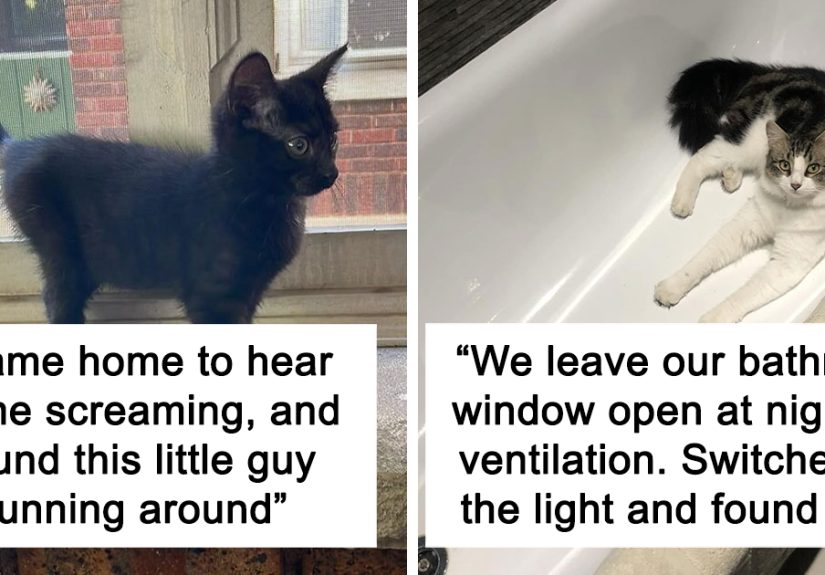
Since we’re not posting actual photos here, let’s capture the spirit of those 40-picture collections: the recurring scenarios that make people
laugh-scroll, screenshot, and send to friends with captions like, “This would be you if you were a cat.”
- The Porch Supervisor: Sits at your door like they’re waiting for you to clock in.
- The Window Critic: Stares through the glass, judging your interior design choices.
- The Sofa Squatter: Appears on your couch mid-afternoon like a fluffy plot twist.
- The Laundry Basket Lodger: Declares your clean clothes “the warm nest of destiny.”
- The Garage Stowaway: Sneaks in when you grab a box, then acts shocked you noticed.
- The Pantry Inspector: Walks in like they’re conducting a snack audit.
- The Garden Gremlin: Pops out of shrubs with the energy of “surprise!” and “I live here now.”
- The Delivery Roommate: Times their appearance to coincide with your food delivery, obviously.
- The Bedtime Opportunist: Slides into your bedroom like a fuzzy dream sequence.
- The Sink Philosopher: Sits in the sink contemplating the meaning of water and gravity.
- The Chair Thief: Waits for you to stand up, then steals your seat with Olympic precision.
- The “I Know Your Pet” Diplomat: Sniffs your dog/cat through the door like they’re negotiating a treaty.
In most “my house, not my cat” albums, the humor comes from the cat’s total lack of embarrassment.
They don’t look lost. They look appointed. Like you were supposed to set out a charcuterie board and forgot.
Not-My-Cat Etiquette: How to Handle a Surprise Visitor Responsibly
The internet loves the punchline, but real-life cat encounters come with real responsibilitiesespecially if the cat seems injured, hungry,
or determined to move in permanently. Here’s how to keep things kind, safe, and drama-free (for you, the cat, and the cat’s actual human).
Step 1: Check for visible ID
A collar with tags is the easiest clue that the cat has a home. If there’s a number, contact the owner.
If there’s no collar, don’t assume “stray” immediatelysome owned cats simply don’t wear collars.
Step 2: Don’t accidentally “double-dinner” someone else’s cat
Feeding a friendly visitor can be tempting, but it can also cause issues: special diets, food allergies, medication schedules,
and the classic “now it comes back every day at 6 p.m. sharp” side effect.
If you choose to offer anything, keep it modest and prioritize water. When in doubt, skip the buffet and go for information-gathering instead.
Step 3: If you’re worried, get them scanned for a microchip
Veterinary clinics and shelters can scan for a microchip. This is often the fastest way to confirm whether the cat is owned and how to contact
their family. Microchips aren’t GPS, but they can link to owner information through registries.
Step 4: Keep introductions cautious (especially if you have pets)
Even friendly cats can carry parasites or contagious illnesses, and a startled meeting between animals can turn stressful fast.
If the cat enters your home, keep them separated from your pets and avoid forcing contact.
Step 5: Use local community channelskindly
If the cat appears repeatedly or seems to be hanging around “too hard,” consider posting a photo in local lost-and-found pet groups with the location
(but avoid sharing personal details). The goal is reunion, not internet fame.
Safety Notes People Forget (Because the Cat Is Extremely Cute)
Outdoor life is riskier than it looks
Many animal welfare organizations emphasize that outdoor cats face more hazardscars, fights, predators, parasites, and infectious diseasesthan indoor cats.
That doesn’t mean every outdoor cat is doomed; it means “not my cat” visitors deserve a little caution and a lot of empathy.
Collars matter, but the right kind matters more
If you’re a cat owner reading this and thinking, “Oh no, my cat is someone’s NotMyCat,” identification is your best friend.
Breakaway collars can reduce risk if a collar gets caught, and visible ID helps neighbors contact you quickly.
Microchipping adds a permanent backup if a collar comes off.
If you’re bitten or scratched, treat it seriously
Most cats are not out here plotting chaos, but bites and scratches can lead to infection.
Wash the area promptly with soap and water and seek medical advice when appropriateespecially if you don’t know the cat’s vaccination status
or the wound looks significant.
Why We Love These Encounters So Much
“My house, not my cat” photos work because they’re low-stakes delight with a sprinkle of mystery. You get a tiny story:
a stranger arrives, makes themselves comfortable, and leaves behind a moment of connectionsometimes with you, sometimes with your neighbor,
sometimes with thousands of people online who comment things like, “That’s his house now.”
There’s also something quietly sweet about the trust involved. A cat that chooses to rest near you, rub against a chair leg, or nap on your porch
is saying, in cat language: “This place feels safe.” In a world that’s often loud, that’s a pretty great compliment.
Quick FAQs
Is a “not my cat” always a stray?
Not necessarily. Many are owned cats who roam. Others are community cats cared for by neighbors. Some are truly lost.
Behavior, body condition, and repeat visits can offer hints, but a microchip scan is the most reliable way to confirm ownership.
Should I let a visiting cat inside?
If the cat appears healthy and calm, it’s still best to be cautiousespecially if you have pets.
If the weather is extreme or the cat seems distressed, you can offer a quiet, separated space temporarily while you look for an owner or contact local help.
How do I stop a not-my-cat from coming over?
Don’t feed them, remove tempting resources (like accessible pet food outdoors), and politely talk with neighbors if you suspect the cat has an owner.
Many repeat visits are resource-driven: comfort plus snacks equals loyalty.
Conclusion: The Cutest Home Invasions Are Still Someone’s Responsibility
The best “People Are Sharing Photos Of Their Best ‘My House, Not My Cat’ Encounters” moments are funny because they’re relatable:
cats are bold, humans are confused, and everyone ends up smiling. But behind every viral porch-loaf photo is a real animal with real needs.
Enjoy the humor, appreciate the mystery, and keep the etiquette in mindbecause the only thing better than a surprise cat visit
is knowing that cat is safe, identified, and loved (even if they’re also casually running a neighborhood tour).
Extra: of “Not My Cat” Experiences People Love to Share
The classic “not my cat” experience usually starts with a harmless sighting: a cat strolling through your yard like it’s late for a meeting.
You look away for five secondsjust long enough to blink, sip water, or remember what you walked into the kitchen forand suddenly the cat is closer.
Now it’s on the porch. Now it’s sitting on the welcome mat. Now it’s making eye contact so intense you feel like you’ve been chosen for a quest.
Some people describe the “doorway debate,” where the cat lingers just outside the threshold, as if it’s negotiating a lease.
You open the door a crack, and the cat takes that as a signed contract. It slips in with the confidence of a tiny celebrity avoiding paparazzi,
then immediately heads toward the warmest spot in the house. Bonus points if it chooses the one chair everyone fights over.
Then there’s the “garage cameo,” a fan favorite. You’re carrying groceries, the door is open for one second too long, andboomthere’s a cat inside,
sniffing boxes like an inspector on a very serious mission. When you try to guide it back out, it acts personally offended, as if you’re interrupting
its busy schedule of being adorable.
Many stories revolve around silent companionship. A cat appears every afternoon, not demanding anythingjust sitting nearby like a fuzzy neighborhood
watch captain. People joke that the cat is “clocking in” for its shift. It watches birds. It watches traffic. It watches you try to water plants
without spilling. The cat offers no feedback, which is honestly the most cat-like performance review possible.
And of course, the greatest plot twist: the cat that arrives looking mildly scruffy, accepts exactly zero pats, and still returns the next day.
The human thinks, “It likes me!” The cat thinks, “This porch has excellent acoustics for napping.” Over time, the cat may softenfirst a slow blink,
then a polite headbutt, then a full loaf position that signals peak comfort. That’s when people start calling it “my house, not my cat” with the tone
of someone who’s trying very hard not to fall in love.
The most wholesome experiences often end with a reunion: someone recognizes the cat, a neighbor confirms ownership, and everyone agrees the cat has
simply been conducting “neighborhood relations.” Sometimes the owner laughs and says, “Yeah, she does that.” Sometimes they’re relieved and grateful.
Either way, the cat returns to its regular programmingrotating naps, collecting admirers, and proving that in the grand hierarchy of the universe,
humans do not own houses. Houses are merely places cats may choose to appear.