Table of Contents >> Show >> Hide
- What Does It Mean To Be a “Tragedy Kid”?
- Why Do Children Fixate on Historical Disasters?
- The Greatest Hits of Childhood Historical Obsessions
- When a Childhood Obsession Is Actually Coping
- The Upside: Secret Superpowers of Tragedy-Obsessed Kids
- When To Worry (And What Parents Can Watch For)
- How To Support a History-Obsessed Kid (Without Killing the Curiosity)
- First-Person Memories: What Adults Say About Their Childhood Tragedy Phases
- Conclusion: History, Heart, and the Kids Who Can’t Look Away
Every group chat has that one confession that stops everyone mid-scroll:
“When I was eight, I knew every deck number on the Titanic.”
Suddenly, three more people chime in: “Oh good, it wasn’t just me.”
A surprising number of adults look back and realize they spent a decent chunk
of childhood absolutely locked in on some devastating moment in history—a sinking ship,
a vanished city, a war, a nuclear disaster. Instead of cartoons, they were binging
documentaries; instead of fairy tales, they were reading about icebergs, plagues, or
mushroom clouds. Today, social media threads are full of “Titanic kids,” “Pompeii kids,”
and “Chernobyl kids,” swapping stories about how their formative years were shaped by
historical tragedies rather than talking animals.
At first glance, it sounds a little dark. But psychologists, parents, and history buffs
all point to the same thing: these obsessions are often less about doom and more about
meaning, control, and a very intense kind of curiosity.
Let’s unpack why so many of us grew up low-key obsessed with disastrous chapters of history,
what it did to our developing brains, and how to support the next generation of tiny
disaster historians.
What Does It Mean To Be a “Tragedy Kid”?
A “tragedy kid” isn’t an official psychological diagnosis (thankfully), but it’s a very
recognizable vibe. These are the kids who:
- Can explain the full timeline of the Titanic’s final night, with names, dates, and deck plans.
- Know way too much about volcanoes, plagues, or wars for someone missing their front teeth.
- Choose nonfiction disaster books at the library while everyone else is grabbing graphic novels.
- Ask unsettlingly detailed questions about “what went wrong” at major historical events.
Articles written by parents and educators describe “Titanic kids” who memorize obscure facts
about the ship’s construction, passenger lists, and even the weather conditions on the night
it sank. Others write about children fixated on national
disasters they’ve only ever seen on screens, replaying news footage or asking for more books
about hurricanes, bombings, or fires.
To adults, it can look morbid. To the child, it feels like building a mental map of “how the world works when things go wrong.”
Why Do Children Fixate on Historical Disasters?
1. Morbid Curiosity (That’s More Normal Than It Sounds)
Psychologists call part of this pull morbid curiositythe drive to learn about
dangerous, frightening, or taboo subjects from a safe distance. Research on morbid curiosity and
true crime suggests that people, including teens and young adults, are drawn to scary stories to
better understand threats and sharpen their emotional responses.
When a child fixates on a historical tragedy, they’re often doing a kid-sized version of this.
The disaster is safely in the past; nobody is currently in danger. That distance allows their
brain to circle the topic again and again, poking at it from every angle, without the same level
of immediate fear they might feel watching a live crisis unfold.
2. Trying to Make Sense of Chaos
Child development experts note that kids sometimes cling to information about disasters
precisely because they feel scared. Learning every detail becomes a way to “master” the fear—
the more they know, the less helpless they feel.
Educational resources on kids’ books about disasters argue that age-appropriate stories can
help children build emotional resilience and empathy, giving them a narrative structure to
hold complex feelings. A child might obsess over one shipwreck, one city,
or one nuclear plant not because they enjoy the suffering, but because they’re trying to answer
big questions:
- How could this happen?
- Why didn’t someone stop it?
- Would this happen to me?
- What would I do if it did?
3. Narrative, Empathy, and the “What If” Machine
Modern writing on our cultural fascination with true crime and disaster stories points out that
these narratives are about much more than shock value. They often serve as emotional rehearsals
for worst-case scenarios and as exercises in empathy: we imagine ourselves in someone else’s
place, follow their decisions, and feel their fear and hope.
For a child whose imagination is already in overdrive, historical tragedies become giant,
high-stakes “what if” stories. They picture themselves on the deck, in the lifeboat, in the
bunker, in the evacuated town. It’s grim, yesbut it’s also a powerful way of building
emotional depth and perspective.
The Greatest Hits of Childhood Historical Obsessions
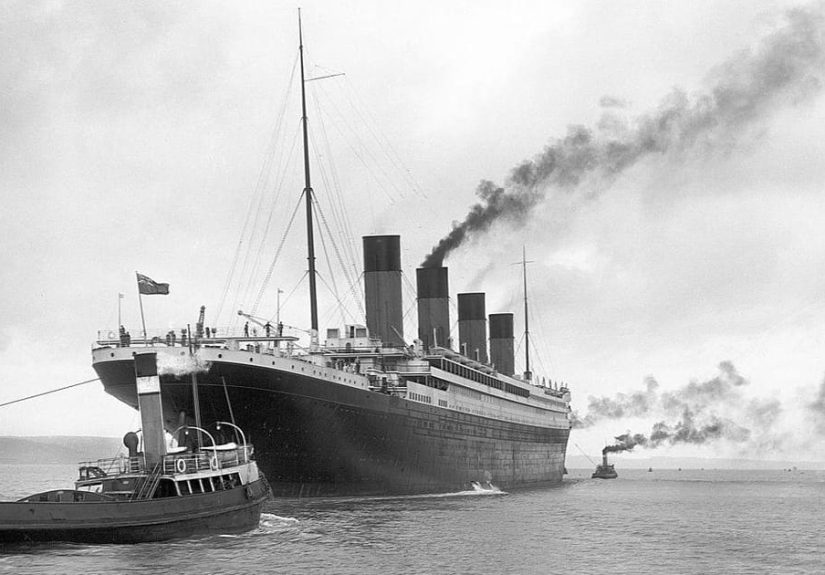
Titanic: The Ultimate Disaster Fandom
If there were a Hall of Fame for childhood historical obsessions, the Titanic would have its
own wing. Entire essays and personal pieces have been written about “Titanic kids” who can
list the ship’s luxuries and failures in the same breath, recite the timeline of the sinking,
and tell you exactly which lifeboats left half empty.
Part of the appeal is the contrast: glamour and disaster; wealth and vulnerability; engineering
ambition and human error. The story is self-contained, dramatic, and full of tiny details
that reward obsessive researchperfect conditions for a young brain that loves to collect facts
like trading cards.
Volcanoes, Plagues, and Nuclear Meltdowns
Other kids bypass ships entirely and head straight for the big, systemic disasters: epidemics,
nuclear accidents, or cities swallowed by ash. Research on nuclear disasters and children notes
that these events can have deep psychological impacts on young people exposed directly or
indirectly, from anxiety to behavioral changes.
But for kids learning about them after the fact, the fascination often centers on scale
and cause-and-effect:
- How can something invisible like radiation be so dangerous?
- How could one small design flaw cause so much damage?
- How did people rebuild afterward?
Historical lists and explainers highlight events like Chernobyl and other nuclear accidents
as turning points in public trust, technology, and policy, which makes them irresistible
to kids who love big “before and after” moments in history.
Wars, Forced Migrations, and “History That Changed Everything”
Many adults recall a childhood phase of reading about wars, forced relocations, or faminesevents
that reshaped entire societies. Online history communities often spotlight moments like the
Irish Famine, the Trail of Tears, and other catastrophes that left lasting scars.
As kids, readers may not have understood the full political context, but they definitely felt
the emotional weight.
These stories often become the first time a child realizes that history isn’t just dates on a
testit’s people losing homes, crossing oceans, or rebuilding after unimaginable losses.
That’s heavy, but it’s also the starting point for a more mature understanding of justice,
ethics, and power.
When a Childhood Obsession Is Actually Coping
Not every deep dive into historical tragedy is a red flag. In fact, experts on children’s
responses to disasters emphasize that engagementasking questions, reading, talkingis often
healthier than silent worry.
For some kids, especially those who have lived through scary events or constant news coverage
of crises, focusing on a particular historical tragedy can act like a psychological “practice
drill.” They explore how people survived, what mistakes were made, and how things changed
afterward. That exploration can restore a sense of order: bad things happen, but there are
reasons, responses, and lessons.
Research on children and major disasters shows that uncertaintynot knowing what happened,
why, or what comes nextis often more distressing than the facts themselves.
A child who keeps asking about one specific event might be trying to remove that uncertainty
piece by piece.
The Upside: Secret Superpowers of Tragedy-Obsessed Kids
It’s easy to focus on the dark side, but childhood obsessions with historical tragedies can
come with some surprisingly positive side effects:
- Research skills: These kids learn how to dig through books, documentaries, and archives to find tiny details no one else noticed.
- Pattern recognition: They start spotting repeated themeshubris, neglect, courage, systemic failureand seeing how they show up again in other contexts.
- Empathy: Putting themselves in the shoes of people in danger builds emotional range and compassion, even if their first exposure is a history book.
- Critical thinking: They learn to ask, “Who made the decisions?” “Whose story is being told?” and “What could have been done differently?”
- Emotional vocabulary: They practice naming and handling big feelingsfear, grief, guilt, hopethrough stories instead of real-time catastrophe.
Modern analyses of our fascination with true crime and disaster emphasize that interest in
dark material is not automatically unhealthy; it depends on how it’s used and whether it
leads to understanding and empathy or numbness and anxiety.
When To Worry (And What Parents Can Watch For)
Of course, there’s a difference between a kid who’s deeply into books about a shipwreck
and a child whose mental health is genuinely suffering. Signs that a historical-tragedy
obsession may be tipping into unhealthy territory can include:
- Persistent nightmares or trouble sleeping
- Growing avoidance of everyday activities because “something bad might happen”
- Constant worry or panic when the topic isn’t even being discussed
- Graphic, distressing play or drawings that seem to cause more fear than relief
Studies on children affected by major disasters, including nuclear incidents, show increased
rates of anxiety, behavioral changes, and cognitive impacts in some groups.
Articles on true crime and mental well-being likewise warn that nonstop exposure to dark material
can make the world feel more dangerous than it actually is.
If a child seems stuck in fear rather than curiosityif their obsession is shrinking their world
instead of expanding itthat’s a good time to check in with a pediatrician, school counselor,
or child psychologist.
How To Support a History-Obsessed Kid (Without Killing the Curiosity)
If you’re raising or teaching a young person who has a Titanic, Pompeii, or “every war ever”
phase, you don’t necessarily need to shut it down. Instead, you can gently guide it:
- Co-view and co-read: Watch documentaries or read books together so you can pause, answer questions, and provide context.
- Balance tragedy with resilience: Look for resources that highlight survival, rebuilding, and reform, not just destruction.
- Set media boundaries: Limit graphic or sensational content and avoid late-night doom-scrolling, especially for younger kids.
- Encourage creative outlets: Invite them to write alternative endings, draw historical scenes, or create timelines that emphasize change and progress.
- Connect it to values: Use their interest to talk about empathy, responsibility, and how we can prevent similar tragedies today.
Done thoughtfully, this kind of obsession can become a gateway to engaged citizenship,
critical thinking, and lifelong curiosity about the world.
First-Person Memories: What Adults Say About Their Childhood Tragedy Phases
Scroll through online threads about “weird childhood obsessions,” and patterns jump out fast.
People talk about Titanic notebooks, Chernobyl documentaries watched on repeat, and school projects
that were arguably “a bit much” for fourth grade.
One person remembers filling sketchbooks with drawings of famous shipwrecksright down to
the lifeboatsand then turning around to write long essays on safety regulations. Another
describes a phase of mapping out nuclear blast radiuses on a globe and then double-checking
their hometown “just in case.” On paper, it sounds like pure anxiety. In practice, many of
these former kids now work in fields like engineering, healthcare, emergency management,
and education.
What they share in hindsight is surprisingly consistent:
- They weren’t trying to shock anyone; they were trying to understand.
- They often felt “weird” or “too intense” compared with peers.
- They remember at least one adult who didn’t shame their interest, just helped them channel it.
- They can see now how those early obsessions became fuel for adult skills and values.
Many adults also talk about how their childhood tragedy fixation shifted over time.
A Titanic obsession might lead to an interest in labor rights, engineering ethics, or
climate change. A fascination with a war or forced migration might grow into activism
around refugees, human rights, or international law. Those early “weird” phases end up
being the first draft of a moral compass.
For some, there was a darker sideperiods of intense anxiety, recurrent nightmares,
or a sense that the world was fundamentally unsafe. In those stories, the turning point is
often support: a therapist who normalized their feelings, a teacher who recommended
age-appropriate resources, or a parent who gently cut back on news exposure while still
answering questions honestly.
And almost universally, there’s a thread of humor. People laugh at the image of their
eight-year-old self standing in front of a class with a fully illustrated presentation
titled “Top 10 Ways the Titanic Disaster Could Have Been Prevented,” or correcting adults’
historical details at family dinners. The tragedies were seriousbut the ways kids tried to
process them were often endearingly over-the-top.
That mixof seriousness, curiosity, fear, empathy, and slightly nerdy intensityis exactly
what makes childhood obsessions with historical tragedies so memorable. They’re proof that
even at a young age, we’re already trying to answer big questions about risk, fairness, and
what it means to be human.
Conclusion: History, Heart, and the Kids Who Can’t Look Away
Childhood obsessions with historical tragedies are rarely just about disaster for disaster’s sake.
They’re about control in the face of chaos, meaning in the face of loss,
and curiosity in the face of fear. Whether it was the Titanic, a famous battle, a famine,
or a nuclear accident, many of us grew up clinging to one intense story as we tried to figure out
how the world really works.
When handled with care, these fascinations can sharpen research skills, deepen empathy, and
lay the foundation for lifelong engagement with history and social issues. When they slide into
relentless anxiety, they’re a signal that a child needs more support, not shame.
So if you were that kid who knew all the lifeboat capacities by heartor you’re raising one nowtake
heart. Being captivated by historical tragedies doesn’t mean you’re broken. It usually means you’ve
always taken the world, and the people in it, very seriously. And that, in its own slightly intense way,
is a pretty hopeful story.