Table of Contents >> Show >> Hide
- The Story Behind the Poul Kjaerholm PK22 Chair
- What Makes the PK22 Chair So Special?
- Why the PK22 Became a Mid-Century Design Icon
- PK22 Chair Design Details Worth Noticing
- How the PK22 Works in Modern Interiors
- Is the Poul Kjaerholm PK22 Chair Still Worth Buying?
- Living With the Poul Kjaerholm PK22 Chair: Experience, Mood, and Everyday Use
- Conclusion
If you have ever looked at a Poul Kjaerholm PK22 chair and thought, “That seems almost too simple,” congratulations: the chair is working exactly as intended. The PK22 is one of those rare pieces of furniture that looks effortless only because someone very talented did an absurd amount of thinking first. It does not beg for attention. It does not arrive wearing sequins. It just sits there, all calm steel and refined restraint, quietly making the rest of the room behave better.
Originally designed in the 1950s, the PK22 chair remains one of the clearest expressions of Danish modern design. It blends industrial precision with handcrafted warmth, pairing a minimal steel frame with natural materials such as leather or wicker. The result is a lounge chair that feels architectural without becoming cold, elegant without becoming fragile, and iconic without acting smug about it. That is a difficult trick to pull off, even for furniture with better cheekbones than most people.
In this guide, we will look at the history of the Poul Kjaerholm PK22 chair, what makes its design so enduring, how it compares with other mid-century lounge chairs, and why it still matters in today’s interiors. Whether you are a collector, a design enthusiast, or someone who simply wants a chair that says “I have excellent taste” without actually saying anything at all, the PK22 deserves a closer look.
The Story Behind the Poul Kjaerholm PK22 Chair
The Poul Kjaerholm PK22 chair was introduced in 1956, during a remarkable period for Scandinavian furniture design. While many of Kjærholm’s Danish contemporaries were celebrated for sculpting wood into warm, organic forms, he took a different route. He treated steel not as a cold industrial compromise, but as a noble material with aesthetic value equal to wood. That choice alone helped separate him from the pack.
Kjærholm had trained as a cabinetmaker, which matters more than it might seem. His work never feels like pure machine-age minimalism. Even when he used steel, he approached furniture with the patience and proportion of a craftsman. The PK22 reflects that mindset beautifully. It is disciplined, but not severe. Precise, but not sterile. It feels engineered by someone who also understood comfort, touch, and the beauty of materials that age gracefully.
The chair is often discussed as an evolution of the earlier PK25. Where the PK25 was more overtly sculptural, the PK22 refined the idea into a cleaner, more practical form. It simplified the construction and introduced a design that could be more easily produced, shipped, and integrated into everyday interiors. In other words, Kjærholm did what all great designers do: he made something harder look easier.
That evolution also helps explain why the PK22 became such a classic. It was not trying to be flashy. It was trying to be right. And in design, “right” tends to outlive “trendy” by several decades.
What Makes the PK22 Chair So Special?
1. The Frame Is Minimal, but Never Boring
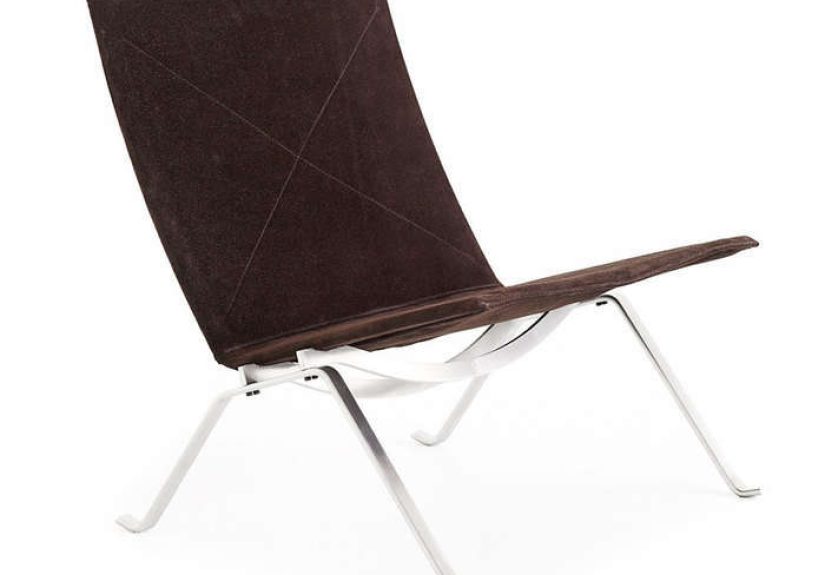
The first thing people notice about the PK22 lounge chair is the frame. It is slim, open, and visually light, usually made from brushed or spring steel. The lines are clean, but they are not flat or lifeless. There is tension in the shape. The legs angle with a subtle confidence, and the crossbars support the suspended seat in a way that feels almost inevitable, as though the chair simply arrived fully resolved.
Minimalism can sometimes feel like a design excuse for “we ran out of ideas.” That is not the case here. Every line on the PK22 seems deliberate. Nothing extra has been added, but nothing essential has been removed. That balance is one reason the chair still looks modern in contemporary homes, offices, galleries, and high-end hospitality spaces.
2. Natural Materials Give It Warmth
The steel frame might be the chair’s skeleton, but the seat and back are what give it soul. Versions of the Poul Kjaerholm chair have been produced in leather, wicker, and other natural finishes over the years. These materials matter because they soften the chair’s industrial language and add texture, character, and aging potential.
Leather on the PK22 does not just look luxurious; it gains personality over time. It creases, deepens, and develops patina. Wicker versions bring an entirely different mood, one that feels lighter, airier, and perhaps a touch more relaxed. Either way, the materials remind you that this is not just a steel object. It is a human-use object. A beautiful one, yes, but still meant to be touched, sat in, and lived with.
3. It Balances Comfort and Restraint
The PK22 is not a giant sink-in recliner for people who want to disappear under a blanket and emerge only for snacks. That is not its mission. Instead, it offers a low, relaxed pitch that supports the body comfortably while maintaining a refined silhouette. It is lounge seating with manners.
This is one of the chair’s smartest qualities. It looks light and elegant, yet it does not feel decorative-only. In a well-designed space, the PK22 can function as real seating while also preserving visual openness. That is especially valuable in smaller rooms, minimalist interiors, and homes where bulky upholstered chairs would feel heavy or crowded.
Why the PK22 Became a Mid-Century Design Icon
The PK22 chair belongs to a distinguished family of mid-century modern lounge chairs, but it stands apart for a few reasons. First, it captures the Danish modern interest in function, simplicity, and craftsmanship while also embracing the international modernist fascination with steel and exposed structure. It sits somewhere between warm Scandinavian design and the sharper language of Bauhaus and Miesian modernism.
Second, the chair feels timeless because it never leaned too heavily on a single design fad. It is not overloaded with ornament, exaggerated curves, or dramatic bulk. You can place it in a minimalist loft, a quiet library, a richly layered designer living room, or even a contemporary office lounge, and it still looks appropriate. That flexibility is a huge part of its longevity.
Third, the PK22 benefits from credibility in multiple worlds. It is admired by museums, sought after by collectors, used by interior designers, and sold by premium furniture retailers. That is a powerful combination. Some chairs are beloved by historians but ignored by everyday buyers. Others are trendy in showrooms but irrelevant to collectors. The PK22 manages to satisfy both camps, which is a neat trick for a chair that visually appears to be doing very little.
PK22 Chair Design Details Worth Noticing
One of the joys of studying the Poul Kjaerholm PK22 chair is noticing how much care went into details that casual viewers might miss. The seat and back are handled as a single, floating visual plane rather than a bulky padded unit. The stitching on leather versions adds subtle character without disrupting the clean profile. The frame connections are exposed enough to emphasize construction, yet refined enough not to feel mechanical.
Proportion also plays a major role. The chair is compact, but not cramped. It is low, but not awkward. It occupies space in a way that feels deliberate and self-aware. This is where Kjærholm’s training really shows. He did not just design a chair shape; he designed a relationship between materials, angles, and human posture.
That relationship is part of why the PK22 often gets compared to other design icons such as the Barcelona Chair. The comparison makes sense, especially because both use metal and leather to create elegant lounge seating. But the PK22 is more reserved, lighter in appearance, and less monumental. If the Barcelona Chair walks into the room like an aristocrat in a tailored coat, the PK22 glides in wearing a crisp black sweater and somehow steals just as much attention.
How the PK22 Works in Modern Interiors
Today, the PK22 chair remains popular because it solves a very modern decorating problem: how to add luxury and design credibility without making a room feel overcrowded. In open-concept homes, the chair reads as sculptural seating without blocking sightlines. In smaller urban interiors, it adds sophistication while taking up less visual weight than a stuffed club chair. In offices, studios, and boutique hospitality settings, it signals taste without trying too hard.
A leather PK22 works especially well in rooms with stone, walnut, black metal, linen, or warm neutrals. A wicker version can soften a more architectural interior and add a natural layer to modern spaces that risk feeling too polished. The chair also pairs beautifully with low tables, textured rugs, and understated lighting.
Because the chair is visually disciplined, it often makes surrounding materials look better. Marble seems richer next to it. Wool rugs seem more intentional. Even plain walls start to feel curated. That is one of the magic powers of classic Scandinavian furniture: it can elevate a room without turning the room into a museum exhibit where nobody is allowed to exhale.
Is the Poul Kjaerholm PK22 Chair Still Worth Buying?
If you care about design history, craftsmanship, and long-term style, the answer is yes. The Poul Kjaerholm PK22 chair is not a disposable purchase, and it is certainly not the sort of chair people buy because they need somewhere to toss a hoodie. It is an investment in design quality.
Its value comes from more than the name attached to it. The chair offers real versatility, enduring visual appeal, and a material palette that ages well. It also carries cultural weight. Owning one means owning a piece of 20th-century design thinking that still feels fresh. That is rare.
Of course, the chair is not for everyone. If your top priority is oversized plush comfort, there are softer lounge chairs out there. If you want a chair with storage, cup holders, or an electric recline button that sounds like a tiny spaceship, the PK22 would like to respectfully decline. But if you want a chair that combines sculpture, comfort, proportion, and timelessness, it remains one of the strongest options in the world of designer lounge chairs.
Living With the Poul Kjaerholm PK22 Chair: Experience, Mood, and Everyday Use
What is it actually like to live with a PK22 chair, beyond the glamorous product photos and the reverent design essays? In practical terms, the experience is less about spectacle and more about atmosphere. The chair changes the tone of a room before anyone even sits down. It introduces calm. It suggests that clutter should probably leave. It has that rare ability to make a space feel more composed without demanding a full lifestyle overhaul.
Visually, the chair behaves almost like architecture. Because the frame is so open, it does not create the blocky interruption that larger upholstered chairs often do. In a living room, that means the eye can travel more freely. Near windows, the PK22 preserves light. In a bedroom corner or reading nook, it creates a destination without feeling like a heavy object parked in the way. People often talk about furniture taking up space, but the PK22 is more interesting because it edits space. It clarifies it.
Then there is the tactile side of the experience. Leather versions tend to feel richer and more grounded over time. The material softens slightly, the surface records use, and the chair begins to tell a story. Wicker versions feel breezier and lighter, with a texture that plays especially well in interiors that mix natural and modern elements. Neither version feels anonymous. The PK22 is one of those chairs that becomes more convincing the longer it is around.
From a lifestyle perspective, the chair shines in moments that are not especially dramatic. Morning coffee. An afternoon design magazine binge. A slightly overambitious attempt to read a serious book while secretly scrolling your phone every six minutes. The PK22 supports those rituals with style and enough comfort to encourage lingering, but not so much softness that posture fully dissolves into furniture soup.
It is also a chair that tends to attract comments from guests who may not know its name but know something interesting is happening. People notice the steel. They notice the low profile. They notice that it looks expensive in the best possible way: not flashy, just resolved. Design-savvy visitors may clock it immediately. Everyone else usually lands on some variation of, “That chair is really cool.” Honestly, that is a solid review.
Perhaps the most lasting experience of owning or regularly using a Poul Kjaerholm PK22 chair is that it rarely feels dated. Seasons change, rugs get swapped, paint colors come and go, and somehow the chair remains persuasive. It adapts. It does not beg for a matching set or a themed room. It simply continues doing its quiet, highly intelligent job. And for a piece of furniture designed decades ago, that kind of staying power is not just impressive. It is the whole point.
Conclusion
The Poul Kjaerholm PK22 chair endures because it solves a design challenge that never goes away: how to make furniture feel refined, useful, and timeless all at once. Its steel frame brings clarity, its natural materials add warmth, and its proportions create comfort without visual heaviness. That combination has kept it relevant from the mid-century era to the present day.
Plenty of chairs are beautiful in photographs. Fewer stay compelling after decades of changing tastes, technologies, and interiors. The PK22 does. It remains a benchmark for Danish modern furniture, a standout among mid-century lounge chairs, and a reminder that great design often whispers rather than shouts. In a world full of furniture trying very hard to be noticed, the PK22 remains effortlessly unforgettable.