Table of Contents >> Show >> Hide
- Why Handwashing Works (It’s Not Just the SoapIt’s the Physics)
- The Visual Handwashing Guide (20 Seconds, Done Right)
- Step 0: Prep (5 seconds that make the next 20 seconds count)
- Step 1: Wet (and don’t overthink the temperature)
- Step 2: Soap (enough to cover both hands)
- Step 3: Scrub for at least 20 seconds (this is the whole point)
- Step 4: Rinse (let the water carry the germs away)
- Step 5: Dry completely (yes, this matters)
- Bonus: Turning off the faucet without re-contaminating
- When You Should Wash Your Hands (The Greatest Hits List)
- Hand Sanitizer: When It Helpsand When Soap Wins
- Common Handwashing Mistakes (And How to Fix Them)
- Handwashing for Kids (Because Tiny Humans Touch Everything)
- Skin-Friendly Hand Hygiene (Clean Hands, Not Cracked Hands)
- Quick “Visual Checklist” You Can Screenshot with Your Brain
- Wrap-Up: Clean Hands, Fewer Problems
- Real-Life Handwashing Experiences & Lessons (Extra Stories + Tips)
Handwashing is the closest thing we have to a real-life “undo” button. You can’t un-touch the gas pump, un-handshake the coworker who “just has allergies,” or un-pet the dog who definitely rolled in something mysterious. But you can wash your hands correctlyand dramatically cut down the number of germs you carry from place to place.
This guide pulls together best-practice hand hygiene advice from major U.S. health authorities and medical organizations, then rewrites it into a simple, visual, step-by-step routine you’ll actually remember. No guilt. No scare tactics. Just clean hands and fewer “why do I feel sick again?” moments.
Why Handwashing Works (It’s Not Just the SoapIt’s the Physics)
Washing with soap and water does two big jobs at once: it loosens grime and oils that microbes cling to, and it uses friction (rubbing!) to lift germs off the skin so they can be rinsed away. That “scrub” step is the main eventsoap helps, but the rubbing is what turns a quick rinse into an actual clean.
Hand sanitizer is different. It primarily kills certain germs on the skin, but it doesn’t remove everything the way soap and water can. That’s why there are situations where soap-and-water is clearly the better move (more on that below).
The Visual Handwashing Guide (20 Seconds, Done Right)
Think of proper handwashing like painting a tiny fence: you don’t get credit for painting only the easy, flat parts. The weird corners matter. Here’s the simple, “visual map” you can follow every time.
Step 0: Prep (5 seconds that make the next 20 seconds count)
- Remove obvious barriers: big rings, chunky bracelets, or a watch can trap soap and water and make you miss areas.
- Get ready for friction: you’re not “rinsing,” you’re scrubbing.
Step 1: Wet (and don’t overthink the temperature)
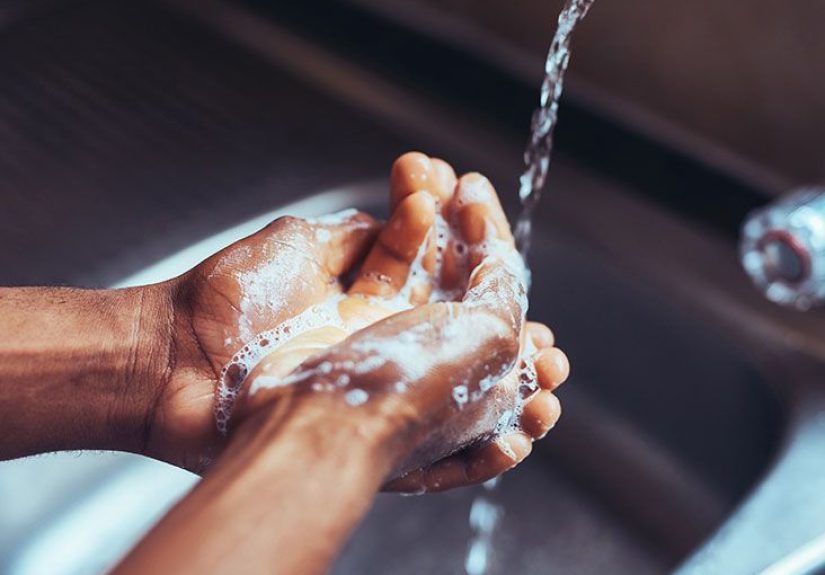
Wet hands under clean, running water. Comfortable water is fine; what matters is clean running water, soap, friction, and time.
Step 2: Soap (enough to cover both hands)
Apply soap and build a lather. Any plain soap works. The goal is coverage, not bubble aesthetics.
Step 3: Scrub for at least 20 seconds (this is the whole point)
Scrub like you’re trying to get rid of something stickybecause you are. If you need a timer, hum “Happy Birthday” twice or use a short chorus you can’t resist.
Your “hand map” (hit these zones):
- Palms rub palm-to-palm.
- Backs of hands one palm scrubs the back of the other hand, switch sides.
- Between fingers interlace fingers and scrub the webbing.
- Fingertips & nails rub fingertips against the opposite palm (like you’re sanding a tiny table).
- Thumbs wrap and twist each thumb in the opposite hand.
- Wrists quick circles around each wrist (people forget these all the time).
Step 4: Rinse (let the water carry the germs away)
Rinse thoroughly under clean, running water. The rinse is not “optional”it’s where the stuff you lifted off your skin actually leaves.
Step 5: Dry completely (yes, this matters)
Dry hands well with a clean towel or air dryer. Wet hands transfer microbes more easily than dry hands, so “kind of dry” isn’t the vibe.
Bonus: Turning off the faucet without re-contaminating
If you’re using a paper towel, use it to turn off the faucet and open the door when possible. If you’re in a place with touchless faucets… enjoy the small luxuries.
When You Should Wash Your Hands (The Greatest Hits List)
If you only remember one rule, make it this: wash hands at the moments when germs are most likely to jump from surfaces/people/animals to youor from you to food and other people.
Key times at home and in public
- Before, during, and after preparing food (especially when switching tasks).
- Before eating (yes, even that “just a snack” snack).
- After using the bathroom or changing diapers.
- After blowing your nose, coughing, or sneezing.
- After touching animals, pet food/treats, or animal waste.
- After handling garbage.
- Before and after caring for someone who’s sick (especially vomiting/diarrhea).
- Before and after treating a cut or wound.
Food safety moments (where “close enough” is not close enough)
- Before and after handling raw meat, poultry, seafood, or eggs.
- After touching your phone while cooking (your phone is basically a tiny, glowing germ museum).
- After handling pets in the kitchen (we love them; kitchens are not their stage).
Hand Sanitizer: When It Helpsand When Soap Wins
Hand sanitizer is a useful backup when soap and water aren’t available. But it’s not a magic eraser for every situation.
Choose the right sanitizer
- Look for at least 60% alcohol on the label.
- Use enough to cover all hand surfaces (not just palms).
- Rub until dryusually around 20 seconds. Don’t wipe it off early.
When sanitizer is a solid choice
- You’re out running errands and just touched high-contact surfaces.
- You’re in a car, on public transit, or somewhere without a sink.
- You need a quick clean between tasks and your hands aren’t visibly dirty.
When soap and water are the better call
- Hands are visibly dirty or greasy (think: gardening, grilling, camping, mechanics, playground adventures).
- You’re dealing with certain tough germs (soap and water is more effective for some, like norovirus and C. diff).
- You may have chemicals on your hands (certain pesticides or heavy metals won’t be reliably removed by sanitizer).
Common Handwashing Mistakes (And How to Fix Them)
Mistake: Washing “the palm only”
Palms get the spotlight because they’re easy to see, but the backs of hands, thumbs, and fingertips are high-traffic zones too. Fix: follow the hand map above every time.
Mistake: Rushing the scrub
Five seconds of soap is basically a polite greeting to germs. Fix: commit to at least 20 seconds of friction. Make it a habit: one verse, one chorus, done.
Mistake: Not drying completely
Damp hands transfer microbes more easily. Fix: dry thoroughlyespecially between fingers.
Mistake: Using sanitizer like lotion (tiny drop, quick rub, immediate sandwich)
Sanitizer needs coverage and contact time. Fix: use enough to wet all surfaces and rub until completely dry.
Handwashing for Kids (Because Tiny Humans Touch Everything)
Kids aren’t “bad” at hygienethey’re just busy living their best life at full speed. The trick is making handwashing predictable and doable.
- Make the sink accessible: a step stool and a pump soap dispenser go a long way.
- Use a simple timer cue: “Happy Birthday” twice works for most ages.
- Supervise sanitizer: alcohol-based sanitizer should be used with adult guidance so it isn’t swallowed.
Skin-Friendly Hand Hygiene (Clean Hands, Not Cracked Hands)
Frequent washing can dry out skin, and cracked skin is uncomfortableand can create tiny openings you don’t want. The goal is to keep washing (because it works) while supporting your skin barrier.
Dermatologist-approved habits
- Use lukewarm water when possible.
- Dry your hands, but consider leaving them slightly damp before moisturizing.
- Apply a hand cream or ointment right after washingespecially focusing on fingertips and around nails.
- If fragrance stings, pick fragrance-free and dye-free products.
Quick “Visual Checklist” You Can Screenshot with Your Brain
If you can answer “yes” to these, you’re doing it right:
- Did I scrub at least 20 seconds?
- Did I hit thumbs, fingertips/nails, and between fingers?
- Did I rinse thoroughly?
- Did I dry completely?
- If I used sanitizer, did I use enough and rub until dry (no wiping)?
Wrap-Up: Clean Hands, Fewer Problems
Proper handwashing isn’t about being perfectit’s about being consistent at the moments that matter. A 20-second scrub with soap and water, aimed at the “forgotten zones,” does more for everyday health than most people realize. Add smart sanitizer use when sinks aren’t available, and you’ve got a simple system that protects you, your family, your coworkers, and whoever eats the cookies you made.
Real-Life Handwashing Experiences & Lessons (Extra Stories + Tips)
The funny thing about handwashing is that most of us only become “hand hygiene philosophers” after we’ve learned a lesson the hard way. Not dramatic “movie montage” hardmore like “why is my whole household doing the sick-day shuffle?” hard. Here are a few everyday scenarios that show where good handwashing pays off, plus what people tend to change afterward.
1) The “I only touched one thing” grocery run
Someone runs to the store for “just milk,” grabs a basket, taps a card reader, opens a freezer door, and then gets back in the car. The intention is pure: “I’ll sanitize when I get home.” But then the phone rings, the seatbelt gets adjusted, a snack gets opened, and suddenly hands have toured half the interior like it’s a museum exhibit. The lesson isn’t that errands are dangerousit’s that our hands are busy. The practical fix many people adopt is a simple rhythm: sanitizer in the car right after checkout, and a full soap-and-water wash the moment they walk in the door (especially before eating or cooking). It’s not paranoia; it’s just a clean “reset” between public surfaces and home life.
2) The kitchen cross-contamination “oops”
Cooking is where handwashing becomes a team sport. Someone seasons raw chicken, then reaches for the pepper grinder, then grabs the fridge handle, then realizes the salad is still undressed. Even when you know better, the flow of cooking can trick you into moving too fast. People who get serious about food safety often adopt micro-habits: wash hands after touching raw meat/eggs/seafood, keep a dedicated “raw prep zone,” and treat the phone as an off-limits item while cooking (or use voice commands). The most common “aha” moment? Handwashing isn’t just about protecting the cook. It protects everyone who eats.
3) Kids + pets + outdoors = the “hands are a timeline” problem
A kid plays outside, pets the dog, touches the swing, picks up a cool rock, and thenwithout a single pause for breathasks for a snack. Adults learn quickly that kids don’t separate “outdoor hands” and “snack hands.” Families who make handwashing easy (stool at the sink, soap pump they can reach, a consistent routine before meals) usually find it becomes less of a battle. Some parents even turn the “hand map” into a game: “Did you get your thumbs? Did you get your spider-web spaces between fingers?” Weirdly effective.
4) The office snack table (a.k.a. the communal petri dish buffet)
Workplaces have their own high-touch greatest hits: elevator buttons, shared printers, door handles, and that innocent bowl of candy everyone reaches into like it’s a trust exercise. People who stay healthier during cold/flu season often aren’t doing anything extremethey’re just consistent about washing before eating and after obvious high-contact moments. One small behavior shift that shows up again and again: keep snacks in a wrapper or a container you can pour into your hand (instead of reaching in with your fingers). Pair that with a quick wash before lunch, and suddenly the “afternoon sniffles” are less common.
5) The “dry hands” backlash
After people commit to better hand hygiene, a predictable obstacle appears: dry, irritated skin. It can feel like a cruel reward“Congrats on preventing illness, here’s a desert for a hand.” The fix is usually skincare, not less washing. A lot of folks discover that moisturizing immediately after washing is the difference between “I can keep this up” and “I’m going to start washing like a raccoonbriefly and with suspicion.” Keeping a small hand cream near sinks or in a bag becomes a practical habit. The goal is sustainable hygiene: clean hands and an intact skin barrier that can do its job.
The bigger takeaway from all these everyday stories is simple: the best handwashing routine is the one you’ll do consistently. Make it easy, make it automatic, and focus on the moments that matter mostbefore eating, after the bathroom, after food handling, after coughs/sneezes, after animals, and after high-touch public surfaces. The “visual guide” isn’t just technique; it’s a tiny life upgrade that pays off every week.