Table of Contents >> Show >> Hide
- The fastest way to understand the difference
- Why psoriasis and eczema get confused
- A quick cheat sheet: eczema vs psoriasis
- Where it shows up matters (a lot)
- Itch isn’t just a symptomit's a clue
- What it looks like on different skin tones
- Why flares happen: triggers aren’t identical
- Can you have both?
- How doctors tell them apart
- Treatment overlaps (but the strategy isn’t identical)
- Real-life examples: “What does this look like in the wild?”
- When to see a dermatologist ASAP
- Daily habits that help either way
- Conclusion: same neighborhood, different addresses
- Experiences: what living with psoriasis or eczema can feel like (extra )
(Translation: “Psoriasis or eczema: what’s the difference?”)
If you’ve ever stared at a red, angry patch of skin and thought, “Cool… my body has decided to cosplay as a
strawberry,” you’re not alone. Two of the most commonly confused culprits are psoriasis and
eczema (often meaning atopic dermatitis). They can both itch, both flare, and
both show up at the worst possible timelike five minutes before pictures, a big presentation, or your
“I’m totally fine” era.
But psoriasis and eczema aren’t the same thing. They have different “why it happens” backstories, different
favorite hangout spots on your body, and different treatment playbooks. This guide breaks down what to look for,
why they get mixed up, and when it’s time to bring in a dermatologist (a.k.a. the skin detective).
The fastest way to understand the difference
Psoriasis in plain English
Psoriasis is a chronic inflammatory disease in which the immune system becomes overactive and
speeds up skin-cell turnover. The result is often thick, well-defined plaques (raised patches)
covered with scalesometimes described as silvery-white on lighter skin tones. Psoriasis can also
affect nails (pitting, thickening, lifting) and may be linked with joint inflammation
(psoriatic arthritis).
Eczema (atopic dermatitis) in plain English
Eczema is an umbrella term for several types of dermatitis. When most people say “eczema,” they
mean atopic dermatitis: a chronic, relapsing condition tied to skin-barrier weakness
and immune overreaction. The hallmark is often intense itching plus dryness and inflammation. It’s
especially common in childhood, but it can persist or start later, too.
Why psoriasis and eczema get confused
Both conditions can cause:
- Redness or discoloration
- Dryness and scaling
- Itching
- Flare-ups that come and go
Add in the fact that skin can look different across skin tones (red may appear more violet, brown, gray, or purple),
and it’s easy to see why people play “Is this eczema or psoriasis?” at 2 a.m. under bathroom lighting that makes
everyone look tired.
A quick cheat sheet: eczema vs psoriasis
| Clue | More common in eczema (atopic dermatitis) | More common in psoriasis |
|---|---|---|
| Itch level | Often intense, can keep you up at night | Can itch, but may be milder; burning/soreness can happen |
| Edges of the rash | Often less defined, blends into surrounding skin | Often well-defined, sharply bordered plaques |
| Texture | Dry, rough, sometimes oozing/crusting during flares | Thicker plaques with noticeable scale |
| Favorite locations | Skin folds (inside elbows, behind knees), face/neck (esp. kids), hands | Elbows, knees, scalp, lower back; can include nails and areas of friction |
| Other clues | History of allergies/asthma/hay fever is common | Nail changes; joint pain/swelling; family history can be strong |
Where it shows up matters (a lot)
Eczema’s usual “map”
Atopic dermatitis often prefers flexural areasthe bends and folds of the bodylike the crooks of
elbows and the backs of knees. In babies and young kids, it may show up on the face and scalp.
Hands can also be a major trouble spot, especially with frequent washing, sanitizer use, or contact with irritants.
Psoriasis’s usual “map”
Psoriasis often shows up on extensor surfacesareas that rub, press, or face outwardlike
elbows and knees. The scalp is another common location, and psoriasis can also
appear on the lower back, palms, soles, and even in skin folds (called inverse psoriasis),
where scale may be less obvious but redness and soreness can be pronounced.
Itch isn’t just a symptomit’s a clue
Here’s a practical way to think about it:
eczema itches like a mosquito bite multiplied by bad decisions. It can be relentless, and scratching
often makes it worsecreating the classic itch–scratch cycle.
Psoriasis may itch too, but many people describe it as more of a burning, stinging, or sore feeling,
especially when plaques crack or land in high-friction areas.
That said: you can’t diagnose either condition by itch alone. Some eczema is mild. Some psoriasis itches intensely.
Bodies love being complicated.
What it looks like on different skin tones
“Red” is not a universal color experience. On deeper skin tones, inflammation may look purple, violet,
gray, or dark brown, and scale may appear more grayish. This matters because misreads and
delayed diagnosis can happen when education and images don’t represent a wide range of skin tones.
A helpful rule: focus on texture, borders, scale, and distribution (where it shows up), not just color.
If you’re unsure, a dermatologist can identify patterns that aren’t obvious in a mirror selfie.
Why flares happen: triggers aren’t identical
Common eczema flare triggers
Atopic dermatitis is strongly tied to skin-barrier sensitivity, so triggers often include everyday stuff that would be
mildly annoying to other people and wildly offensive to eczema-prone skin:
- Irritants (fragrances, harsh soaps, detergents, some fabrics)
- Allergens (seasonal allergies, dust mites, pet dandervaries by person)
- Sweat and heat (especially if salt and friction team up)
- Dry air and cold weather
- Stress (yes, your skin can feel your calendar)
Eczema can also be complicated by skin infectionsscratching creates tiny openings that bacteria and viruses love to
RSVP to.
Common psoriasis flare triggers
Psoriasis flares often follow immune “stressors” such as:
- Illness and infections (classic example: strep throat triggering guttate psoriasis)
- Stress
- Skin injury (scratches, sunburns, frictionsometimes called the Koebner phenomenon)
- Certain medications (your clinician can review your list safely)
Can you have both?
Yes, it’s possible to have features of bothor to have one condition and later develop the other. It’s also possible
to have something that looks like eczema or psoriasis but isn’t, such as contact dermatitis, seborrheic dermatitis,
fungal infection (ringworm), or another inflammatory skin condition. This is why a professional diagnosis matters,
especially if you’ve tried over-the-counter fixes and the rash is still throwing tantrums.
How doctors tell them apart
Dermatologists typically start with:
- History: When it started, itch level, family history, triggers, other allergies, joint symptoms
- Skin exam: Distribution, borders, scale, thickness, nails, scalp
- Sometimes tests: A skin scraping to rule out fungus, patch testing for allergic contact dermatitis,
or a biopsy when the diagnosis is unclear
If a rash is changing quickly, spreading widely, painful, oozing, or paired with feveror if you have significant
joint paindon’t play guessing games. Get medical care.
Treatment overlaps (but the strategy isn’t identical)
Both conditions can benefit from a “calm the skin, calm the immune response” approach. But the best plan depends on the
diagnosis, severity, age, location (face vs elbows is a different universe), and your personal triggers.
Eczema treatment basics
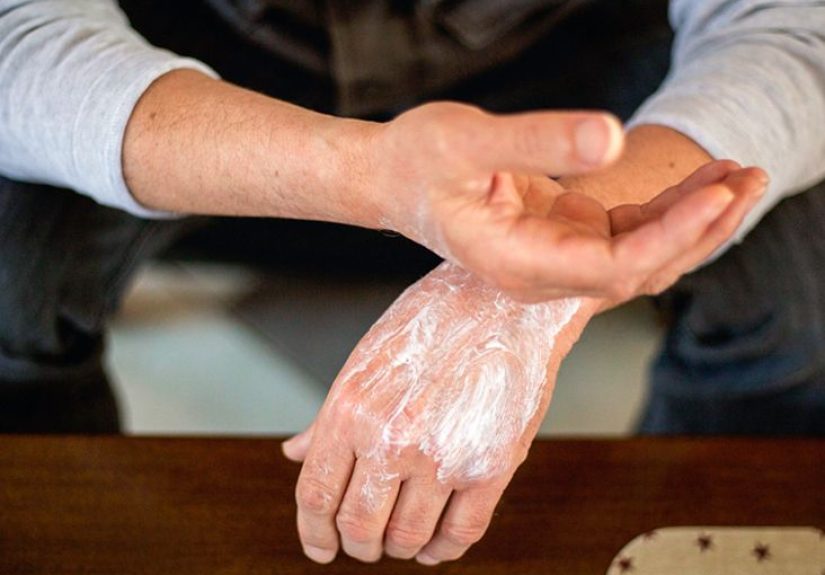
- Moisturize like it’s your job: Thick creams/ointments help repair the skin barrier and reduce flares.
- Gentle cleansing: Lukewarm water, fragrance-free products, and short showers can help.
- Topical anti-inflammatories: Topical corticosteroids are common for flares; non-steroid options
like calcineurin inhibitors may be used in sensitive areas (as guided by a clinician). - Wet wraps: Sometimes used for severe flares (medical guidance recommended).
- For moderate-to-severe cases: Phototherapy or systemic options (including targeted biologics) may be
considered by specialists.
If infection is suspected (increasing pain, pus, honey-colored crusting, fever, rapidly worsening rash), treating the
infection becomes part of the plan.
Psoriasis treatment basics
- Topicals: Corticosteroids, vitamin D analogs, and other prescription creams can help thin plaques
and reduce inflammation. - Phototherapy: Controlled UV light therapy can reduce symptoms for many people.
- Systemic treatments: Oral medications and biologics can target immune pathways in moderate-to-severe
psoriasis. - Whole-person care: Because psoriasis can be linked with other health issues (and sometimes joint
disease), clinicians may screen for comorbidities and symptoms beyond the skin.
Real-life examples: “What does this look like in the wild?”
Here are a few pattern-based examples (not a diagnosisjust a way to think):
- Scenario A: A child has patches in the bends of elbows and behind knees, scratching at night,
skin feels rough and dry, and flare-ups follow winter weather or new soap. That pattern often fits
atopic dermatitis. - Scenario B: An adult has thick, sharply bordered plaques on elbows and knees, scalp scaling that
returns like a sequel nobody asked for, and nail pitting. That pattern often fits plaque psoriasis. - Scenario C: A “rash” appears where a watch band sits or where a new scented body wash touched the skin,
with burning and redness. That may point toward contact dermatitis, not classic eczema or psoriasis.
When to see a dermatologist ASAP
- Rash is rapidly spreading, very painful, or accompanied by fever
- Signs of infection: increasing warmth, swelling, pus, significant crusting, worsening tenderness
- Severe, persistent itch causing sleep loss and daily disruption
- Widespread psoriasis or eczema not improving with basic care
- New joint pain, swelling, morning stiffness (especially with suspected psoriasis)
- Rashes on the face/genitals/around the eyes that need careful treatment choices
Daily habits that help either way
Whether it’s eczema or psoriasis, your skin tends to respond well to consistent, boring, sensible care (annoying, yes
but effective):
- Moisturize regularly (especially after bathing)
- Use fragrance-free products when possible
- Watch water temperature (lukewarm beats lava)
- Choose soft fabrics and avoid scratchy triggers
- Track patterns: weather, stress, foods (if relevant), products, infections
- Don’t DIY forever: if it’s not improving, get expert help
Conclusion: same neighborhood, different addresses
Psoriasis and eczema are both common, chronic inflammatory skin conditionsbut they’re driven by different biological
mechanisms and often show different patterns. Eczema tends to be the itch-forward, barrier-sensitive
condition that loves skin folds and flares with irritants. Psoriasis tends to be the plaque-and-scale
condition with sharper borders, common on elbows, knees, and scalp, and sometimes tied to nails and joints.
If you’re stuck between the two, you’re not “bad at skincare.” You’re dealing with two conditions that can look like
distant cousins in the same awkward family photo. A dermatologist can confirm the diagnosis and build a plan that’s
safe for your skin (and your sanity).
Experiences: what living with psoriasis or eczema can feel like (extra )
If medical descriptions feel too tidy“scaly plaques,” “erythematous patches,” “pruritus”real life is messier. People
often describe eczema as a condition that doesn’t just live on the skin; it lives in routines. Many
eczema patients talk about becoming accidental experts in “everything that touches me,” from laundry detergent to
shampoo to the fabric content of a hoodie. A common experience is the nighttime itch spike: you’re
exhausted, you finally lie down, and suddenly your skin decides this is the perfect time to host a fireworks show of
itching. Some people keep moisturizer in multiple placesbathroom, bedside, backpackbecause waiting “until later”
often means the flare wins. Parents of kids with eczema frequently describe the emotional whiplash of a great skin week
followed by a sudden flare after a cold snap, a new soap at school, or a sweaty sports day.
People living with eczema also mention the social side: the awkward “Is it contagious?” question, or the pressure to
explain why their hands are cracked or why they’re wearing long sleeves when it’s warm. And then there’s the mental
loop: itching causes stress, stress can worsen symptoms, and now you’re stressed about being stressedcongrats, you’ve
unlocked the deluxe edition of the itch–stress cycle. Many find that having a simple plan (moisturize, treat flares,
avoid known triggers) feels empowering because it replaces panic with steps.
With psoriasis, people often describe the experience as part physical, part logistical. Flaking can
show up like uninvited confettion black shirts, on car seats, on pillows. Scalp psoriasis can be especially
frustrating because it can be mistaken for “just dandruff,” and many people end up trying a parade of shampoos before
they get the right diagnosis and treatment. Others talk about the strange mismatch between how it looks and how it
feels: sometimes it doesn’t itch much, but it can feel tight, sore, or cracked, especially in areas
that bend or rub. Nail psoriasis can feel subtle at firsttiny pits, thickening, liftingbut it can become a daily
annoyance when buttons, zippers, and basic hand tasks get harder.
A big theme in psoriasis stories is unpredictability: months of calm, then a flare after an illness, intense stress, or
skin injury. Some people also describe relief when they learn psoriasis is a systemic inflammatory diseasenot because
it’s “good news,” but because it explains why the condition can be stubborn and why treatment sometimes needs to be
more than lotion. Many find that support groups or simply talking to others helps reduce shame. The most consistent
“real-world” takeaway across both conditions: getting the right diagnosis changes everything. Once
people stop treating psoriasis like eczema (or eczema like psoriasis), they’re more likely to find a routine that works
and a plan that feels manageablebecause the goal isn’t perfect skin forever. It’s fewer flares, less discomfort, and
more days where your skin is just… skin.