Table of Contents >> Show >> Hide
- The so-called Adele feud sounds more like discomfort than a Hollywood war
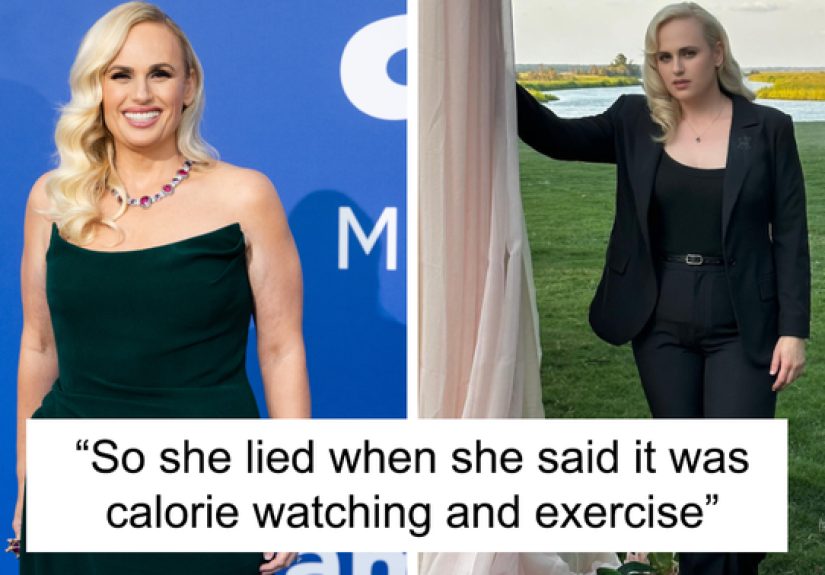
- Rebel Wilson’s weight-loss story was never as simple as the headlines wanted
- Hollywood loved her change, which says a lot about Hollywood
- The backlash, the praise, and the impossible standard
- What this story really reveals about celebrity culture
- A more human way to read Rebel Wilson’s candor
- Extended reflections and relatable experiences around comparison, visibility, and body change
Celebrity culture loves a tidy headline, and this one came gift-wrapped with glitter: Rebel Wilson, Adele, a rumored feud, a memoir, and a conversation about weight loss that the internet was always going to turn into a full-contact sport. But once you move past the clicky drama, the real story is more layered, more human, and frankly more interesting than a simple “who said what” showdown.
In her memoir-era interviews and the media storm surrounding Rebel Rising, Wilson opened up about two topics that tend to light up the gossip machine: her belief that Adele may have disliked being compared to her, and her own very public wellness journey. Those threads got bundled together into one flashy pop-culture package. The problem is that flashy packages often flatten the truth. What Wilson actually described was less a blood-sport celebrity feud and more an awkward mix of projection, public comparison, body-image politics, and the weird social tax of becoming famous for being “the funny one” in a body the industry thought it understood.
So yes, there is celebrity intrigue here. But there is also something more revealing: a story about how Hollywood labels women, how audiences obsess over transformation, and how a person can try to talk honestly about health without the world treating it like a scoreboard. And that, unlike a fake feud headline, is worth sticking around for.
The so-called Adele feud sounds more like discomfort than a Hollywood war
The phrase “Adele feud” does a lot of cardio for a situation that, in reality, seems far murkier and far less theatrical. Wilson said in memoir coverage that she believed Adele did not like being compared to her, especially during the years when both women were discussed publicly through the usual lazy celebrity shorthand about size, shape, and “before” versus “after.” That is a candid statement, but it is also an interpretation. Wilson herself framed it as what she thought was happening, not as a documented sit-down confrontation complete with dramatic music and a wind machine.
That distinction matters. There is a difference between “these two stars are in an active feud” and “one star believes another was uncomfortable with the comparison.” The first belongs in a tabloid headline. The second belongs in a much broader discussion about how women in entertainment get reduced to body narratives, often by total strangers with Wi-Fi and too much confidence.
Wilson’s comments landed because they pulled a strange cultural truth into the light: celebrities are often forced into comparison boxes they did not build and do not control. Sometimes the comparison is about talent. Sometimes it is about age. And sometimes, in one of the laziest habits in pop culture, it is about body size. That kind of comparison can be demeaning, especially when it drags a person’s appearance into a joke they never agreed to join.
When resemblance becomes rivalry
One of the oldest entertainment-media tricks is turning superficial comparison into imagined competition. Two actresses with similar hair? Rivalry. Two singers with overlapping fan bases? Feud. Two famous women who were both publicly discussed in terms of weight? Apparently that becomes a whole weird cultural circus. Wilson’s account taps into that pattern. She was not just talking about Adele as a person; she was talking about what it feels like to be publicly processed as an interchangeable category.
That is where the story gets sharper than gossip. The issue is not only whether Adele liked or disliked the comparison. It is that the comparison existed at all, and that it became sticky enough to live in Wilson’s head for years. Public narratives can do that. They turn passing commentary into identity, then identity into insecurity, then insecurity into a quote that shows up in a memoir years later and sends half the internet sprinting for the comment section.
Why “Fat Amy” still hangs over the conversation
Wilson’s breakthrough role as Fat Amy in the Pitch Perfect films was wildly successful and undeniably funny, but success in Hollywood often comes with a catch: the role that makes you famous can become the role the industry keeps trying to make permanent. Wilson has spoken about being boxed into the “fat funny girl” lane, and that context matters when discussing the Adele comment. If you are constantly being identified through a character built around body-based humor, any outside comparison is going to feel heavier than it looks on paper.
That does not automatically make the Adele interpretation right. But it does help explain why Wilson would read distance, avoidance, or awkwardness through that lens. When the culture brands you with a character name and then uses that brand as shorthand for your body, it can distort how you read every social interaction that follows.
Rebel Wilson’s weight-loss story was never as simple as the headlines wanted
If the Adele angle provided the spark, Wilson’s weight-loss story was the gasoline the media already had sitting in the garage. For years, coverage of Wilson’s body has bounced between celebration, scrutiny, inspiration, speculation, and the kind of faux concern that somehow still manages to sound nosy. But Wilson has repeatedly tried to describe the journey in more grounded terms.
Her “year of health” in 2020 was not framed by her as a quest to become a sample size or win the approval of the internet’s most annoying commenters. Instead, she connected it to health, emotional eating, and fertility concerns. That is a very different story from the one many celebrity headlines prefer. It is less glamorous, less meme-ready, and much more real.
Wilson has also been unusually open about the emotional side of the journey. She has talked about stress eating, shame around eating behaviors, self-worth, and the fact that changing habits is not some magical montage where a person suddenly starts loving kale and doing lunges at sunrise while orchestral music swells. She has described it as complicated, inconsistent, and tied to deeper patterns. In other words, like actual life.
Health, not halo-polishing
One of the most important threads in Wilson’s public comments is that she keeps pushing back on the idea that wellness equals thinness. That pushback matters because celebrity weight-loss coverage is often built like a fairy tale: problem, transformation, applause, end scene. Wilson’s story interrupts that tidy arc. She has said the goal was to become healthier, not to achieve some abstract ideal. That difference may sound subtle, but it changes the entire tone of the conversation.
It also helps explain why her story still resonates. Plenty of people understand the desire to feel better, sleep better, move more easily, or prepare their bodies for future plans like parenthood. That is a far cry from trying to satisfy an industry or internet culture that never stops moving the goalposts anyway.
The emotional eating piece is the real headline
If there is a genuinely revealing part of Wilson’s story, it is not the number of pounds lost. It is her honesty about emotional eating and the mental burden attached to it. That is the part of the conversation that rarely gets the same volume of coverage because it is harder to package into a glamorous transformation post.
Wilson has described her relationship with food as complicated, which is a refreshingly adult way to talk about a topic that is usually reduced to simple morality tales. Too often, public conversations about food sound like old-timey courtroom drama: carbs are guilty, sugar is suspicious, and everyone is sentenced to celery. Wilson’s version is less theatrical and more useful. She has acknowledged cravings, setbacks, stress, and the fact that personal health does not move in a straight line.
Hollywood loved her change, which says a lot about Hollywood
Wilson has also spoken candidly about the industry’s reaction to her body, and this is where the story moves from personal to structural. She has said that people around her career were not exactly throwing confetti at the idea of her losing weight. Why? Because the version of Rebel Wilson that Hollywood already understood was profitable. She had a lane. She worked in that lane. The lane made money. Hollywood, being Hollywood, does not usually see a lane as a temporary convenience. It sees it as a cage with good lighting.
That tension helps explain why Wilson’s health story also became a career story. She has discussed how losing weight changed how people treated her and even affected the kinds of roles she was offered. There is a bitter irony in that. The same industry that packages actors into simplified types suddenly starts calling when the packaging changes.
Wilson has even noted that she got more attention for losing weight than for many of her films. That is both unsurprising and deeply depressing. It reveals how body transformation can become its own entertainment product, one that audiences consume with the same energy they might bring to a red-carpet slideshow or a franchise trailer. The message is hard to miss: talent may get applause, but physical change gets obsession.
Typecasting is the villain with the best agent
Wilson’s comments about being pigeonholed deserve more attention than they usually get. For years, she was celebrated for comedy while also being boxed into a very specific comic identity. That identity brought fame, but it also narrowed expectation. Once the public gets used to one version of a performer, any shift can feel like a violation of an imaginary contract. Suddenly the person is not just changing; they are betraying the character the audience thought they owned.
That is part of why some celebrity body transformations create such intense reactions. The public often acts as if a familiar body belongs to them. When it changes, they read it as a plot twist. Wilson’s story exposes how strange that expectation really is.
The backlash, the praise, and the impossible standard
Wilson’s candor has attracted praise because it feels honest, but it has also pulled her into one of the most exhausting traps available to women in the public eye: no matter what they do with their bodies, someone will write an essay in the comments claiming it is wrong. Stay the same, and there is scrutiny. Change, and there is scrutiny. Speak openly, and people overanalyze. Say nothing, and people fill in the blanks anyway. It is a rigged carnival game, except the prize is usually another bad headline.
What makes Wilson’s story compelling is that she does not present herself as having solved the body-image puzzle once and for all. She has spoken about stress-related weight regain, about feeling bad during high-pressure periods, and about the ongoing challenge of balance. That honesty is more valuable than any polished “I cracked the code” narrative. It reminds readers that maintenance is not glamorous, stress is real, and human beings do not become emotionally invincible just because a magazine ran a flattering headline about them once.
Even her comments about briefly trying Ozempic were framed in a way that kept the discussion from becoming cartoonish. Rather than pretending there is one perfect answer for everyone, Wilson’s public remarks fit a more complicated reality: modern weight conversations are tangled up with medicine, appetite, emotional health, and intense cultural pressure.
What this story really reveals about celebrity culture
At its core, “Rebel Wilson versus Adele” is not really a tale of two stars facing off under a disco ball. It is a story about projection. The media projected conflict. Audiences projected meaning. Body-image debates projected ideology onto two famous women who have both had their appearances publicly dissected more than any sane person would volunteer for.
Wilson’s memoir comments and weight-loss reflections hit such a nerve because they exposed a contradiction in celebrity culture. The public claims to want honesty from famous people, but when they get honesty, they often strip it for parts. Vulnerability becomes content. Ambivalence becomes a quote card. A nuanced discussion of health becomes “feud and glow-up” because apparently context does not get as many clicks as chaos.
That is why the smartest reading of Wilson’s comments is not “Adele feud confirmed.” It is “Here is what happens when public comparison, typecasting, body politics, and memoir promotion all collide at once.” Less dramatic? Maybe. More accurate? Absolutely.
A more human way to read Rebel Wilson’s candor
The most useful takeaway from all this is not whether Adele ever avoided Wilson at an event or whether a certain headline went too far. The better takeaway is that Wilson is describing the emotional weirdness of being turned into a public body narrative. She is talking about what it feels like to be labeled, rewarded, boxed in, and then suddenly reinterpreted when you change.
There is humor in the way Wilson tells parts of her story, and that helps. Humor has always been one of her best tools. But underneath the jokes is a serious point: public attention is not the same thing as understanding. People may cheer a transformation while missing the emotional labor behind it. They may amplify a “feud” while ignoring the loneliness of being compared to someone else in the first place.
So the headline may promise celebrity drama, but the deeper story is about agency. Wilson is trying to reclaim authorship over her own narrative: not the industry’s version, not the tabloid version, not the “fat funny girl” version, and not the clean little redemption arc version either. Just her version. In modern celebrity culture, that might be the boldest move of all.
Extended reflections and relatable experiences around comparison, visibility, and body change
What makes this topic connect beyond celebrity gossip is that most people have lived some version of it, just without paparazzi and a memoir release date. A lot of readers know what it feels like to be compared to someone else in a way that is supposed to be casual but does not feel casual at all. It might happen in families, friend groups, schools, workplaces, or online spaces where people think every observation deserves to be spoken out loud. “You look like her.” “You remind me of him.” “You used to be the funny one.” “You look so different now.” These comments can sound harmless on the surface, but over time they can reshape how a person sees themselves.
There is also the strange experience of realizing that people treat you differently when your appearance changes, even if your core personality has not moved an inch. Many people who lose or gain weight talk about this quietly because it feels awkward to admit. Doors do not literally swing open in slow motion while a choir sings, but social behavior shifts. Some people become kinder. Some become more curious. Some suddenly act as though they have discovered you, which is flattering and insulting at the same time. It can make a person wonder which version of them everyone was seeing before.
Another relatable part of Wilson’s story is the stop-and-start nature of trying to take better care of yourself under stress. Anyone who has ever set a health goal in the middle of a busy year knows that progress rarely arrives wearing a gold medal. It arrives tired, carrying a water bottle, missing one sock, and asking whether this still counts if you had fries on Tuesday. Real health efforts are messy. They involve backtracking, restarts, emotional triggers, and the constant negotiation between intention and real life.
Then there is the issue of identity. When a certain version of you becomes familiar to other people, changing can feel oddly disloyal, even when the change is for your own well-being. That is true for celebrities, but it is also true for regular people. The class clown who becomes serious. The shy kid who becomes assertive. The person known for comfort eating who starts building different habits. The body may change, but the deeper tension is often this: will people still know me if I stop performing the version of me they are used to?
That is why stories like this linger. They are not only about one actress, one singer, or one memoir excerpt. They are about comparison, self-definition, and the emotional whiplash of being seen too much and understood too little. Strip away the celebrity sparkle, and the lesson is surprisingly grounded: people deserve room to change without being turned into a spectacle, and they deserve the dignity of being more than the loudest headline attached to their name.
![“[Am I The Jerk] For Telling My Wife I’m Not Going To Sacrifice My Hobbies Just So That I Can Babysit?”](https://2quotes.net/wp-content/uploads/2026/04/am-i-the-jerk-for-telling-my-wife-im-not-going-to-sacrifice-my-hobbies-just-so-that-i-can-babysit-iqoh9o4a-thumb.jpg)