Table of Contents >> Show >> Hide
- What happened (and why it struck a nerve)
- Why dress codes so often create “double standards”
- What the law and federal guidance say (in plain English)
- What the research says about dress codes and missed class time
- How schools can avoid this mess (without pretending rules don’t matter)
- What students and parents can do when this happens
- Why communities react so strongly to cheerleader dress-code incidents
- Conclusion: Fair rules, fair enforcement, zero humiliation
- Experiences People Commonly Share About Dress-Code Double Standards (Extended)
Nothing says “school spirit” quite like being told the official school uniform is somehow too scandalous for third-period algebra.
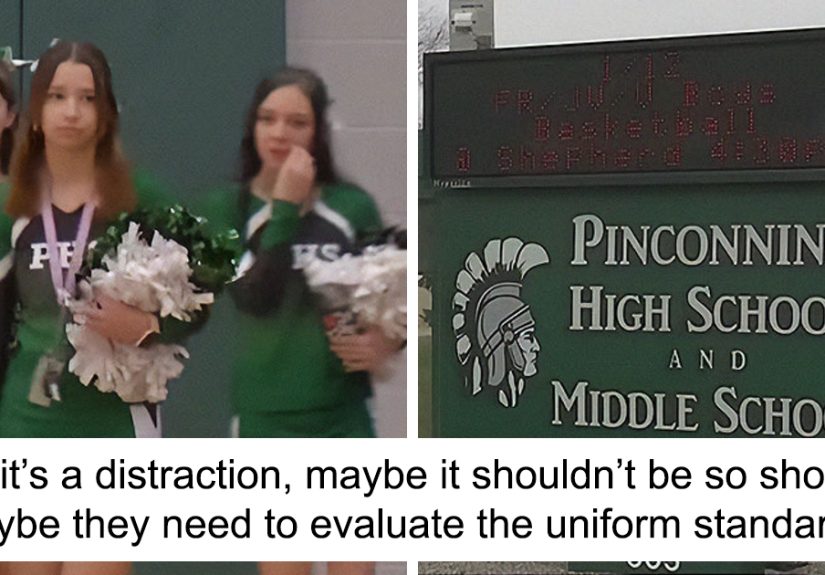
Yet that’s exactly the kind of headline that keeps popping up across the U.S.and one Michigan incident put the issue under a spotlight:
a varsity cheerleader wore her cheer uniform to school on game day and was told to “cover up” by putting pants on underneath.
Parents immediately raised the obvious question: if the uniform is approved for a public game in front of the whole community,
why is it suddenly a problem in the hallway between the water fountain and the copier?
The controversy isn’t just about a skirt, sweatpants, or whether “spirit day” is a sacred tradition.
It’s about double standardshow dress codes are written, how they’re enforced, who gets labeled a “distraction,” and who gets to move through school
without being treated like a walking rule violation. And it’s about what schools can do to protect students’ dignity while still setting reasonable expectations
for safety and learning.
What happened (and why it struck a nerve)
In the Michigan case, a parent said her daughter was instructed to wear her cheer uniform to school on the day of a home game.
At school, the student was told to put pants on, because the uniform’s skirt allegedly didn’t meet the dress code.
The parent said she was told the rule existed because it would be “a distraction to the boys.”
The superintendent responded that athletic uniforms don’t automatically meet school dress code standards, and emphasized the issue was the skirt lengthnot discipline.
Either way, families showed up at a school board meeting to argue the enforcement felt unequal and out of touch with how other sports uniforms are treated.
This kind of dispute spreads fast because so many people recognize the pattern:
the rules get strictest when they’re applied to girls’ clothingespecially when the clothing is already school-issued.
That’s when students and parents start asking, “Are we enforcing a policy… or policing a group?”
Why dress codes so often create “double standards”
Most schools don’t set out to be unfair. Dress codes usually begin with reasonable goals: preventing truly unsafe clothing (think footwear in labs or shop class),
reducing conflict, and keeping the focus on learning. The trouble starts when rules become vague, gendered, or selectively enforced.
1) “Approved for the game” vs. “not approved for school”
Here’s the awkward logic knot: schools approve uniforms for athletic performance and team branding, then apply a separate set of standards in the building.
If a uniform is shorter or more fitted than the everyday dress code allows, students can get caught in a weird contradiction:
the school bought it, the school requires it, and the school still says it breaks the rules.
The fix isn’t complicated. Schools can either (a) make spirit-day uniform guidelines that clearly match the dress code, or (b) allow a standardized “warm-up layer”
(joggers, leggings, team pants, zip-up jacket) that applies evenly across teamswithout singling out one sport.
2) “Distraction” language that puts the burden on students
When a policy (or a staff member) says clothing is “a distraction,” it often translates to: “You need to change because someone else might react.”
That frames the student as the problem. Many civil rights advocates have argued that this approach can stigmatize students and interrupt learning timewithout actually
improving behavior.
A more respectful approach is simple: keep rules focused on clear, objective standards (safety, basic coverage, and school-appropriate attire),
and leave out subjective judgments that end up sounding like moral commentary.
3) Enforcement that isn’t consistent across genders, sports, or body types
Even when a dress code is “technically neutral,” enforcement may not be.
Federal reviews and education reporting have highlighted concerns that dress code enforcement can fall more heavily on girls, students of color, and LGBTQ+ students.
That doesn’t mean every staff member is biased; it means the system can produce biased outcomes when rules are subjective and discretion is wide.
This is where the cheerleader situation becomes symbolic. People look around and notice:
some athletes can wear uniforms that are clearly recognizable as “sports attire,” while other students get pulled aside for the same ideaschool spiritbecause the uniform
is treated as “too much.” That inconsistency is what communities mean when they say “double standards.”
What the law and federal guidance say (in plain English)
Schools have the right to set dress codes. But public schools and federally funded schools also have legal obligations not to discriminate.
Under Title IX, sex-based discrimination in education is prohibited, and federal resources explicitly include discriminatory dress code policies or enforcement
as an example of Title IX concerns.
Civil rights organizations also emphasize that dress codes can’t apply different requirements based on gender or enforce gender stereotypes.
Title IX and dress code enforcement
Title IX is widely known for athletics equity, but it reaches beyond sports. If a dress code or its enforcement treats students differently based on sex,
reinforces sex stereotypes, or results in discriminatory outcomes, schools can face complaints and investigations.
In practice, that might look like:
- Rules that apply differently to “boys” vs. “girls” (including grooming rules) or pressure students to dress according to stereotypes.
- Enforcement that repeatedly targets one gender for subjective “modesty” standards.
- Discipline that removes students from class disproportionately based on who they are, not what they wore.
Real-world examples: when dress codes end up in court or federal review
A well-known example involved a charter school policy requiring girls to wear skirtsan approach criticized as promoting “traditional” gender roles and restricting movement.
Courts and advocates have argued that sex-based dress code rules can trigger Title IX concerns.
Separately, federal civil rights reporting has described cases where schools revised dress code language, trained staff, and created clearer complaint pathways after concerns
that enforcement treated students differently based on sex stereotypes.
What the research says about dress codes and missed class time
Beyond fairness, there’s a practical question: what do dress codes cost students in learning time?
A major federal report on K–12 dress codes noted that enforcement can include requiring students to change, removing them from class, and using disciplinary consequences.
National reporting on that research has also highlighted how common vague language is in dress codesand how often schools rely on subjective terms that invite inconsistent enforcement.
That matters because the “punishment” for a clothing issue often isn’t just a conversationit’s lost instruction, embarrassment, and a lingering feeling of being singled out.
And when the outfit in question is a school-issued uniform, the student experience can be especially frustrating:
“I followed the plan, I wore the uniform, and I still got in trouble.”
How schools can avoid this mess (without pretending rules don’t matter)
1) Write the policy like you actually want people to follow it
The best dress codes are boringand that’s a compliment. They focus on clarity, safety, and fairness.
They avoid loaded words like “distracting” or “immodest,” which tend to be interpreted differently depending on who’s looking and who’s being looked at.
2) Create a “game-day uniform” rule that applies to everyone
If athletes are encouraged to wear uniforms on game day, schools should publish a simple, consistent standard:
what’s allowed in the building, what requires a layer, and what does not.
If cheer uniforms (or any team uniform) don’t meet everyday requirements, the solution should not be surprise enforcement.
It should be a predictable optionlike official warm-ups, team joggers, or school-approved leggingsapplied evenly.
3) Train staff to enforce rules without shaming students
Dress code enforcement can put staff in an uncomfortable role, and many educators have said they dislike policing clothing.
Training should cover:
- How to address concerns privately and respectfully.
- How to avoid comments that sound like body judgment or gender stereotyping.
- How to keep students in class whenever possible.
- When to route concerns to administrators instead of handling them in the hallway.
4) Use an appeal path that students actually trust
If a student believes enforcement was unequal, there should be a clear way to raise the issuewithout retaliation or humiliation.
Some districts explicitly direct concerns to a Title IX coordinator or civil rights contact, which helps keep the process consistent and accountable.
What students and parents can do when this happens
If your school (or your child’s school) gets caught in a “cover up” controversy, the goal isn’t to win a social media argument.
The goal is to get a fair policy that protects students and keeps them learning.
Step-by-step, practical moves
- Ask for the exact policy in writing. Not “what we usually do,” but what the handbook actually says.
- Document what happened. Date, time, who spoke, what was said, and what the student was instructed to do.
- Compare enforcement across teams and genders. If uniforms are allowed for one sport but singled out for another, ask why.
- Request a simple, consistent solution. For example: “All teams may wear uniforms with official warm-ups during school hours.”
- Bring it to the right forum. Principals can address day-to-day practice; school boards can revise policy language.
- Keep the focus on equity and instruction time. The strongest argument is often: “Don’t remove students from learning over subjective standards.”
Why communities react so strongly to cheerleader dress-code incidents
Cheerleading sits at the intersection of athletics, school identity, and old cultural assumptionsso it often becomes a lightning rod for debates about gender and respect.
When a student is told to cover up in a uniform the school selected, families hear an unspoken message:
“Your presence is a problem to be managed.”
The backlash is not just about one outfit. It’s about the cumulative impact of being monitored, corrected, and interruptedespecially when other students are allowed to walk by
in equally sporty, equally team-branded uniforms without a second glance.
Communities want schools to teach responsibility and respect, not outsource those lessons onto the students being policed.
Conclusion: Fair rules, fair enforcement, zero humiliation
A school dress code should never be a scavenger hunt where the rules change depending on who’s wearing the outfit.
If a cheer uniform is acceptable for a public game, schools owe students a clear, consistent policy for how that uniform fits into the school day.
Better policies are possibleones that protect safety, respect student dignity, and keep kids in class instead of in the office.
The standard should be simple: no double standards, no shaming, and no learning time lost over vague rules.
Experiences People Commonly Share About Dress-Code Double Standards (Extended)
The loudest part of dress code debates isn’t usually the policy itselfit’s the lived moments that make students feel singled out. Here are experiences that show up again and again
in school communities when a cheerleader (or any student) is told to “cover up,” especially on a game day.
The “We Were Told to Wear It” whiplash
One of the most common frustrations is the mixed messaging. A coach encourages students to wear the uniform to build spirit, take photos, and represent the school.
Then, later that morning, a student is pulled aside and told the outfit violates dress code. The student isn’t trying to “push boundaries”they’re trying to follow instructions.
That whiplash creates a particular kind of anger because it feels like getting in trouble for being compliant.
The hallway correction that turns into a spotlight
Students often describe the worst part as not the rule, but the setting. Being corrected in a hallwaywithin earshot of friends or classmatescan feel humiliating.
Even if the staff member’s intent is neutral, the student experience can be: “Everyone is looking at me. Everyone now thinks I did something wrong.”
When the fix is “put on pants” or “go change,” the student may miss class, fall behind, or spend the rest of the day feeling self-conscious.
The “other athletes can, but we can’t” comparison
Game-day clothing is full of exceptions. Jerseys, warm-ups, team jackets, and athletic shorts become normal school-day attire in many buildings.
That’s why students and parents frequently compare treatment across sports. If basketball players can wear uniforms without being labeled “distracting,”
but cheerleaders are told to add layers, it lands as a value judgmentnot a safety rule. Over time, students start believing the dress code isn’t about standards;
it’s about which groups get policed.
Teachers who don’t want to be “clothing referees”
Many educators report discomfort enforcing dress codes, especially when the rules are subjective. Teachers often prefer clear boundaries (like footwear in a lab)
over rules that require evaluating body coverage or “fit.” In schools where enforcement is inconsistent, staff members can feel trapped:
if they enforce, they risk harming trust; if they don’t, they risk being blamed for “not following policy.”
Students feel that tension tooand it can turn everyday interactions into quiet standoffs.
The school board meeting that changes the temperature
When communities bring these concerns to a board meeting, something interesting can happen: the conversation moves from “this outfit” to “this system.”
Parents speak about consistency. Students talk about embarrassment and missed learning time. Administrators explain why policies exist.
And occasionally, the district lands on a practical compromise that makes everyone breathe easierlike official warm-ups for any sport uniform worn during school hours,
clearer written standards, and an enforcement approach that keeps students in class. The experience many families want isn’t chaos or “no rules.”
It’s fairness, clarity, and a school climate where spirit doesn’t come with a side of shame.