Table of Contents >> Show >> Hide
Some headlines age like milk. This one aged like a supernova. Back on June 1, 2017, scientists announced that the Laser Interferometer Gravitational-wave Observatory, better known as LIGO, had detected gravitational waves for the third confirmed time. That may sound like a niche physics update for people who casually read about black holes over breakfast, but it was actually a huge moment in modern astronomy. It meant the first detection was not a one-off cosmic fluke, the second was not beginner’s luck, and the third was the universe leaning into the microphone and saying, “Yes, I really do sound like that.”
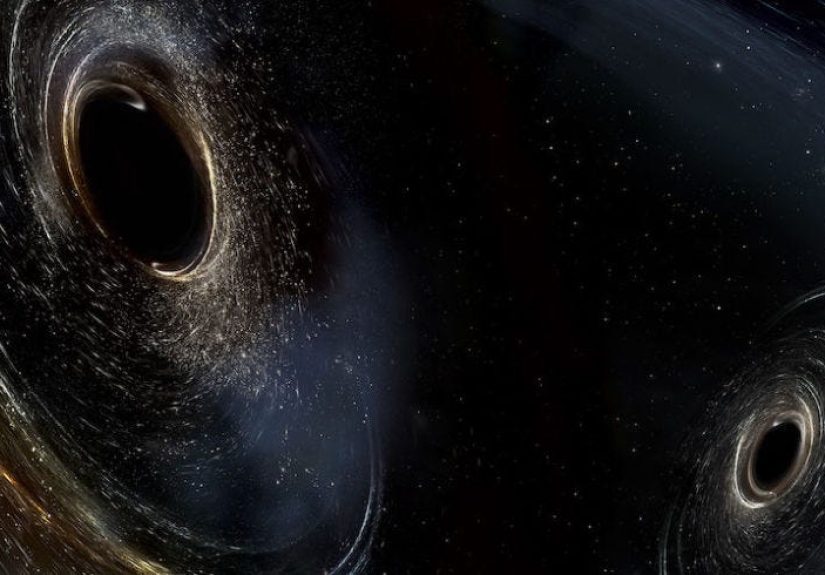
The event, known as GW170104, came from two black holes crashing together about 3 billion light-years away. Their collision sent tiny ripples through space-time itself, and those ripples eventually reached Earth, where LIGO’s detectors caught the signal. The finding helped confirm that gravitational wave astronomy was no longer a thrilling science experiment with one miraculous success. It was becoming a real working field, complete with repeat observations, better analysis, and bigger questions.
For anyone trying to understand why this mattered so much, here is the short version: astronomers had spent centuries studying the universe through light. Then gravitational waves arrived and gave scientists a second sense. It was like going from watching a silent movie to finally turning on the sound.
What Are Gravitational Waves, Exactly?
Gravitational waves are ripples in the fabric of space-time, predicted by Albert Einstein in 1915 as part of general relativity. If that phrase sounds dramatic, it should. Space and time are not just a quiet stage where cosmic events happen. They can bend, stretch, wobble, and shake when massive objects move in extreme ways.
Picture two heavy bowling balls spinning around each other on a giant rubber sheet. As they circle faster and faster, they disturb the sheet and send waves outward. Replace the rubber sheet with space-time and the bowling balls with black holes, and you have the basic idea. The catch is that by the time those waves reach Earth, they are absurdly tiny. LIGO does not detect a dramatic cosmic earthquake. It measures a change in distance so small that calling it “tiny” feels rude to tiny things.
That is why LIGO is such an engineering flex. Each observatory has two long arms, each 4 kilometers in length. Lasers travel down these arms, bounce off mirrors, and return. When a gravitational wave passes through, one arm is stretched while the other is squeezed by an unimaginably small amount. LIGO measures that difference. In other words, the instrument is basically listening for the universe to whisper while Earth is busy doing loud Earth things like weather, trucks, and gravity itself.
The Third Detection: What Happened in GW170104?
The third confirmed signal arrived on January 4, 2017, during LIGO’s second observing run. The two detectors, one in Hanford, Washington, and the other in Livingston, Louisiana, picked up the signal within milliseconds of each other. That near-simultaneous detection was critical. It showed the signal was not local noise, not a random glitch, and definitely not someone dropping a wrench in the lab and ruining astrophysics forever.
Scientists concluded that the source was a pair of stellar-mass black holes. One was about 31 times the mass of the sun, and the other about 19 times the sun’s mass. As they spiraled together, they radiated energy through gravitational waves, lost orbital energy, and plunged into each other. The final black hole weighed about 49 solar masses, which means roughly two solar masses were converted into gravitational-wave energy during the merger. Yes, two suns’ worth of mass became ripples in space-time. Casual.
The signal lasted less than a quarter of a second, but that was enough. In that tiny chirp, scientists could infer the masses, the distance, and aspects of the system’s motion. The event occurred about 3 billion light-years from Earth, making it the most distant of LIGO’s first three confirmed detections at the time. That mattered because it showed the observatory was not merely lucky enough to catch nearby collisions. It was reaching deep into the universe and pulling out evidence from ancient catastrophes.
Why the Third Detection Was a Big Deal
1. It proved the first discoveries were the start of a pattern
The first gravitational-wave detection in 2015 was historic. The second one in 2015 made the first look more believable and more exciting. But the third detection in 2017 pushed the story into a new category: repeatable science. In research, that shift is everything. The moment you move from “we found something amazing” to “we are finding these things again,” you stop living in miracle territory and start building a new branch of astronomy.
That is why this event mattered beyond the headline. LIGO’s third detection showed that black hole mergers were not weird cosmic unicorns. They were real astrophysical events happening often enough to be observed repeatedly once humans had the right instruments.
2. It expanded the known population of black holes
Before LIGO, many of the stellar-mass black holes confidently identified through X-ray observations were on the lighter side compared with the hefty objects involved in the earliest gravitational-wave detections. The third event added to a growing pattern: nature seemed perfectly comfortable making black holes above 20 solar masses and pairing them up in binaries. That forced astronomers to rethink how massive stars live, die, and sometimes leave behind surprisingly bulky black holes.
This was not just a fun fact for black hole collectors. It affected models of stellar evolution, metal content in stars, binary formation, and the environments where these objects are born. In other words, a short chirp in the detector sent theorists back to the whiteboard with the emotional energy of students realizing the test covered chapter nine too.
3. It gave another strong test of Einstein’s general relativity
Einstein predicted gravitational waves over a century ago, but predictions are one thing and repeated observations are another. Because GW170104 came from farther away than the earlier detections, it gave scientists a longer baseline over which to test whether gravitational waves behaved the way general relativity says they should.
One of the big questions was whether gravitational waves show dispersion, meaning whether different wavelengths travel at different speeds. Light does this in a prism, which is why you get a rainbow. General relativity says gravitational waves in a vacuum should not do that. The third detection fit Einstein’s prediction again. No cosmic rainbow. No dramatic overthrow of physics. Just another sturdy point in favor of the theory holding up under pressure.
4. It hinted at how binary black holes may form
This is where the story gets especially interesting. Scientists found tentative evidence that at least one of the black holes in GW170104 may have had a spin that was not aligned with the orbital motion of the pair. That sounds technical, but it carries an important clue.
There are two broad ideas for how binary black hole systems form. In one scenario, two massive stars are born together, evolve together, and eventually collapse into black holes that remain more or less aligned with their orbit. In the other scenario, black holes form separately and later get paired up in a dense stellar environment such as a cluster. If that happens, their spins can point in more random directions.
GW170104 did not settle the argument. Science rarely throws confetti that early. But it offered one of the first observational hints that some black hole binaries may form through dynamical capture rather than tidy shared evolution. And yes, physicists do enjoy phrases like “dynamical capture” because they sound like both a paper title and a prog-rock album.
How LIGO Pulled It Off
By 2017, LIGO was operating as Advanced LIGO, a major upgrade over the earlier version of the observatory. That upgrade dramatically increased sensitivity, which is a polite way of saying the machine became much better at detecting cosmic nonsense from billions of light-years away.
The two U.S. detectors work together because any one detector by itself is vulnerable to local disturbances. A truck rumbling nearby, a seismic jiggle, a stray environmental effect, or an instrumental glitch can all cause trouble. But when both detectors see the same chirp with the right time delay and waveform, confidence skyrockets.
The third detection also showed how much modern astronomy depends on collaboration. LIGO involves huge teams of scientists, engineers, data analysts, theorists, and institutions. This was not a lone genius under candlelight discovering truth with a notebook and dramatic hair. This was coordinated, technical, large-scale science at its best.
What Scientists Learned from the First Three Detections
Once astronomers had three solid detections, they could begin doing something deeply satisfying: statistics. Not beautiful statistics, not final statistics, but the glorious first sketches of a new population.
From GW150914, GW151226, and GW170104, researchers could start estimating how often stellar-mass black hole mergers occur in the universe. They could compare masses across events. They could ask whether spins tended to align. They could refine models for how these systems form. They could also get more comfortable with the idea that gravitational-wave signals were going to become part of normal astrophysical practice rather than occasional media fireworks.
This is the subtle but profound impact of the third detection. It was not just another success. It was the beginning of pattern recognition. Astronomy was no longer merely celebrating detection. It was beginning to do population science.
Why This Discovery Still Matters Today
Even though the title points to a 2017 breakthrough, the third detection still matters because it helped establish the foundation of modern gravitational-wave astronomy. Later discoveries, including neutron star mergers and larger catalogs of black hole collisions, were built on the confidence earned during these early detections.
GW170104 also showed the scientific value of repeated listening. With every new event, researchers sharpened their tools, improved their models, and learned to ask better questions. By the time gravitational-wave astronomy matured into a fast-growing field, the third detection was already part of the reason scientists trusted the method so deeply.
And perhaps that is the most powerful takeaway. The universe is not silent. We were just technologically hard of hearing for a very long time.
What the Experience of This Discovery Feels Like
There is also a human side to the story that rarely fits inside a straight news brief. The phrase “scientists detect gravitational waves for the third time” sounds neat and tidy, like a check mark on a project plan. But the experience behind it is anything but tidy. It is anticipation, doubt, calibration, reruns of data, long nights, weird coffee, and the deeply unglamorous labor of making sure a chirp from the cosmos is not a hiccup from the instrument.
Imagine being part of a team that has spent years building a detector sensitive enough to notice a distortion smaller than a proton by a factor of roughly a thousand. Then imagine seeing a suspicious signal appear in the data. At first, there is excitement, of course, but it is cautious excitement. Scientists are professionally trained not to fall in love too quickly. Every promising signal has to survive interrogation. Is it terrestrial noise? Is it a data artifact? Is the waveform consistent across detectors? Does the timing make sense? Can independent pipelines recover the same event? Discovery, in real life, often feels less like shouting “Eureka!” and more like repeatedly asking, “Okay, but are we absolutely sure?”
There is an experience on the public side, too. For many readers, the third detection was the moment gravitational waves became less abstract. The first detection was astonishing, but it also felt almost mythic, like the kind of headline you tell your kids about later. The third one felt different. It felt durable. It felt like humanity had acquired a new scientific sense and was beginning to trust it. That feeling is hard to overstate. It is one thing to read that Einstein was right. It is another to realize that, with a pair of giant laser instruments on Earth, humans can now “hear” black holes collide billions of light-years away.
There is even a strange emotional quality to the sound itself. When people convert these detections into audio, the signal becomes a chirp: a tiny upward sweep in pitch. It is short, almost modest. Yet that little sound stands in for one of the most violent events in the cosmos. The contrast is unforgettable. The universe can stage an event of incomprehensible power and deliver the news as a polite peep. It is the astrophysical version of getting a text message that says, “By the way, two black holes merged.”
And then there is the philosophical experience. Discoveries like GW170104 change how people feel about the scale of knowledge itself. They remind us that science is not only about collecting facts. It is about expanding perception. Before LIGO, black hole mergers of this kind were hidden from direct observation. They happened whether we knew it or not. After LIGO, they became measurable events with mass estimates, waveforms, and implications for how stars live and die. That shift is thrilling. It means reality was richer than our old tools allowed us to see.
So yes, the third detection was a physics story. It was also a human story about patience, precision, teamwork, and the joy of discovering that the universe is even stranger and more talkative than we imagined.
Conclusion
Scientists Detect Gravitational Waves for the Third Time was more than a dramatic headline. It marked the moment gravitational-wave astronomy began to feel reliable, repeatable, and full of long-term promise. GW170104 confirmed that black hole mergers could be detected again and again, pushed tests of Einstein’s theory to greater distances, and offered clues about how massive black hole pairs may form. Most importantly, it showed that astronomy had entered a new eraone in which scientists do not just look at the universe. They listen to it.