Table of Contents >> Show >> Hide
- First, a quick refresher: Luke Danes vs. Sully Sullivan
- So what did Scott Patterson say about a possible connection?
- Why the “Luke-to-Sully” theory works (even if it’s not canon)
- Where the theory breaks (and why that’s good news)
- A playful “character map” of the connection
- The real connective tissue: why we crave “cozy community” TV
- What to watch for if you love the “connection” idea
- Experiences section: 500-ish words of lived-fan energy around this connection
- Conclusion
Somewhere in the great television multiverse, a diner owner in a backward cap hits a breaking point, closes the doors, and drives north until the coffee turns into campfire percolator brew. That’s not a fanfic pitch (well… it kind of is). It’s a joke Scott Patterson himself has floated: a playful, “what if?” bridge between Gilmore Girls and Sullivan’s Crossingtwo shows with very different rhythms, but suspiciously similar flannel energy.
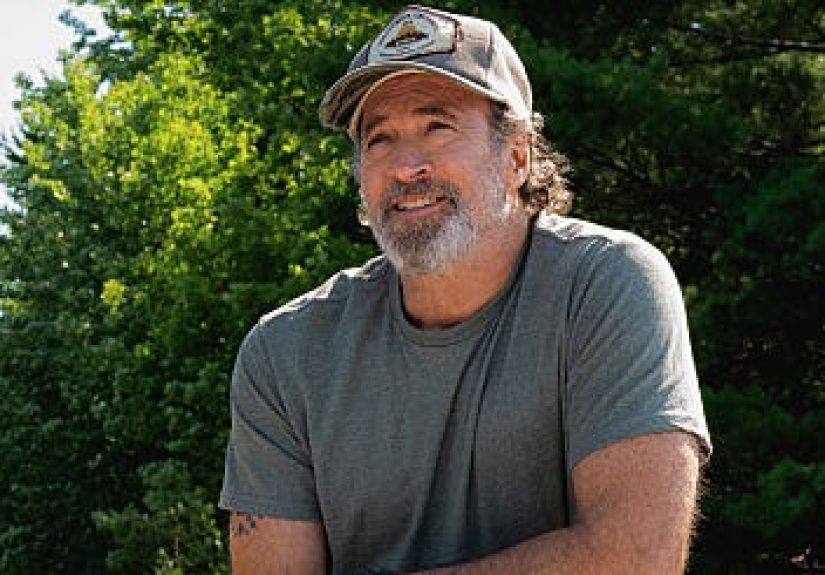
Patterson, forever beloved as Luke Danes, now plays Harry “Sully” Sullivan on Sullivan’s Crossing, a small-town romantic drama set around a rustic campground in Timberlake, Nova Scotia. The premise alone makes people’s TV brains do that thing where they connect dots like they’re trying to solve a murder board with yarn. Same actor. Similar vibe. Similar scowl-that’s-secretly-a-hug. So when Patterson jokes that Sully could be Luke if life went sideways, fans don’t just laughthey lean in.
Let’s unpack what Patterson actually said, why the “connection” idea works (even if it’s not canon), and what it reveals about why cozy small-town storytelling still hits harder than a surprise town meeting agenda.
First, a quick refresher: Luke Danes vs. Sully Sullivan
Luke Danes: the original grump-with-a-heart
Luke Danes is the steady pulse of Gilmore Girls: a diner owner in Stars Hollow who pretends he’s allergic to nonsense while routinely being the only adult in the room. Luke’s whole thing is reliability. He fixes things. He feeds people. He shows up. Even when he complains about it like it’s a competitive sport.
Fans didn’t fall for Luke because he was flashy. They fell for him because he was a human safety netone that comes with coffee refills and passive-aggressive commentary.
Sully Sullivan: a different kind of anchor
On Sullivan’s Crossing, Patterson plays Sully, the estranged father of Maggie Sullivan, a Boston neurosurgeon who returns to her hometown in Timberlake after legal and professional turmoil upends her life. Sully runs the titular campground (and an inn), which becomes the emotional hub of the storyless “order your pancakes” and more “come sit down and unpack your entire life.”
The show is based on Robyn Carr’s book series and blends romance, family tension, second chances, and the healing power of natureplus the occasional small-town complication that arrives right on schedule, like it got a calendar invite.
So what did Scott Patterson say about a possible connection?
Patterson’s “connection” is not an official crossover announcement, and nobody should expect Lorelai to pop out from behind a canoe yelling, “Ooooh, rustic!” What Patterson offered was a wink to fans: the idea that Sully could be Luke Danes if Luke’s life took a very different turn.
In his joking scenario, Luke never ends up with Lorelaior the relationship implodesso Luke shuts down the diner, can’t cope, and essentially disappears into the woods of Canada to start over running a campground. It’s an alternate timeline pitch delivered with the exact vibe you’d expect: dry humor, a little emotional sting underneath, and a strong preference for remote locations where nobody asks you to attend a town festival.
The reason the joke lands is simple: it’s emotionally legible. It’s not about plot logistics; it’s about character logic. Luke’s defining trait is that he feels deeply but expresses it sparingly. If things went wrong, you can absolutely picture him choosing distance over drama.
Why the “Luke-to-Sully” theory works (even if it’s not canon)
1) The vibe overlap is real
Patterson has noted there are similarities between the worlds of Timberlake and Stars Hollow: small-town settings, familiar faces, community entanglements, and the sense that everyone knows your business before you do. The difference is genre. Gilmore Girls leans quirky and fast-talking; Sullivan’s Crossing leans earnest, romantic, and scenic in a “please pause so I can stare at this lake” way.
Still, the overlap matters. Both shows are built around a comforting promise: you can mess up, get overwhelmed, and still have a community that pulls you back insometimes gently, sometimes by dragging you to dinner.
2) Both characters function as “the place”
Luke isn’t just a character; he’s also a location. The diner is where people land when they don’t know what else to dowhen they’re happy, heartbroken, broke, confused, or just hungry in an emotional way.
Sully is similar. The campground isn’t merely a setting; it’s a reset button. Maggie returns home, and the place forces her to confront what she’s avoided: family pain, identity questions, relationship knots, and the fact that you can’t out-run your past foreverespecially when your past has a lake view and a ton of unresolved feelings.
3) Patterson’s screen presence sells “gruff comfort”
Some actors carry chaos. Some carry charm. Patterson carries a specific energy that can best be described as: “I will pretend I don’t care, but I already fixed it.” Put him in a small-town story, and he becomes believable as the guy who doesn’t want to be the emotional centeryet somehow ends up holding the whole thing together.
That’s why the Luke-to-Sully leap feels plausible in spirit. Patterson knows how to play guardedness without turning it into coldness. He gives you the sense of a man who has a lot going on under the surface and would prefer everyone stop looking at him about it.
Where the theory breaks (and why that’s good news)
Luke’s story is a love story; Sully’s is a reckoning
Luke’s arc, at its core, is about opening upfirst reluctantly, then profoundly. He learns to let himself be seen. He becomes a partner. He becomes family.
Sully’s arc is more about consequences: the weight of past choices, strained relationships, and the kind of regret you can’t fix with a well-timed cup of coffee. The father-daughter dynamic with Maggie carries generational hurt, lost time, and the uneasy work of rebuilding trust.
That’s why Patterson has described Sully as emotionally challenging in ways that differ from Luke. Even if you can draw a straight line from “guarded guy who loves quietly” to “guarded guy who loves quietly,” the emotional terrain isn’t identical.
Stars Hollow runs on banter; Timberlake runs on breath
Gilmore Girls is famous for its rapid-fire dialogue and pop-culture confetti. It’s a sprint. Sullivan’s Crossing is more of a hikeappropriately. The show makes space for silence, scenery, and the slow thawing of complicated relationships.
If Stars Hollow feels like a town that survives on caffeine and town meetings, Timberlake feels like a town that survives on fresh air and quietly asking, “So… you okay?”
A playful “character map” of the connection
If you want to indulge Patterson’s idea without breaking your brain, here’s a fun way to do it: treat it like a personality remix rather than a literal continuity claim.
Shared DNA
- Protective instincts: Both Luke and Sully default to caretakingeven when it makes them cranky.
- Low patience for nonsense: If someone starts a pointless argument, both men have the same facial expression: “Please don’t make me be the adult again.”
- Acts of service as love language: They fix, build, carry, drive, patch, and provideoften instead of saying what they feel.
- Small-town gravity: They’re part of the town’s infrastructure. Remove them, and the whole ecosystem gets weird.
Different wiring
- Romance positioning: Luke is a romantic lead; Sully is more of the emotional backbone with his own layered story.
- Family focus: Luke’s “family” is chosen and grown; Sully’s story centers on repairing a bond that fractured long ago.
- Tone: Luke lives in a world where quirky neighbors can interrupt your serious moment with a troubadour song. Sully lives in a world where the serious moment is the point.
The real connective tissue: why we crave “cozy community” TV
The most interesting part of Patterson’s joke isn’t the pretend timelineit’s what it says about viewers. People don’t just want a crossover; they want continuity of feeling. They want shows that offer emotional refuge without being empty calories.
Sullivan’s Crossing scratches a similar itch to Gilmore Girls for a lot of viewers: the fantasy that, when life goes sideways, there’s a place you can return to where people notice you, feed you, and slowly help you remember who you are.
In Gilmore Girls, that place is a diner booth and a town square. In Sullivan’s Crossing, it’s a campground, an inn, and a landscape that looks like it was designed to calm your nervous system on purpose.
And yesput Scott Patterson in either environment and it feels like home, even when he’s scowling.
What to watch for if you love the “connection” idea
If you’re a Gilmore Girls fan curious about Sullivan’s Crossing, the connection isn’t plot; it’s pattern. Here are a few things to notice:
The “softened edges” moments
Patterson excels at tiny emotional shiftsan exhale, a pause, a look away because the feeling is too big. When Sully lets his guard drop, it echoes Luke’s best moments: the ones where you realize the grumpiness is just protective packaging.
Community scenes that function like comfort food
Gilmore Girls gave you town meetings and festival chaos. Sullivan’s Crossing gives you community ties and familiar faces circling around people in trouble. Different recipe, same comfort.
The “second chance” theme
Both series are obsessed (in a good way) with second chancesat love, at family, at becoming the person you meant to be. The tone differs, but the emotional promise is similar: you are not defined by your worst season.
Experiences section: 500-ish words of lived-fan energy around this connection
If you’ve ever binged Gilmore Girls and felt like Stars Hollow was a place you could move to tomorrow (assuming your rent budget can handle “quirky fictional town premium”), you already understand why Patterson’s joke hits. Watching Sullivan’s Crossing can feel like that same comfort impulse, just updated for a different stage of lifeless rapid-fire banter, more “let’s heal in nature and maybe cry a little.”
A common viewer experience goes like this: you start Sullivan’s Crossing for the small-town romance, and then Scott Patterson walks into frame and your brain immediately supplies the diner bell sound effect. You catch yourself thinking, “Luke…?” even though you know the character is Sully and the setting is Nova Scotia. It’s not confusion so much as recognitionlike seeing an old friend in a new jacket.
Then the “connection” game begins. You notice the flannel. The guarded posture. The way he speaks in a tone that suggests he’s allergic to oversharing. You start narrating a fake backstory to whoever’s watching with you: “Okay, hear me outLuke got tired of town meetings.” The fun is that you don’t need the show to confirm anything. The theory is a playful lens that makes the viewing experience feel interactive, like your own little director’s commentary track.
Another experience people share: the shift in what feels “cozy.” As a teen or young adult, Gilmore Girls cozy might mean coffee, fast jokes, and the fantasy of a town that never stops talking. As an adult who has seen a few plot twists in real life, Sullivan’s Crossing cozy might mean quieter scenestrees, lakes, a slower pace, and characters who aren’t afraid to admit they’re struggling. The settings are different, but the emotional goal is the same: a safe place to land.
And if you’re the kind of fan who likes to turn a show into a whole vibe, Sullivan’s Crossing tends to inspire “experience-based” watching. People make it a soft evening: cozy blanket, hot drink, phone on silent, maybe a candle pretending you’re outdoorsy. Some viewers even end up Googling Nova Scotia travel photos after an episode, because the scenery sells the idea that stepping away from your life for a minute could be… possible.
Finally, there’s the emotional experience of seeing an actor you associate with one era of comfort TV show up in another. It’s a reminder that you can revisit the feelings you lovedcommunity, steadiness, second chanceswithout needing the exact same show again. Patterson’s Luke-to-Sully joke works because it captures something real: we don’t just rewatch old favorites to relive plots. We rewatch them to relive the sense that things can be okay. And if your brain wants to imagine Luke Danes escaping to the woods and running a campground? Honestly, let it. That’s called self-care.
Conclusion
Scott Patterson’s “Gilmore Girls meets Sullivan’s Crossing” idea isn’t a canon crossoverit’s better than that. It’s a fan-friendly, emotionally intuitive thought experiment that highlights why both shows work: small communities, big feelings, and a gruff protector figure who acts like love is inconvenient but practices it anyway.
If you want the connection to be “real,” the easiest answer is: it’s real in tone. It’s real in comfort. It’s real in the way these stories invite you to believe that even after a hard season, there’s still a place where you can start againpreferably somewhere with coffee, or a lake, or both.