Table of Contents >> Show >> Hide
- Why Sag Harbor Makes Shopping Feel Like a Vacation
- Meet Bloom: A Shingled-Cottage Treasure Box
- Shopper’s Diary: What Catches Your Eye First
- How to Shop Bloom Like a Pro (Without Panic-Buying a Lamp)
- Steal Bloom’s Style at Home (Even If You Live Nowhere Near the Hamptons)
- A Mini Sag Harbor Itinerary to Pair with Bloom
- Conclusion: Why Bloom Belongs in Your Shopping Memory Hall of Fame
- Extra Diary Pages: of Bloom-in-Sag-Harbor Experience
Some towns are built for errands. Sag Harbor is built for wanderingthe kind where you promise you’re “just looking,” then emerge with a linen napkin you’ll guard with your life and a sudden desire to replace every light fixture you own. And if you’re doing Sag Harbor right, your first real stop isn’t a chain store or a glossy “must-have” pop-up. It’s Bloom: a quietly iconic design-and-antiques shop with a cult following and an eye for the kind of beauty that doesn’t need to shout to be heard.[1]
This is a shopper’s diary in the classic sense: part travel notes, part style decode, part “how did I end up caring this much about a chair?” We’ll set the scene in Sag Harbor, step into Bloom’s shingled-cottage calm, call out the details that make the shop feel like a master class in restraint, and leave you with practical tips for shopping (and decorating) like you’ve been doing this your whole life. Even if your “design background” is mostly watching your friend reorganize their spice drawer on Instagram.
Why Sag Harbor Makes Shopping Feel Like a Vacation
A village with salt air and serious history
Sag Harbor isn’t just “cute Hamptons town energy.” It’s a village shaped by the wateronce a major maritime and commercial hub in eastern Long Island during the 1800s, with a whaling-era legacy that still echoes through its architecture and museums.[2] That history gives the place a specific charm: weathered shingles, wide porches, old storefronts, and streets that seem designed for an unhurried pace.
The shopping experience matches the mood. Instead of one giant retail corridor, you get a walkable patchwork of independent boutiques, galleries, and design shopsespecially along Main Street and the nearby side streets that reward curiosity.[3]
Main Street vs. Madison Street: the two-lane shopping strategy
Think of Main Street as your “browse and snack” routeclassic Americana storefronts, ice-cream-on-the-wharf vibes, and boutiques you can dip in and out of with your coffee. Madison Street, meanwhile, is where you head when your taste gets a little more… specific. This is design-territory: antiques, interiors, and shops where you suddenly find yourself discussing patina like it’s a personality trait.[4]
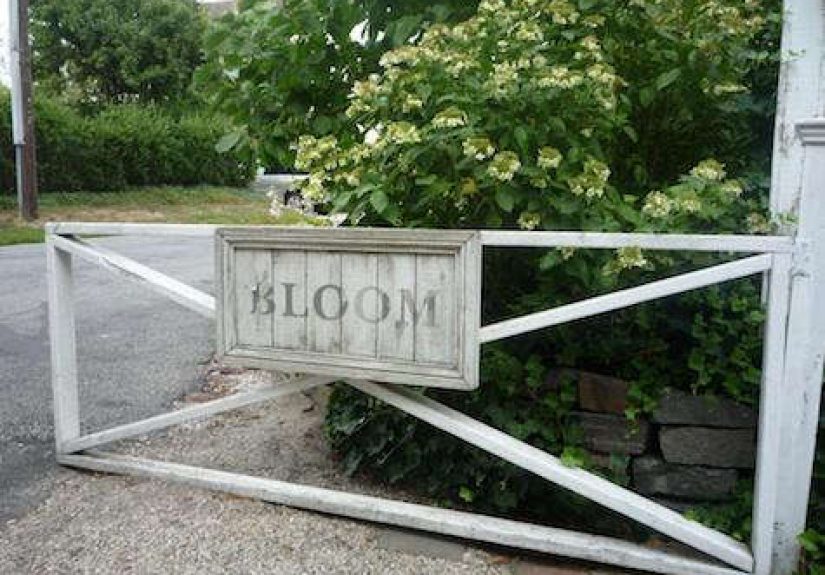
Bloom lives on Madison Street and has long been a magnet for interior designers and dedicated collectors.[1] Over the years, the shop has moved within the neighborhood; it’s been historically associated with 43 Madison Street, and more recent guides place it at 25 Madison Street.[1][5] (Translation: you’re in the right areawalk slowly, look for the shingled cottage feel, and let your eyes do the GPS work.)
Meet Bloom: A Shingled-Cottage Treasure Box
What Bloom is known for (and why it works)
Bloom is often described as “exquisitely edited,” and that’s exactly the point.[6] It’s not a place where every surface is crammed with product. It’s curatedcalm, minimal, and wildly persuasive. The shop blends antiques (with a strong European lean) and newer pieces that play nicely together: textiles, homewares, and tableware that feel timeless instead of trendy.[5]
Multiple travel and design sources highlight Bloom’s mix of antiques from Sweden, Belgium, and France, plus European homewaresespecially Astier de Villatte ceramics, which are frequently singled out as a shop highlight.[5][7] If your dream aesthetic is “coastal, but make it quietly intellectual,” Bloom is basically your love language.
The Bloom effect: you don’t just shopyou learn
Here’s the sneaky genius: Bloom sells objects, but it also sells context. A chair isn’t just a chair; it’s a chair next to the perfect lamp, under the right art, paired with a linen throw that makes you question your life choices in the best way. You leave with something smalland a mental Pinterest board you didn’t ask for.
That’s why Bloom has become a reference point in Hamptons design culture. It shows up in design media not only as a shop but as a source for pieces that end up in real homesantiques, stools, ceramics, and decor details that designers and homeowners genuinely live with.[7]
Shopper’s Diary: What Catches Your Eye First
Bloom is the kind of store where your shoulders drop the second you step inside. The pace changes. Your voice gets softer. You start thinking in textures. In the classic “shopper’s diary” spirit, here are the categories that tend to pull people inand why each one is so dangerous (financially) and delightful (emotionally).
1) The table moment: linens that make dinner feel like an event
If you’ve ever wanted your everyday table to look like it belongs in a magazine, Bloom understands the assignment. One of the most talked-about “Bloom staples” in earlier write-ups is Society Limonta linenstablecloths and textiles that feel relaxed, high-quality, and intentionally imperfect in the most chic way.[1]
Why it matters: a great linen tablecloth is the fastest shortcut to “I host” energyeven if your guests are just you, a rotisserie chicken, and a streaming service. Bloom’s styling tends to show linens with understated ceramics and natural materials, so the whole scene reads warm, not fussy.
2) Seating with a backstory: antiques that don’t feel precious
Bloom has been known to feature European seating that looks airy and tactilewoven textures, light wood, pieces that work in both beach houses and city apartments.[1] A past shopper’s diary highlight included bamboo-and-willow chairs made in Belgiumexactly the kind of “quiet statement” piece Bloom does best.[1]
The lesson here: when an antique (or antique-inspired) piece is simple in silhouette, it becomes versatile. You can move it from dining room to bedroom to hallway without it feeling like you’re dragging a museum exhibit around.
3) The “one dramatic object” rule
Bloom isn’t all whispers and neutrals. It often includes a few sculptural, conversation-starting pieces that function like punctuation marks. Earlier coverage has pointed to items like an artist-made fire pokerutilitarian, yes, but also distinctly sculptural.[1]
This is Bloom’s version of balance: keep the room calm, then add one element that makes you lean in. The trick is choosing drama through form and materialnot loud color, not novelty. Think: iron, steel, stone, weathered wood.
4) Ceramics, but make them emotional support ceramics
If Bloom had a mascot, it might be a stack of white, slightly irregular plates that somehow looks like art. Multiple guides single out Astier de Villatte ceramics at BloomParis-based, storied, and loved for that chalky, handcrafted elegance.[5][7]
The styling payoff is huge: white ceramics reflect light, they photograph beautifully, and they layer well with almost anythingvintage glassware, linen napkins, even a mismatched fork you stole from your own kitchen drawer.
How to Shop Bloom Like a Pro (Without Panic-Buying a Lamp)
Bring three things: measurements, photos, and a tiny bit of self-control
- Measurements: especially if you think you’ll fall for furniture. Bring room dimensions and door widths (yes, door widths).
- Photos: a quick album of your space helps you shop with your reality, not your fantasy.
- Self-control: not for resisting purchasesjust for resisting too many purchases.
Ask the questions Bloom shoppers actually ask
In design-forward antique shops, good questions aren’t awkwardthey’re expected:
- Provenance: Where is it from? How old is it (roughly)?
- Care: What’s safe for cleaning? What should you never do (so you don’t cry later)?
- Patina policy: Is the wear part of the charm, or is restoration recommended?
Plan the logistics before you fall in love
Big pieces are thrilling until you realize you drove out in a car that can barely fit a tote bag and a sense of optimism. If you’re shopping furniture, assume you’ll need delivery or shippingthen shop with that in mind. (If your vacation rental has a tiny staircase, your future self will thank you.)
Use the “small treasure” approach if you’re on a budget
You don’t need to buy a cabinet to bring Bloom home. The Bloom look is built on details: a linen tea towel, a single perfect bowl, a small tray, a candleholder with a handmade feel. Those pieces can shift your whole space because they change the daily ritualsmorning coffee, weeknight dinner, your “I’m totally fine” bubble bath.
Steal Bloom’s Style at Home (Even If You Live Nowhere Near the Hamptons)
Start with one “quiet hero” piece
Bloom’s rooms don’t feel expensive because they’re loud; they feel expensive because they’re considered. Pick one anchoran antique chair, a linen tablecloth, a ceramic vaseand let everything else support it.
Keep the palette calm, then add texture like seasoning
Bloom’s signature moodespecially in the way it’s described in design/travel coverageleans serene and natural: light neutrals, weathered finishes, and materials that look better as they age.[5][7] If your room feels flat, don’t run to color first. Add texture: linen, woven cane, raw wood, iron, stoneware, matte ceramics.
Mix old and new so nothing looks like a set
The magic is in contrast: modern sofa + antique side chair, crisp white walls + worn wood table, clean-lined lighting + vintage mirror. Bloom’s “edited” approach works because every piece has a roleno filler, no matching-for-the-sake-of-matching.[6]
Leave negative space on purpose
Bloom’s styling teaches a powerful retail truth: empty space is not wasted space. One vase on a table can look more intentional than seven decorative objects arguing with each other. Your home doesn’t need to look like a store, but it can borrow the store’s discipline.
A Mini Sag Harbor Itinerary to Pair with Bloom
Bloom is a destination, but Sag Harbor makes it easy to build a full day around itshopping, culture, and a little local history without ever feeling like you’re “doing activities.”
Stop 1: A quick Main Street stroll
Main Street is lined with independent boutiques and that “classic summer” Sag Harbor feelingboats in the harbor, local storefronts, and a slower pace that’s part of the appeal.[3] Pop into a few shops, grab coffee, and let the day ease in.
Stop 2: Canio’s Books for a brainy reset
Canio’s Books is an independent Sag Harbor institution (and a perfect counterbalance to shopping dopamine). It’s located at 290 Main Street and hosts eventsso it’s worth checking what’s happening while you’re in town.[8]
Stop 3: A cultural detour at Sag Harbor Cinema
The Sag Harbor Cinema is a historic local landmark that was rebuilt and renovated after a 2016 fire, reopening as a community-focused, state-of-the-art triplex.[9] Even if you don’t catch a film, it’s the kind of place that reminds you Sag Harbor is more than a summer postcard.
Stop 4: A whaling-history walk-through
For a deeper sense of the village’s roots, the Sag Harbor Whaling & Historical Museum connects Sag Harbor’s present-day charm to its 1800s maritime history.[2] It’s also a great rainy-day move when your “out East” plans get humbled by weather.
Conclusion: Why Bloom Belongs in Your Shopping Memory Hall of Fame
Bloom is proof that shopping can be more than acquiring objectsit can be a lesson in taste, a reset for your eyes, and a reminder that “simple” is often the hardest style to do well. Sag Harbor gives you the setting: a walkable village with old-world bones and seaside ease. Bloom gives you the point of view: calm, edited, European-leaning beauty that makes everyday lifedinner, hosting, reading on the sofafeel a little more intentional.
If you go, don’t rush. Let the store teach you what you’re drawn to: texture, craftsmanship, restraint, story. Then bring one small piece homenot just to decorate, but to remember how it felt to shop somewhere that doesn’t try too hard… because it doesn’t have to.
Extra Diary Pages: of Bloom-in-Sag-Harbor Experience
Picture this: you turn off Main Street and the noise drops a notch, like someone gently lowered the volume on the whole town. Madison Street feels quietermore “local errands” than “crowd scene”and then you spot it: the shingled-cottage vibe, the kind of place that looks like it belongs in a novel where everyone owns a beautiful sweater and somehow always has fresh bread. That’s Bloom energy.
You step inside and immediately slow down, because everything is spaced out with purpose. No frantic retail lighting. No “SALE!” signs trying to jump-scare you. Just objects that look like they’ve already lived a lifeand would like to move in with you next. A table is set in a way that makes your own dining setup feel like it’s been trying… but not hard enough. The linens are that perfect not-too-pressed kind of crisp. You run your fingers over a cloth and realize you’re thinking about fabric weight like it’s a serious topic. (It is. Welcome.)
You wander into the next room and spot a chair that looks simpleuntil you really look. The weave is irregular in a way that signals it was made by hands, not a machine having a bad day. You imagine it in your home: by a window, with a book, with a throw tossed over the back like you’re effortlessly stylish and not at all a person who owns twelve mismatched phone chargers. Then reality taps your shoulder: “Where would I put it?” you ask yourself. Your brain answers: “Somewhere. You’ll find a way.”
In Bloom, you start making mental rules. Rule one: one dramatic object per room. You see a sculptural piece that’s technically functionalmetal, weighty, beautifully shapedand suddenly you understand why people collect “practical art.” Rule two: white ceramics aren’t boring; they’re the blank page your whole table can write on. A stack of plates looks like sculpture. A bowl looks like a calm thought. You didn’t come here to buy dishes, but now you’re imagining your next dinner party with the seriousness of a presidential administration.
The best part is the feeling that the shop is encouraging you to choose slowly. Not to buy nothingBloom is not a monasterybut to buy well. You leave with a small treasure (maybe a piece of tabletop magic, maybe a linen that upgrades your Tuesday night), and you also leave with a sharper eye. Outside, Sag Harbor continues doing its thing: harbor air, independent storefronts, and that “summer can be simple” vibe. And you walk away thinking, honestly, that might be the real Bloom souvenirthe reminder that good style isn’t about more. It’s about better.