Table of Contents >> Show >> Hide
- What Exactly Is a Stromboli?
- Why Shredded Beef + Caramelized Onions Works So Well
- Ingredients for a Big, Sliceable Stromboli
- Step-by-Step: How to Make Shredded Beef and Caramelized Onion Stromboli
- Smart Dips and Serving Ideas
- Make-Ahead and Freezer Tips
- Storage and Reheating Without Turning It Into a Brick
- Variations: Make It Yours (Without Breaking the Physics of Dough)
- Troubleshooting: Common Stromboli Problems (and Fixes)
- Food Safety Notes for Beef Fillings
- of Real-Life Stromboli Moments (The Experience Part)
- Conclusion
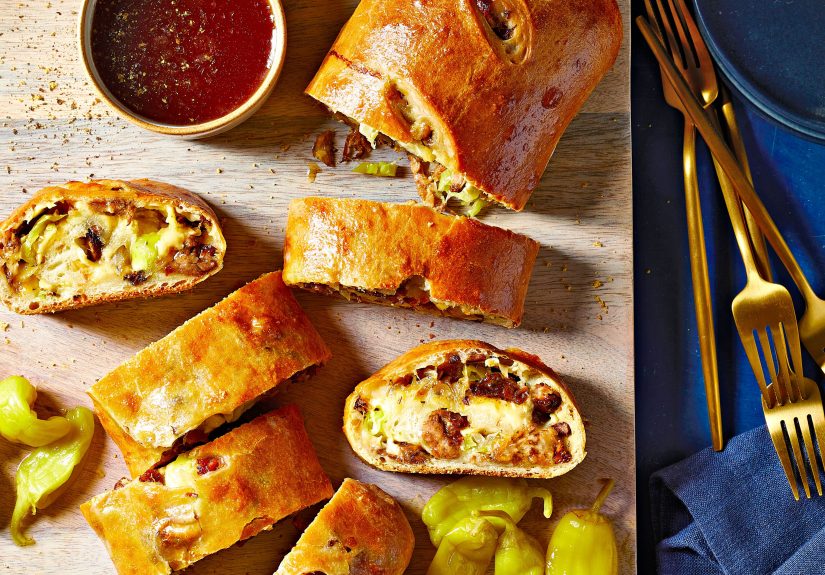
Stromboli is what happens when pizza decides to put on a cozy sweater and become portable. It’s a golden, rolled-up
bundle of dough stuffed with savory fillingsmeant to be sliced, shared, and mysteriously “missing” by the time you
return from the kitchen with dipping sauce.
This version goes big on flavor: tender shredded beef (leftovers welcome), deeply caramelized onions, and a cheese
combo that melts like a dream without turning your beautiful roll into a soggy soap opera. If you’re looking for a
crowd-pleasing dinner, game-day appetizer, or “I brought food, please love me” contribution to a potluck, this
shredded beef and caramelized onion stromboli is ready for the spotlight.
What Exactly Is a Stromboli?
A stromboli is an Italian-American baked roll made with pizza dough (or bread-style dough), layered with fillings,
then rolled into a log and baked until crisp and golden. Unlike a calzone (folded like a half-moon pocket), stromboli
is rolled like a burrito, which gives you those swirly layers when you slice it. That spiral is not just prettyit’s
practical: every slice gets a little of everything.
Stromboli is also a smart way to use cooked meats. Shredded beef, especially, is a powerhouse filling: it’s already
tender, it soaks up flavor, and it turns a “pizza night” into something that feels like a real meal.
Why Shredded Beef + Caramelized Onions Works So Well
This pairing is basically the culinary version of a great buddy-cop movie: one is rich and savory, the other is sweet
and mellow, and together they solve the crime of “boring dinner.”
Shredded beef brings the savory backbone
Use leftover pot roast, braised chuck, brisket, or even slow-cooked beef you originally made for tacos or sandwiches.
The key is moist but not wet. If your beef is swimming in juice, you’ll want to drain or reduce itbecause
stromboli loves flavor, but it hates puddles.
Caramelized onions add sweetness and depth
Proper caramelized onions aren’t “browned onions.” They’re onions cooked low and slow until their natural sugars
deepen into jammy, golden-brown goodness. It takes patience (often 30–60 minutes), but the payoff is massive: you get
sweetness without adding sugar, plus a rich, almost meaty aroma that plays beautifully with beef.
Cheese is the glueand the insurance policy
Cheese does two jobs here: flavor and structure. Low-moisture mozzarella melts smoothly and helps prevent a watery
interior. Provolone adds tang and a classic Italian-deli vibe. A sprinkle of Parmesan sharpens everything like a
well-timed punchline.
Ingredients for a Big, Sliceable Stromboli
Makes: 1 large stromboli (about 10–12 slices) | Serves: 4–6
Dough
- 1 pound pizza dough (homemade or store-bought), at room temperature
- All-purpose flour or fine cornmeal (for shaping)
- 1 egg + 1 tablespoon water (egg wash)
Caramelized onions
- 2 large yellow onions, thinly sliced
- 2 tablespoons olive oil or butter (or a mix)
- 1/2 teaspoon kosher salt (plus more to taste)
- Optional: 1–2 teaspoons balsamic vinegar (for a deeper “steakhouse” vibe)
Filling
- 1 1/2 to 2 cups shredded cooked beef (pot roast, brisket, braised chuck, etc.)
- 1 1/2 cups shredded low-moisture mozzarella
- 1/2 to 3/4 cup shredded provolone (or sliced provolone, torn)
- 2–3 tablespoons grated Parmesan
- 1 teaspoon garlic powder (optional)
- 1/2 teaspoon black pepper
- Optional: 1 cup baby spinach (lightly sautéed and squeezed dry) or roasted peppers (patted dry)
For serving
- Warm marinara sauce, au jus, or a quick horseradish mayo dip
Step-by-Step: How to Make Shredded Beef and Caramelized Onion Stromboli
1) Caramelize the onions (the “worth it” step)
Heat oil/butter in a wide skillet over medium heat. Add sliced onions and salt. Cook 8–10 minutes, stirring often,
until softened and starting to turn translucent. Reduce heat to medium-low and cook 30–45 minutes (sometimes longer),
stirring every few minutes. If the pan looks dry, add a splash of water and scrape up browned bitsthose bits are
flavor, not a warning sign.
When onions are deep golden-brown and jammy, taste and adjust salt. If using balsamic, stir it in during the last
2–3 minutes. Let onions cool slightly before assembling (hot filling = steamy dough = sad stromboli).
2) Prep the beef for “stromboli success”
Shred your cooked beef and give it a quick inspection: is it juicy? Great. Is it wet? Not great. If there’s
lots of liquid, drain it, or simmer it down until it’s saucy but not runny. If the beef tastes mild, toss it with a
pinch of salt, pepper, garlic powder, and a spoonful of reduced cooking juices for flavor.
3) Set your oven up for crispness
Preheat the oven to 400°F. Line a baking sheet with parchment. If you have a pizza stone or steel,
preheat it too and bake the stromboli on parchment over the hot surface for an extra-crisp bottom.
4) Stretch the dough (don’t fight it)
Lightly flour your surface. Stretch or roll the dough into a rectangle about 10×14 inches (roughly).
If the dough keeps shrinking back, let it rest 10–15 minutes, then try again. Dough is like people: it behaves better
after a break.
5) Layer the filling like you’re building a delicious fence
Leave a 1-inch border around the edges. Sprinkle a thin layer of mozzarella first (this helps buffer
moisture). Add the shredded beef in an even layer, then the caramelized onions. Add provolone and Parmesan over the
top. If you’re adding spinach or peppers, make sure they’re dry and keep the layer modest.
6) Roll, seal, and vent
Roll from the long side, snug but not so tight you squeeze out the filling. Pinch the seam closed. Tuck the ends
under and pinch to seal. Place seam-side down on the parchment-lined sheet.
Whisk egg + water and brush over the top. Cut 4–6 small slits across the top to vent steam. This is
one of the simplest ways to avoid a soggy interior.
7) Bake until golden and set
Bake for 20–30 minutes, until the crust is deeply golden and the vent slits show bubbling cheese.
If the top browns too fast, tent loosely with foil for the last 5–10 minutes.
Let the stromboli rest 10 minutes before slicing. That rest time helps the cheese set so you get
clean slices instead of a delicious landslide.
Smart Dips and Serving Ideas
Stromboli is flexible. Marinara is classic, but shredded beef opens other doors:
- Au jus: Warm beef broth with a splash of reduced cooking juices for a French-dip vibe.
- Horseradish mayo: Mix mayo + prepared horseradish + lemon + salt. Sharp, creamy, and perfect with beef.
- Garlic butter: Melted butter + garlic + parsley for a “pizza crust” feeling with extra swagger.
Make-Ahead and Freezer Tips
Make it ahead (same day)
You can caramelize onions and shred beef up to 2 days ahead. Store separately in the fridge. Assemble and bake when
ready. This makes stromboli weeknight-friendly without pretending onions caramelize in 12 minutes “like magic.”
Freeze unbaked stromboli
Assemble, roll, and seal. Skip egg wash and vent slits. Wrap tightly (plastic wrap + foil), freeze up to 2–3 months.
Thaw in the fridge overnight, then add egg wash, cut vents, and bake at 400°F.
Storage and Reheating Without Turning It Into a Brick
Cool leftovers, then refrigerate in an airtight container. For best food safety, don’t let it sit out more than about
2 hours. Most cooked leftovers are best used within about 3–4 days.
- Oven: 350°F for 10–15 minutes until hot and crisp.
- Air fryer: 325–350°F for 5–8 minutes (watch closelyair fryers don’t play).
- Microwave: Works, but softens the crust. If you microwave, finish in a hot skillet to re-crisp.
If you’re reheating for safety, aim for steaming-hot throughout. When in doubt, use a food thermometer and reheat
leftovers until they’re thoroughly hot.
Variations: Make It Yours (Without Breaking the Physics of Dough)
1) Philly-ish cheesesteak stromboli
Use shredded beef plus sautéed green peppers. Swap provolone to the front of the cheese lineup. Keep onions
caramelized (because you deserve happiness).
2) BBQ shredded beef stromboli
Toss beef with a thick BBQ sauce (not watery). Add pickled jalapeños (drained), cheddar + mozzarella, and serve with
extra sauce on the side.
3) Spicy Italian “beefy” stromboli
Add crushed red pepper, sautéed mushrooms, and a little Italian seasoning. Keep the fillings dry and don’t overload.
Stromboli is confident, but it has limits.
Troubleshooting: Common Stromboli Problems (and Fixes)
“My stromboli leaked everywhere.”
Usually this is a sealing issue or an overstuffing issue. Pinch seams firmly, place seam-side down, and keep fillings
away from the edges. Egg wash on the seam can help it stay closed.
“The inside is soggy.”
Vent slits matter. Also: cool your onions before assembling, use low-moisture mozzarella, and don’t add watery sauce
inside the roll. Keep dips on the side.
“The dough is browned but the center feels underbaked.”
Your roll may be too thick or your oven runs hot. Next time, stretch the dough a bit larger and roll slightly looser.
You can also lower to 375°F and bake a little longer so heat penetrates the center without over-browning.
Food Safety Notes for Beef Fillings
If you’re cooking beef specifically for this stromboli, follow safe minimum internal temperature guidance for beef,
and always handle leftovers safely: refrigerate promptly and reheat thoroughly. Stromboli is fun, but food safety is
not a “YOLO” situation.
of Real-Life Stromboli Moments (The Experience Part)
Making shredded beef and caramelized onion stromboli tends to come with a very specific set of kitchen experiences
the kind you don’t see in the tidy recipe card photo. First, there’s the onion phase. You start confident, tossing
thin slices into the pan like a cooking show host, and then reality gently taps you on the shoulder: caramelizing
onions is mostly waiting. You stir, you scrape, you lower the heat, you wonder if the onions are doing
anything at all… and then suddenly the kitchen smells like a cozy deli that also somehow sells happiness. The onions
shrink down to a glossy pile that looks like it couldn’t possibly have come from two huge onions, which is your cue
to feel both proud and slightly betrayed by physics.
Then comes the dough. If it’s homemade, it’s soft and pillowy and wants to spring back like it’s training for the
Olympics. If it’s store-bought, it still sometimes acts like it has opinions. The moment you stop fighting and let it
rest for a few minutes, it becomes dramatically more cooperativelike it just needed to “process its feelings” before
being shaped into a rectangle. This is also when you start mentally negotiating how much filling is “reasonable.”
Reasonable is the amount that lets you roll without panic. Unreasonable is the amount that makes you say, “It’ll be
fine,” right before the seam starts to gape like a surprised cartoon character.
When you layer the beef and onions, it feels like assembling a flavor blueprint. You can practically see the slices
in your head: spirals of dough, strands of beef, ribbons of onion, pockets of melted cheese. And then, right as you
roll it up, you realize the most important stromboli skill is not rollingit’s sealing. Pinching the seam is
oddly satisfying, like closing an overstuffed suitcase, except this suitcase is headed for a 400°F vacation and may
explode if you’re careless.
The best part is the oven transformation. The stromboli goes in looking pale and a little shy, and it comes out
bronzed, glossy from the egg wash, and smelling like a pizzeria decided to move into your house. The vent slits bubble,
the cheese announces itself, and you have to fight the urge to slice immediately. That 10-minute rest is the difference
between clean slices and a molten cheese situation that requires both a fork and emotional support.
Serving it is its own mini event. People gather “just to look,” then suddenly they’re holding a slice. Someone asks
what it is, you say “stromboli,” and they nod like they totally knew what that meant. Then they dip it in marinara (or
au jus, or horseradish mayo), take a bite, and the conversation stops for a secondthe universal sign of a recipe that
deserves a permanent spot in the rotation. And later, when you open the fridge and see leftover slices, you feel that
rare joy of knowing tomorrow’s lunch is already handled… assuming the household doesn’t “mysteriously” eat it first.
Conclusion
Shredded beef and caramelized onion stromboli is the kind of recipe that feels special without being fussy. You’re
taking familiar ingredientspizza dough, beef, onions, cheeseand combining them in a format that’s sliceable, sharable,
and ridiculously satisfying. Focus on moisture control (dry-ish fillings, low-moisture mozzarella, vent slits), give
the stromboli a short rest before slicing, and you’ll get crisp edges, gooey layers, and a filling that tastes like it
had a very good plan all along.