Table of Contents >> Show >> Hide
- The “Series Finale” That Wasn’t: What Viewers Actually Watched
- Where the Fake Finale Idea Came From
- Early Drafts: The Finale Anthology That Needed a Spine
- Why Bart Had to Be the Heart of the Joke
- Conan O’Brien: The Perfect Host for a Perfect Fakeout
- Writing “Bad” on Purpose Without Making It Unwatchable
- The Celebrity Cameo Problem (and the Sneaky Solution)
- Why the A.I. Angle Hit at the Right Time
- The Most “Simpsons” Part: Rejecting Closure
- So… What Would a Real Finale Be?
- Why This Episode Worked (Even If You’ve Been “Off the Show” for Years)
- Experiences: What a “Supposed Finale” Feels Like in Real Life (and Why That’s the Point)
- SEO Tags
If you woke up, checked your phone, and briefly thought The Simpsons had ended, congratulations: you experienced
the exact emotional roller coaster the writers were aiming forminus the theme-park gift shop at the exit.
When Season 36 premiered on September 29, 2024, Fox didn’t just air a new episode. It aired a prank in the shape of a
“series finale,” complete with a host, celebrity fanfare, and an in-universe A.I. machine designed to spit out the
most “perfect” (read: most painfully predictable) ending imaginable.
The twist wasn’t that The Simpsons suddenly discovered mortality. The twist was that it used the idea of mortality
to make fun of TV’s obsession with wrapping everything in a sentimental bow… and then lit that bow on fire for warmth.
Writers Jessica Conrad and Michael Price, along with showrunner Matt Selman, built a finale that wasn’t a finale at all
a meta satire of finales, fandom, network mythology, and the modern panic about A.I. “writing” culture.
The “Series Finale” That Wasn’t: What Viewers Actually Watched
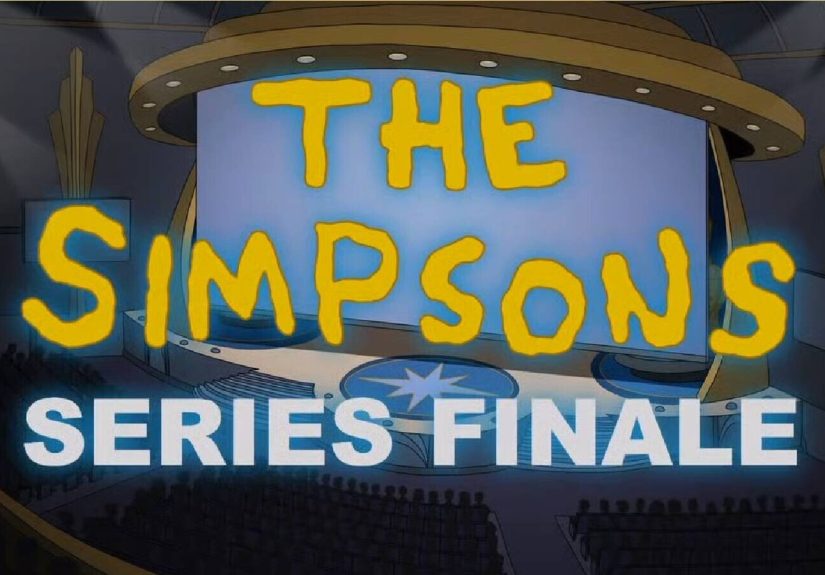
The premiere presents itself as “The Simpsons Series Finale,” hosted by former writer Conan O’Brien. Inside that
framing device, we get an A.I.-generated “perfect finale” built from decades of Simpsons dialogue and the entire
history of TV series endings. The result is a greatest-hits parade of finale clichés: heartfelt goodbyes, life-changing
announcements, surprise reunions, and big emotional swingsdelivered with the kind of earnestness that makes comedy fans
reach for the remote like it’s a defibrillator.
The episode’s secret weapon is that it doesn’t just roast finales from a distance; it stages the cliché, lets it play,
and then has the characters react to it. Bart, in particular, senses that something is “super weird” and begins to push
backbecause if any character is going to fight the concept of closure, it’s the 10-year-old who has been 10 since 1989.
Where the Fake Finale Idea Came From
Michael Price has explained that the seed came straight from Matt Selman. After the 2023 Hollywood strikes, Selman was
traveling and kept getting the same question people have asked for years: “How much longer will the show go on?” and
“How will you end it?” Instead of giving the usual shrug, Selman brought the question back to the writers’ room and
pitched a solution that was equal parts practical and mischievous: do a fake ending now, get it out of everyone’s system,
and turn the whole concept into a comedy engine.
That pitch also solves a tricky creative problem. A “real” finale invites expectations that are impossible to satisfy for
a show with this many eras, fans, and emotional attachments. A “fake” finale, though? That’s freedom. It lets the writers
explore what a finale would look likewithout being trapped by what it must be.
Early Drafts: The Finale Anthology That Needed a Spine
One of the most revealing behind-the-scenes details is that the episode didn’t start with the A.I. premise. Price has said
the room toyed with an anthology structure where each act would mimic a different famous series finale. Funny idea, sure
but it lacked an organizing principle. You can parody five endings in a row and still feel like you’ve only made a mixtape
titled “Sad Montage Vol. 12.”
The A.I. “Hack-GPT” concept gave the story a single comedic logic: if you feed a machine every finale ever, it won’t create
something freshit will average them into a beige smoothie of tropes. That, in turn, gave the writers a way to stack clichés
intentionally while still telling one coherent story.
Why Bart Had to Be the Heart of the Joke
Finales are about change. The Simpsons is about reset. So the cleanest emotional hook is the one change that can’t
happen in Springfield: the characters aging.
Price has described how the writers landed on Bart’s birthday as the ultimate “end of the world” event. Bart turning 11 is
funny on its face (it’s been decades, let the kid level up), but it’s also sneakily existential. If Bart changes, the show
changes. If the show changes, the entire premise collapses. That’s why the episode’s comedy lands best when it’s filtered
through Bart’s rising alarm: he isn’t just resisting sentimentalityhe’s resisting narrative physics.
Conan O’Brien: The Perfect Host for a Perfect Fakeout
If you’re going to stage a network-style goodbye party, you need a host who symbolizes “classic Simpsons” in the
public imagination. Conan fits like a glove… if the glove also had a joke inside it making fun of the glove.
Selman has explained that Conan represents the “golden age” aura, and the writers wanted to poke at how fandom mythologizes
certain eras. So Conan’s presence isn’t just a cameo; it’s commentary.
The hosting format also nods to earlier meta episodes (like the famous clip-show parody specials). That’s key: the episode
isn’t pretending the show is suddenly something new. It’s reminding viewers that The Simpsons has always been capable
of breaking its own frameand that “the frame” is often where the best jokes live.
Writing “Bad” on Purpose Without Making It Unwatchable
One of the cleverest balancing acts is how the writers make the A.I. finale feel hacky without making the episode itself
feel sloppy. Conrad has said the room leaned into the “Hack-GPT” idea by crafting intentionally corny linesthe kind of
dialogue that sounds like it was assembled by a machine that has studied only three things: old sitcom finales, inspirational
posters, and the concept of “wrapping up.”
That approach gives the episode two tracks at once: the parody track (the A.I. script that hits clichés like a checklist)
and the Simpsons track (human writers shaping those clichés into actual jokes, pacing, and character reactions).
The audience laughs not because the writing is badbut because it’s skillfully pretending to be bad.
The Celebrity Cameo Problem (and the Sneaky Solution)
Real finales often turn into celebrity parades, and the writers knew that. The fun part is how they handled it.
Vulture reported that many “cameos” are simply animated celebrities in the audiencemeaning the show didn’t necessarily need
their permission to draw them there. It’s a wonderfully Simpsons-y hack: you get the visual punchline of a star-studded
goodbye without spending the whole budget on voice actors.
There were still real-world logistics, though. Some audio or returning elements required clearance, and at least one reused
laugh reportedly needed sign-off. And then there’s the delightfully last-minute detail: the writers realized that if Maggie
speaks in a legacy-obsessed “finale,” it’s funnier if a celebrity voice does it. Conrad has described how Amy Sedaris came in
to record the line just days before the episode aireda reminder that even a 35-year-old institution can still operate with
a “wait, we can make this funnier” mindset.
Why the A.I. Angle Hit at the Right Time
The A.I. premise isn’t random tech decoration. Coming out of the 2023 strikeswhen A.I. was a major industry anxiety
Selman has argued that A.I. is excellent at regurgitating patterns but not at being imaginative. That idea becomes the episode’s
thesis: if you let a machine write your farewell, it will give you what’s statistically familiar, not what’s emotionally true.
And that’s the deeper satire. The episode isn’t only mocking A.I.; it’s mocking a certain kind of “prestige” storytelling that
treats finales like obligatory monuments. The Simpsons basically says: if your ending feels like it was designed by a
committee (human or machine), maybe the problem isn’t the committeemaybe it’s the idea that every story needs a tidy exit sign.
The Most “Simpsons” Part: Rejecting Closure
What ultimately makes the episode feel like The Simpsons (instead of a generic meta sketch) is its insistence that the
show’s identity is tied to refusing the neat version of itself. Selman has described the series as something that resets, like
Groundhog Day: it can keep going precisely because it isn’t built around heavy continuity or an endpoint.
That’s also why the episode keeps poking at sentimental tropeslike everyone saying heartfelt goodbyes, turning out the lights,
and declaring personal growth as if growth is a contractual obligation. Those tropes aren’t “bad” in the abstract; they’re just
hilariously mismatched to Springfield’s chaos. Trying to give this town a clean ending is like trying to alphabetize a donut shop.
So… What Would a Real Finale Be?
Price has been blunt about it: if a real finale ever happens, he wouldn’t want it to look like the fake one. No grand closure.
No forced relocation. No tidy “and everyone learned a lesson” epilogue. The ideal ending, in his view, would be something almost
defiantly simple: a really funny episode that feels like The Simpsons, not a museum exhibit for The Simpsons.
In other words, the best possible finale might be the one that doesn’t behave like a finale at allbecause the show’s entire
comedic worldview is built on the idea that life doesn’t wrap, it loops.
Why This Episode Worked (Even If You’ve Been “Off the Show” for Years)
The fake finale succeeds because it understands three audiences at once:
the longtime fans who know the show’s history of meta experiments, the casual viewers who enjoy a big stunt episode, and the
people who only pop in when the internet screams “you won’t believe what The Simpsons just did.”
It also works because the satire is specific. It targets recognizable finale mechanics (the swelling emotion, the forced growth,
the “celebration of legacy”) while letting the characters react like themselves. Bart’s panic grounds the episode in something
surprisingly relatable: the fear that a familiar world is being rewritten by someoneor somethingoutside your control.
Experiences: What a “Supposed Finale” Feels Like in Real Life (and Why That’s the Point)
Even if you didn’t watch the episode live, you can probably imagine the experience: your group chat suddenly lights up like
the nuclear plant control room. Someone sends a screenshot. Someone else says, “No way, is it actually ending?” A third person
admits they haven’t watched in ten years but is now emotionally invested for exactly twelve minutes. That’s the modern TV ritual:
you don’t need to be a weekly viewer to be a weekly participant in the internet’s collective gasp.
That’s also why the “supposed finale” prank is such a smart cultural move. For decades, the question “When will it end?” has been
part of The Simpsons discourse. The show has existed long enough to become a measuring stick for longevity, an easy punchline
for critics, and a comfort-food rerun for fans. A fake finale turns that entire conversation into a single shared experience:
everyone, for one night, has to confront the idea of absenceeven if the absence is just a joke wearing a suit.
There’s a second layer to the experience, too: the emotional whiplash of cliché. Finales often try to make viewers cry on schedule.
They cue the music, they do the long goodbyes, they deliver the “we’re all grown now” speech. The Simpsons fake finale lets you
feel the machinery in motion and then laugh at it. It’s weirdly liberating. It reminds you that a lot of TV emotion is engineering
not because the emotion is fake, but because the structure is predictable. And once you see the structure, you can’t unsee it.
(Which is basically how Springfield feels about monorails, too.)
For writers and creators, the episode is almost a mini-workshop in how to parody something you still respect. The jokes don’t land
because finales are “stupid.” The jokes land because finales are hard, and audiences bring enormous expectations to them. The episode’s
experience is a lesson in contrast: the more intensely a story pushes toward neat closure, the funnier it is when a character like Bart
refuses to cooperate. It’s comedy built from frictionbetween what the genre demands and what the characters would actually do.
The experience also mirrors a real modern fear: that algorithms will flatten storytelling into “most likely” outcomes. Whether you’re
excited by A.I., skeptical of it, or just tired of hearing about it, the episode captures the feeling of watching culture get remixed
at scale. We all recognize that certain beatsbig speeches, surprise returns, sentimental montagescan be generated because they’ve been
repeated so often. The comedy comes from realizing you’ve seen the template before… and then watching The Simpsons weaponize that
template against itself.
And finally, there’s the fan experience that’s almost tender: the reminder that the show can still surprise people. Not by changing what
it is, but by changing how it plays with what it is. A fake finale isn’t a surrender to legacy; it’s a refusal to be trapped by legacy.
It says: “Yes, we know the history. Yes, we know the discourse. Now watch us turn it into jokes.” That kind of creative self-awareness is
its own form of longevityone that doesn’t depend on pretending the show is immortal, but on proving it can still move.
In the end, the most memorable “finale experience” might be the simplest: you finish the episode, you laugh, you exhale, and you realize
you weren’t actually watching The Simpsons end. You were watching it remind everyone why endings are overratedespecially when
the whole point of Springfield is that tomorrow will be another chance to reset the mess.