Table of Contents >> Show >> Hide
- The Cameo Curse Has Haunted SNL for a Long Time
- Why This Week Was Different
- Miles Teller Helped More Than He Hurt
- The Episode Was Not Flawless, and That Actually Helps the Argument
- Why This Mattered for Season 51
- The Bigger Lesson: Surprise Is Not the Same as Comedy
- The Viewer Experience: What It Feels Like When an SNL Cameo Actually Works
- Conclusion
For years, Saturday Night Live has treated the celebrity cameo like hot sauce: when in doubt, splash on more. Sometimes that works. More often, it leaves the whole dish tasting like stunt casting. The classic SNL cameo curse shows up when a surprise guest arrives, the audience gasps, and then the sketch quietly dies on the operating table because the show mistook recognition for comedy.
That is why the November 1 episode of Saturday Night Live, hosted by Miles Teller, felt oddly refreshing. Not perfect. Not legendary. Not the kind of episode people will store in a museum vault next to “More Cowbell.” But for once, a cameo-heavy opening sketch did not feel like the writers were tossing famous faces at the screen and hoping viewers would confuse applause with laughter. This time, the cameos had a job to do, a structure to play inside, and a host willing to keep the whole thing from becoming a celebrity traffic jam.
In a season already adjusting to major cast turnover, that mattered. SNL has been searching for a fresh center of gravity, and when a show is in transition, cameos can become either a crutch or a spice. This week, they finally became a tool. That may sound like a small distinction, but in sketch comedy, it is the difference between a sharp cold open and a live-action IMDb page.
The Cameo Curse Has Haunted SNL for a Long Time
The problem with celebrity appearances on SNL is not that they exist. The show has always relied on famous drop-ins, from political ringers to beloved alumni to random stars who wander into Studio 8H like they took the wrong elevator. The real issue is that too many SNL cameos operate as punchlines by themselves. The viewer is expected to laugh because a familiar person showed up, not because the sketch built to a comic payoff.
That formula has become especially risky in political cold opens. Instead of trusting cast members to own the material, the show sometimes imports recognizable outsiders to play people from the headlines. The audience gets an instant jolt of novelty, but the sketch often loses something more important: rhythm. A live sketch needs momentum, and nothing stalls momentum faster than the room pausing to process, “Wait, is that who I think it is?”
Worse, stunt casting can accidentally expose insecurity. It tells the audience that the show is worried the writing is not enough on its own. The result is familiar: a parade of famous faces, scattered impressions, and a general feeling that everyone is attending a party no one actually planned. Viewers may remember who appeared, but not what was funny. That is the curse.
The reason the phrase resonates is simple. SNL is supposed to be an ensemble machine. Even when the host is huge and the guest list is glamorous, the show works best when the cast feels like the engine. If the cameo becomes the engine, the episode can start to feel less like sketch comedy and more like a red carpet with cue cards.
Why This Week Was Different
The cold open had an actual comic premise
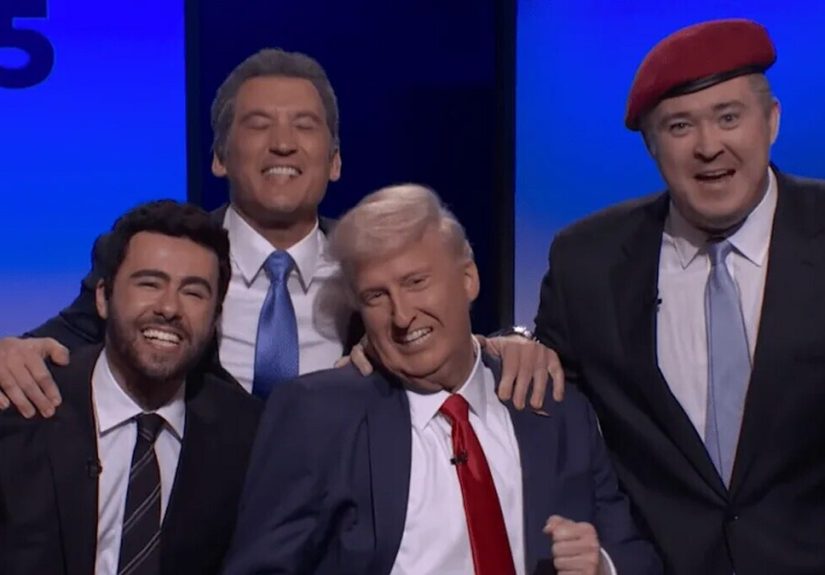
The biggest reason this week escaped the curse is that the cameo-filled opening sketch had a clear frame: a mock New York City mayoral debate. That gave the performers a solid comic arena. Instead of dropping in for a lazy “look who’s here” moment, the outside players were plugged into a recognizable structure with rules, tension, and escalating absurdity.
Miles Teller played Andrew Cuomo. Ramy Youssef appeared as Zohran Mamdani. Shane Gillis showed up as Curtis Sliwa. On paper, that lineup sounds like the exact kind of thing that should trigger an eye roll. It is almost too cameo-friendly, like the writers were building a fantasy football roster for people who follow both comedy podcasts and local politics. But the sketch worked better than expected because each performer represented a different comic energy within the same debate format.
Teller brought a slick, slightly smirking confidence that fit Cuomo. Youssef gave Mamdani a controlled, modern-media polish. Gillis, meanwhile, leaned into Sliwa’s oddball energy with the kind of broad, shambling force that sketch comedy can absorb. None of these performances reinvented television, but they were distinct enough to justify being there. The cameos were not ornamental. They were functional.
Kenan Thompson anchored the chaos
One of the smartest choices in the sketch was giving Kenan Thompson the role of moderator Errol Louis. Thompson did what he has done for approximately the last 700 years on SNL: he made the room feel stable. A cameo-heavy sketch needs a house voice, someone who can absorb the noise and bounce the scene back toward the joke. Thompson was that voice.
That matters because the cameo curse usually hits hardest when nobody owns the center. Everyone arrives with their own energy, but no one controls the traffic pattern. This cold open avoided that trap by letting a seasoned cast member keep the frame intact. So even when the sketch got crowded, it never became mush.
The sketch knew New York is part of the joke
Another reason the cold open landed is that it embraced something SNL sometimes forgets: the show is at its best when it remembers it is made in New York, not in some abstract national cloud of trending topics. A fictionalized mayoral debate gave the sketch local texture. It had a point of view beyond “politicians sure are weird.”
That local energy also made the cameos feel less random. They were not just famous people beamed in from Hollywood. They were players in a specific civic circus. That gave the whole thing a sharper identity, and identity is usually the first casualty when surprise guests start piling up.
Miles Teller Helped More Than He Hurt
Hosts can make cameo overload much worse. Sometimes the host vanishes in a sketch built to showcase someone else. Sometimes the host looks like they are waiting politely for the famous guest to finish collecting applause. Teller did neither. Even critics who had mixed feelings about the overall episode generally agreed that he was game, energetic, and most effective when he leaned into smugness, irritation, or controlled chaos.
That turned out to be crucial. The cold open did not play like “special guest stars plus one guy from the poster.” Teller stayed integrated into the material. He also fit the episode’s broader comic tone, which had a slightly hangover-ish Halloween-weekend weirdness. He was not trying to dominate the show, but he was present enough to keep its center from drifting into pure stunt territory.
In fact, Teller’s usefulness this week says something important about sketch comedy: a good host does not need to be the funniest person in every scene. A good host needs to understand the assignment. Teller seemed to get that. He was willing to be broad, willing to be silly, and willing to let more established cast rhythms do some of the heavy lifting.
The Episode Was Not Flawless, and That Actually Helps the Argument
Here is the funny part: the episode was not a runaway triumph. That makes the cold open’s success more interesting, not less. The monologue drew criticism for feeling uneven. A later Italian-restaurant sketch never quite found a comic center. Some reviewers thought the whole show still felt sleepy or transitional, especially compared with stronger recent hosts.
But that is exactly why the opening stood out. If the entire episode had been a masterpiece, then the cameos would have looked harmless simply because everything was working. Instead, this was a mixed night, which means the moments that clicked had to earn their applause the hard way. The cameo-loaded debate sketch did. It survived in an environment where weaker material elsewhere did not.
The same goes for the episode’s stronger later highlights, especially the “White House Makeover” parody and the “Weekend Update” segment with Andrew Dismukes and Ashley Padilla as two people who had just hooked up but somehow ended up discussing the government shutdown like they were co-anchors on C-SPAN after a regrettable wedding reception. Those sketches worked because they had a comic engine. There was a real joke to play, not just a famous face to display.
Why This Mattered for Season 51
SNL season 51 arrived with real turbulence. Several cast members were out, several new featured players were in, and the show clearly entered the fall trying to figure out who would emerge as its next dominant voices. In that kind of transitional year, the temptation to lean on celebrity shortcuts gets stronger. Cameos can patch over uncertainty. They can also make that uncertainty worse by reminding viewers how little time the actual cast is getting.
That is why this week’s near-miss with the cameo curse felt significant. The outside guests did not completely crowd out the ensemble. Kenan Thompson was central. James Austin Johnson’s Trump remained one of the sketch’s most reliable comic weapons. The best material elsewhere in the episode also relied on cast chemistry, not stunt booking.
In other words, the cameos did not erase the cast; they orbited it. That is the balance SNL needs. Celebrity appearances should expand the comic world, not replace it.
This is also where the show can learn the right lesson. The takeaway is not “book more celebrities.” The takeaway is “if you are going to book celebrities, make sure they enter a sketch that would still make sense if the performers were regular cast members.” That is the test. If the material collapses without the famous face, it was probably never strong enough. If the material still works and the guest merely sharpens it, now you are cooking.
The Bigger Lesson: Surprise Is Not the Same as Comedy
SNL has spent decades proving that a cameo can be electric. It has also spent decades proving that it can become lazy very quickly. The November 1 episode finally threaded the needle by remembering a basic truth: surprise gets attention, but structure gets laughs.
The cold open worked because the joke was not “look, it is that person.” The joke was the dysfunction of the debate, the clash of public personas, the New York specificity, and the live-wire instability of the whole setup. The famous faces were ingredients, not the recipe. That is why the sketch avoided the usual curse. It did not ask viewers to clap in place of laughing. It gave them reasons to do both.
That may not sound revolutionary, but on a show that sometimes treats celebrity proximity as a substitute for comic invention, it felt like a small miracle. Or at least a solidly above-average Saturday.
The Viewer Experience: What It Feels Like When an SNL Cameo Actually Works
There is a very specific feeling that happens when an SNL cameo works, and regular viewers know it immediately. First comes the recognition jolt. You see the face, your brain does the quick celebrity math, and there is a split second where the room fills with that familiar “Oh!” energy. Usually, this is where the danger begins. If the sketch has no substance, the excitement drains almost instantly, and what remains is awkward applause hanging in the air like leftover party decorations no one remembered to take down.
This week felt different because the recognition jolt was followed by relief. The outside appearances did not stop the sketch dead. They pushed it forward. That changes the whole viewing experience. Instead of sitting there thinking, “Okay, but why are they here?” you start leaning in to see how the scene will keep escalating. The cameo stops being a detour and starts being part of the route.
For longtime viewers, that difference is almost emotional. SNL is one of those shows people do not just watch; they keep a running relationship with it. They complain about it, defend it, compare eras, argue over cast rankings, and act personally betrayed when a weak cold open burns six perfectly good minutes. So when the show finally gets a cameo right, it feels less like being impressed by a booking decision and more like watching an old friend remember their strengths.
There is also a trust factor. A bad cameo tells the audience, “Please be entertained by our access.” A good cameo says, “Relax, we have a joke.” That is a huge difference in tone. One feels needy. The other feels confident. Viewers can tell when the show is hiding behind celebrity wattage, and they can also tell when the writers are using that wattage to illuminate an already-solid premise.
The best part of this week’s experience was that the cameos did not make the regular cast feel smaller. That often happens on modern SNL, especially when the show seems nervous about transition periods. But here, the ensemble still mattered. Kenan Thompson steadied the room. James Austin Johnson did what he always does with Trump and found the exact line between recognizable and ridiculous. Elsewhere in the episode, cast-driven material still produced some of the strongest laughs. The audience was not being told that the famous visitors were the whole event. They were being invited to enjoy a larger comic ecosystem.
And honestly, that is what fans want. Most viewers are not anti-cameo. They are anti-laziness. They will happily cheer for a surprise guest when the surprise leads to something funnier, stranger, or sharper than what the sketch would have been otherwise. The problem is not the celebrity. The problem is the emptiness that so often follows the entrance. This week, the entrance led somewhere. It had shape. It had friction. It had payoff.
That does not mean the show is cured forever. This is still SNL, a place where brilliance, chaos, filler, accidental greatness, and baffling choices all share the same zip code. But for one week, viewers got the satisfying experience of seeing a cameo-heavy sketch avoid the usual crash landing. And on a show that has made an art form out of almost working, that felt unusually rewarding.
Conclusion
Saturday Night Live did not solve all its problems on the Miles Teller episode. The show is still adjusting to cast changes, still experimenting with its new balance, and still capable of following a strong sketch with one that feels written in the elevator. But the November 1 cold open proved something valuable: celebrity cameos on SNL do not have to be a creative surrender.
When the structure is strong, the point of view is clear, and the cast still owns the room, outside guests can enhance the comedy instead of swallowing it. That is why ‘SNL’ finally avoided the curse of the cameo this week. Not because it booked the right people, but because it remembered the right principle. Fame can open the door. The joke still has to walk through it.