Table of Contents >> Show >> Hide
- Why Banquettes Work So Well in Small and Busy Kitchens
- What Makes a Banquette “Space-Savvy”
- Best Banquette Layouts for Breakfast Nooks
- The Measurements That Matter Most
- Storage Is the Secret Sauce
- How to Make It Comfortable Enough to Use Every Day
- Design Styles That Suit Breakfast Nook Banquettes
- Mistakes to Avoid
- Final Thoughts
- Experiences That Show Why Breakfast Nook Banquettes Work
- SEO Tags
There are two kinds of kitchens: the ones that make you feel like a calm, capable morning person, and the ones that make you bump into a chair before you have had coffee. If your kitchen belongs to category two, a breakfast nook banquette might be your smartest design move.
Banquettes have a way of making even compact kitchens feel intentional. They tuck into corners, soften awkward layouts, and squeeze more usefulness out of the same square footage. Instead of leaving room to pull out four separate dining chairs every day, a banquette lets you line seating neatly against a wall or window and keep the room open for actual living. That means easier circulation, more storage, and a cozier place to eat toast, answer emails, supervise homework, or pretend you are in a charming little café instead of your own kitchen in sweatpants.
That combination of function and charm is exactly why breakfast nook banquettes keep showing up in design magazines, remodel stories, and small-space inspiration galleries. They are not just cute. They are hardworking. A well-planned banquette can act as dining zone, reading perch, storage hub, coffee corner, and informal family command center all at once.
This guide breaks down what makes a banquette truly space-savvy, how to choose the best layout, what dimensions matter most, and how to make the finished nook feel comfortable instead of cramped. Whether you are planning custom built-ins or dreaming up a renter-friendly version, here is how to make breakfast nook banquettes earn their keep.
Why Banquettes Work So Well in Small and Busy Kitchens
The biggest advantage of a banquette is footprint. Traditional dining chairs need pull-back space, side clearance, and constant repositioning. A banquette removes a lot of that daily shuffle. Push the seating to the perimeter of the room and suddenly the middle breathes again.
That is especially helpful in galley kitchens, pass-through dining areas, bay windows, eat-in corners, and those odd leftover spots where a standard dining set always looks like it was invited late. Banquettes turn dead space into useful space. Corners become dining zones. Window alcoves become favorite seats in the house. A wall that would have held one lonely chair can now support seating for three or four.
They also create a softer, more intimate atmosphere than a row of chairs. There is a reason restaurant booths have fans: people like to settle in. A breakfast nook banquette feels welcoming, casual, and lived-in. It invites lingering. And in homes where the kitchen does triple duty as café, office, and family headquarters, that kind of flexibility matters.
Another quiet benefit is visual order. Because the bench usually aligns with the walls, banquettes look built-in even when they are not. That gives the room a cleaner outline. In a smaller kitchen, less visual chaos is a very good thing. Your eye reads the room as calmer, larger, and more organized. It is a little design magic trick, except with fewer rabbits and more seat cushions.
What Makes a Banquette “Space-Savvy”
Not every banquette automatically saves space. Some are gorgeous but oversized. Others are plush enough to swallow your knees whole. A truly space-savvy breakfast nook banquette gets a few key things right.
It uses the perimeter.
The smartest banquettes hug a corner, run along a wall, or sit beneath windows. They take advantage of the edges of the room rather than fighting the center of it.
It matches the room’s scale.
A tiny kitchen does not want a chunky farmhouse booth with massive arms. Lighter silhouettes, slimmer benches, pedestal tables, and open legroom keep a nook from feeling heavy.
It multitasks.
The best designs hide storage below the seat, combine banquette seating with movable chairs, or work as both dining nook and casual workspace. A bench that holds linens, serving pieces, kids’ art supplies, or breakfast essentials is doing more than looking pretty.
It respects traffic flow.
If a banquette blocks the route between the sink, stove, island, and pantry, it is not helping. Good banquettes feel tucked in, not in the way. A smaller round or oval table often helps because it keeps corners from poking into walkways and makes it easier to slide in and out.
Best Banquette Layouts for Breakfast Nooks
L-Shaped Banquette
This is the classic space saver. An L-shape fits neatly into a corner, maximizes seating, and defines the nook without overwhelming it. Pair it with a round or pedestal table and you have one of the most efficient small-kitchen dining setups around.
Straight Bench Along One Wall
If your kitchen does not have a true corner to spare, a single bench along the wall works beautifully. Add two chairs across from it and you get the cozy look of a banquette without committing the whole table to built-in seating.
U-Shaped or Booth-Style Seating
This works best when you have a dedicated breakfast area and want maximum seating. It can feel extra cozy and family-friendly, but it needs more generous planning so diners do not end up playing accidental footsie with table legs.
Window Banquette
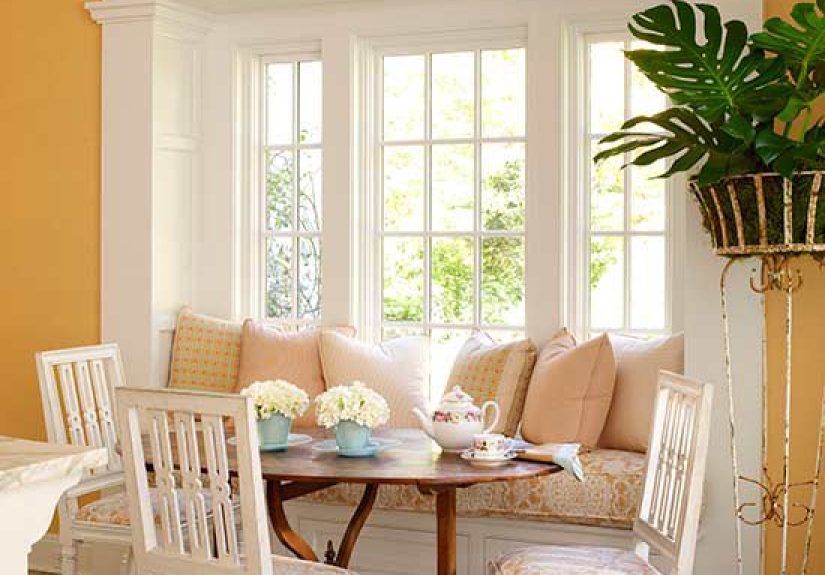
Few things beat breakfast in natural light. A built-in under a bay window or bank of windows makes use of architectural niches that are otherwise difficult to furnish. It also makes the nook feel like a destination rather than an afterthought.
Freestanding Modular Banquette
Not ready for custom millwork? A freestanding or modular banquette can mimic the built-in look with less commitment. It is a smart option for renters, budget-conscious remodels, or anyone who likes flexibility. Just make sure the proportions suit the room and the table does not look dwarfed by the seating.
The Measurements That Matter Most
Banquettes are charming, but dimensions are where the romance either succeeds or files a complaint.
A comfortable dining-height banquette usually works best with a seat height around 18 to 19 inches. Seat depth matters too. Around 18 inches is a practical minimum for the seat itself, while deeper built-ins with back cushions often land closer to 24 inches overall. For width, plan roughly 21 to 24 inches per person so diners do not feel like they are boarding an economy flight. Tables should generally overlap the bench by a few inches so people can sit close enough to eat without hunching like medieval scribes.
There is also the matter of pathways. In a compact kitchen, you want circulation around the nook to feel natural. A smaller table, a pedestal base, or an oval shape can improve legroom and reduce corner collisions. If your layout is especially tight, prioritize ease of entry and exit over dramatic scale. No one wants to shimmy into breakfast like they are squeezing past theater seats.
Here is a practical way to think about sizing:
- For two people: a petite corner bench with a small round table can feel perfectly comfortable.
- For four people: an L-shaped banquette with one or two chairs is often the sweet spot.
- For larger households: a longer bench, oval table, or booth-style arrangement can increase seating without turning the area into a furniture traffic jam.
If you are building custom, think beyond seat size. Back angle, cushion thickness, table pedestal placement, and recessed toe-kick space all affect comfort. A banquette can look gorgeous in photos and still be annoyingly awkward in real life if your feet have nowhere to go.
Storage Is the Secret Sauce
If you want your breakfast nook banquette to pull its weight, give it storage. Under-seat drawers, lift-up lids, cubbies, and baskets can hold placemats, napkins, serving pieces, small appliances, school supplies, or the random deck of cards that somehow lives in every kitchen.
Storage is one of the strongest arguments for choosing a banquette over standalone chairs. Chairs occupy floor space and offer exactly zero help with clutter. A banquette base, by contrast, can become an organizational workhorse. In smaller homes, that hidden storage can be the difference between a kitchen that feels easy and one that feels one cereal box away from chaos.
Drawers are especially convenient if your nook is used daily. Lift-up tops are useful too, though they are slightly less effortless when the table is in the way. Open shelving can work if you style it carefully, but concealed storage generally looks cleaner in a hardworking kitchen.
Another smart move is to extend the functionality around the banquette. Add a picture ledge, slim shelves, hooks, or a nearby cabinet so the nook feels connected to the rest of the kitchen. That way, the banquette is not just seating. It becomes part of your room’s overall storage strategy.
How to Make It Comfortable Enough to Use Every Day
Comfort is where great banquettes separate themselves from pretty-but-neglected ones. The nook should make people want to sit, not admire it from across the room like a museum exhibit.
Choose forgiving materials.
Breakfast nooks are casual, high-traffic areas. Upholstery should be durable and easy to clean. Performance fabrics are a strong choice, especially in homes with kids, pets, coffee, jam, or all four at once. Leather and faux leather can also be practical depending on your style.
Soften the back.
A solid wood bench may look sleek, but for daily use it usually benefits from a back cushion, upholstered panel, or at least a few well-chosen pillows. Comfort should not rely entirely on “good posture.”
Use the right table base.
Pedestal tables are banquette heroes. They make entering and exiting easier, free up legroom, and work especially well with curved or corner seating.
Layer the mood.
Pendant lighting, a cushion in a cheerful color, café curtains, a small rug, or a piece of art above the bench can turn a functional nook into a memorable one. Banquettes are naturally cozy, so they reward thoughtful styling. This is one of those rare places where practical design and personality get along very well.
Design Styles That Suit Breakfast Nook Banquettes
The beauty of a banquette is that it can lean almost any direction aesthetically.
- Modern: clean lines, slim upholstery, pedestal table, minimal palette.
- Cottage: painted wood base, striped cushions, beadboard, warm lighting.
- Coastal: light woods, breezy textiles, pale blues, woven accents.
- Traditional: tailored upholstery, framed art, refined millwork, classic table shapes.
- Café-inspired: curved bench, moody paint, bistro table, layered texture, and a strong desire to order a croissant.
Do not overlook mixed seating. A banquette on one side and movable chairs on the others can make the nook more flexible and visually balanced. It also keeps the setup from feeling too fixed or too booth-like if that is not your style.
Mistakes to Avoid
Even good ideas can go sideways when the planning gets sloppy. Watch out for these common problems:
- Oversized tables: If the table dominates the nook, the whole setup feels cramped.
- Bench seats that are too deep: Extra depth sounds luxurious until everyone needs a stack of pillows just to reach the table.
- No storage plan: A big built-in with a solid base but no drawers or lift-up seat misses a major opportunity.
- Sharp corners in tight walkways: A round or oval table is often kinder to hips and traffic flow.
- Ignoring everyday life: If the fabric cannot survive breakfast, it should not be in the breakfast nook.
Final Thoughts
Space-savvy breakfast nook banquettes succeed because they solve more than one problem at a time. They seat more people in less space, turn awkward corners into useful destinations, add storage where kitchens often need it most, and create a softer, more inviting way to gather. In a world full of giant islands and showroom kitchens, the banquette offers something better: a reason to linger.
If you are redesigning a small kitchen, updating an eat-in corner, or simply trying to make your home feel more welcoming, a banquette is worth serious consideration. Done well, it does not just save space. It makes space feel better.
Experiences That Show Why Breakfast Nook Banquettes Work
One of the most consistent experiences people have with a breakfast nook banquette is that it changes where daily life happens. Before the banquette, breakfast may be a rushed event at the counter, homework may drift to the dining room, and coffee may be carried from room to room with no real place to land. After the banquette, the nook often becomes the default destination. It turns into the seat someone always chooses first. That alone says a lot.
In many real remodel stories, homeowners describe the same surprise: the banquette was planned as a dining solution, but it ended up becoming a lifestyle upgrade. A parent sits there with a laptop while a child finishes cereal. Someone reads the news there in the afternoon. A friend naturally settles in there during visits. The nook becomes useful far beyond breakfast, which is exactly why the design feels like such a smart investment.
Another common experience is how much bigger the room feels once loose chairs are reduced or eliminated. People often expect a built-in bench to make a kitchen feel more fixed, but the opposite is usually true. Because the bench stays tucked against the wall, the center of the room opens up. There is less scraping, less shifting, and less visual clutter. Even in homes where the square footage does not change at all, the everyday movement through the kitchen improves noticeably.
There is also a comfort factor that standard dining sets do not always match. A banquette feels relaxed. Guests lean back a little longer. Kids tend to pile in. Families often say the nook becomes their favorite place for quick meals because it does not feel formal or fussy. That matters in real life. Beautiful rooms are nice, but useful rooms are the ones people actually love.
Storage is another area where experience tends to win people over fast. Homeowners often begin by thinking under-seat drawers are a bonus, then end up treating them like a secret weapon. Extra placemats, paper goods, birthday candles, card games, school supplies, and serving bowls all find a home there. Once that clutter disappears from counters and upper cabinets, the kitchen feels calmer. It is the kind of payoff that sounds small until you live with it every day.
Of course, real experience also teaches a few lessons. Seats that are too deep become annoying. Tables with bulky legs make entry awkward. Delicate fabrics look lovely for about five minutes in a house with daily use. And a banquette without enough back support may photograph beautifully while convincing everyone to migrate elsewhere after ten minutes. The best results usually come from treating the nook like a hardworking piece of furniture, not just a design moment.
That is why the most successful breakfast nook banquettes tend to balance charm and practicality. They look inviting, but they are also easy to wipe down, easy to sit in, and easy to move around. They support routines instead of interrupting them. Over time, that balance is what makes the nook feel less like a trend and more like a permanent improvement to the way a home functions.
In the end, people remember how a banquette made their kitchen feel: cozier, calmer, better organized, and more connected to everyday life. That is the real magic of space-savvy design. It is not only about fitting more into less. It is about making limited space feel generous.